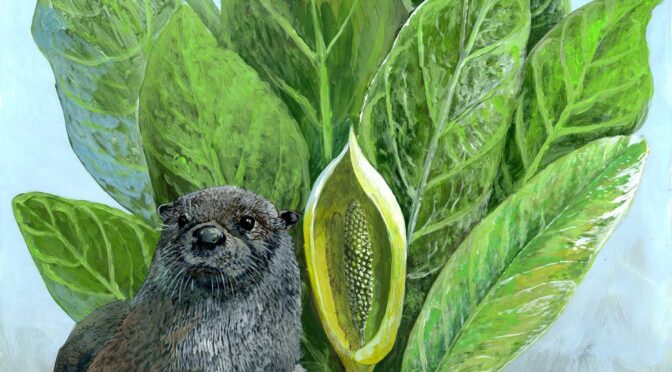
Tag Archives: Interpretive Panels

Hellyer Park wayside panels redo

Yesterday I sent this and it wasn’t pleasant to view on computers. So, I apologize, but here it goes again. You know, old guys, new software. I don’t need to say more, except thanks for sticking with me.
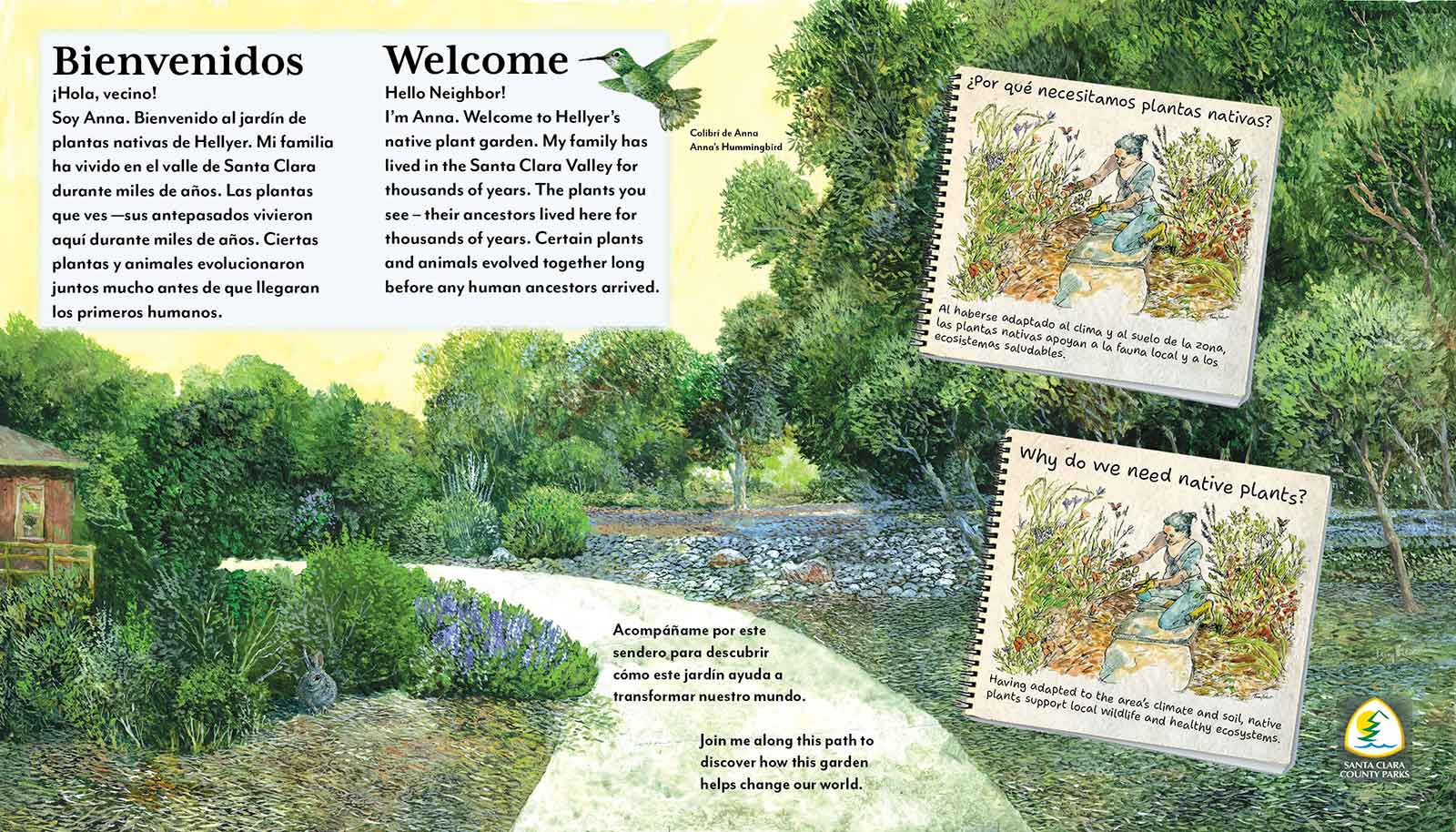
I just finished these last week so wanted to share. A click will enlarge them nicely.

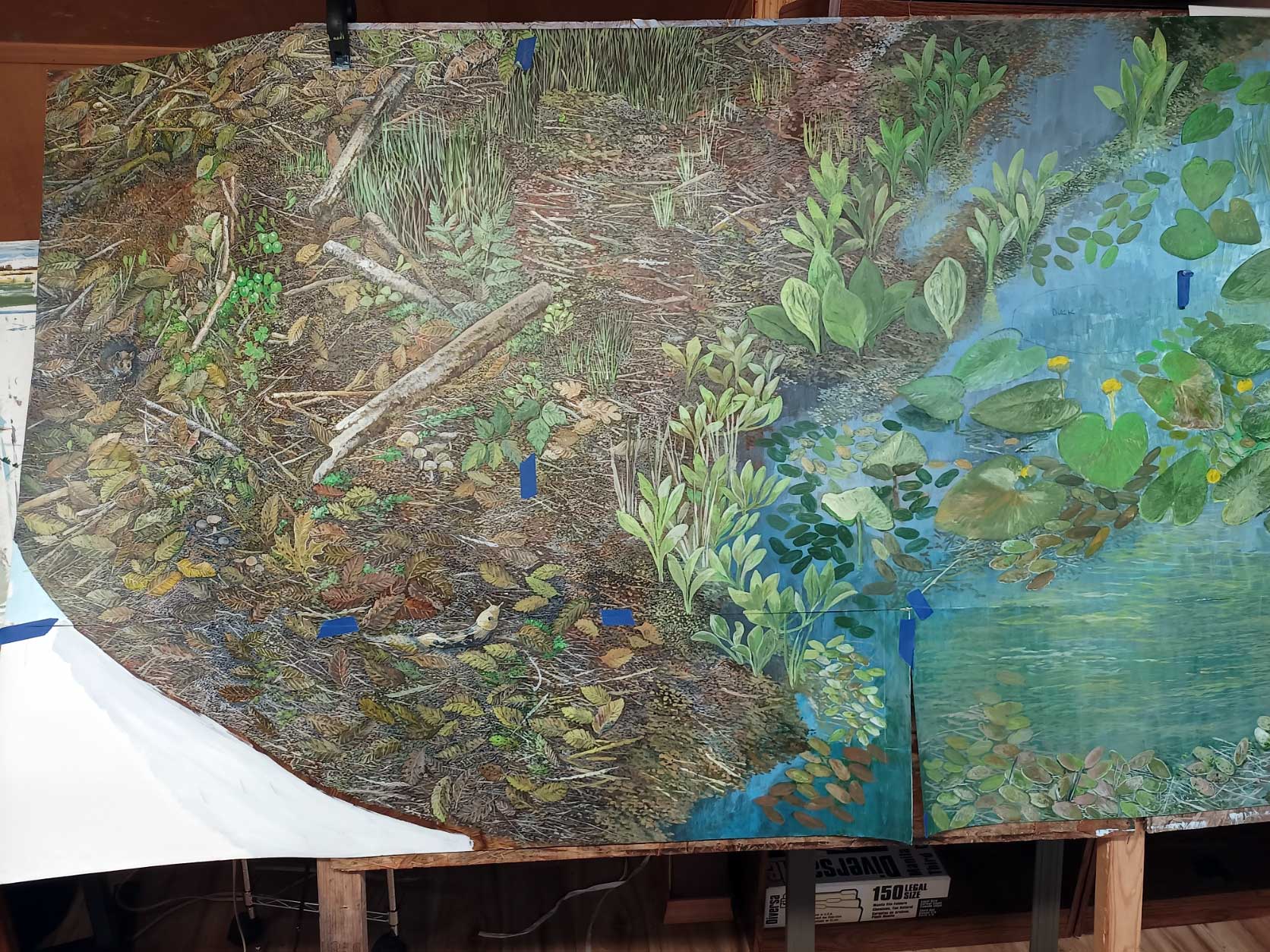
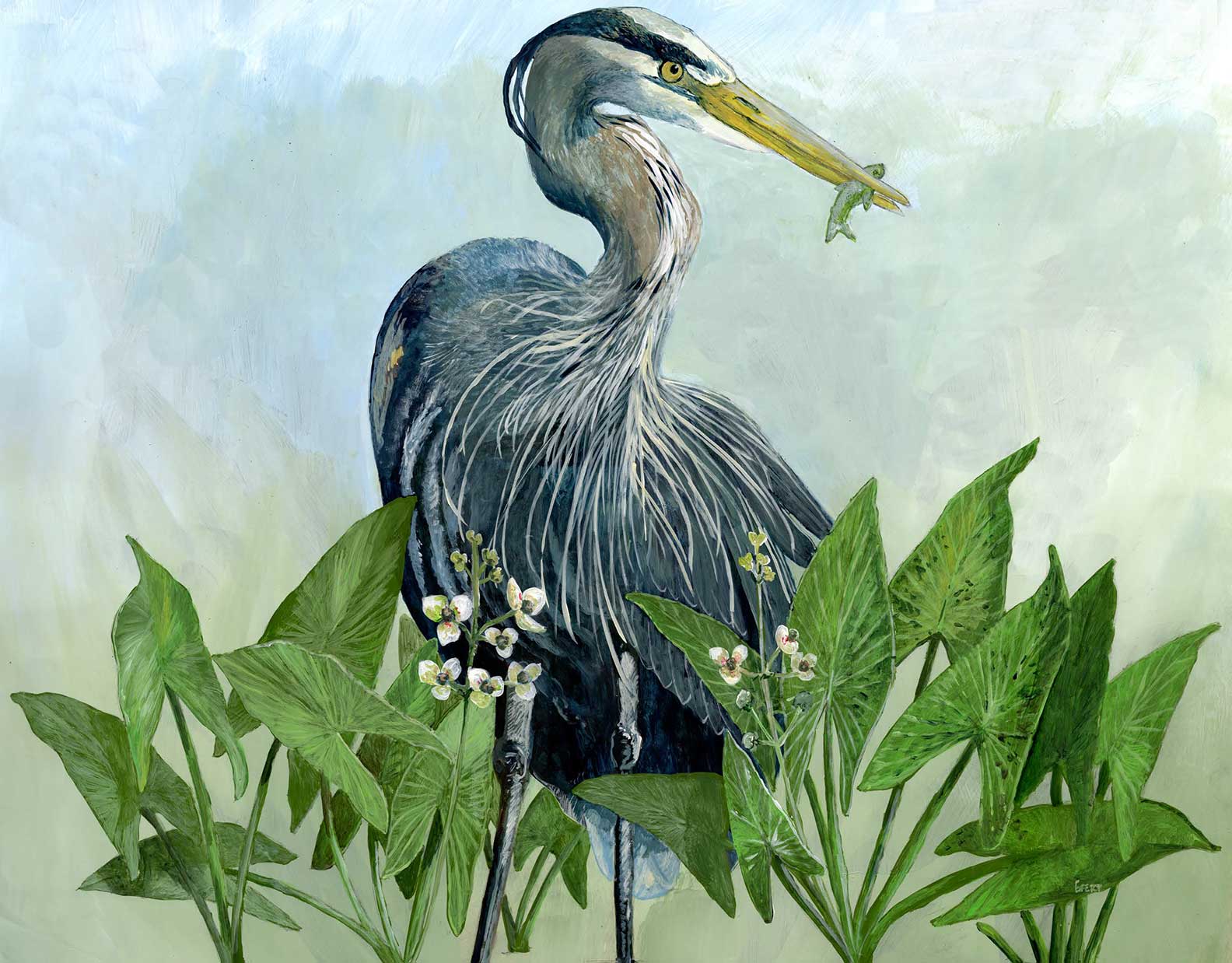
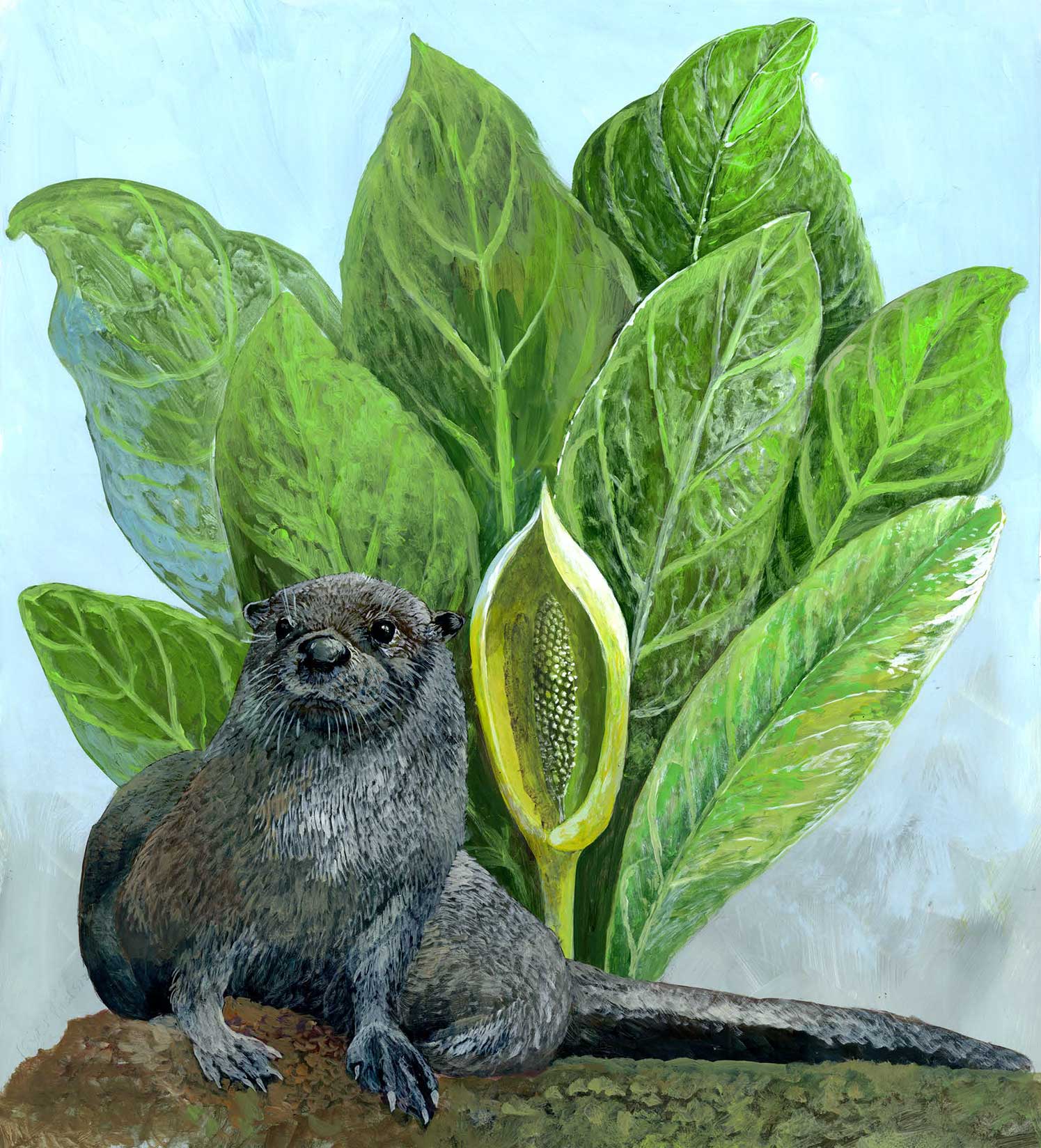
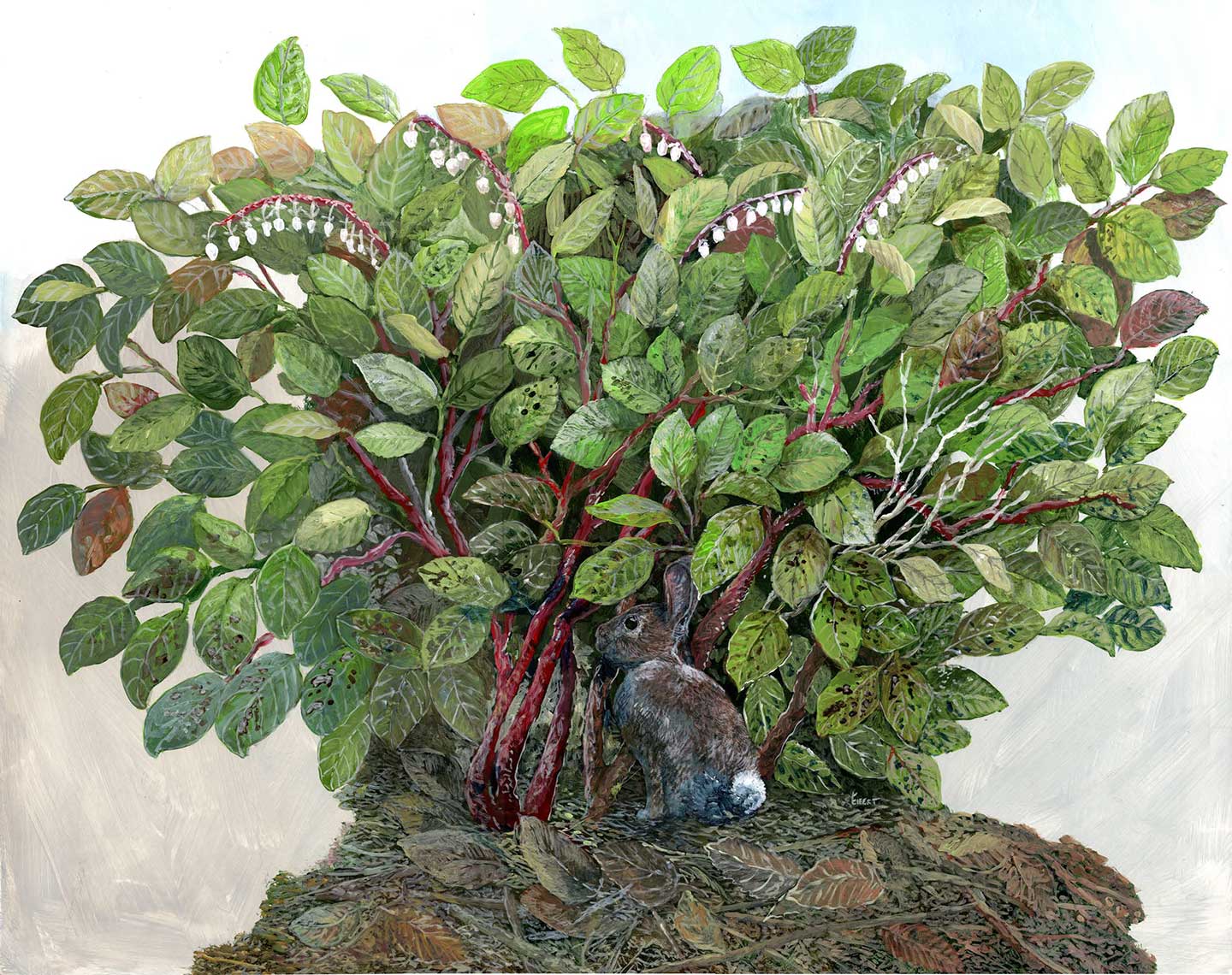
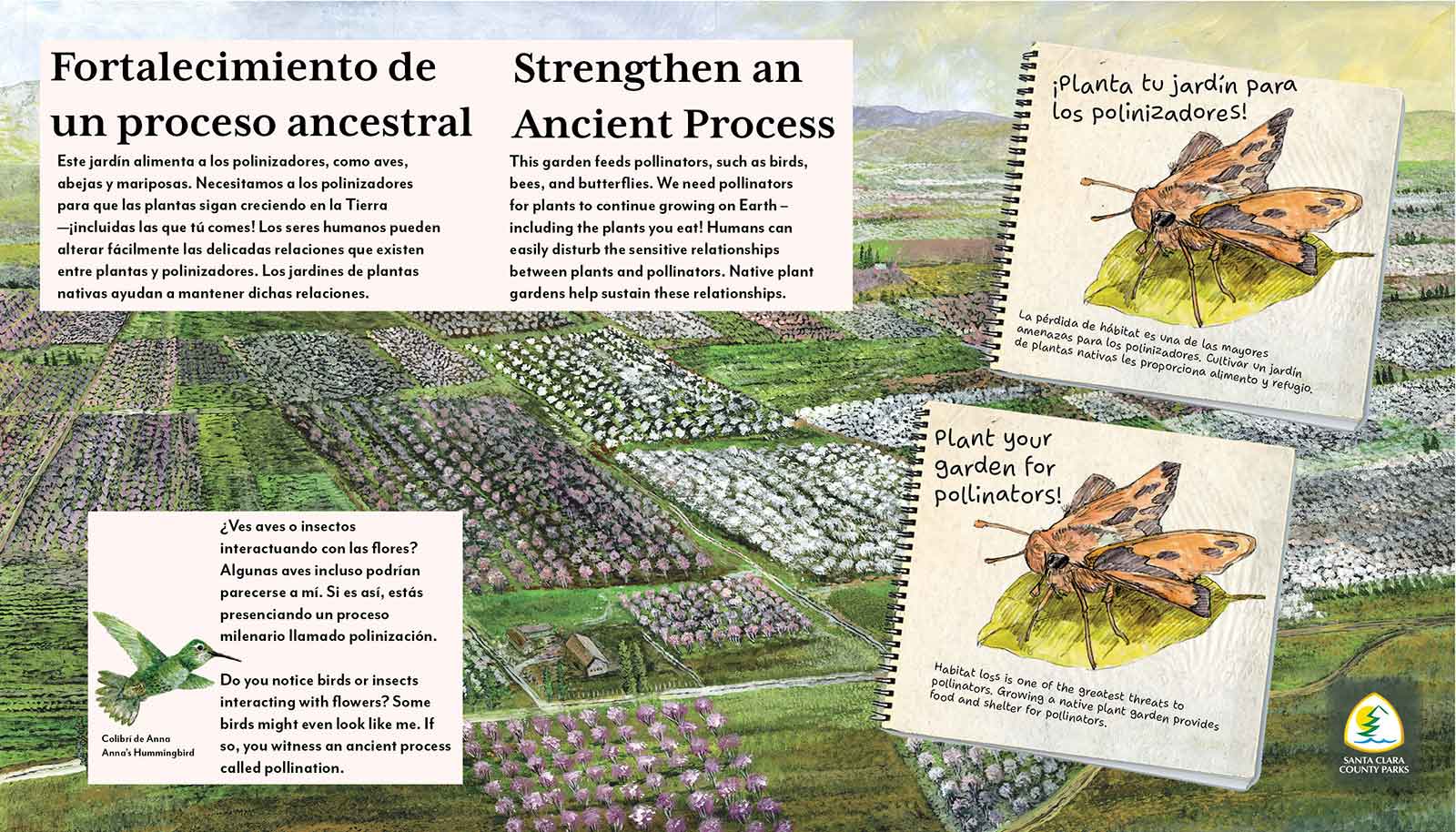
This project was for a native plant garden in Santa Clara County California. It’s a place surrounded by my art in other parks, Mt Diablo, up to Muir Woods, Big Basin Redwoods to Fort Funston and Angel Island, Golden Gate National Recreation Area are some. This park is urban, running along Coyote Creek through San Jose, with a sea of people living along the south shore of San Francisco Bay which includes nearby Silicon Valley and Stanford. Shown here are big background landscape paintings that I was given a fairly free hand it painting – like a gallery show right here in this little park.
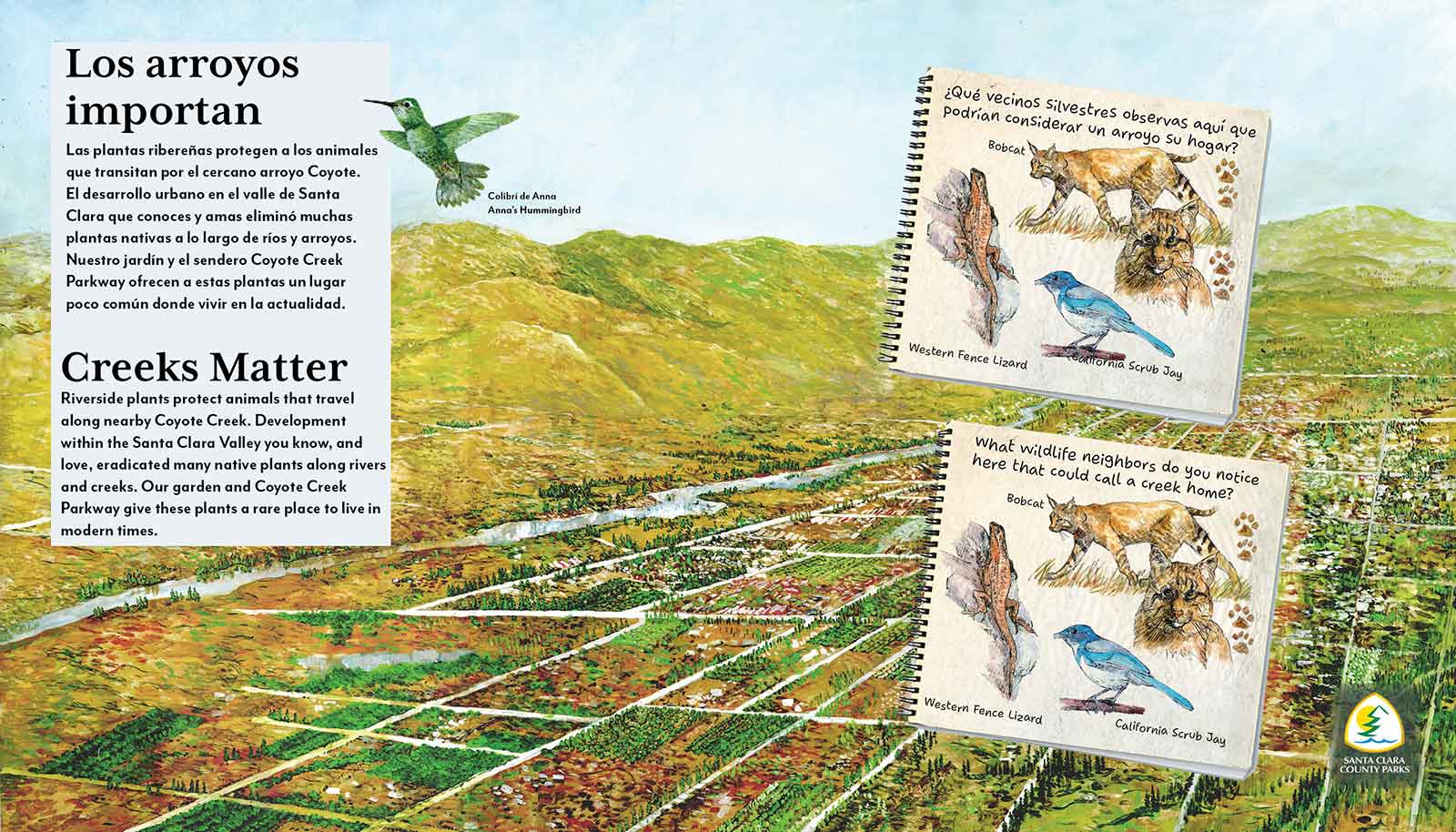
Spanish First! So that’s the redundancy of the two sketchbooks in every panel. Took me a bit to accept it, but I’m okay with it now.

These are the very first wayside panels I’ve ever painted with Spanish as the primary language, which says lots about who uses this urban park. I’ve made many of park panels with Spanish as a second language, but never Spanish as the first language – which shows how far this country has changed in the past few decades. I’m proud to be involved in change.

The other interesting direction taken here is that the text isn’t necessarily connected to the art. It’s common to have background art connected to the rest of it, but this is refreshingly ‘wide’ vision of presenting these are more art than school. The sketchbooks are my pencil and watercolor paintings, with canvas acrylics as the backgrounds. All are 42″ wide.
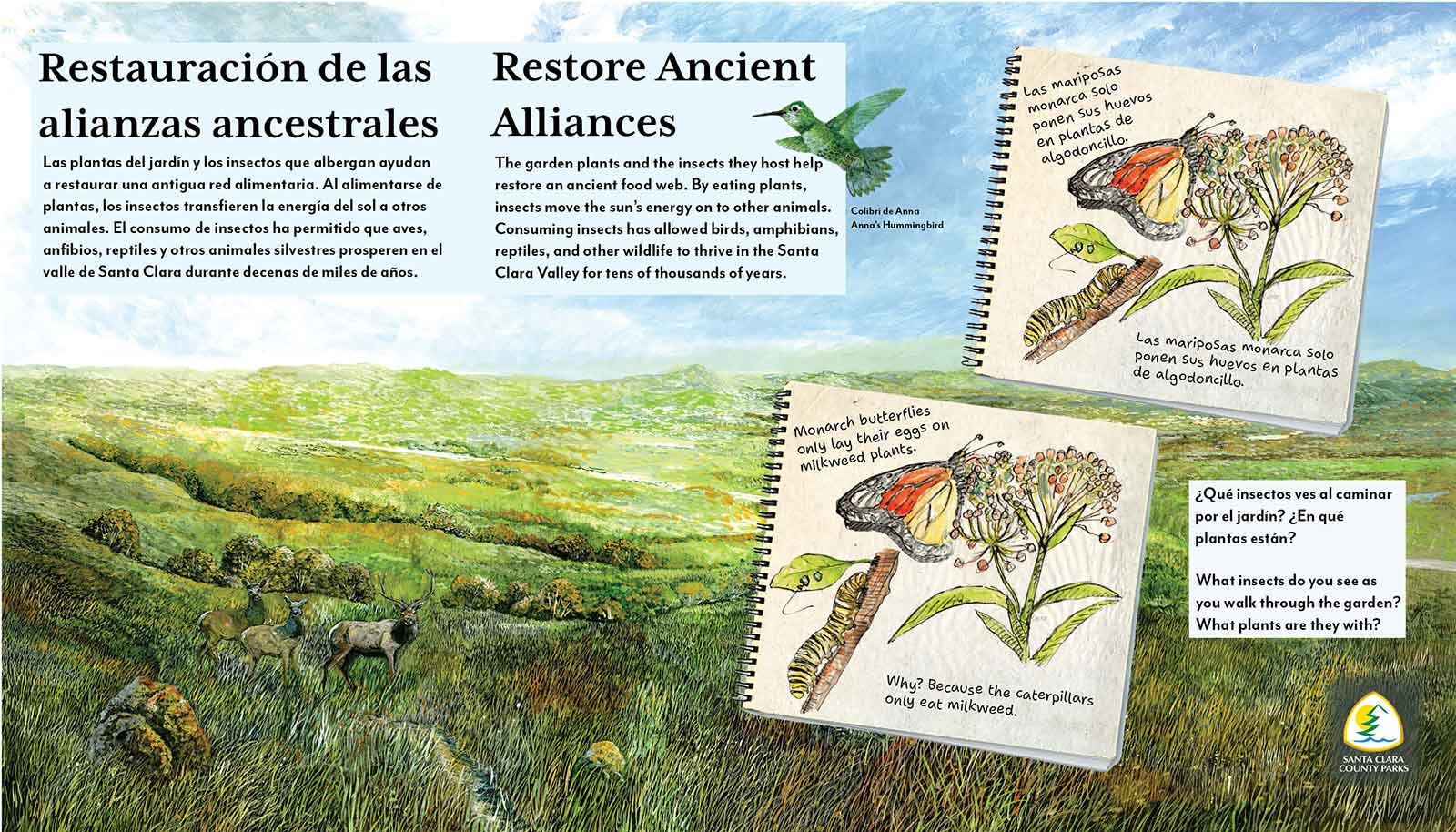
There are elk in this panel, and the title ‘Restore’ suits it. Yes, they’ve introduced Tule elk back into the landscape above the East Bay, and so you can see them here at Hellyer Park up on the ridgetop fairly often.
This last panel is also different, using the entire panel as a thank you to the community’s efforts to repair a landscape much in need of the natural plants that are the foundation of a healthy city.
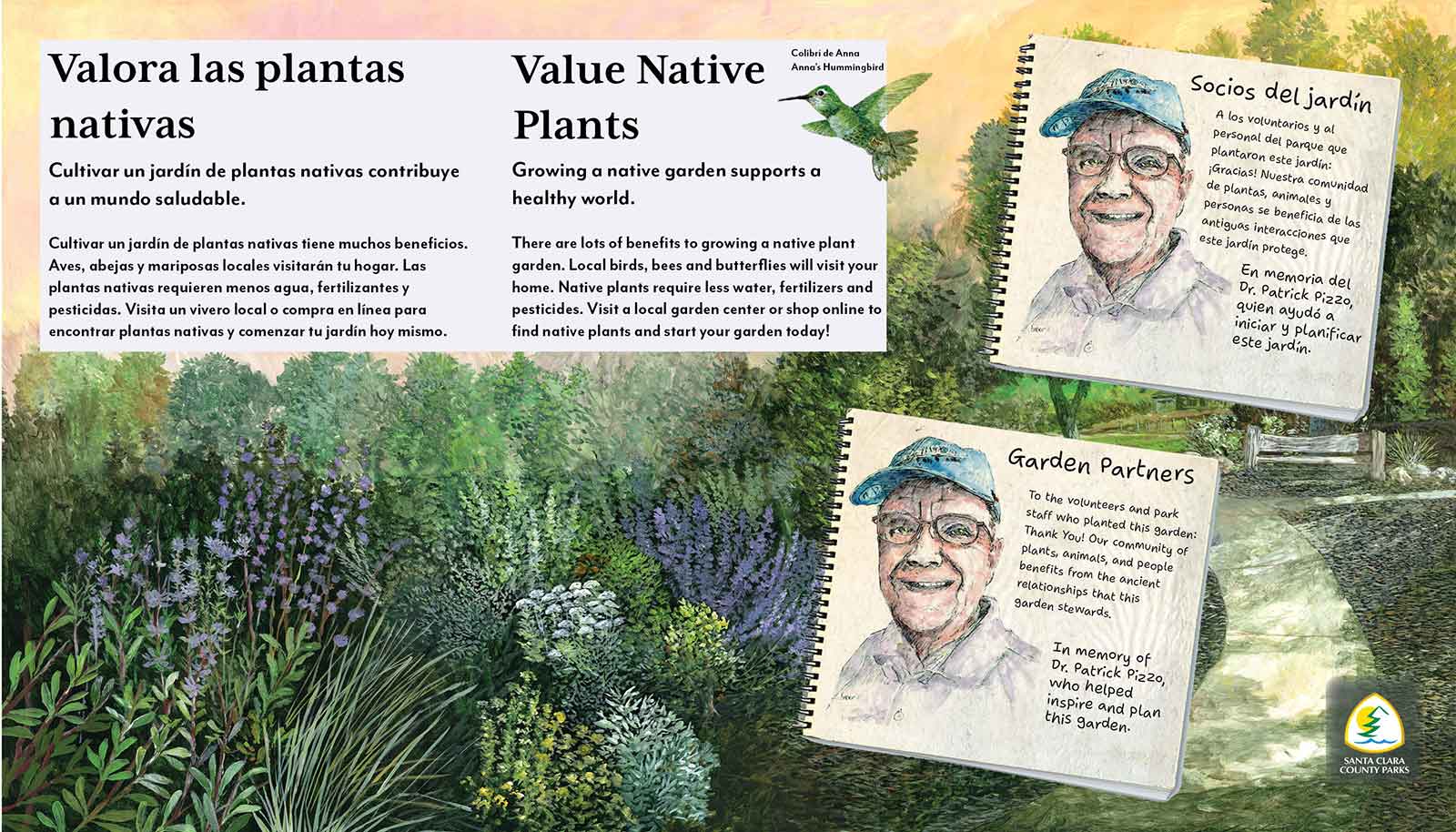
I want to thank Carolyn at Santa Clara County Parks and Recreation for these, for giving me a free hand at design and art. As I move forward with my art, replacing the almost extinct National Park Service with a path forward in continuing to do what I love – which is to make art that teaches people about their surroundings. It’s clear I didn’t really loose my job as our National Parks closes up shop, and I don’t mean any temporary government shutdown, but these great parks will soon become something else I’m not going to be a part of.

Thanks for reading this week. You can sign up for emails for these posts on my website at larryeifert.com.

Larry Eifert

Here is my Etsy site with my currently available paintings for easy sale.

Here’s my Facebook fan page. I post lots of other stuff there.

And Instagram is here.

Click here to go to our main website.

Nancy’s web portfolio of stunning photography and paintings.

And here to go to Virginia Eifert’s website.

Or Crater Lake Institute’s website which I also build – viewership of several million a month!
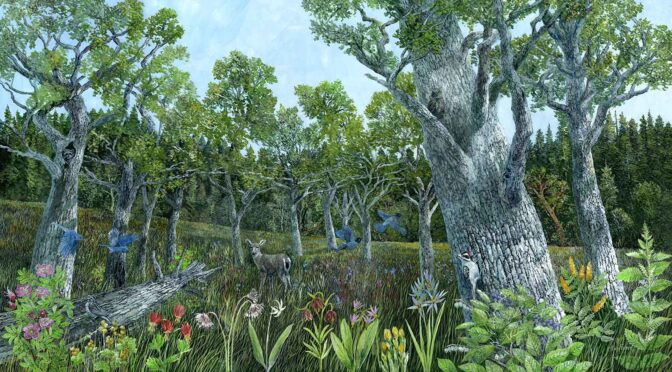
Garry Oak Forest

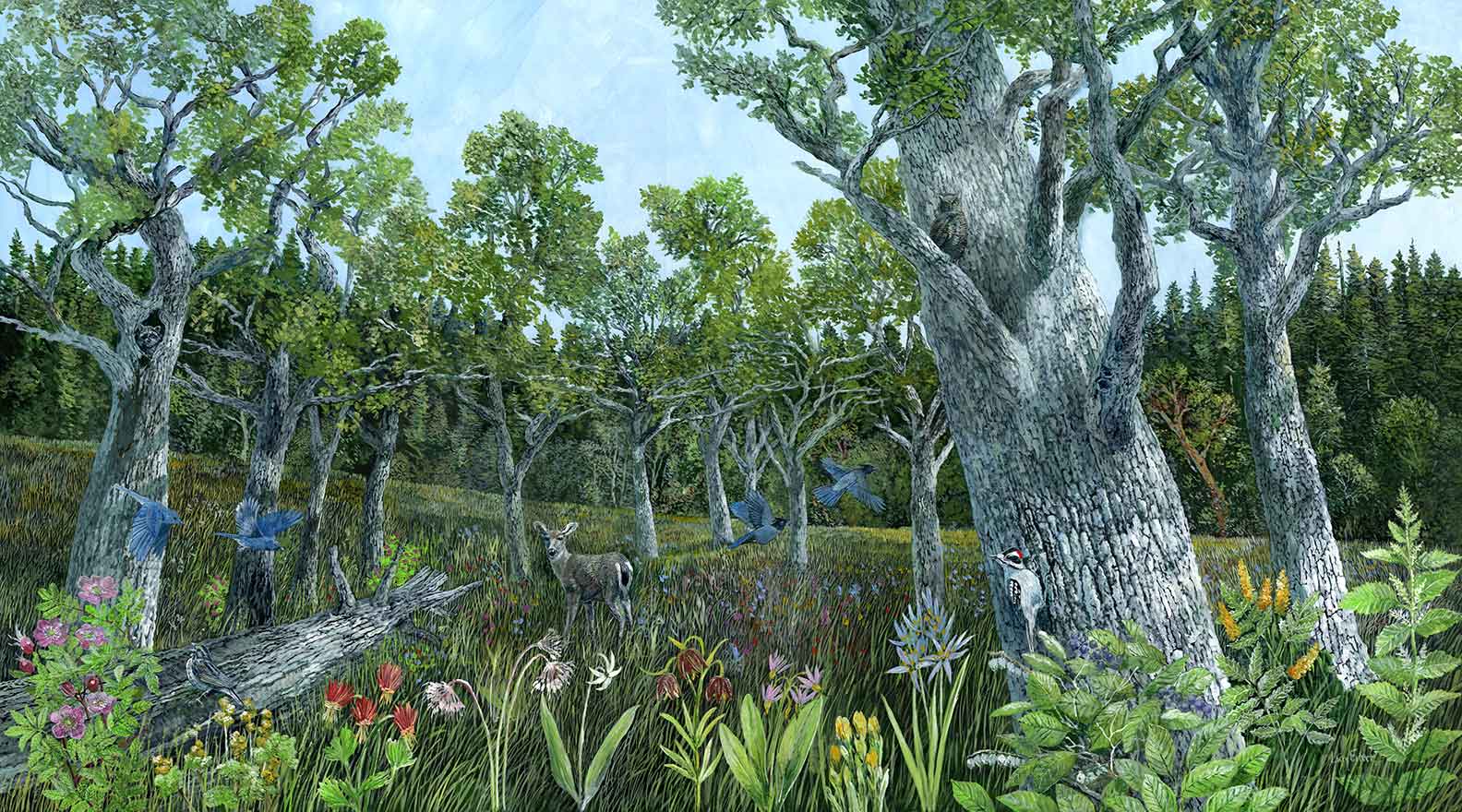
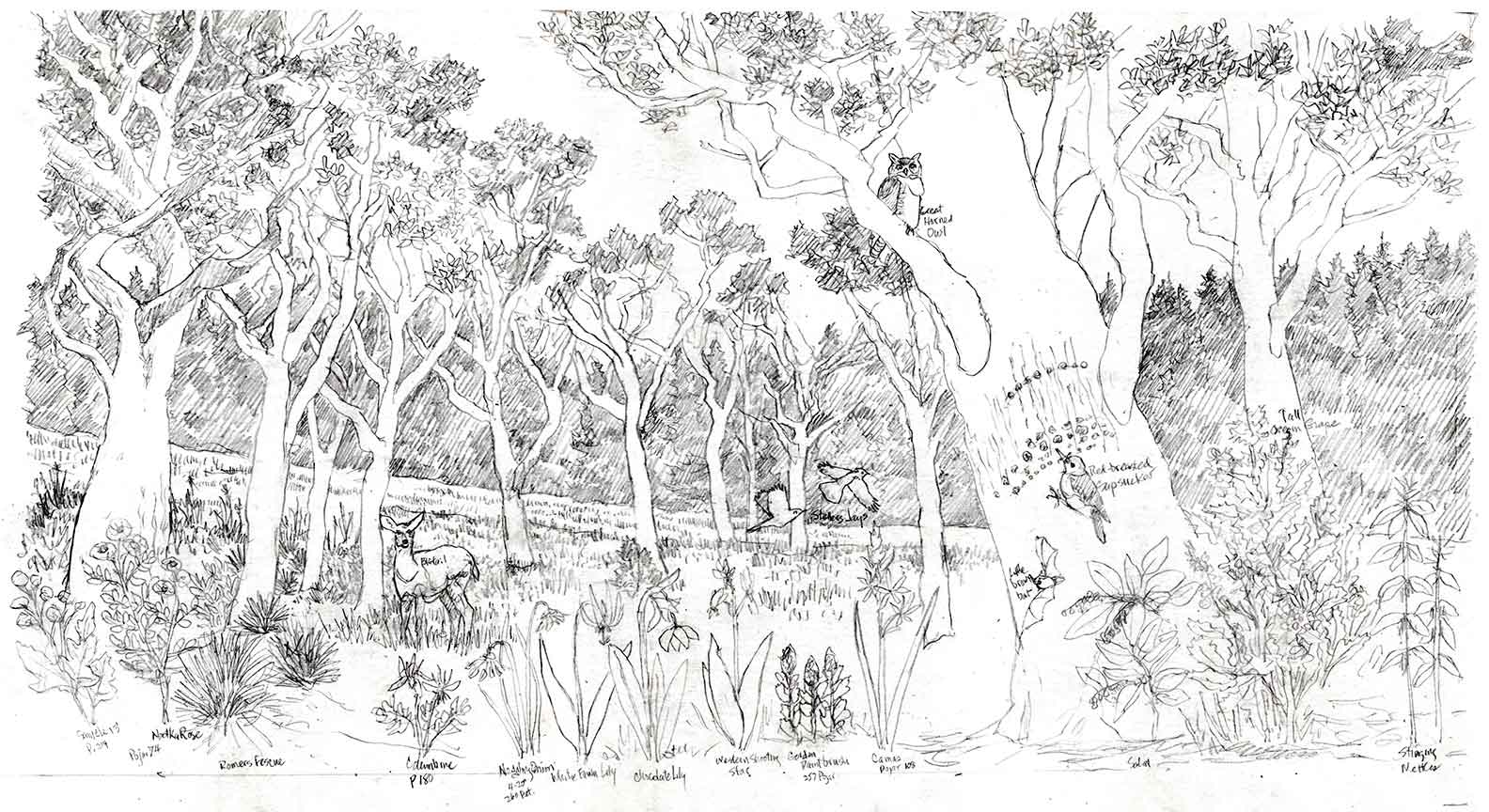
I recently made two panels for the Whidbey Island Land Trust and Oak Harbor Garry Oak Society. Here’s the oak panel. This and a panel about nearshore restoration will be installed at the new Keystone Preserve on Whidbey Island very soon. I’m pleased how this all finished up, from concept designs, to making the art and finally making it all work with a text story. Art telling stories, we’ve been talking about that lately.

Garry oaks are the only oak trees in the Pacific Northwest, and they’ve become very rare. This is the same tree as the Oregon white oak, stately and slow-growing forests that were actually cultivated crops for thousands of years by the Indian tribes. These trees provided food and an open forest designed for other important plants such as camas and the other root vegetables for the first people who lived here.

Garry oak forest

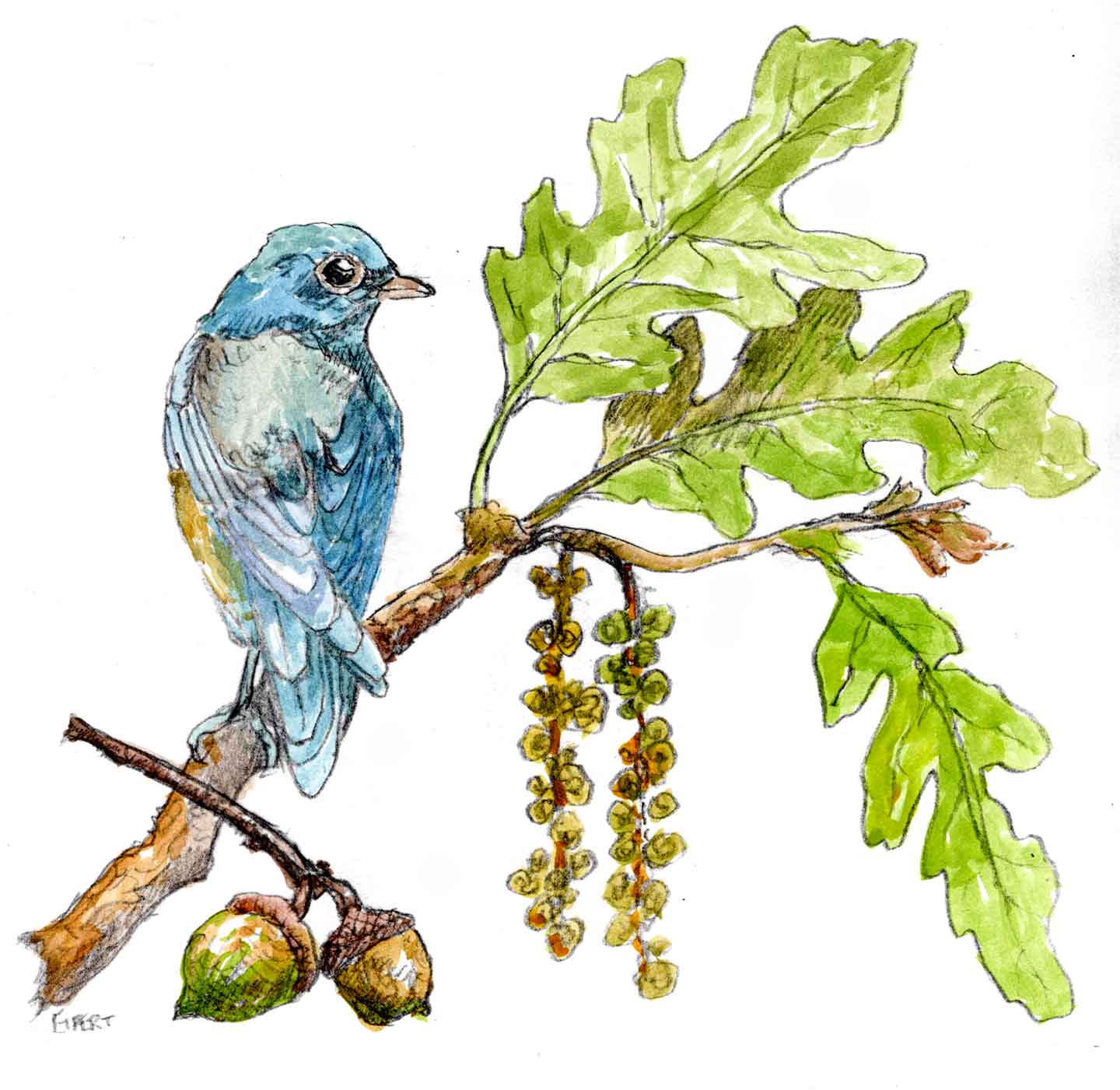
Above is my refined sketch for the painting. I was trying to find a way to show the forest and some way to identify the important native plants that are rare as well. And this bluebird, below, gives a scale to the oak leaves and bird that could fit in the palm of my hand. Watercolor and pencil drawing.

garry oak and western bluebird

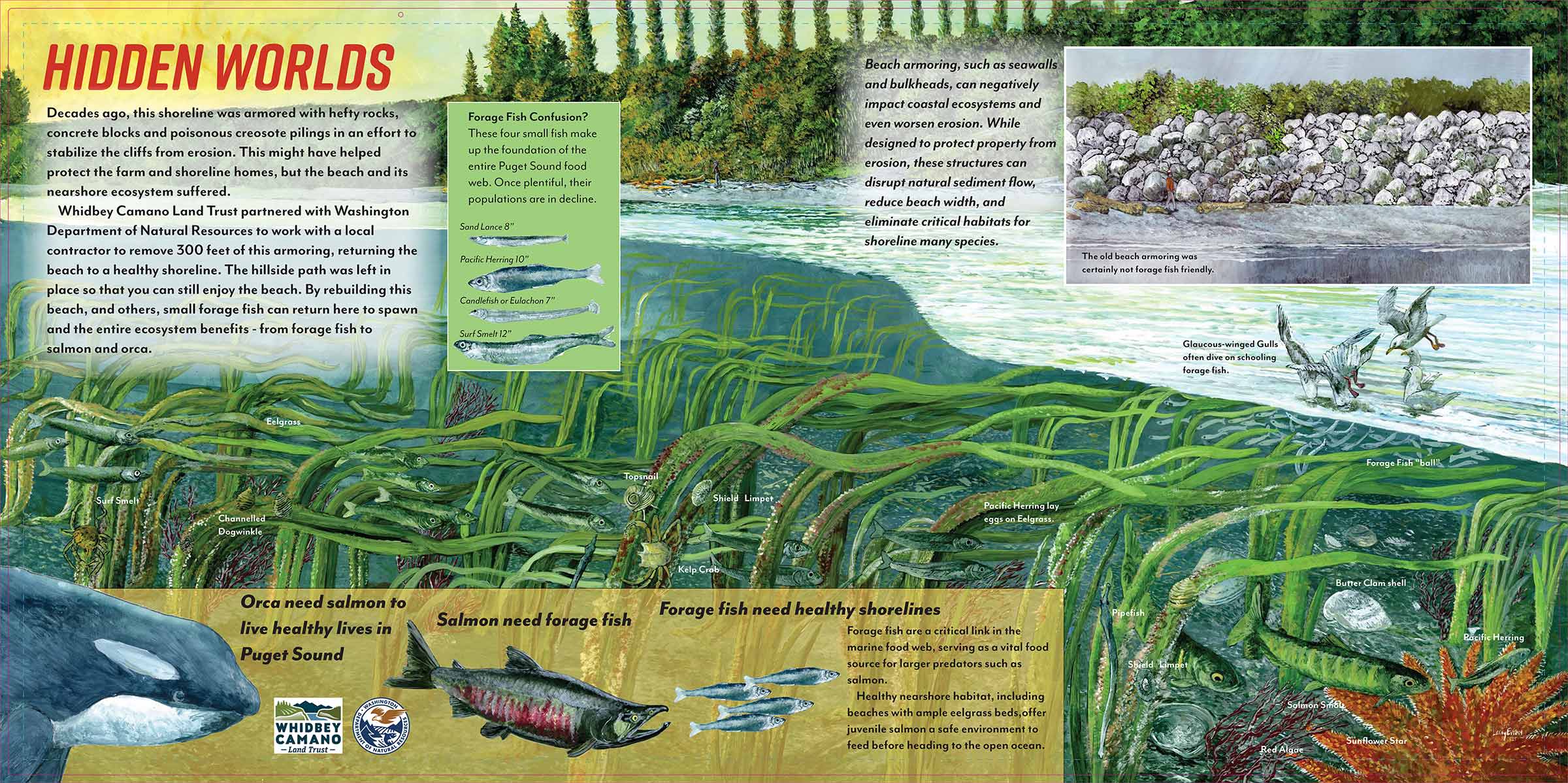
And below, the second panel for this project, about the restoration of the bluff at the Reserve, eelgrass beds, orcas, salmon and forage fish.

People have been asking, are you still painting for the National Park Service as it spirals down to non-existence? Yes, I currently have two projects and two more awaiting for them – but it’s a sad story that shows my work with them is going to end soon – thanks to the Fascist leadership who is setting up the NPS for total failure. It’s been a wonderful experience for me to spend these past decades painting art for a grateful bunch of people who cared more about their country than making money.

Thanks for reading this week. You can sign up for emails for these posts on my website at larryeifert.com.

Larry Eifert

Here is my Etsy site with my currently available paintings for easy sale.

Here’s my Facebook fan page. I post lots of other stuff there.

And Instagram is here.

Click here to go to our main website.

Nancy’s web portfolio of stunning photography and paintings.

And here to go to Virginia Eifert’s website.

Or Crater Lake Institute’s website which I also build – viewership of several million a month!

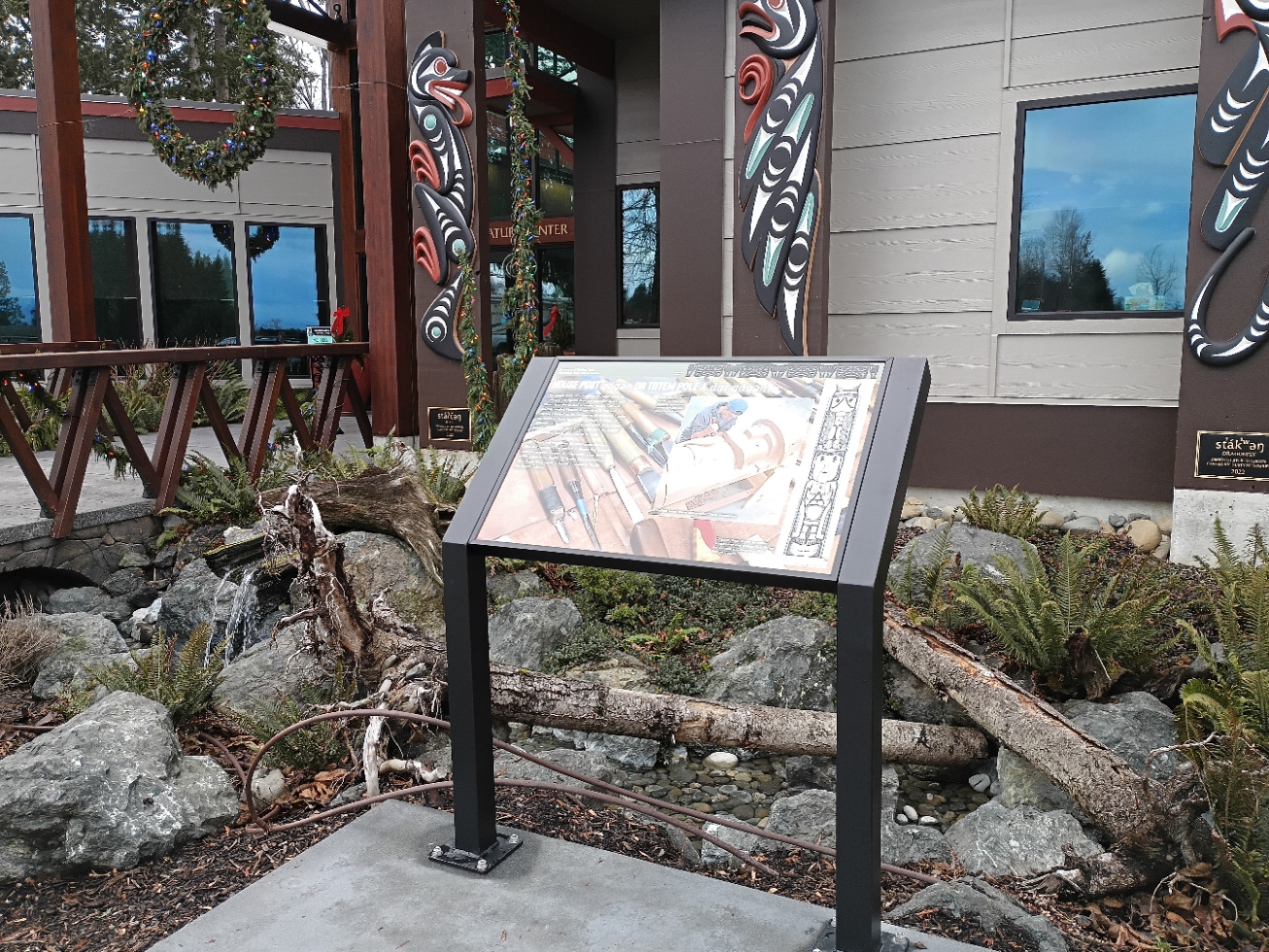
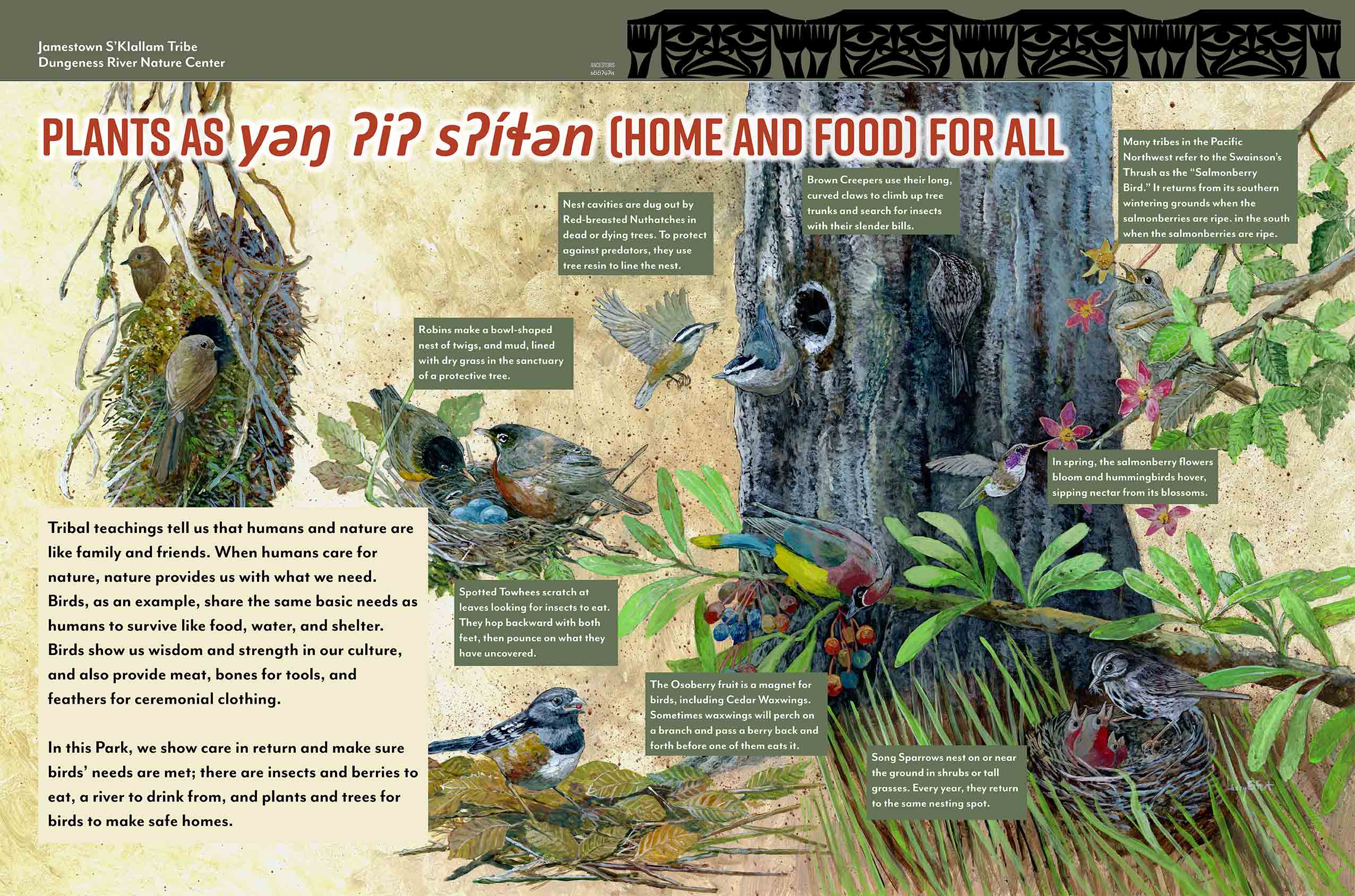
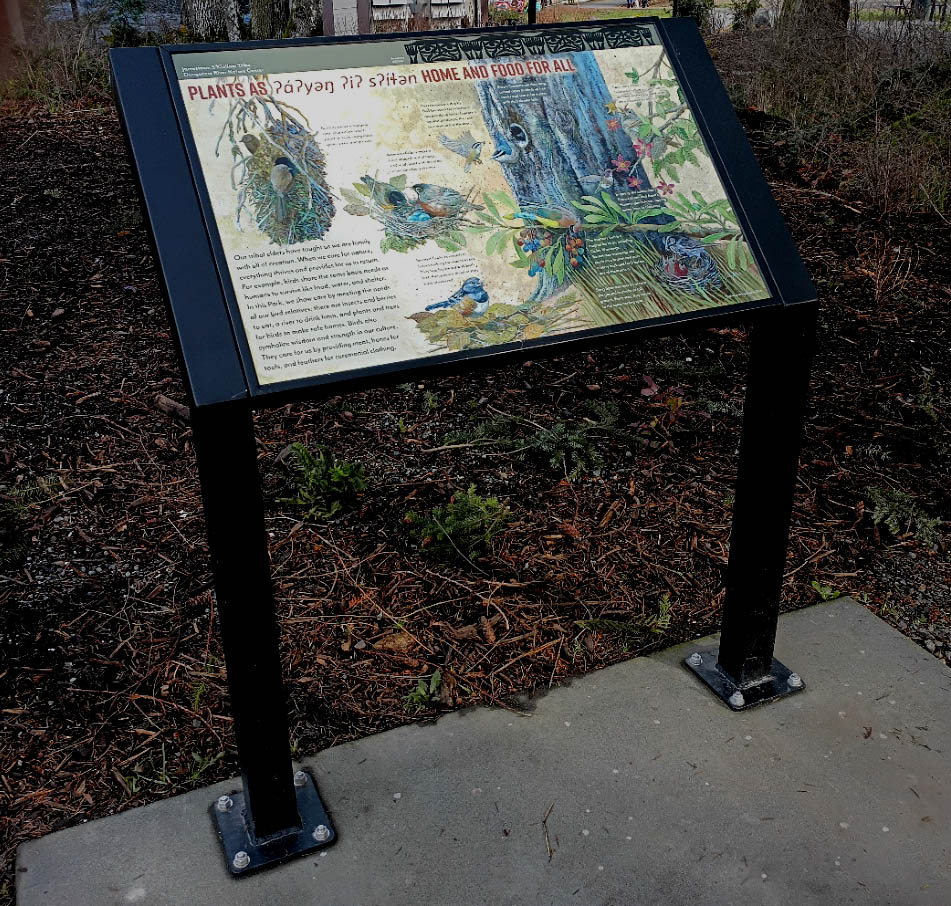
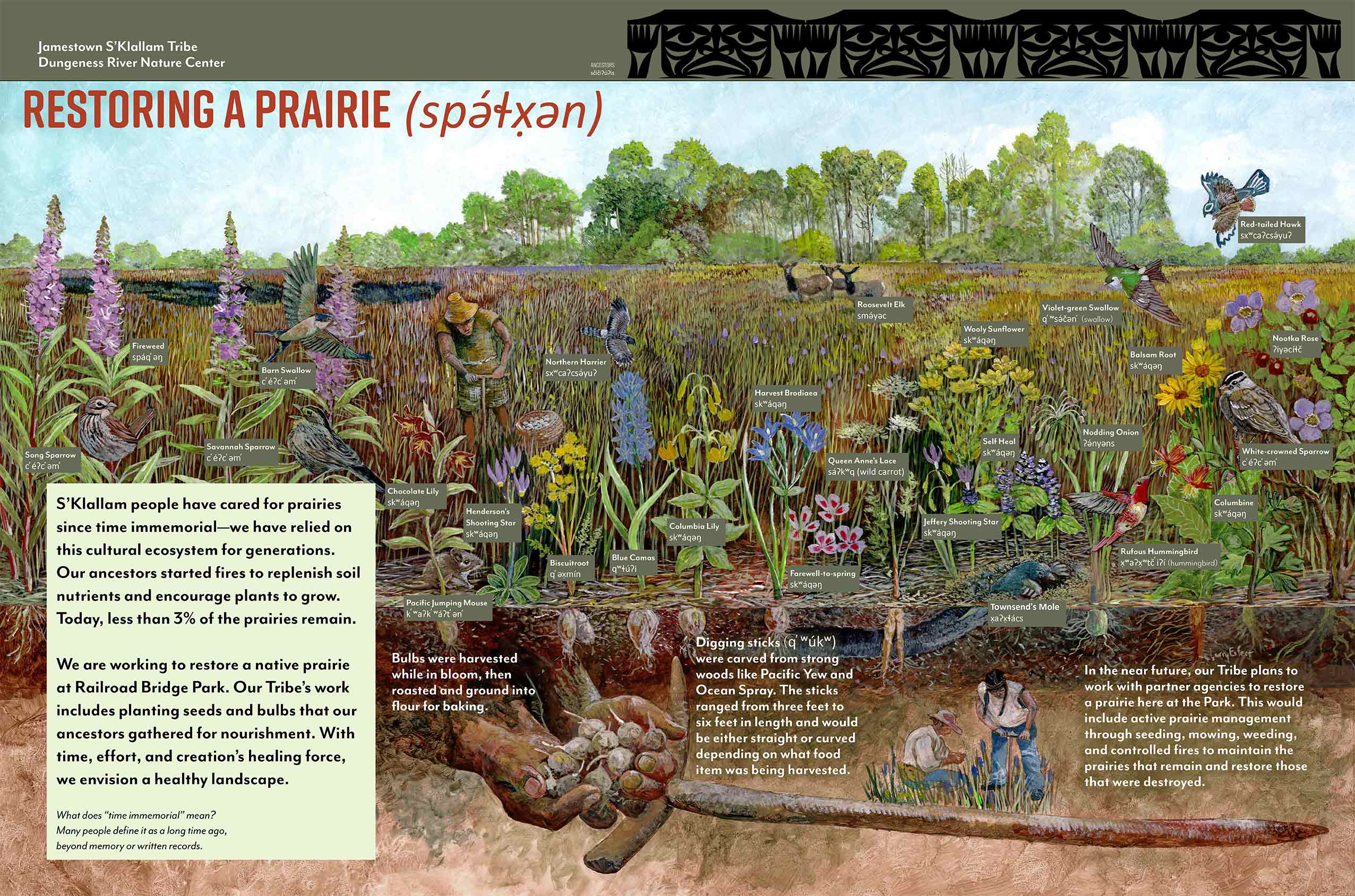
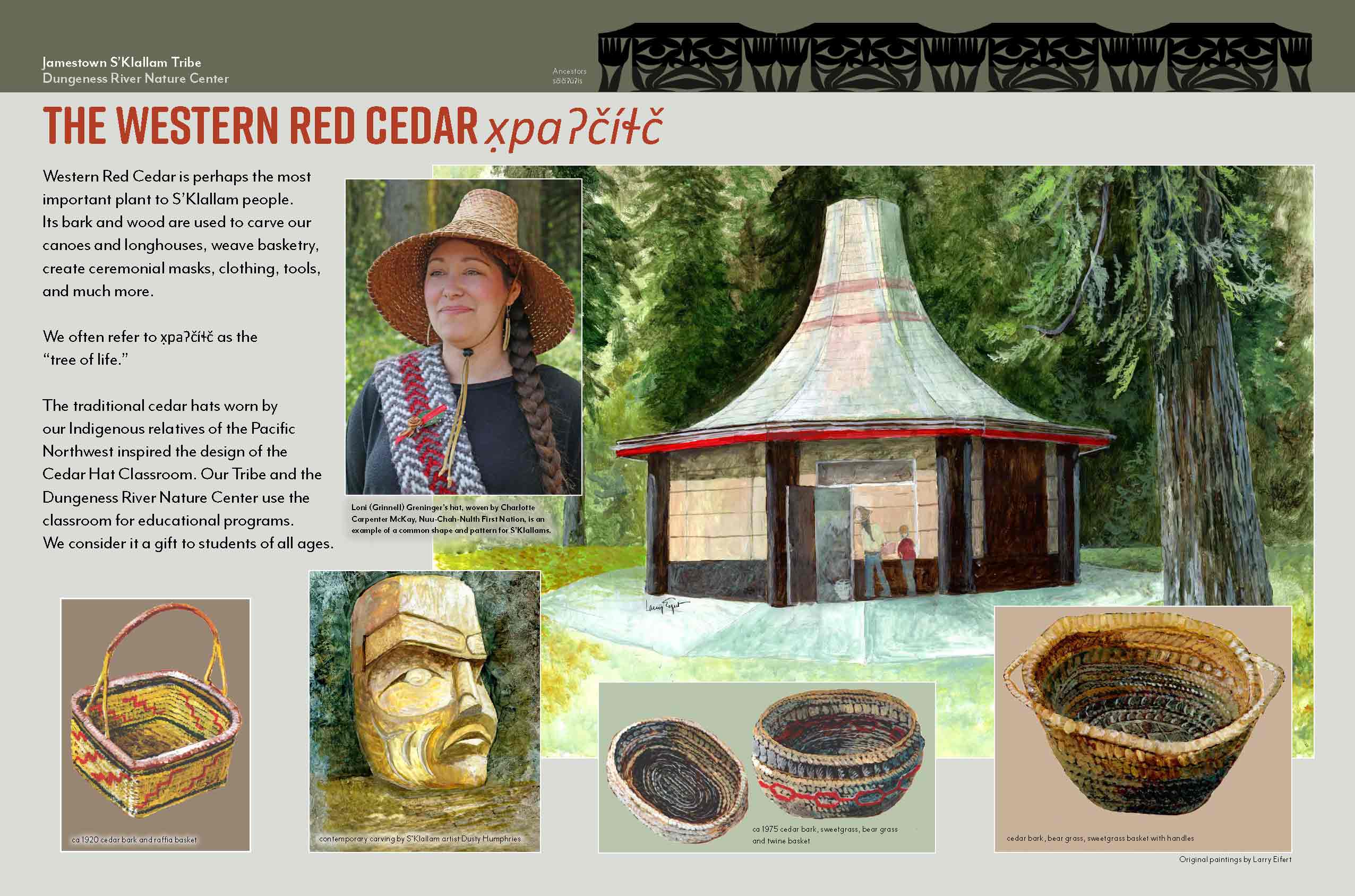
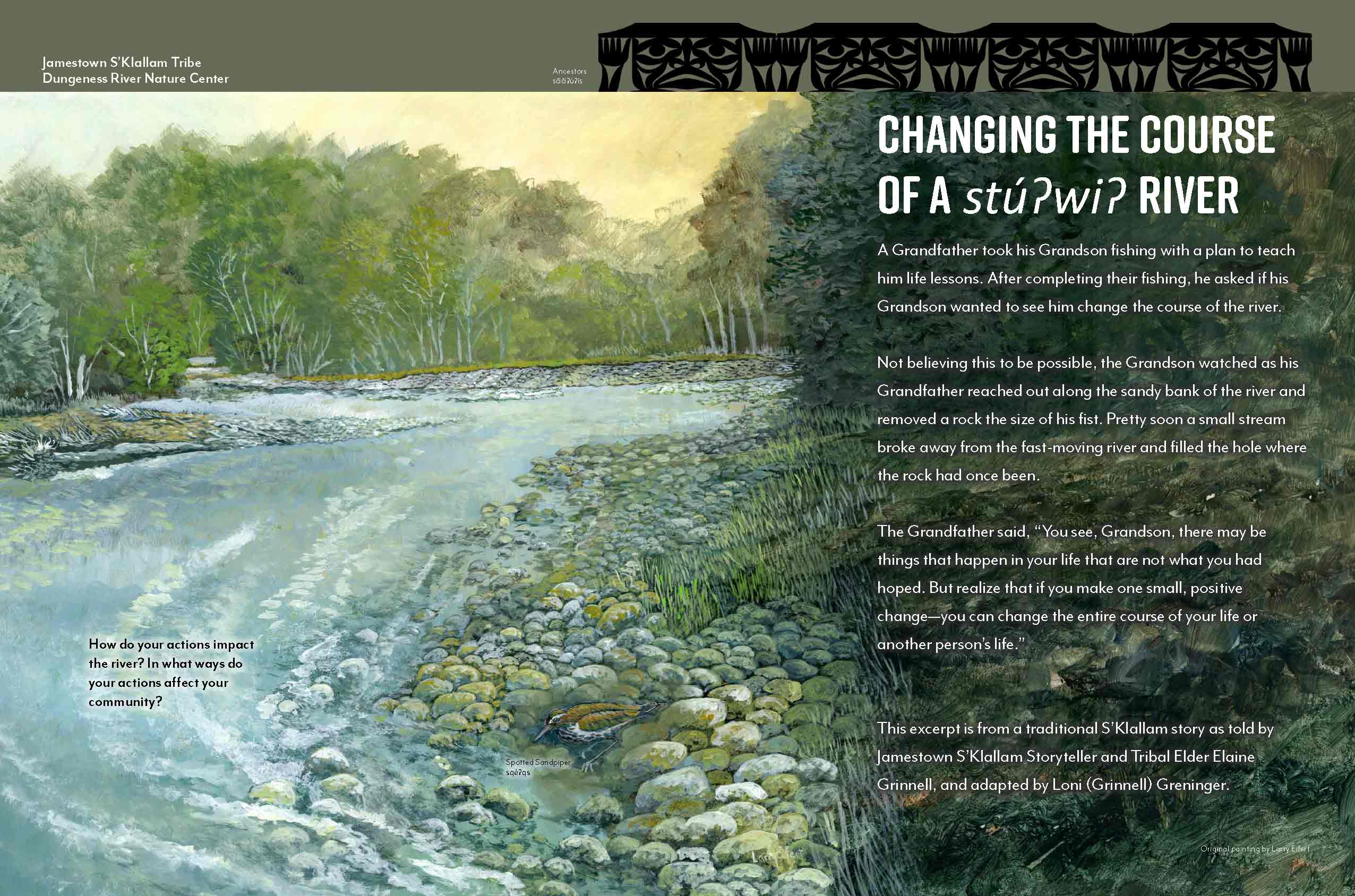
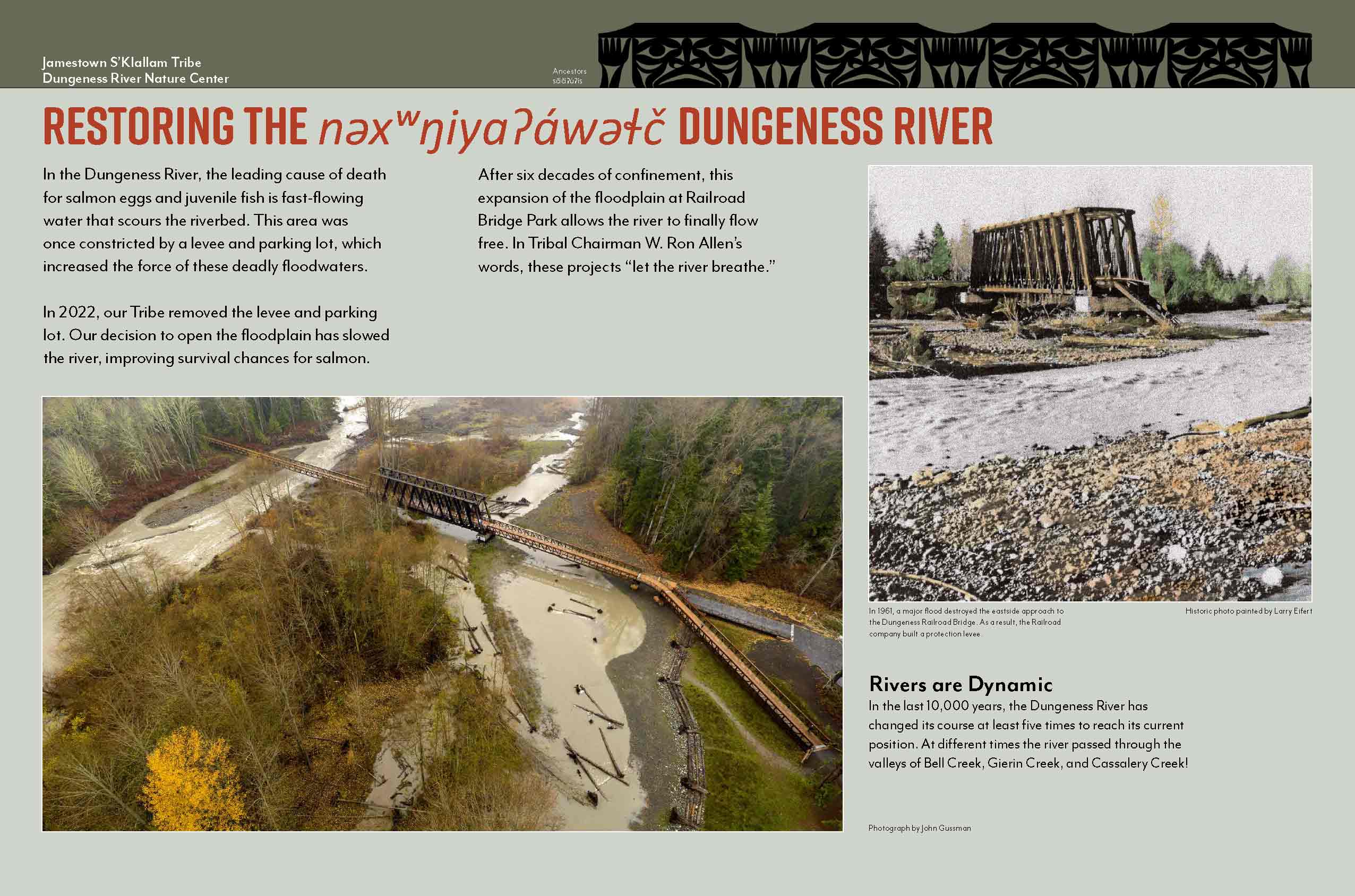
Dungeness River Center – Sequim WA

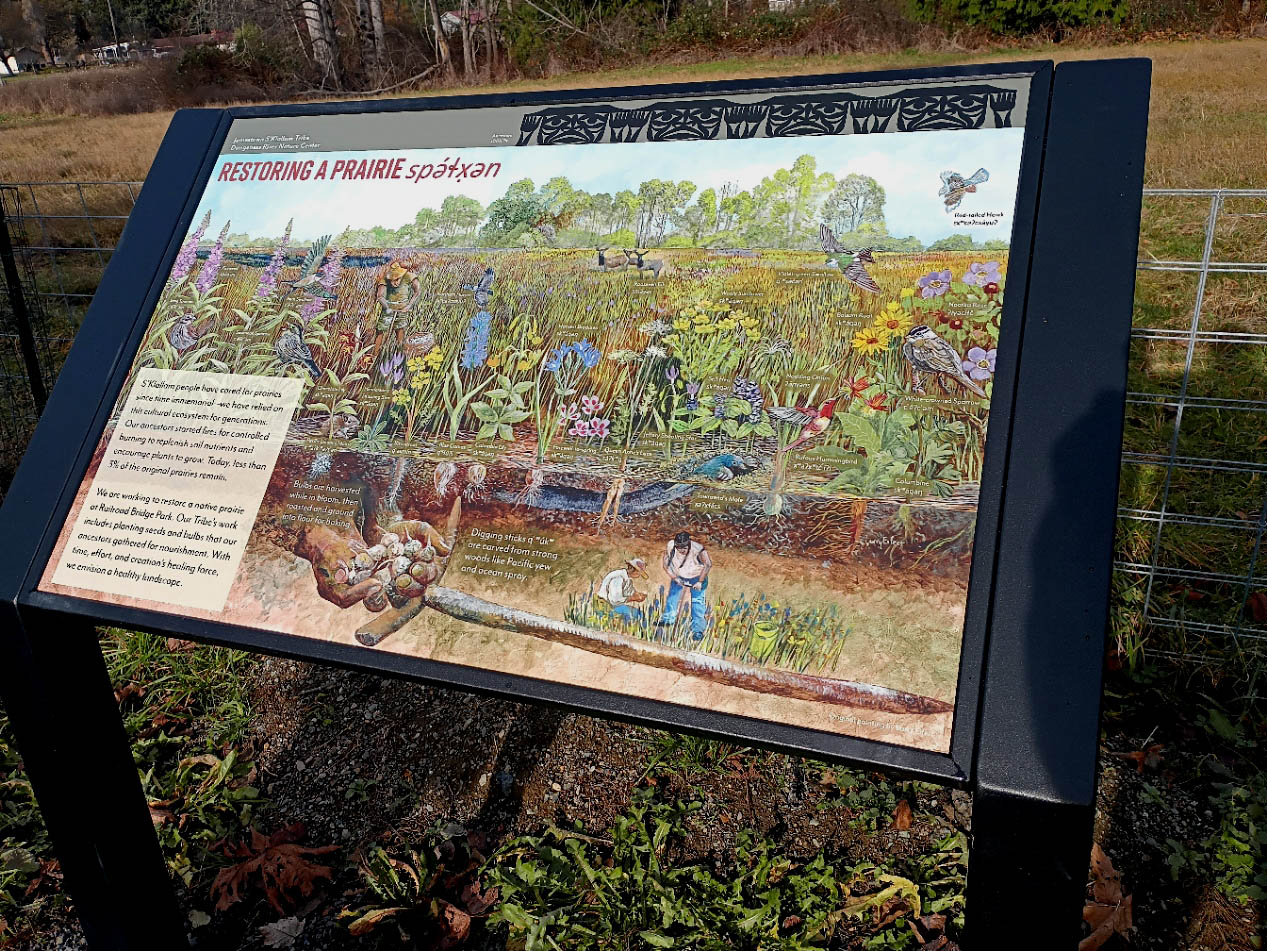
In 2024, I was commissioned by the Jamestown S’Klallam Tribe in Sequim, Wa to make a series of wayside panels for the Dungeness River Center. This is an interpretive center, exhibits and classrooms, for the wild and free Dungeness, one of the steepest watersheds in the country. The project went on half a year, but I never posted a word about it here. Too many other paintings to talk about, I guess – not to mention finding the time to even sit down to post them.

The Tribe asked me to make these outside panels so when the visitor center is closed, visitors still have a visual learning experience. The panels are around the building, but also along the Olympic Discovery Trail that passes nearby. This trail is also part of the Pacific Northwest National Scenic Trail from Glacier National Park to La Push WA on the Pacific Ocean.

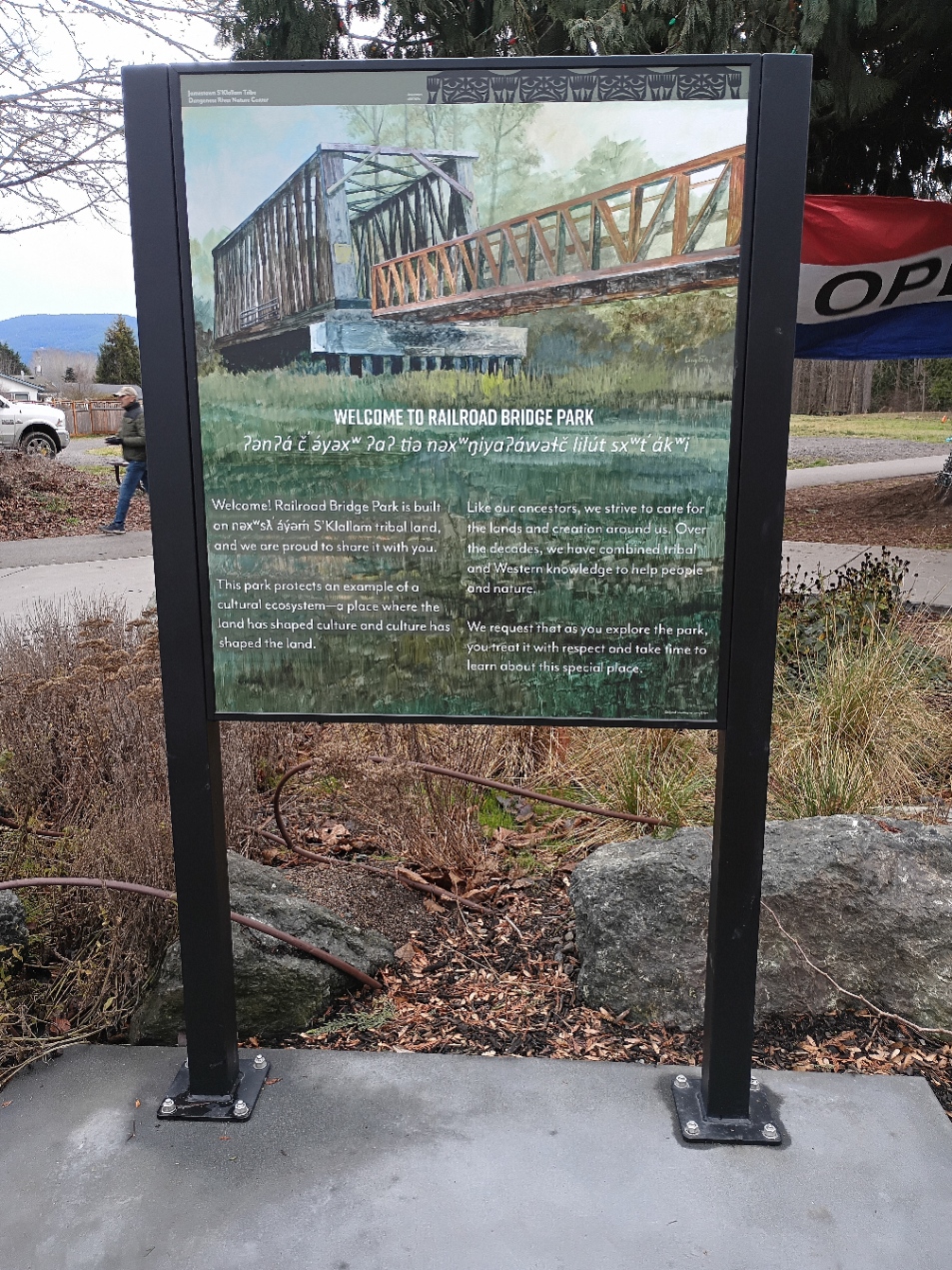
I’m happy with the results. This place is centered around an old railroad bridge (Railroad Bridge Park) and the Tribe bought it, gaining back a bit of their original land they had for thousands of years. In the process, we got to know a rather amazing group of S’Klallam people – and learned a lot doing it. We both felt privileged to be involved.

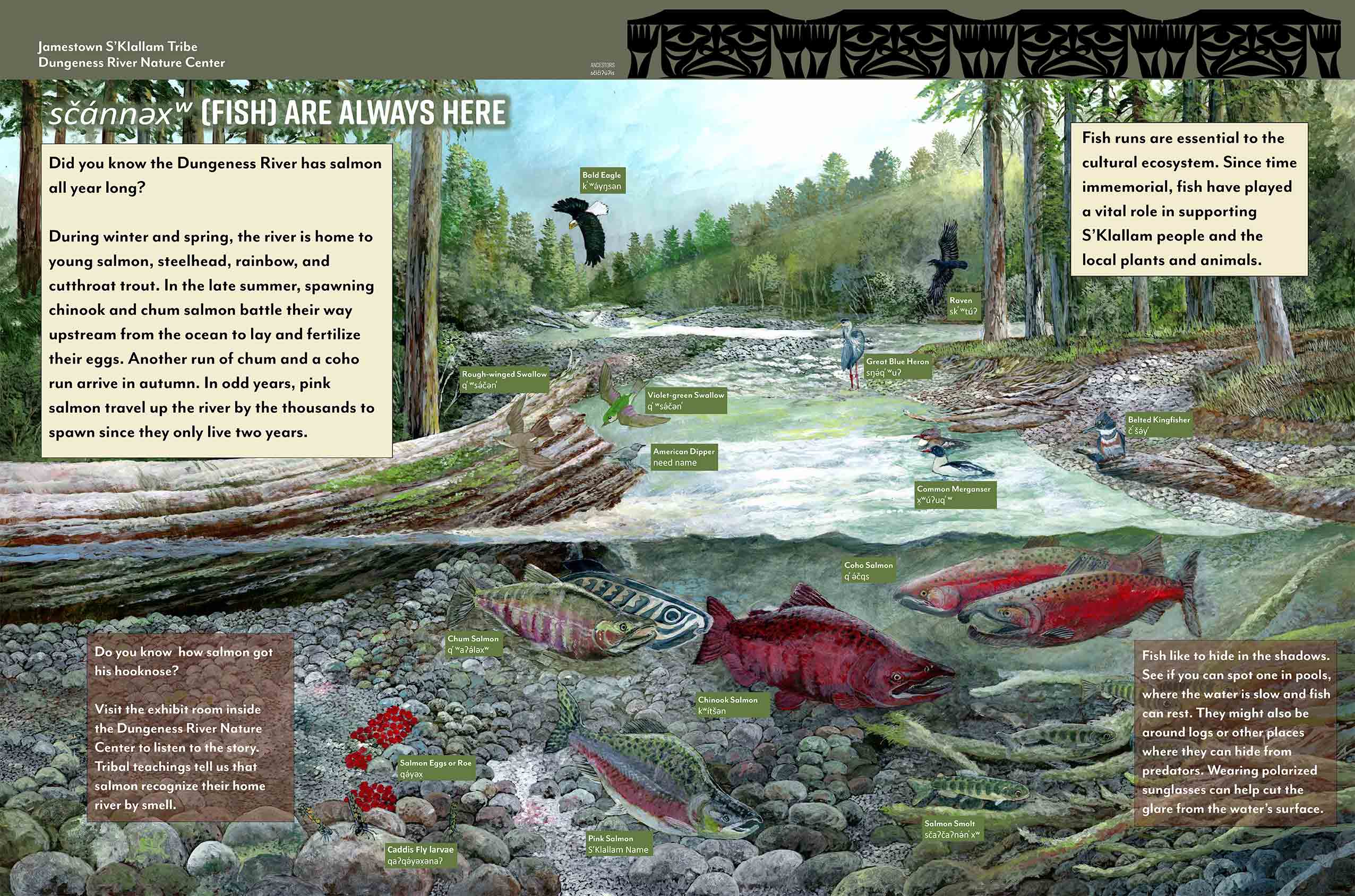
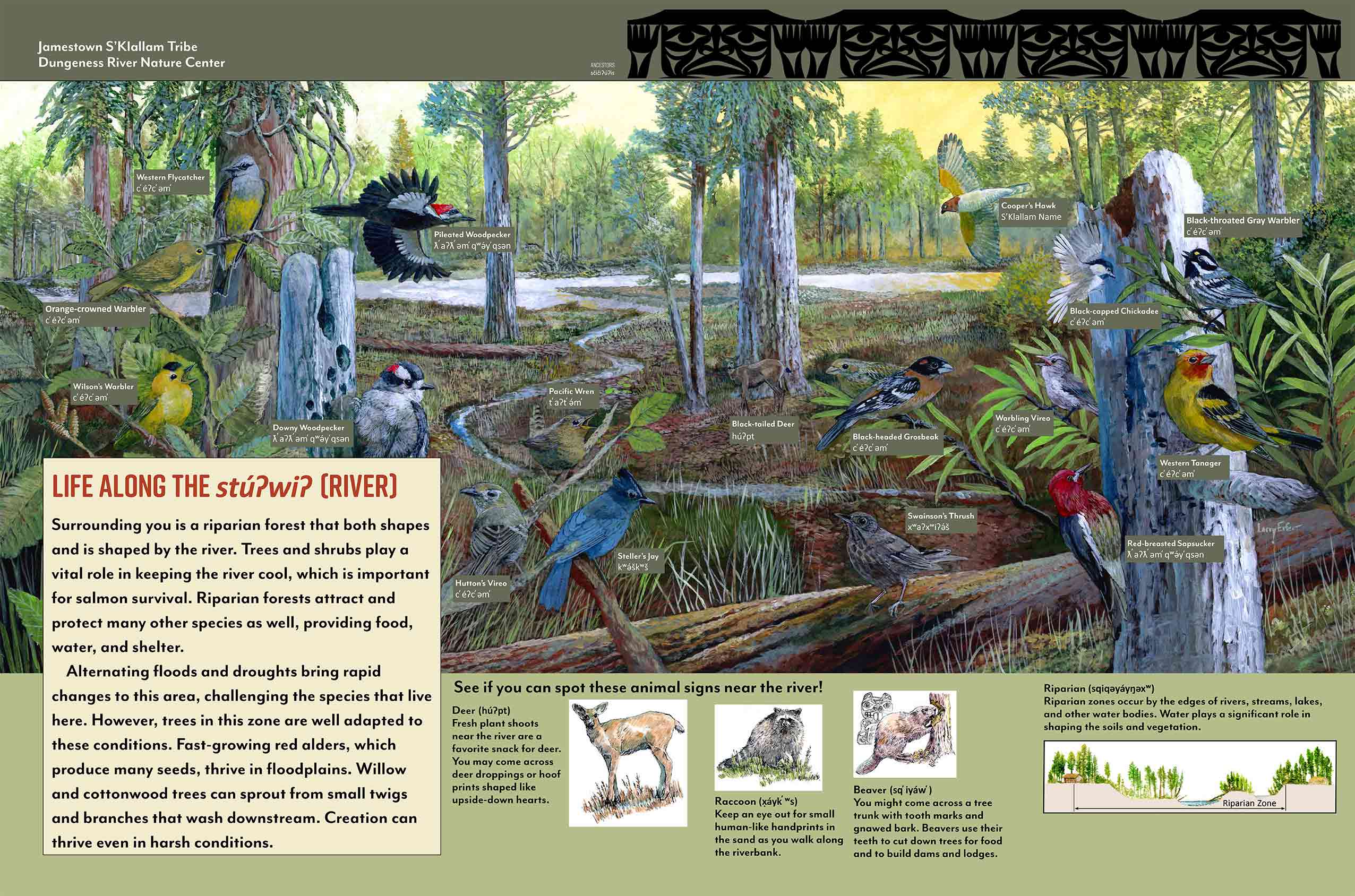
You’ll see both English and S’Klallam languages on these. The Tribe has programs in the local schools teaching this ancient language, and we tried to blend the languages, especially on the species captions. I think it worked pretty well, although it was a real challenge to figure out a font that has all the characters. Try finding a ADA compliant font with a backwards question mark, or a word that means Belted Kingfisher!

There’s a lot more than just painting that goes into this stuff. I don’t do it all, but from the ground up there’s the concrete pad, an ADA-approved installation of the legs and frame that will last 30 years, the aluminum panel the image is etched on is made only in South Dakota. The entire Adobe Suite of software (usually 4 programs that I use to design it) makes it print-ready. Then a committee has to approve what is written and painted so that it’s an accurate story. The art seems a secondary bit of this, but it takes the most time, and without good art, what is this but a book-on-a-stick!

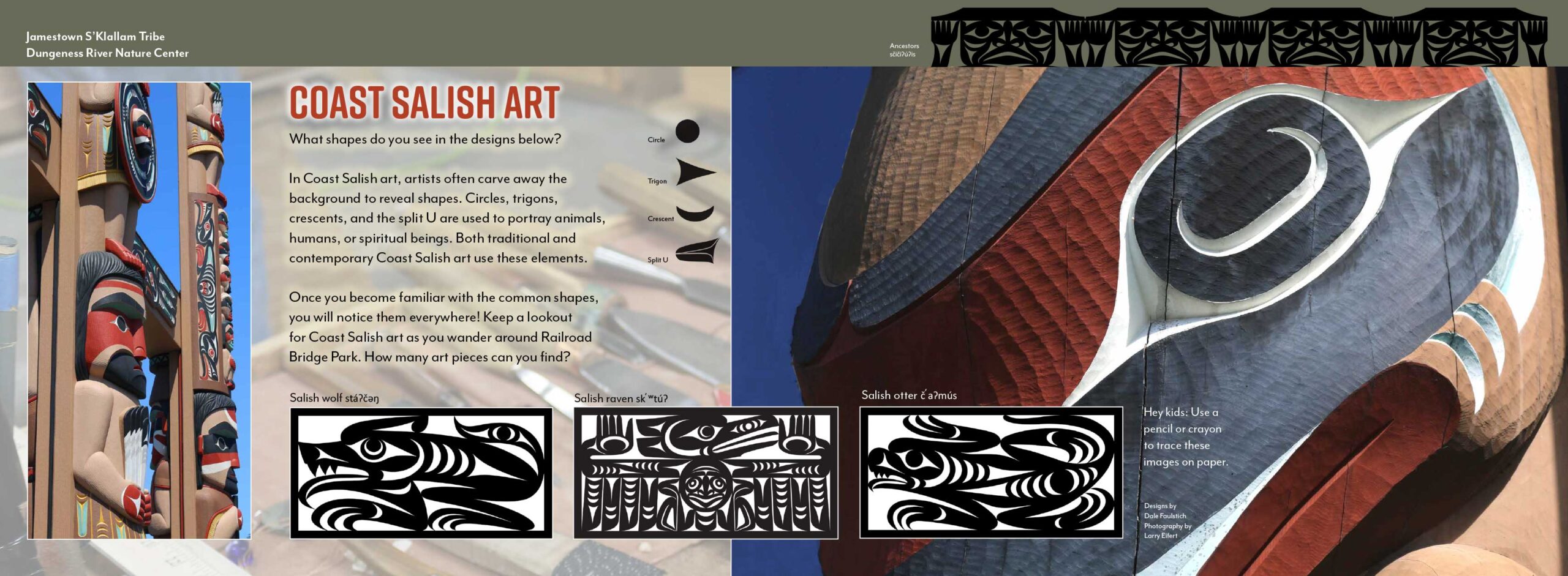
We tried something new on this panel (above), making the three insets from laser-cut plastic that can be traced with pencil or crayon. School groups can trace the image onto paper to take with them – sort of a hands-on approach to a visual object.

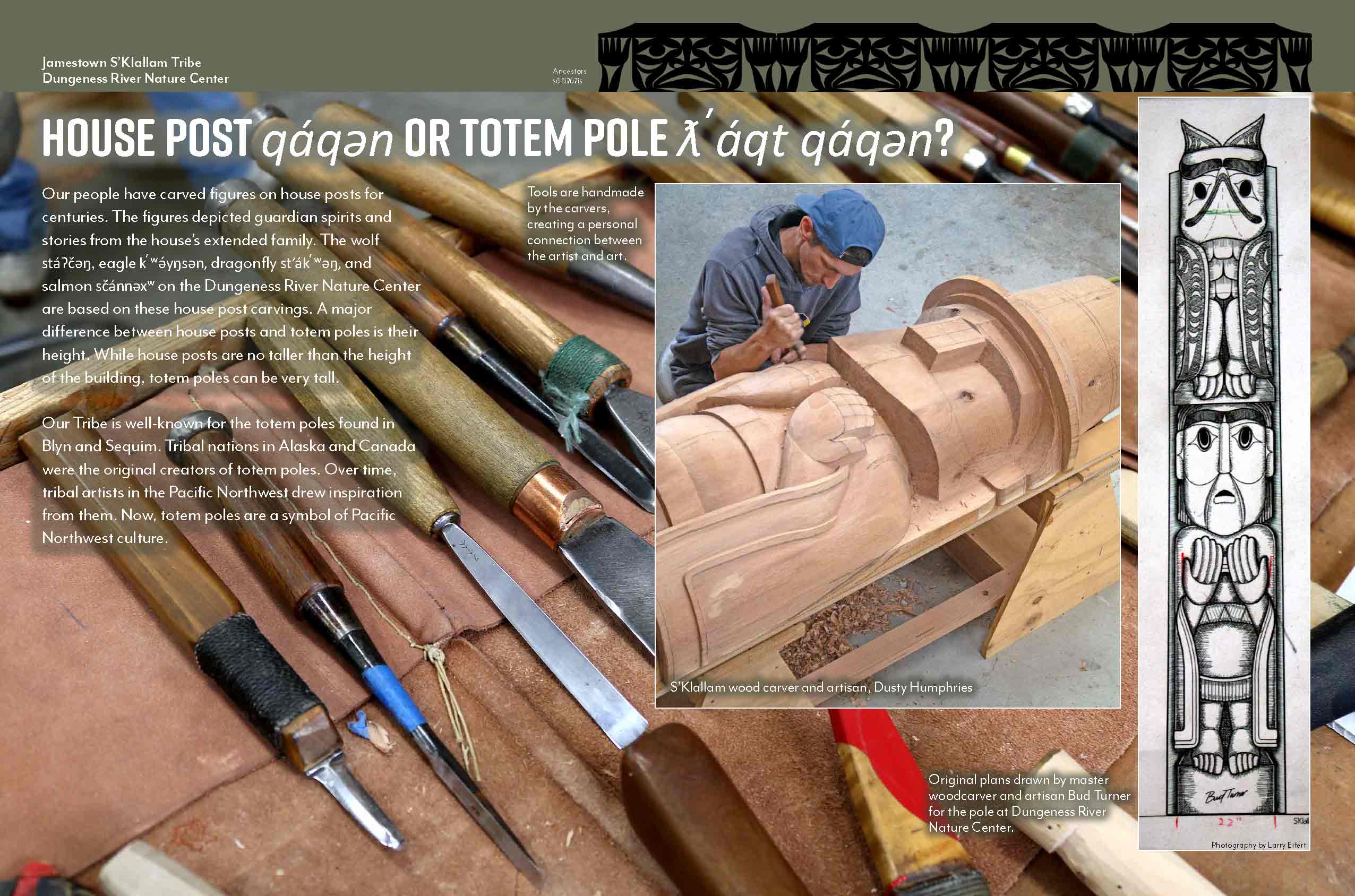
Dusty Humphries, an artisan at the Tribal carving shed (actually a huge new building, not a shed) allowed me in to photograph his work. A truely amazing place.

Lori Grinnell Greninger seemed to be all over this project, giving us help in many ways – and not just modeling her hat – which the building was modeled after.

This last panel has the only image not of my own art or photography. Thanks to John Gussman for the drone image. Also a great thanks to Kathy Steichen for recommending me to the Tribe for this project in the first place. After a lifetime of painting, these new challenges keep me young, and I’ve worked with Kathy on many projects now.

Thanks for reading this week. You can sign up for emails for these posts on my website at larryeifert.com.

Larry Eifert

Here is my Etsy site with my currently available paintings for easy sale.

Here’s my Facebook fan page. I post lots of other stuff there.

And Instagram is here.

Click here to go to our main website.

Nancy’s web portfolio of stunning photography and paintings.

And here to go to Virginia Eifert’s website.

Or Crater Lake Institute’s website which I also build – viewership of several million a month!
Little Oil Paintings – Volume 1

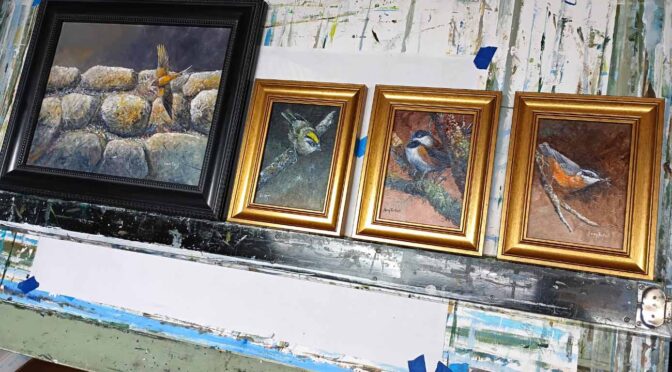
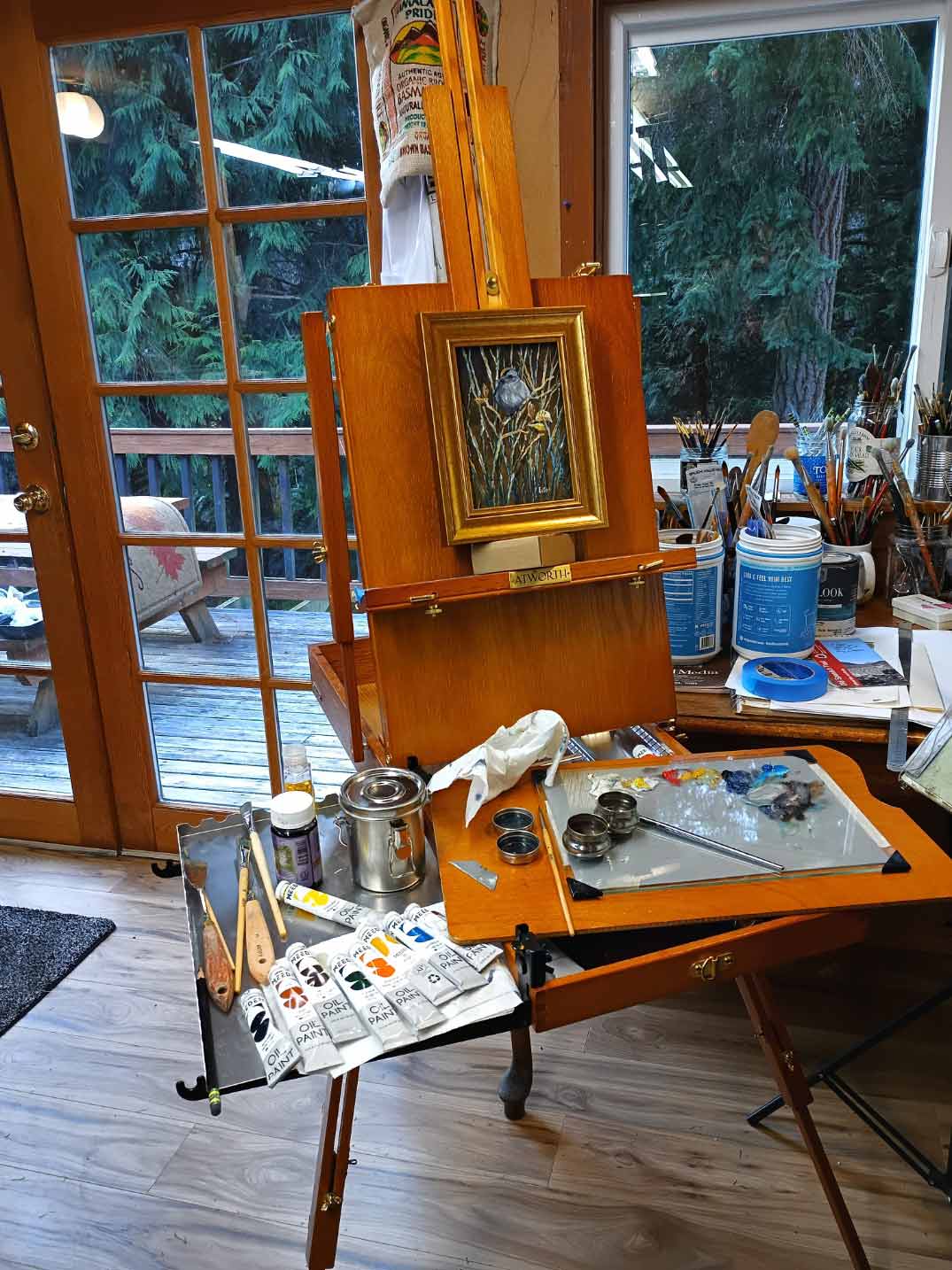
After a very long time, I recently circled back around to painting with oils. Here are some that are currently available. I started with this medium a half a century ago, and I just thought it was time to get back to it. There’s a color glow with oils that acrylic can’t get, at least I don’t think so.

I’m still making paintings in acrylic and watercolor, still have a bunch of new projects scheduled for parks (Hawaii Volcanoes right now). But these little 5″ x 7″ paintings (that’s the canvas size) are using various fluid mediums as I’m trying to find my footing with this. For some, I used linseed oil, some with odorless turpentine or a mix of both, some with an addition of either cobalt drier or Liquin (a dryer). All are now far enough along to offer them here in a series of blog posts.

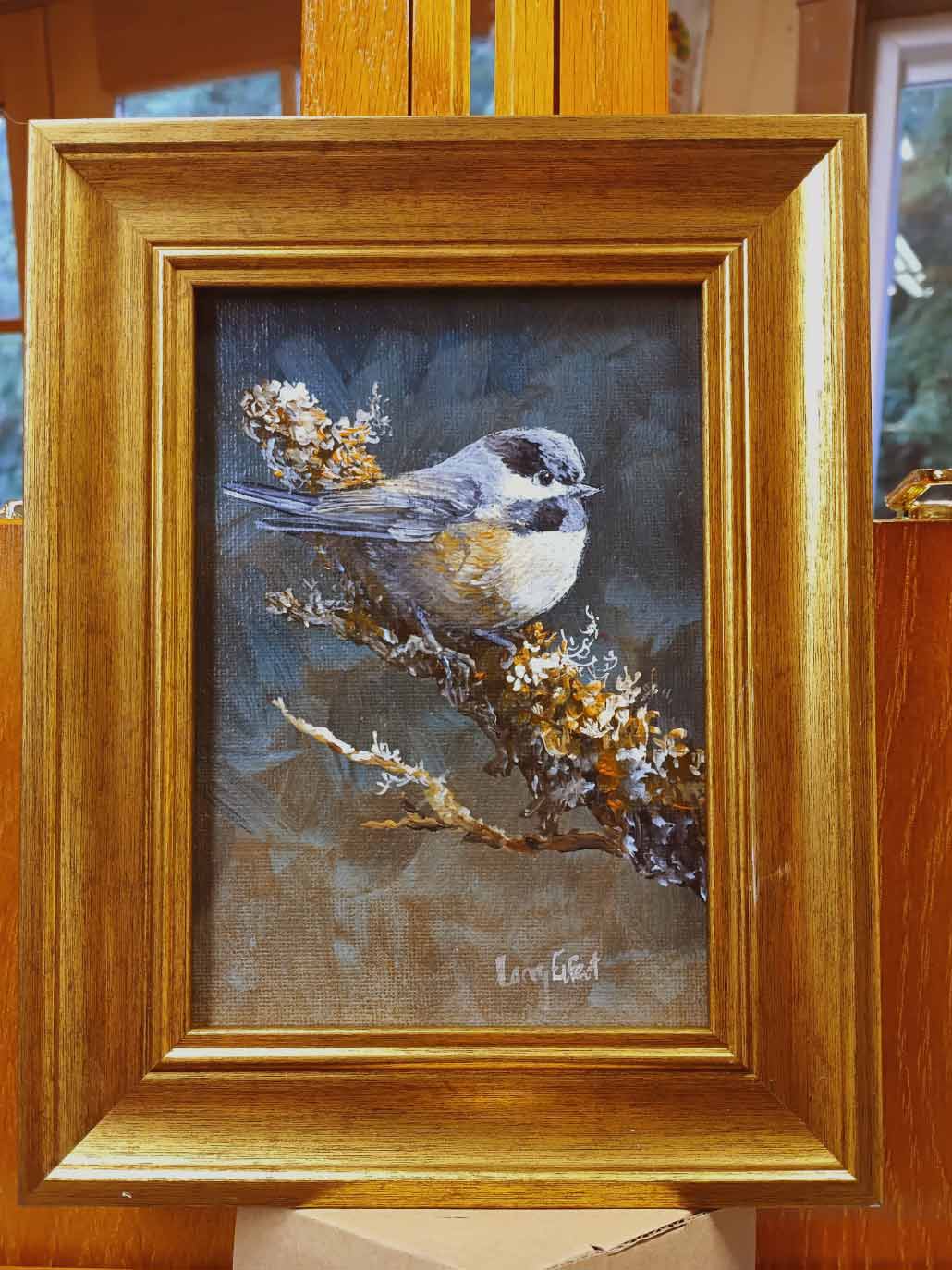
This one is a black-capped chickadee on a lichen-covered branch. SORRY, IT’S SOLD.
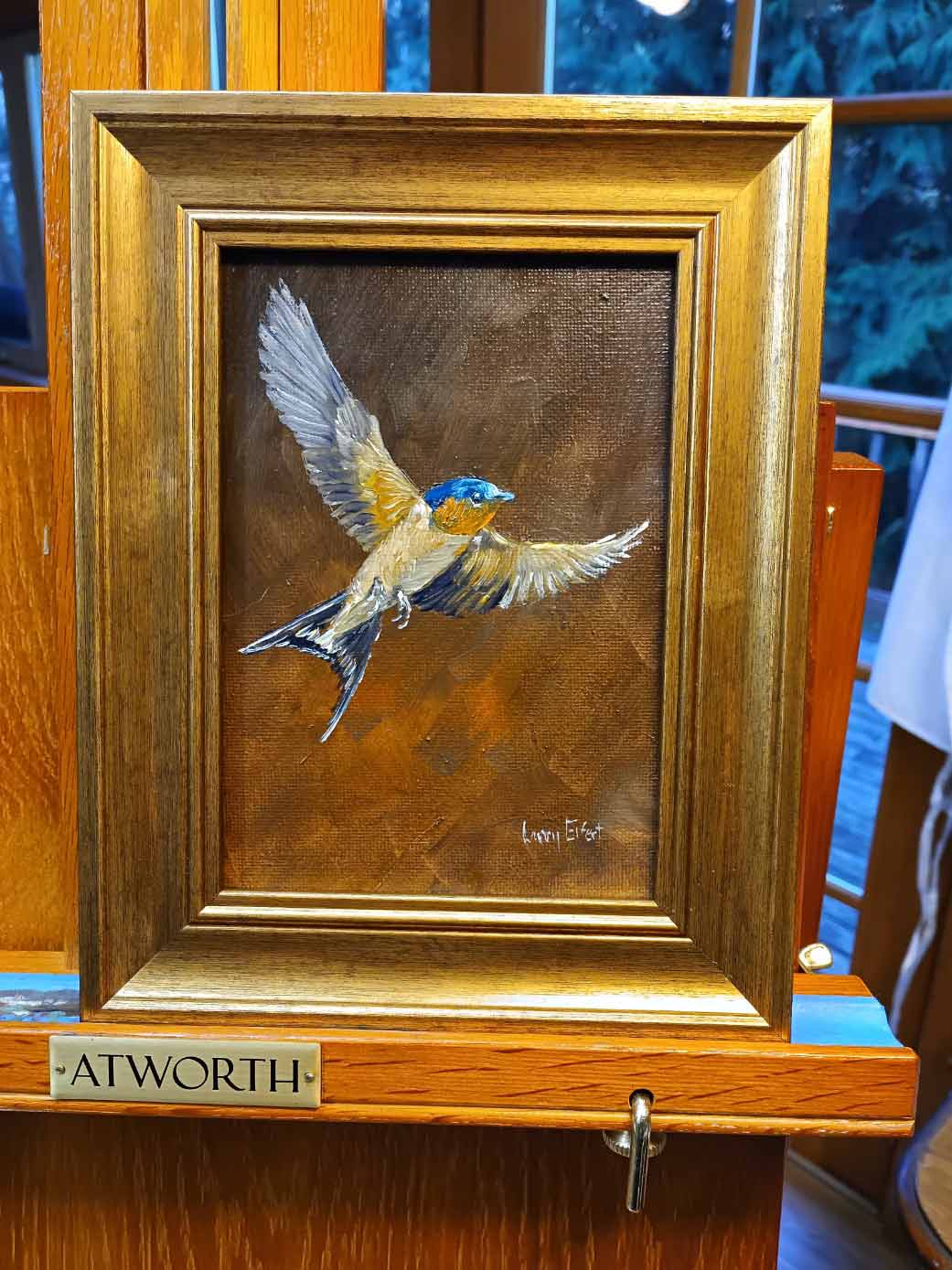
Barn swallow in flight, as I worked out painting wet on wet.
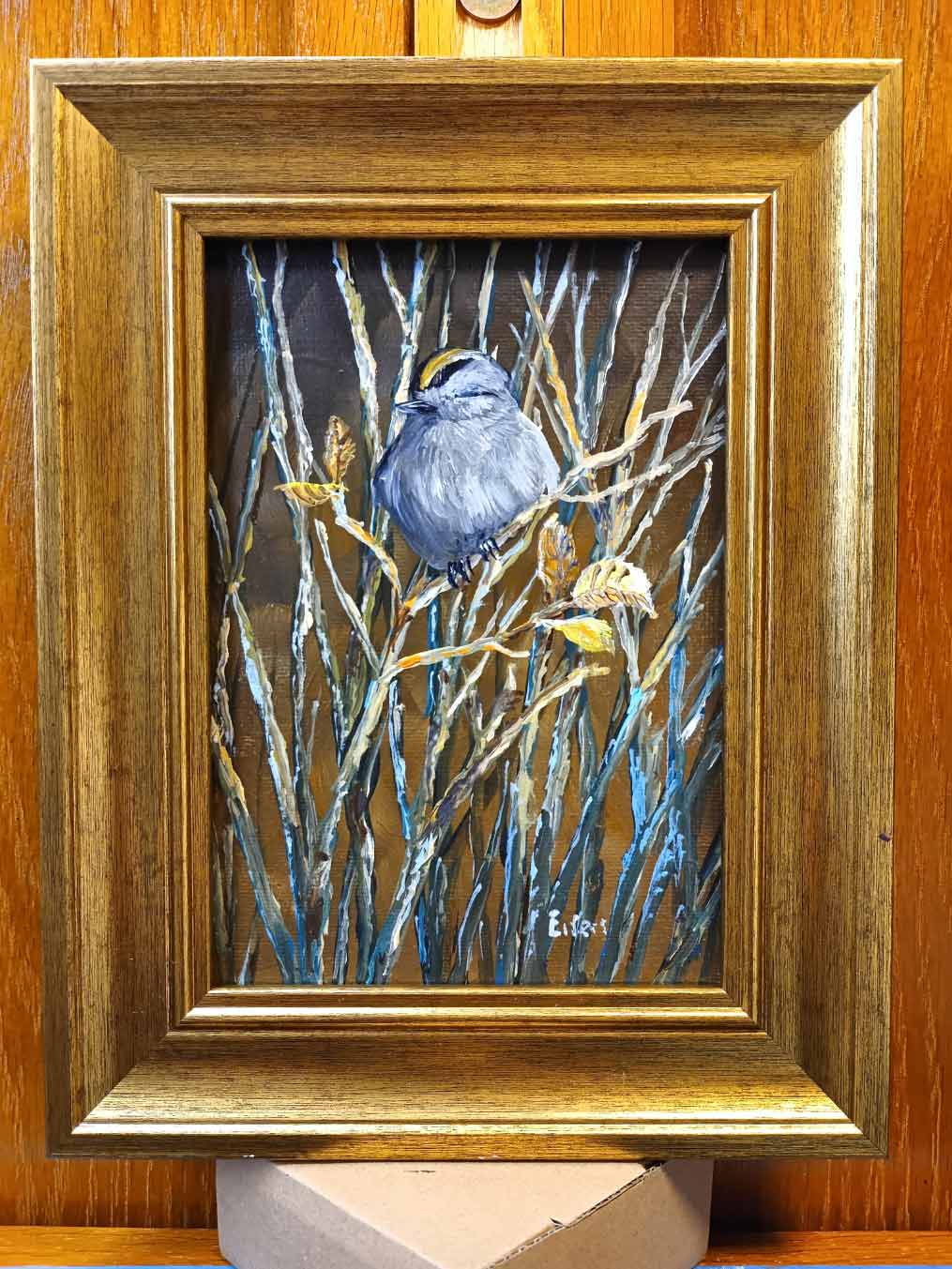
Golden-crowned kinglet from our little forest here, taking a winter nap in the leafless branches of a willow. SORRY, IT’S SOLD.

These are small enough to ship inexpensively, so we’re offering them for $95 framed – plus a bit of USPS postage. Email me at larryeifert@gmail.com if you’re interested. Or if you’d like to see some of the others.

It’s been a few months since I posted my recent paintings here. Some of my subscribers have written asking what’s happened, but it hasn’t been for lack of work to show – I’ve been busy. In fact, it’s been on of the busiest years in decades for both of us. I’ve decided that’s really no good excuse, so expect to see more soon.

Thanks for reading this week.

Larry Eifert

Here’s my Facebook fan page. I post lots of other stuff there.

Click here to go to our main website – with jigsaw puzzles, prints, interpretive portfolios and lots of other stuff.

Nancy’s web portfolio of stunning photography and paintings

And here to go to Virginia Eifert’s website.

MacKay Landing – Lopez Island

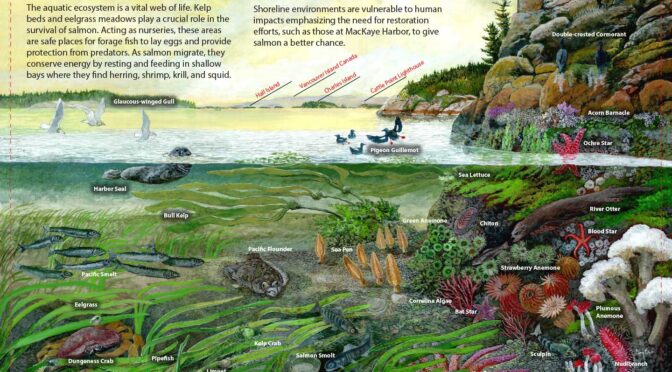
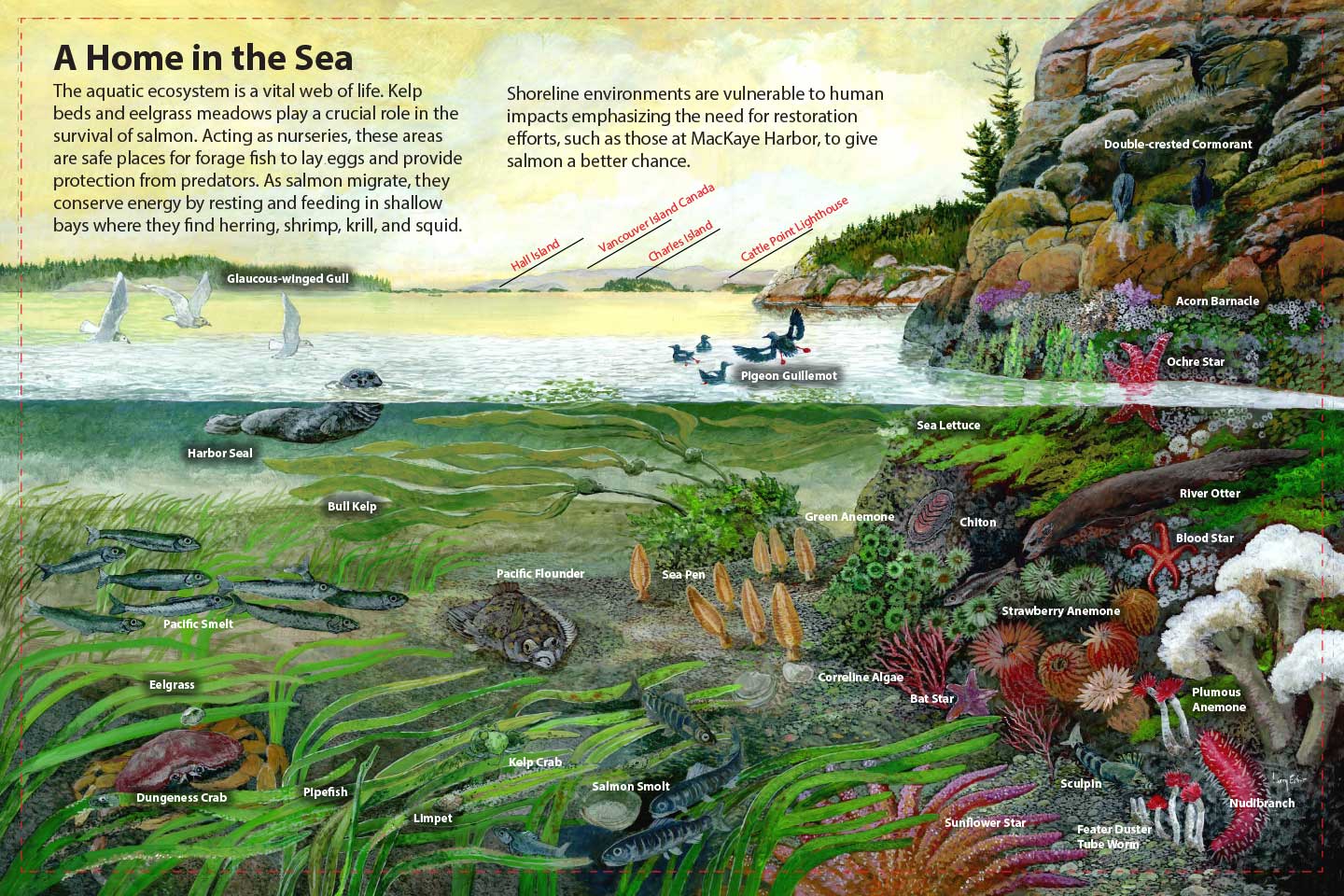
This is one of three paintings for MacKaye Landing on Lopez Island – in the San Juan Islands of Washington State. It’s another restoration project to enhance altered shorelines and make them healthier for forage fish, salmon’s main food source. I THINK, these three a total of 38 waysides in the San Juan Islands, a place I called a summer home in the 1980’s, so they all have good meaning for me.

They were commissioned by the County, another project like the Orcas Landing panels a few years ago. Katie and Frankie wrangled me into submission (in good ways) to produce these. I’ll show the others in the next post.

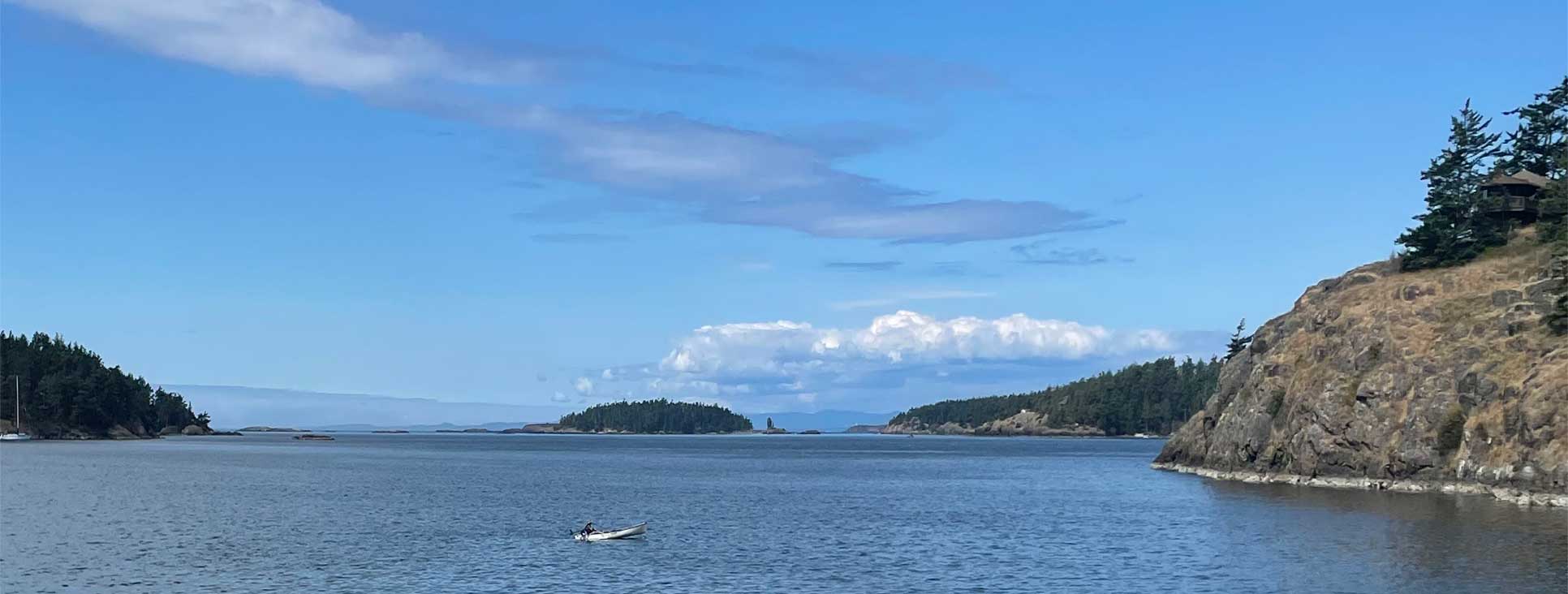
This photo below is from the boat ramp area where the panels will go, a peaceful and beautiful place, Canada’s Vancouver Island in the far distance, the Cattle Point Lighthouse just peeking out – where I have two murals (one is the 37′ Indian wall). This is a prime launch for kayakers and fishermen aiming for the archipelago of islands near Cattle Pass. A truly beautiful place.

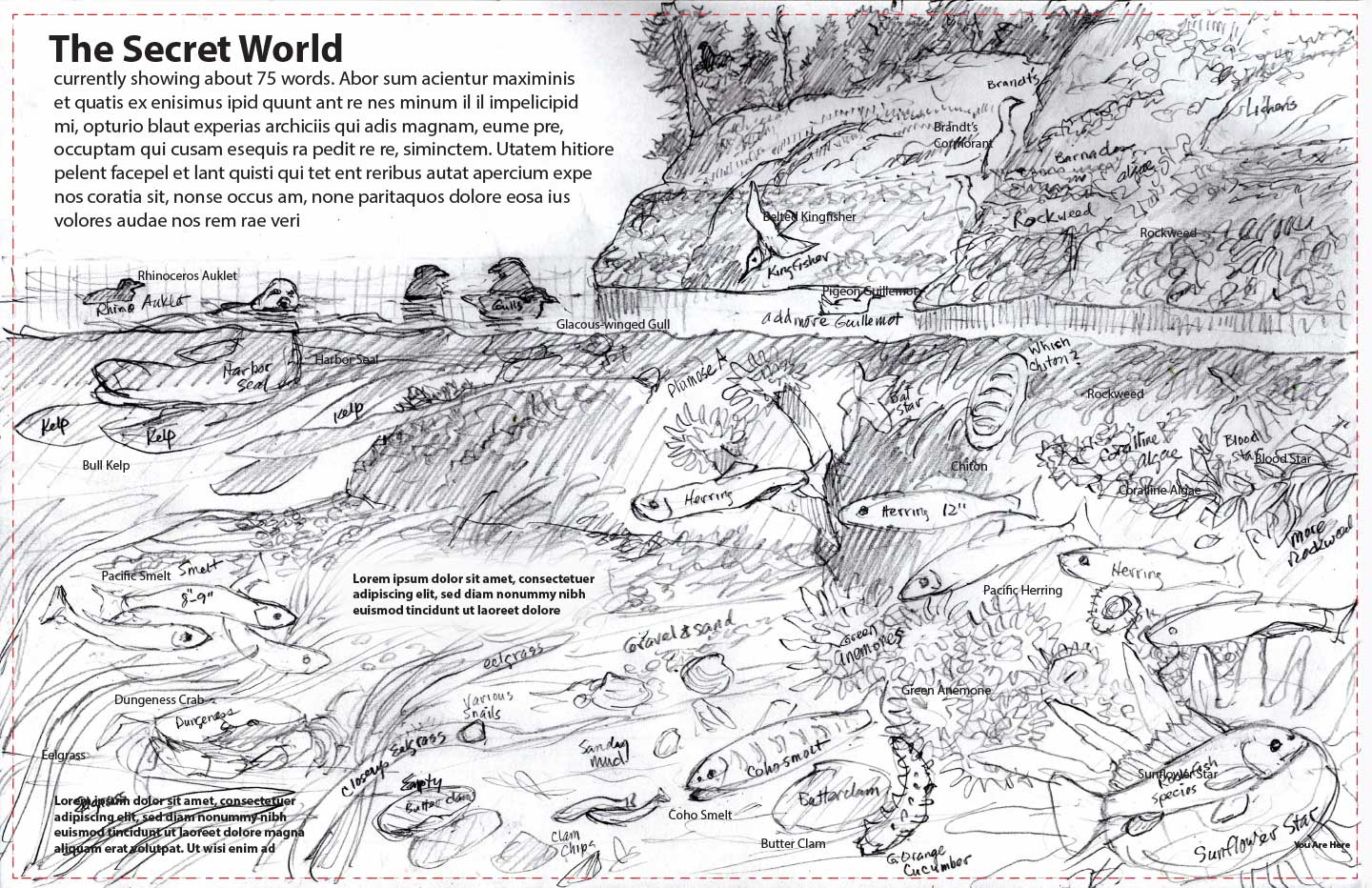
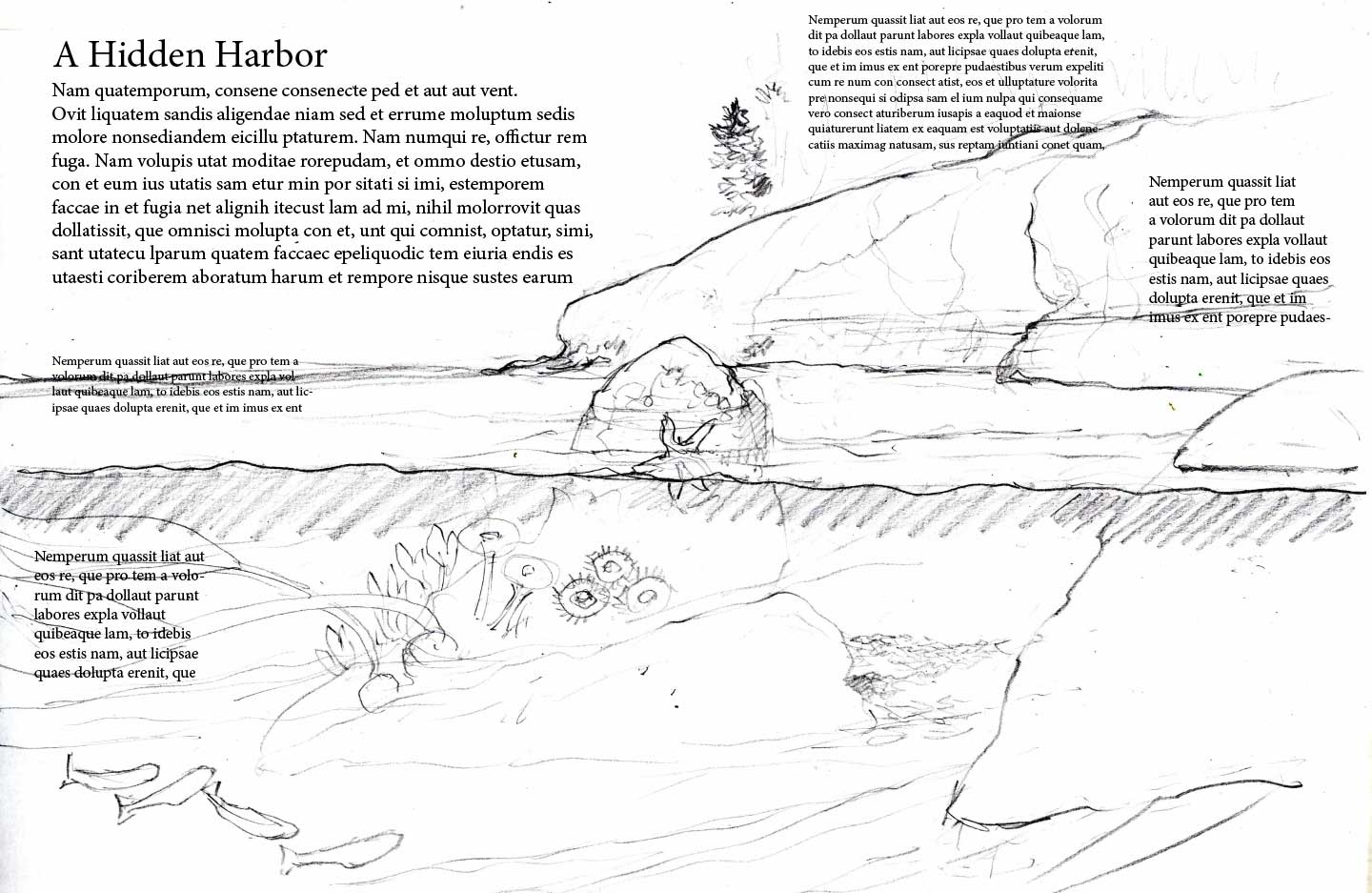
As I was deciding what this habitat panel would look like, I happened to view a YouTube video of two Canadians doing a kayak trip here, with lots of underwater photography showing the amazing variety of aquatic life along these south-facing rocks, which I love to paint – so it was easy to focus on that. Below is the concept sketch I made just after watching that video.

I anchored here several times in the 1980’s, and as I remember, it was a rolling anchorage with swells coming in at 90 degrees from the boat’s angle – not good for sleeping. And here I am, back with some art that will live here for decades – and be seen long after I’m gone – my favorite public art. For me, it’s a small world in hopefully a long life of art – and I’m just trying to remain relevant while I’m still here.

Thanks for reading this week. You can sign up for emails for these posts on my website at larryeifert.com.

Larry Eifert

Here is my Etsy site with my currently available paintings for easy sale.

Here’s my Facebook fan page. I post lots of other stuff there.

And Instagram is here.

Click here to go to our main website.

Nancy’s web portfolio of stunning photography and paintings.

And here to go to Virginia Eifert’s website.

Or Crater Lake Institute’s website which I also build – viewership of several million a month!
Hoypus Landing Wayside Panels

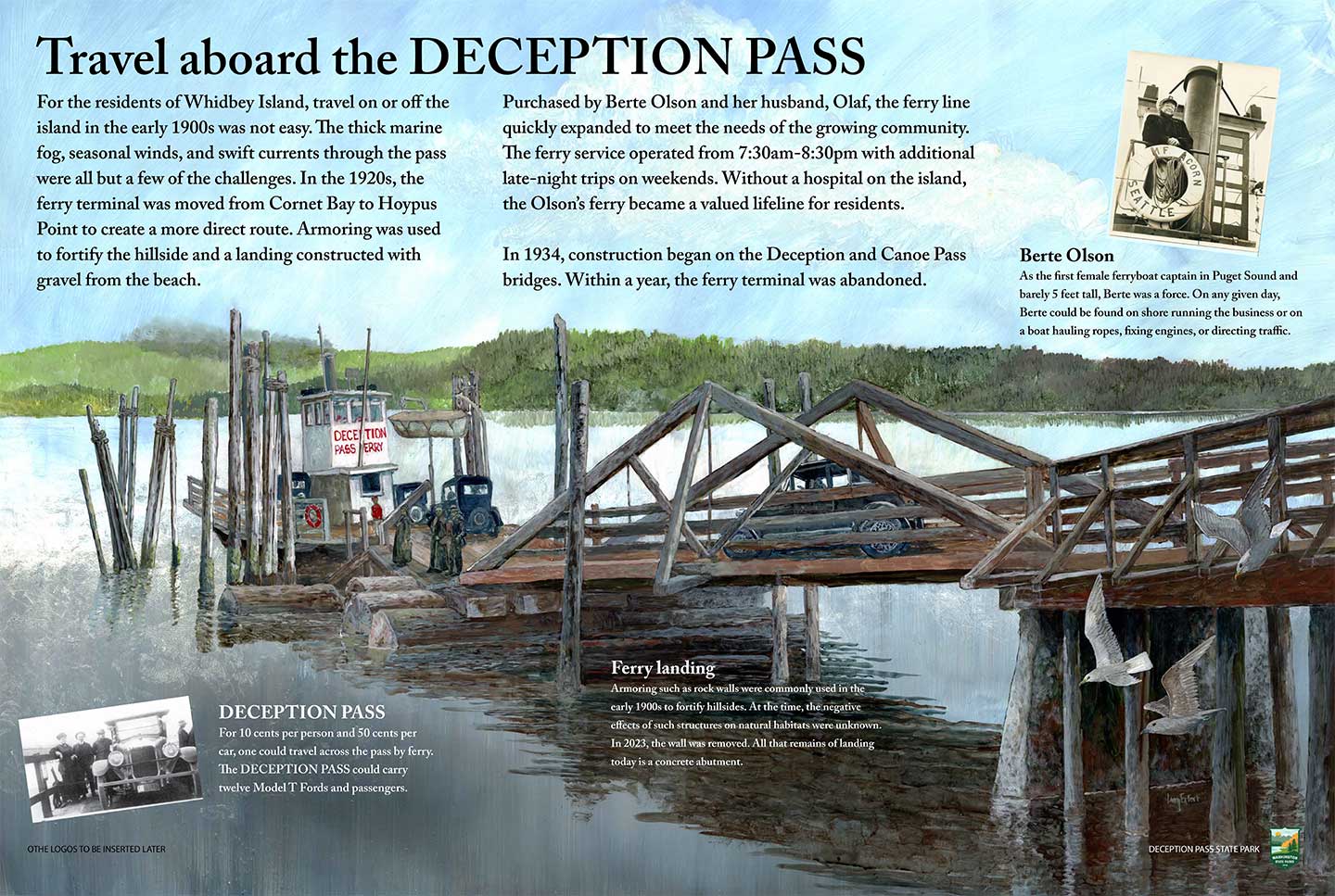
Recently finished some new art for wayside panels at Deception Pass State Park here in Washington State. I’ve lost count of the number of installations I have at this park, a dozen maybe, with a couple even having been washed out to sea in a storm last year.

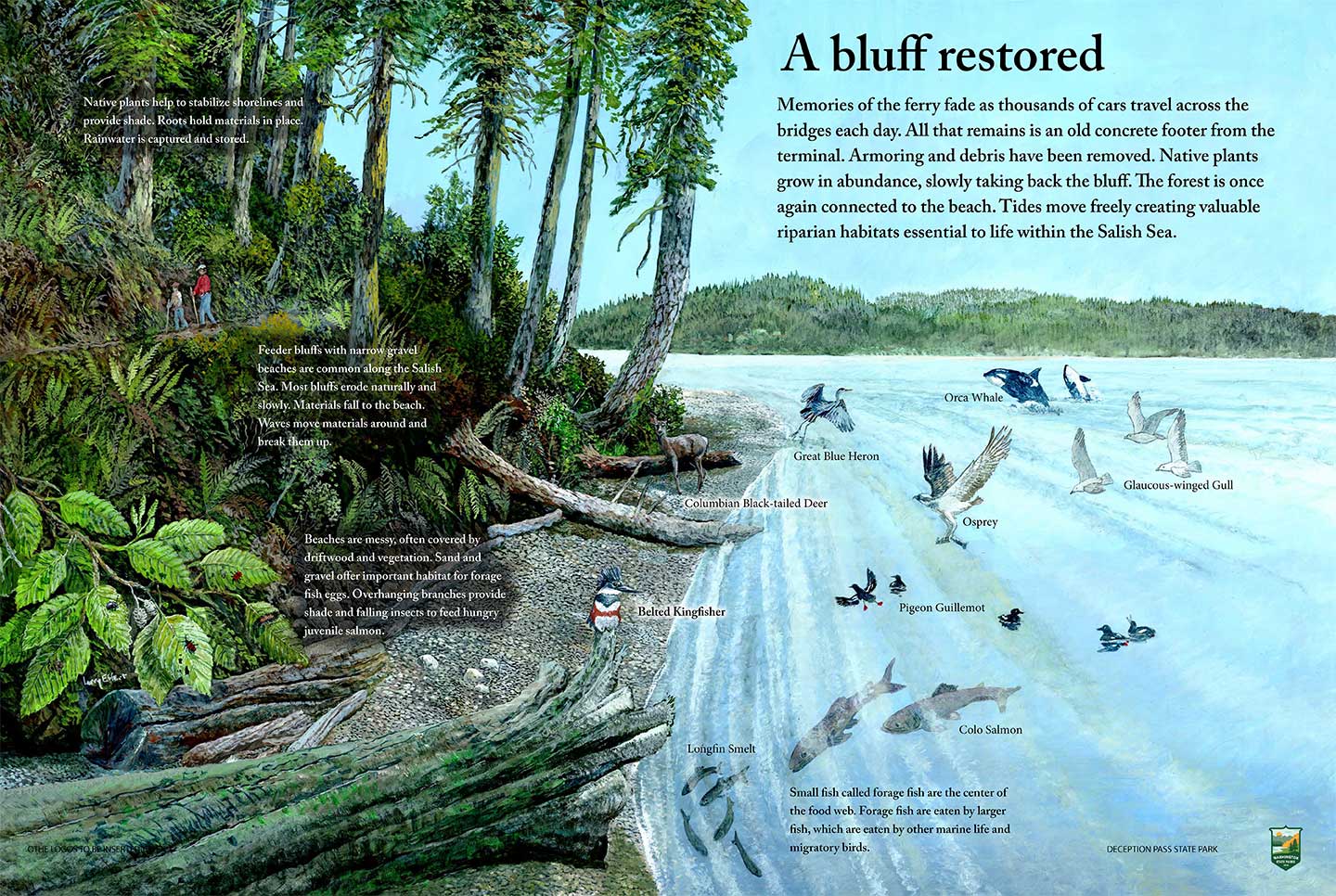
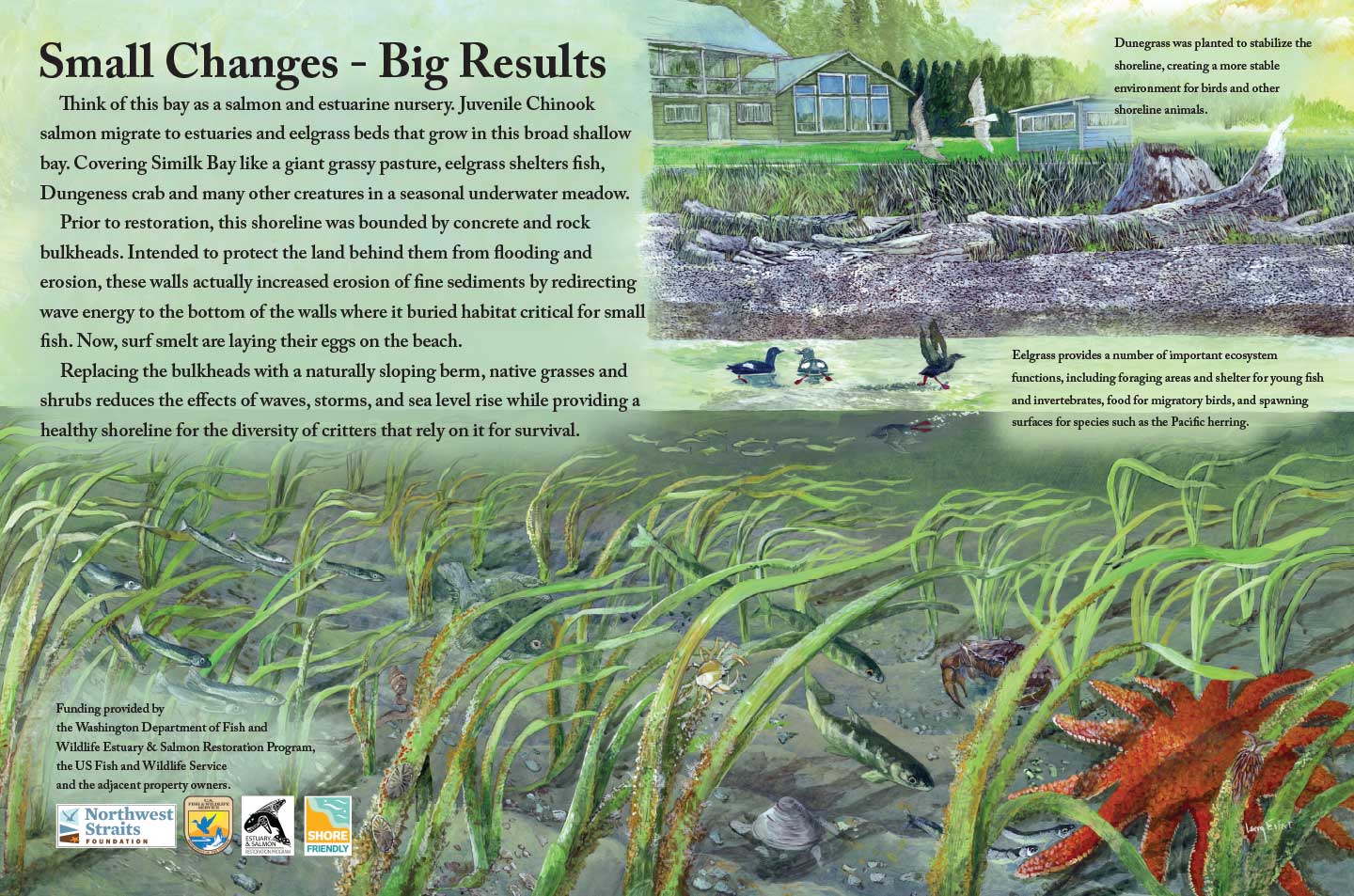
These three are for a salmon habitat restoration project, which I’ve sure been painting a lot of recently. Washington is betting big on salmon restoration, spending billions (yes) removing road culverts, rock walls on the beaches, fixing it so young salmon and forage fish can have places to live. I seem to be THE guy for interpreting this, and have made dozens in the past few years. Here are three.

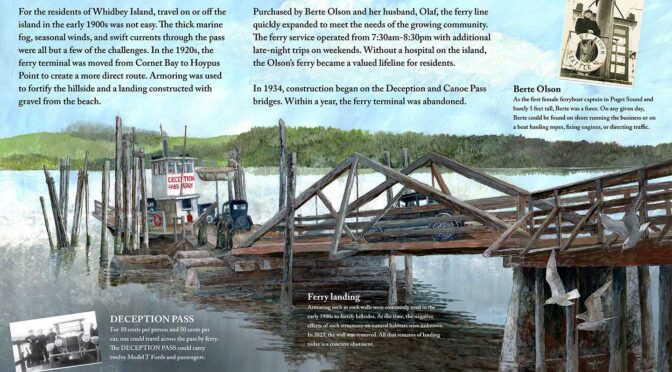
So, this place was once a ferry landing. It didn’t last long before the state built the nearby bridge, but in the process, the ferry landing really messed up the beach, making it difficult for fish to feel at home. So, fast forward a century, and Northwest Straits Foundation managed the removal of the mess, putting it back to as natural as possible. It was my job to show this.

This panel went to a similar messed-up beach just to the north of Hoypus Point, same reasons, same fish, but along a neighborhood of houses.

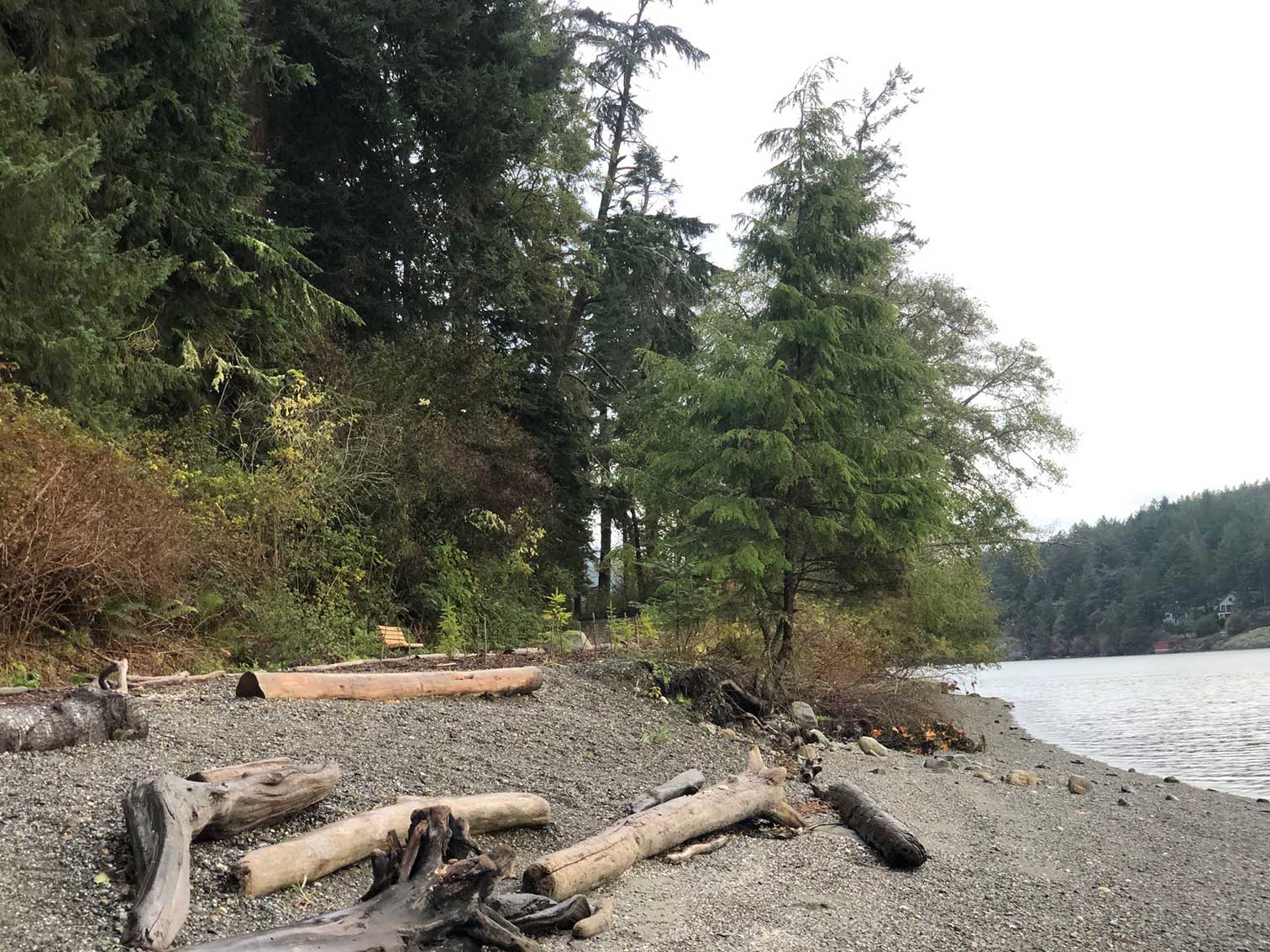
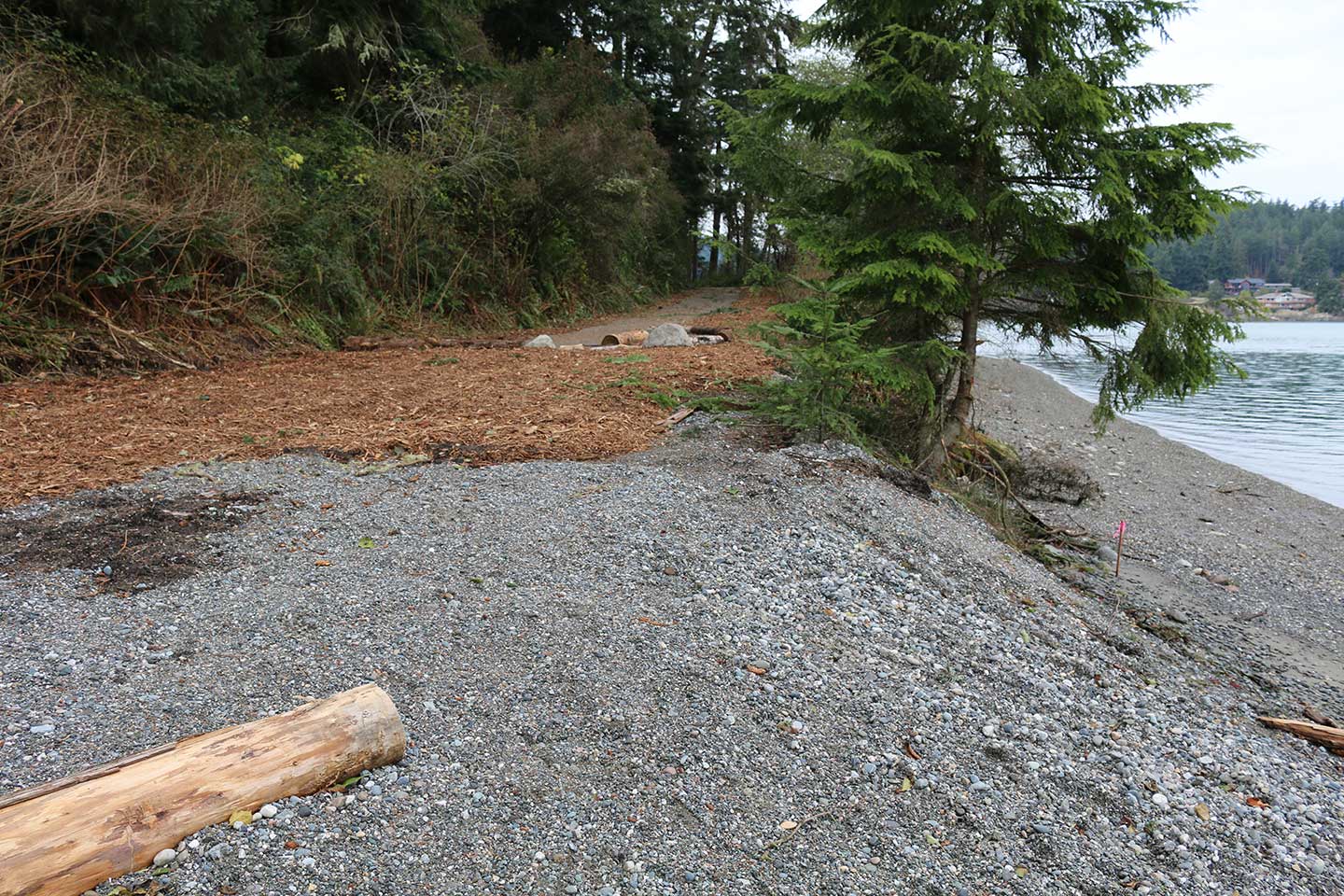
Here’s the result at Hoypus, the ferry landing road is now a trail, the beach put back to gravel and forest duff. The only man-made installation here now is going to be my panels.

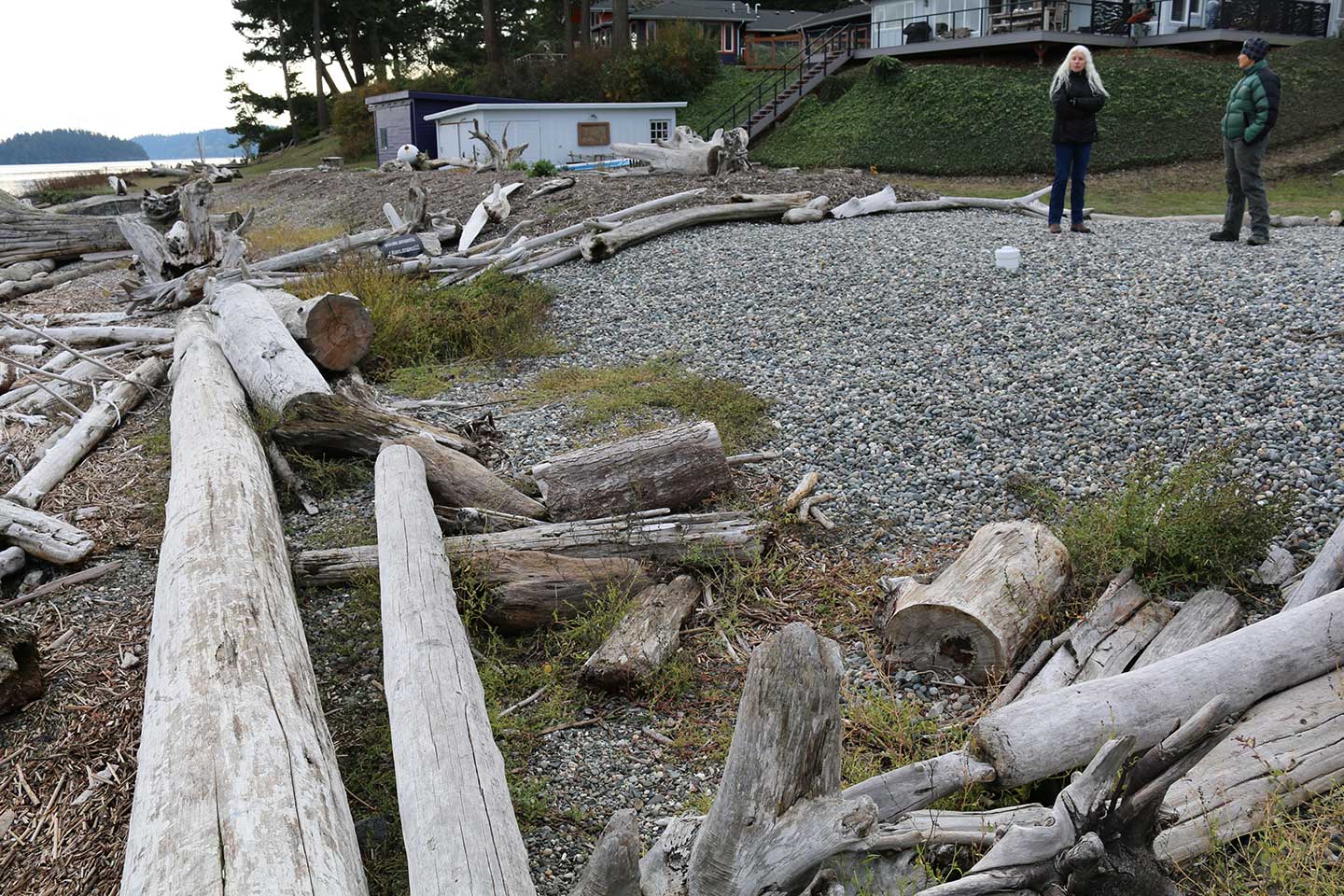
Thanks to Lisa Kaufman from Northwest Straits Foundation (on the right of Nancy), and Joy Sullivan at the state park, for allowing me to paint yet more forage fish and my other favorite critters.

Thanks for reading this week.

Larry Eifert

Here’s my Facebook fan page. I post lots of other stuff there.

Click here to go to our main website – with jigsaw puzzles, prints, interpretive portfolios and lots of other stuff.

Nancy’s web portfolio of stunning photography and paintings

And here to go to Virginia Eifert’s website.

More New Mount St. Helens Paintings

These are some of the other new paintings for the Mount St Helens Visitor Center at Silver Lake, Washington. Commissioned by Washington State Parks, they are part of the interior exhibit plan and it’s complicated enough that I’ll just let the art speak for itself. There’s more than this, and the last post I published, but you’ll get the idea.

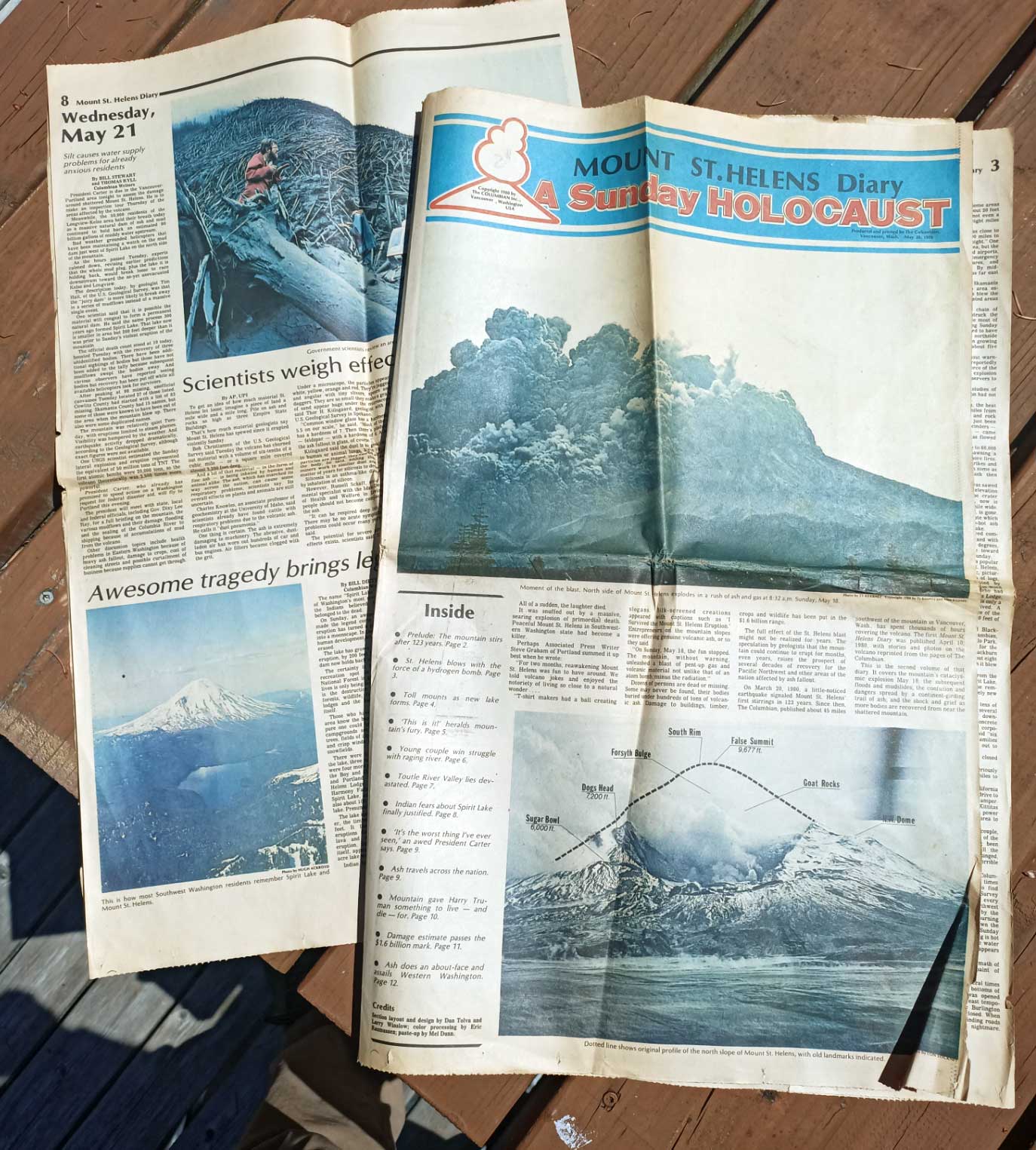
I wanted to explain the newspaper at the top. When I started painting these a few months ago, I opened one of my file cabinets to find maybe a map of the park, and this thing jumped out at me. It’s been sitting here now for 43 years, as I bought it for $2 right after the eruption – and I imagined it saying “me, me, I’m finally here to help”. And it did, as several of these paintings are direct results of the photos in this yellowing magazine. Serendipity, I think the word is.

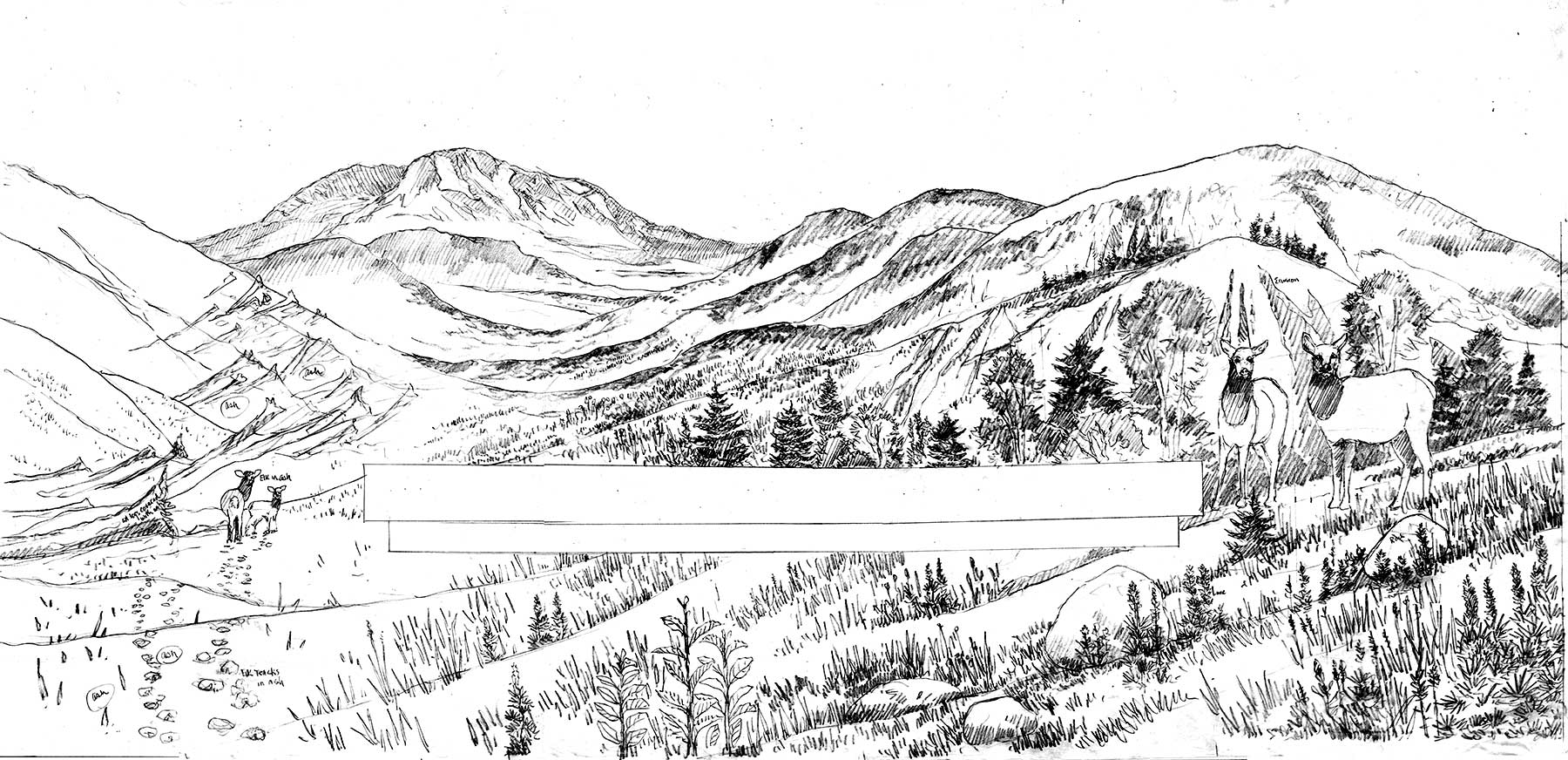
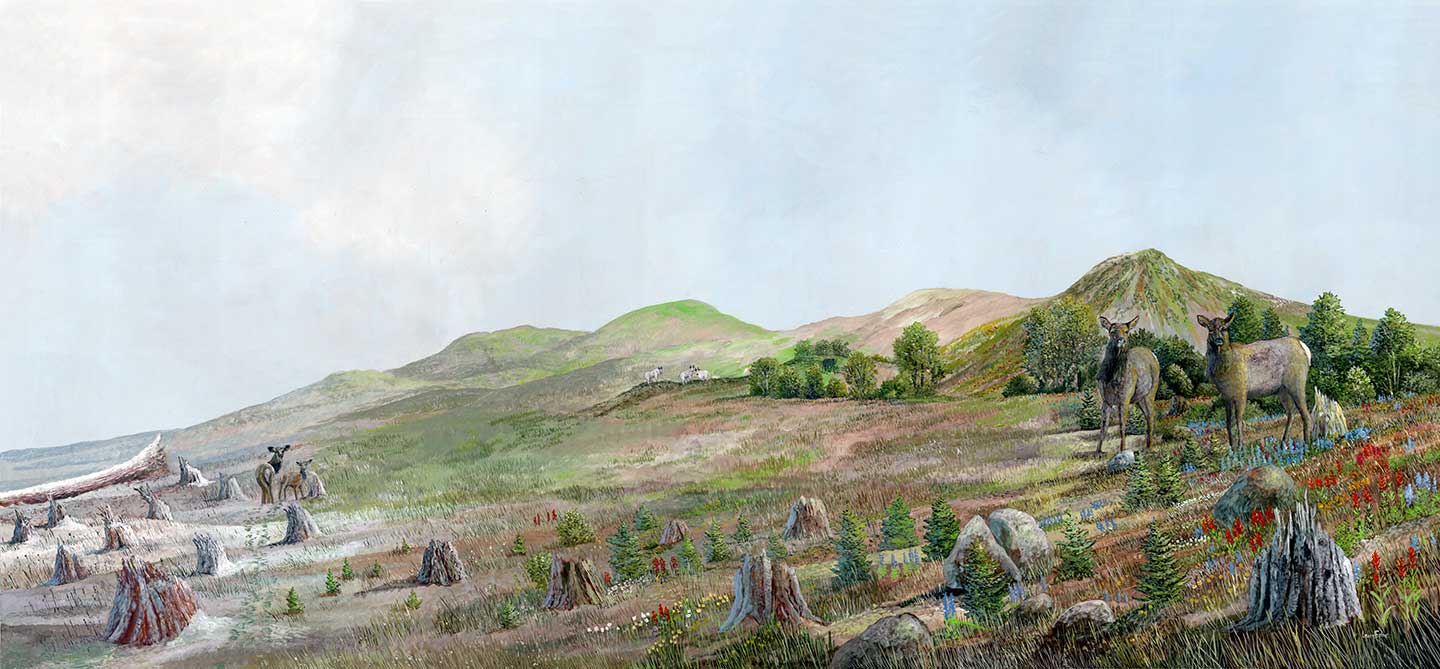
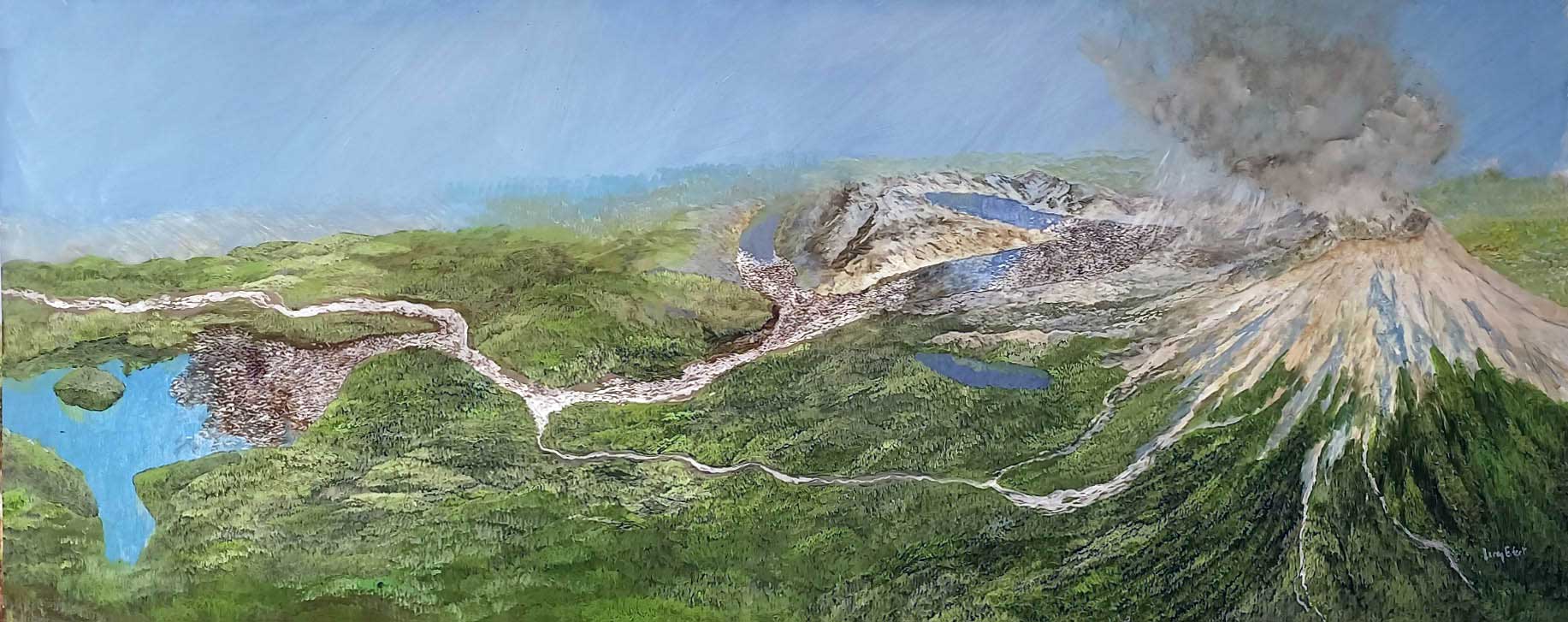
This painting deserves a bit of explanation. Left side, immediately after the blast, right side might be today, 43 years after the blast. The elk returned immediately, and in their footsteps in the ash, water gathered and supported many critters as they expanded back into the ash zone.

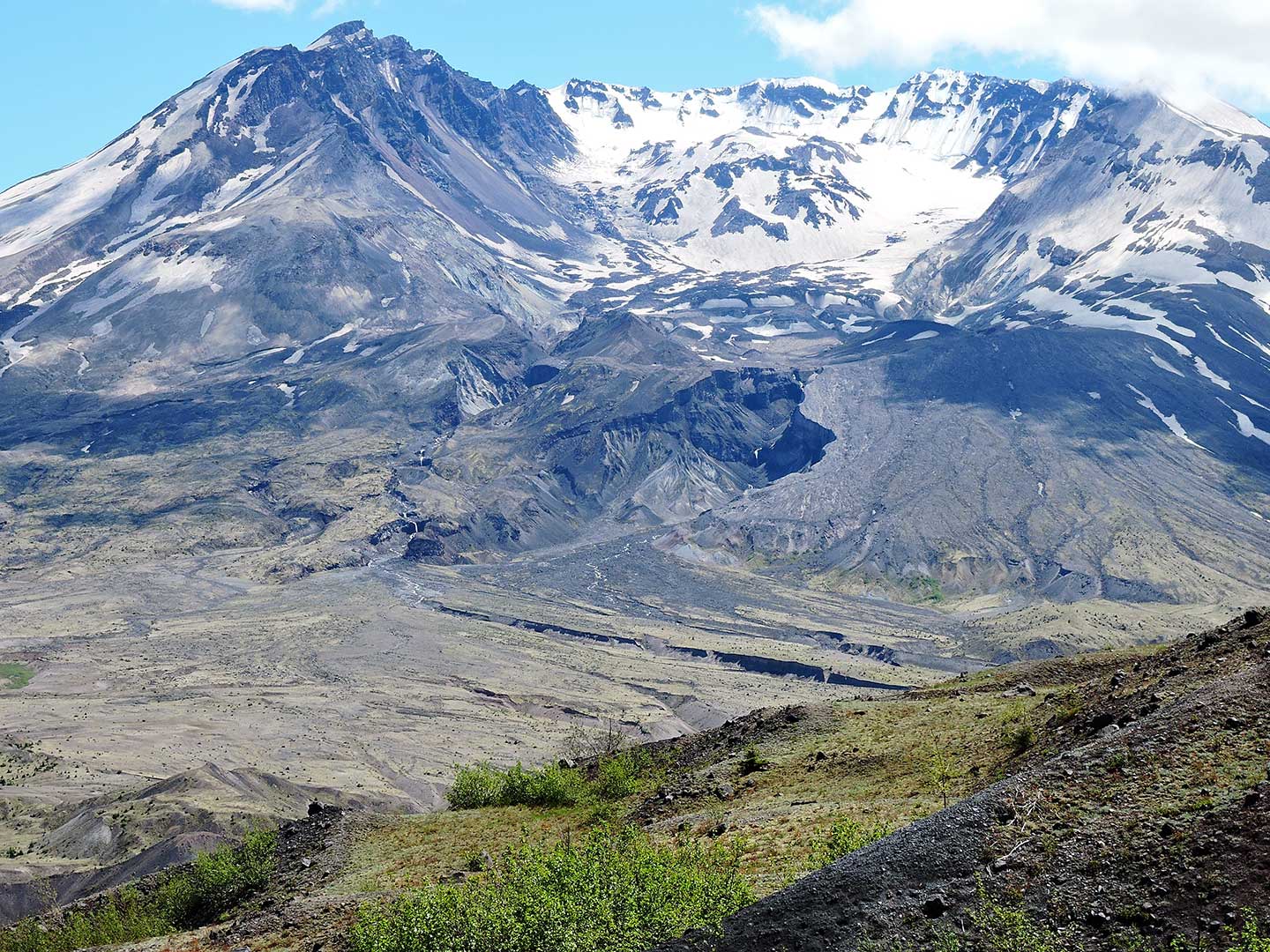
And below is the mountain today (or, two summers ago when we hiked there). It’s recovering nicely and it’s always fun to see how nature finds a way to cover every inch of ground, even after it’s been blown to smithereens.

Thanks for reading this week.

Larry Eifert

Here’s my Facebook fan page. I post lots of other stuff there.

Click here to go to our main website – with jigsaw puzzles, prints, interpretive portfolios and lots of other stuff.

Nancy’s web portfolio of stunning photography and paintings

And here to go to Virginia Eifert’s website.

The Mount St Helens project

I’ve been working on this project since May, but the painting didn’t really start until August. I’ll bet over a million brush strokes! I’m close to finishing painting 24 images for the big revamping of the Washington State Park’s visitor center at Mt St Helens National Monument. I’m told it’s one of the biggest interpretive projects ever for Washington State Parks.

I’ve already made some art for this fantastic park before, but that was a series of outside wayside panels for the US Forest Service placed around the mountain, plus a big painting that we eventually made into a puzzle. This current effort is at Silver Lake on the park’s west side, a big visitor center built right after the eruption in 1980. I’m working with EDX in Seattle who did the designs and asked me to do the art. Sure glad they did – it’s been interesting.

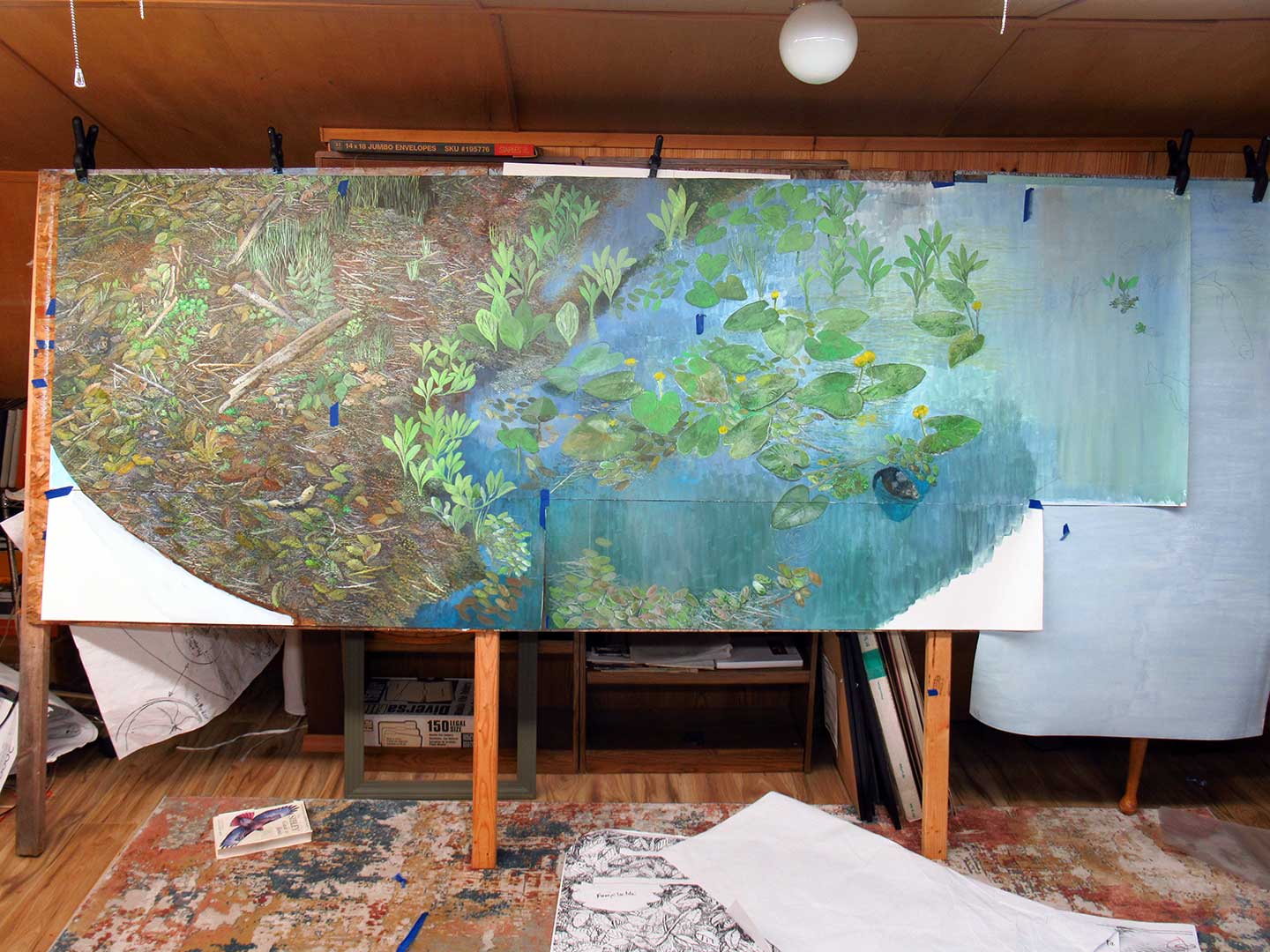
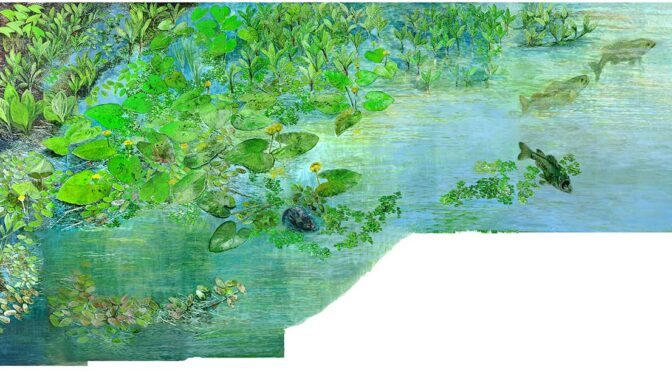
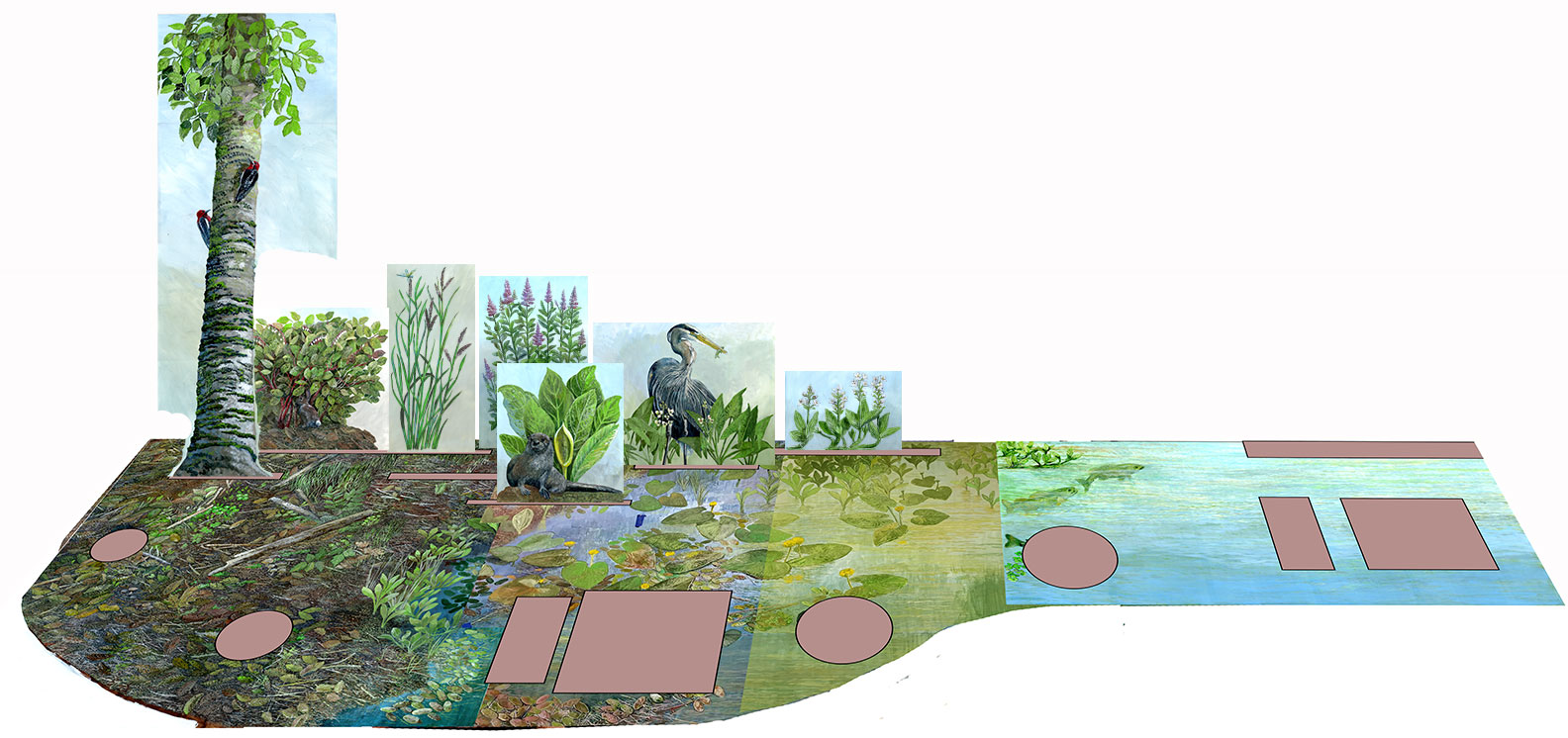
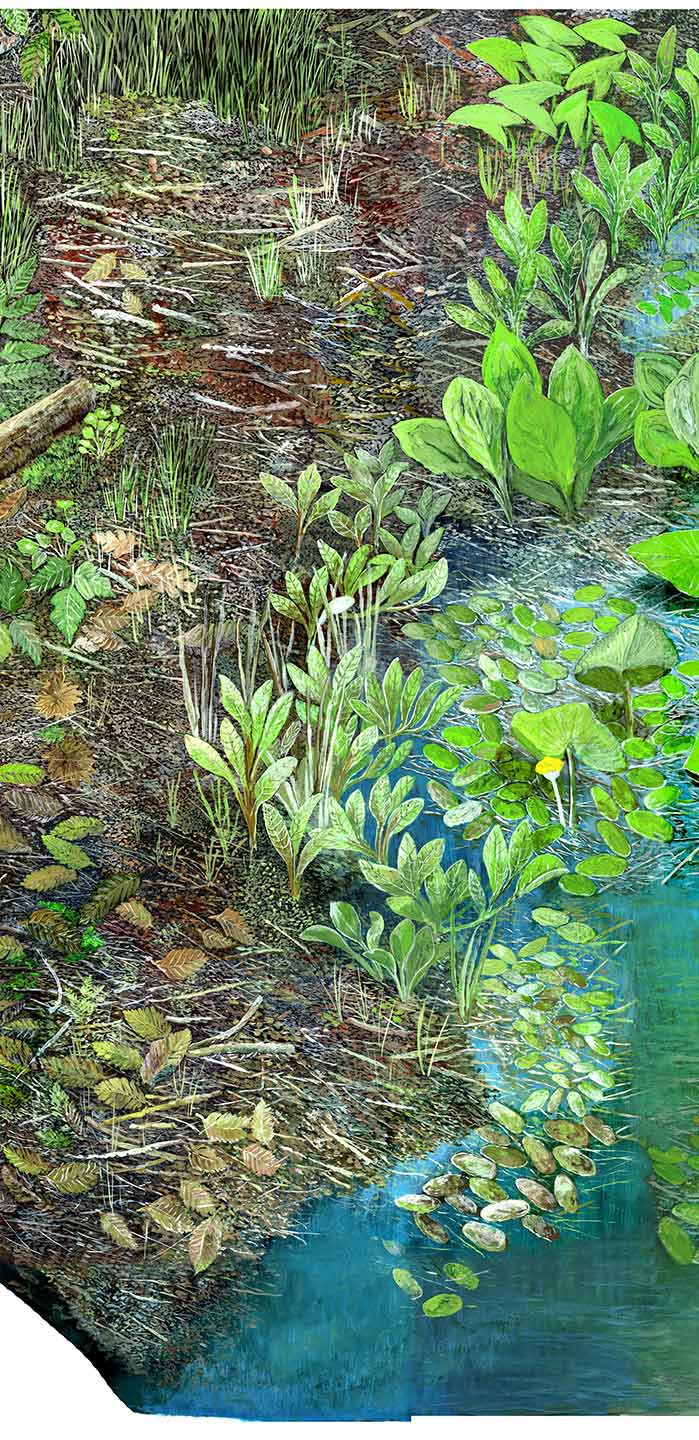
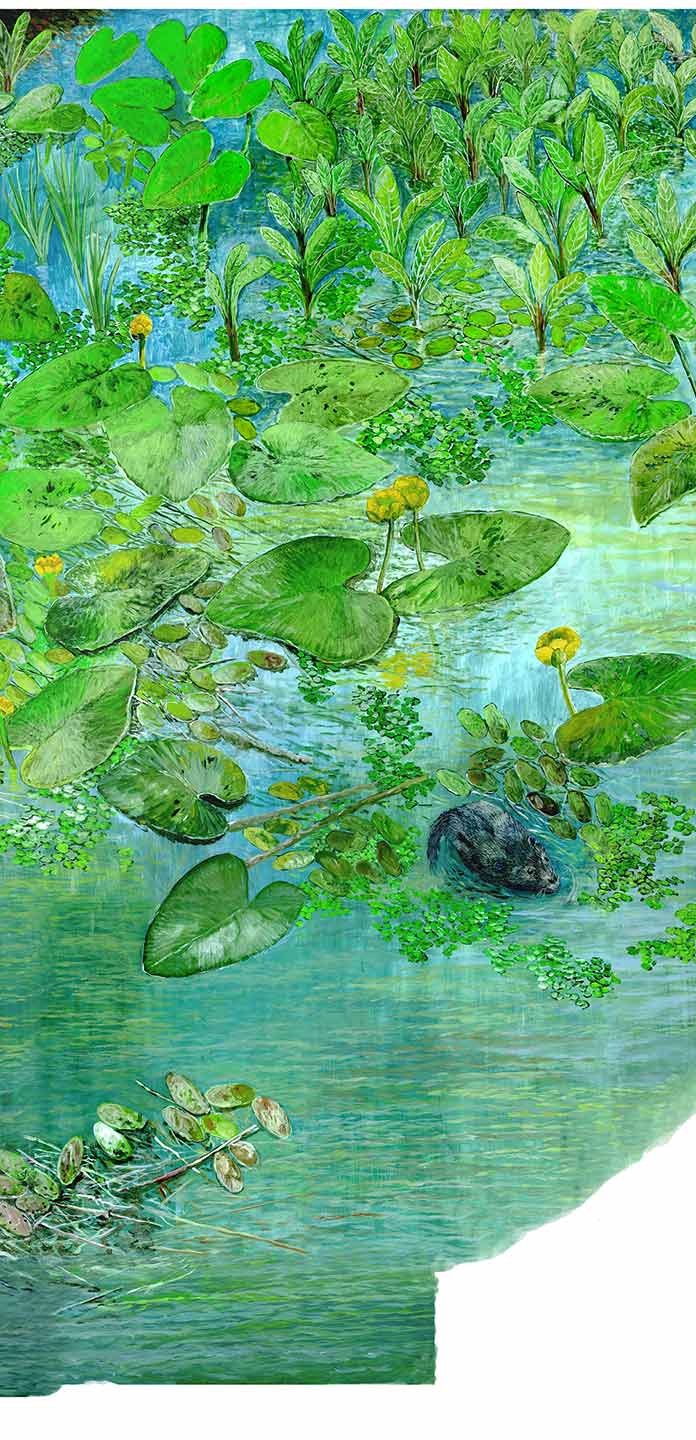
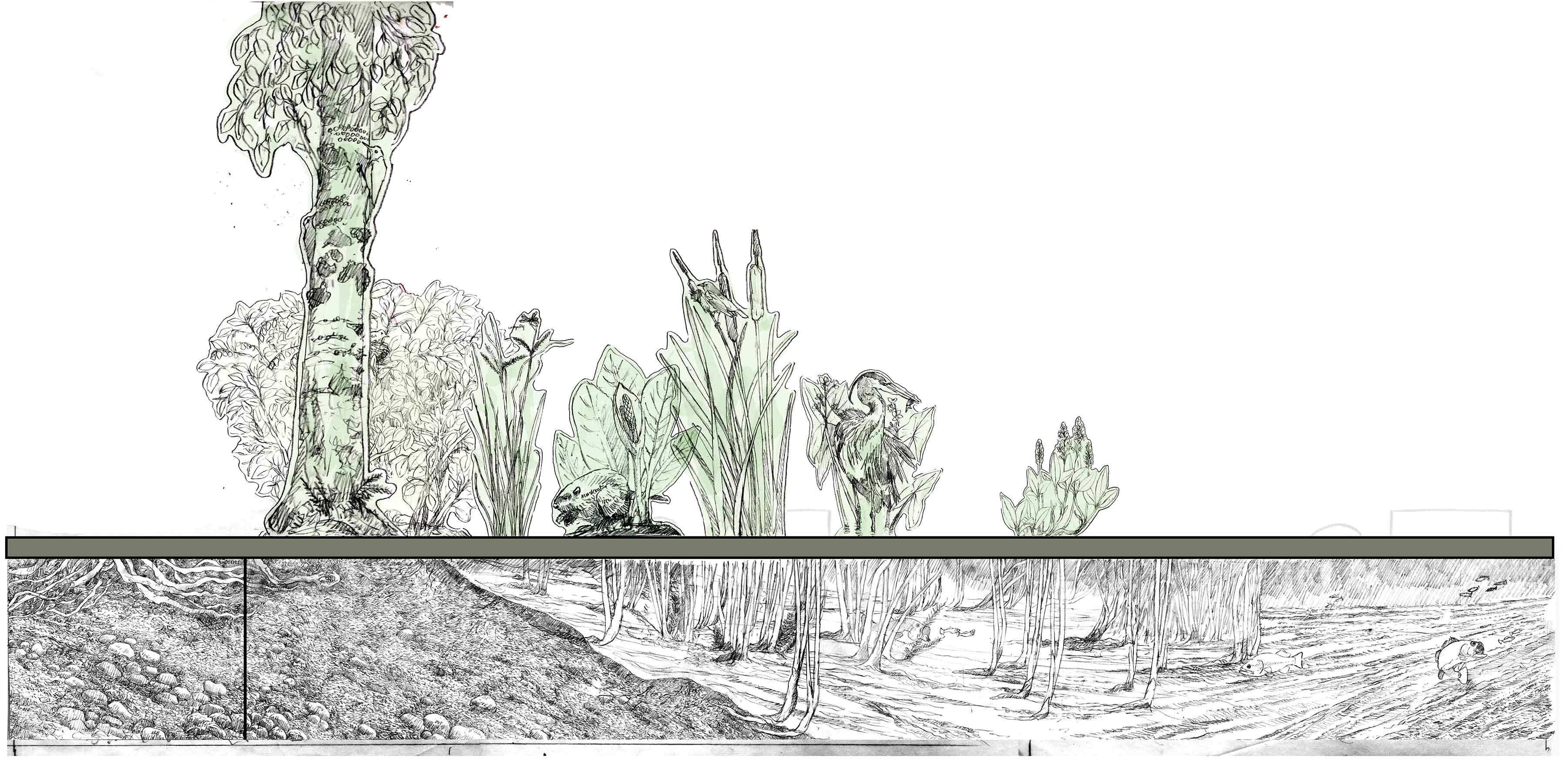
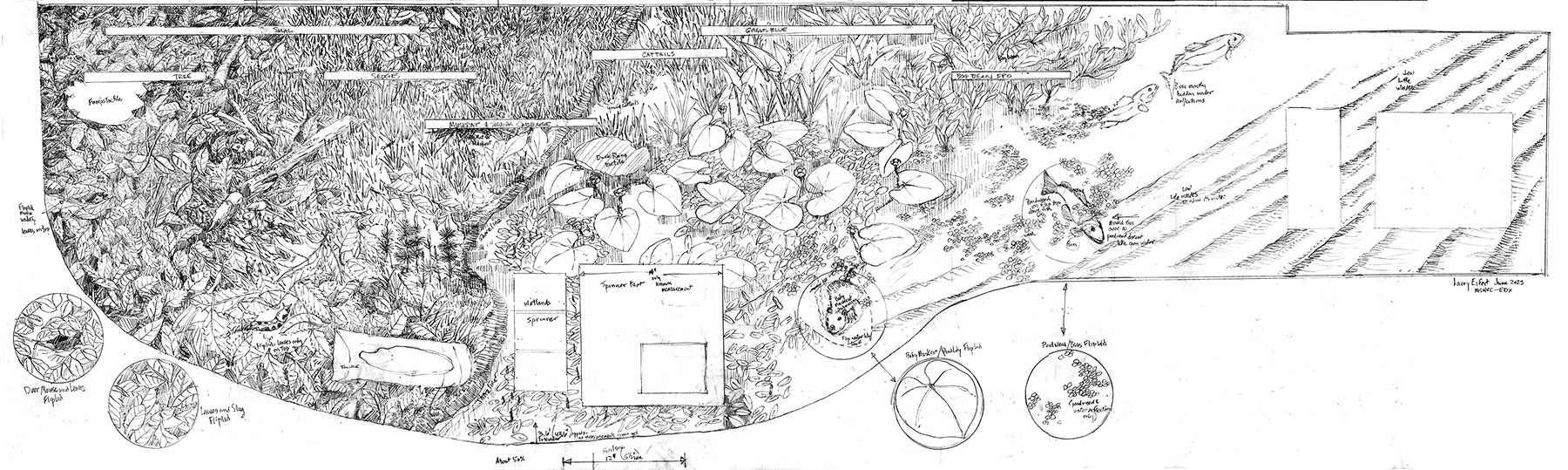
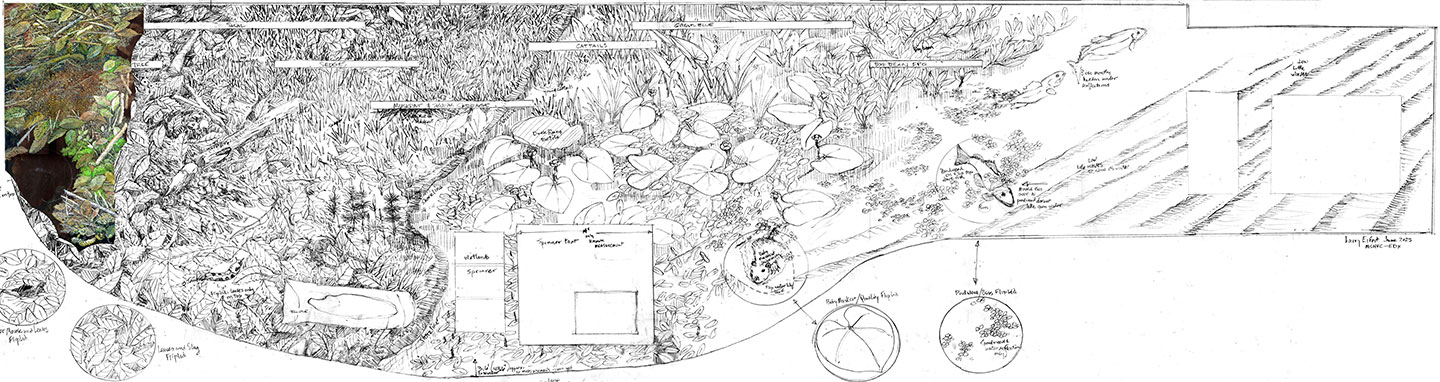
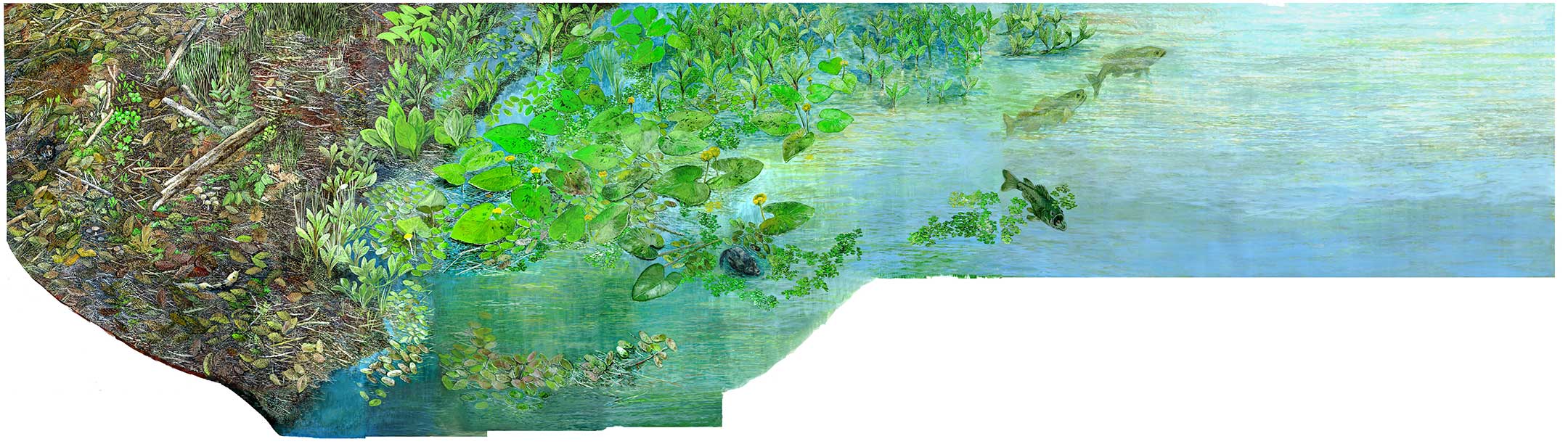
For this post, I’ll focus on just the wetlands tabletop, 17 feet long and 4 feet wide, it’s one of the most complex visitor center exhibits I’ve painted. Other parts of the project will be posted soon.

I have few finished photos of this, but I did get the tabletop main painting scanned – a whopping 4.5 gigabits of data that will be printed on aluminum (I think).

Drawing and the beginnings of the painted art.
Final painting for the tabletop, about 17′ wide.
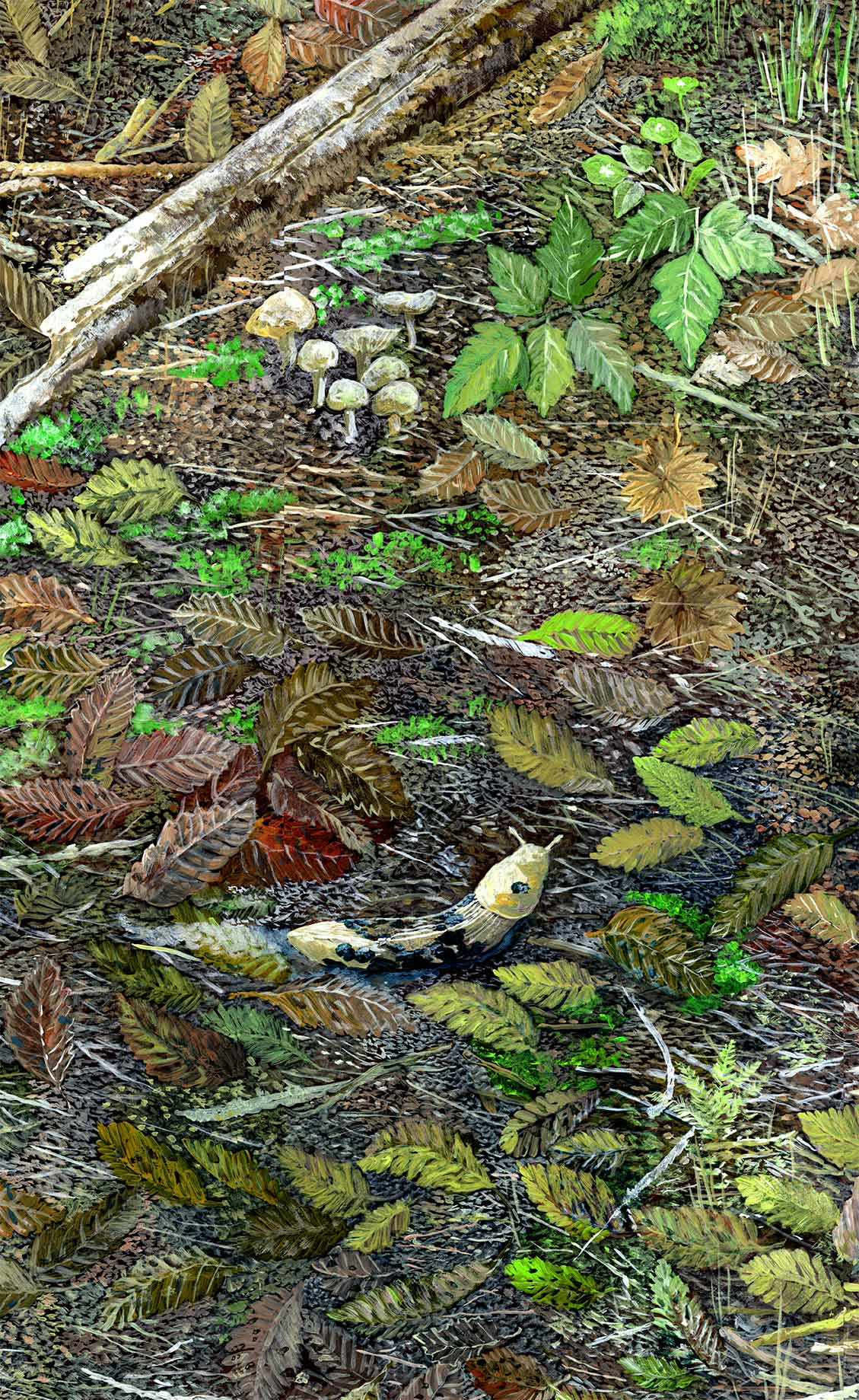
Part of the left side of the tabletop.

The tabletop has all sorts of lift lids showing hidden critters beneath them. There are spinners that show the eruption, another with the evolution of Silver Lake. It’s a very busy thing and I’m hoping kids will love it.

On my next post, I’ll get into the smaller pieces of art, then the second wall (an entirely different theme and painting 14′ long).

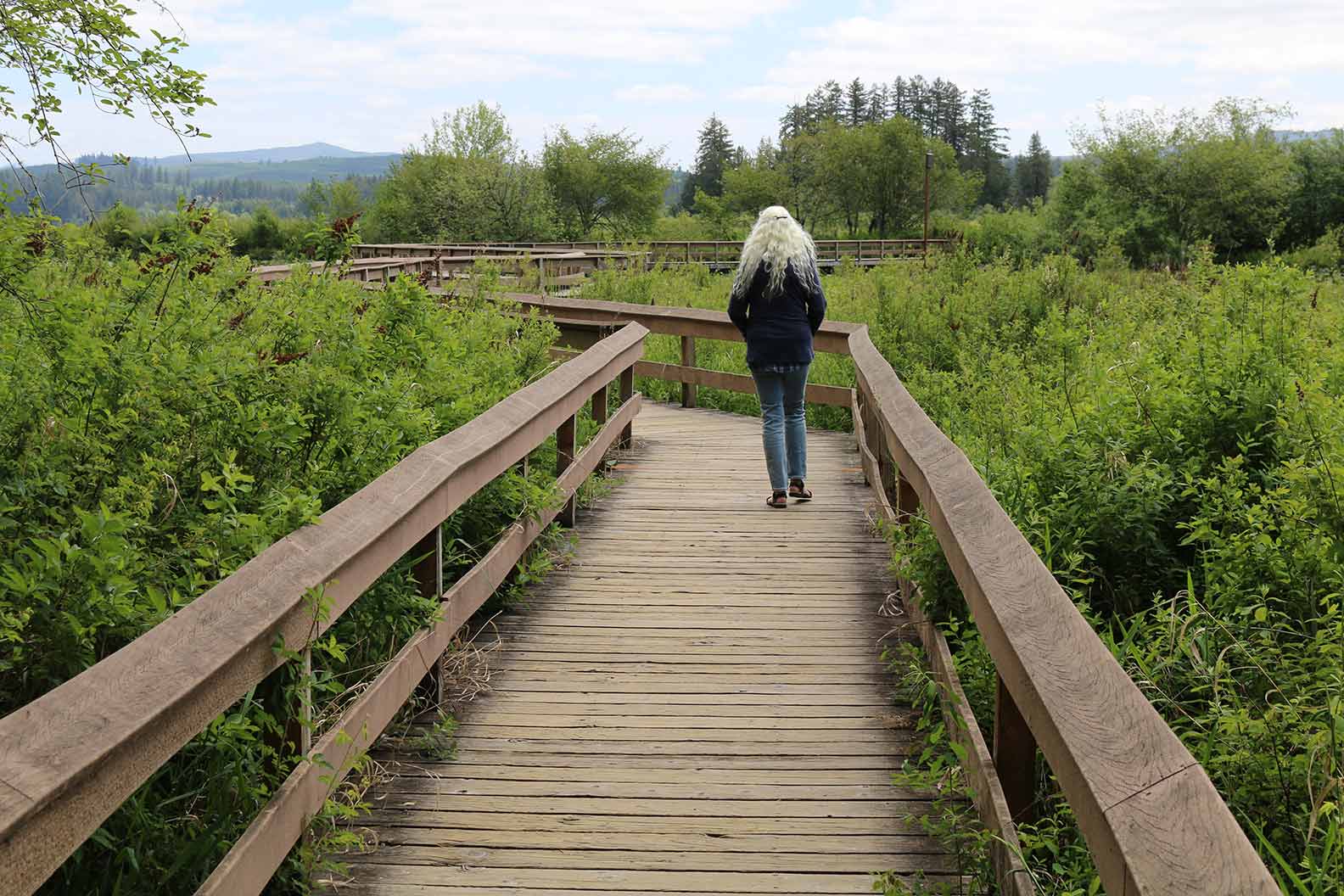
Nancy on the boardwalk at Silver Lake. Enough wood here to build several houses, and it’s in good shape – goes on for half a mile. The volcano is straight ahead but still 25m away.

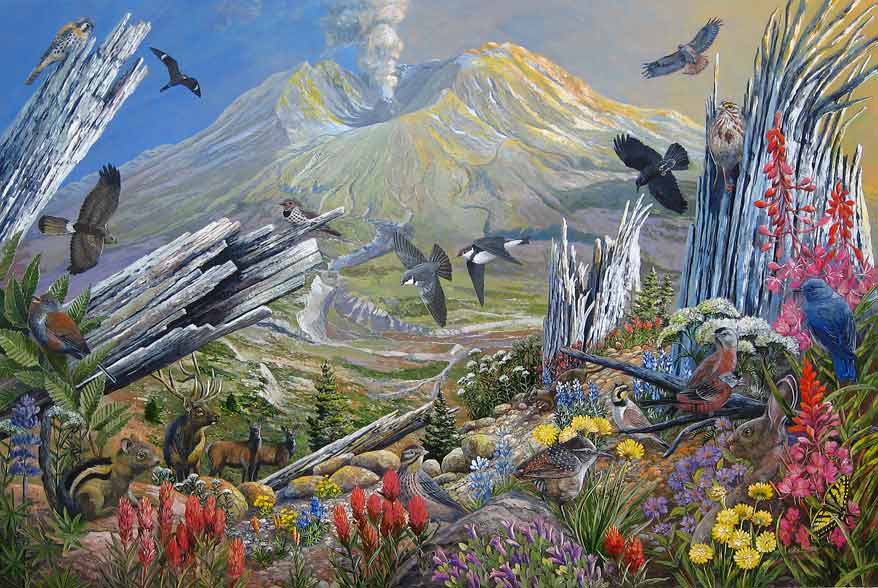
In case you don’t remember what the mountain looks like, here’s a puzzle we did some years ago for it.

Thanks for reading this week.

Larry Eifert

Here’s my Facebook fan page. I post lots of other stuff there.

Click here to go to our main website – with jigsaw puzzles, prints, interpretive portfolios and lots of other stuff.

Nancy’s web portfolio of stunning photography and paintings

And here to go to Virginia Eifert’s website.

Dugualla Flats Preserve

Just finishing up two new paintings for outdoor wayside exhibits at Whitbey Island’s Dugualla Bay Preserve.  This is another project for the Whidbey Camano Island Land Trust and, as always, it was a pleasure to paint for them.

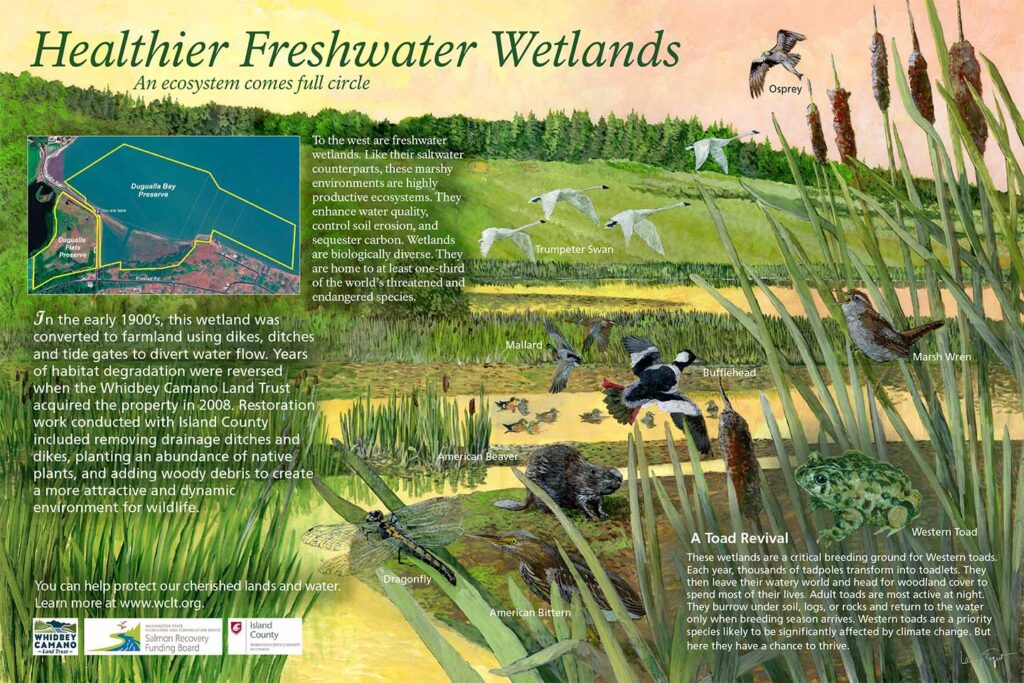
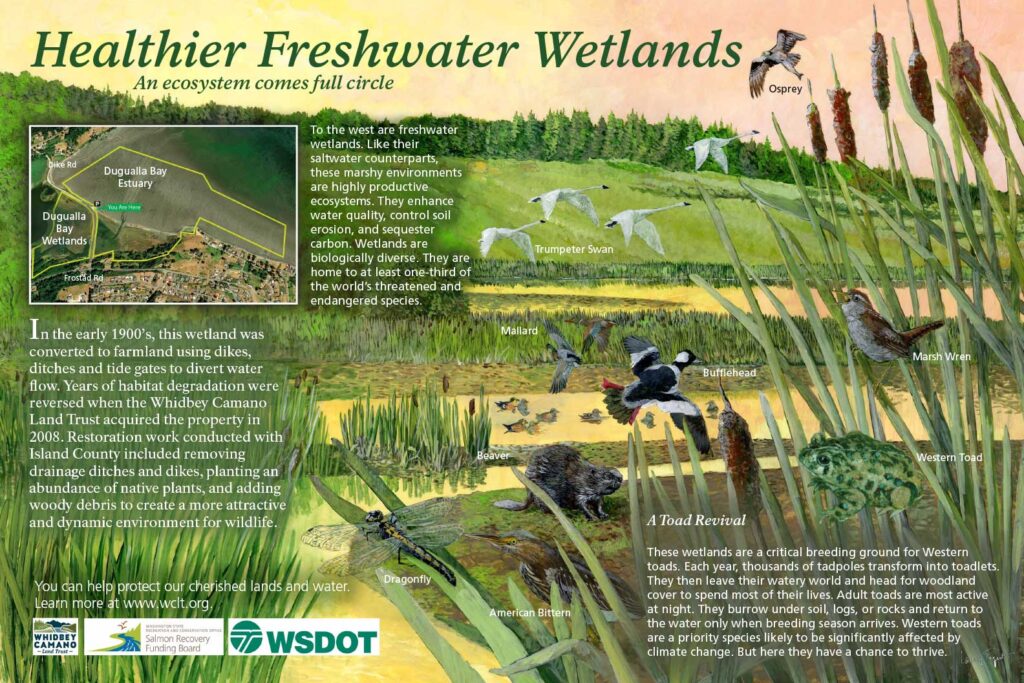
This recently restored wetland is on both sides of a dike road a few miles north of Oak Bay. One side is fresh water, the other is a salt marsh salmon habitat area. First it was bay, then farmland with nature shut out. Now it’s back to nature. The bay side is very good forage fish and salmon habitat.

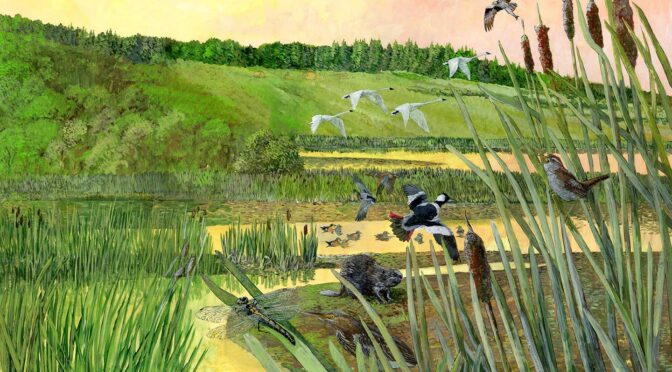
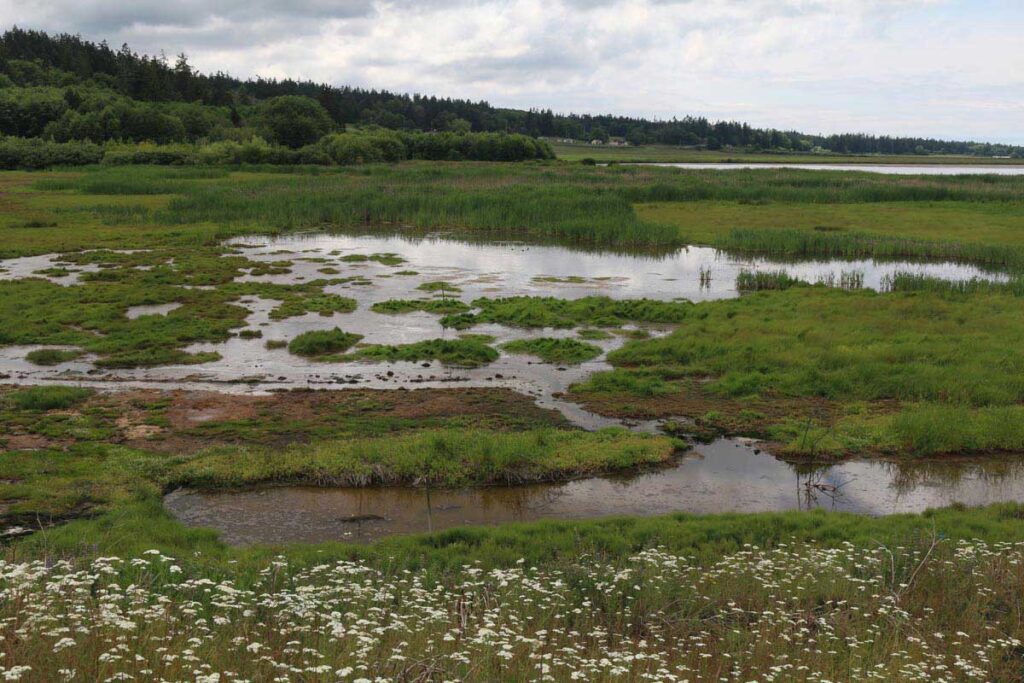
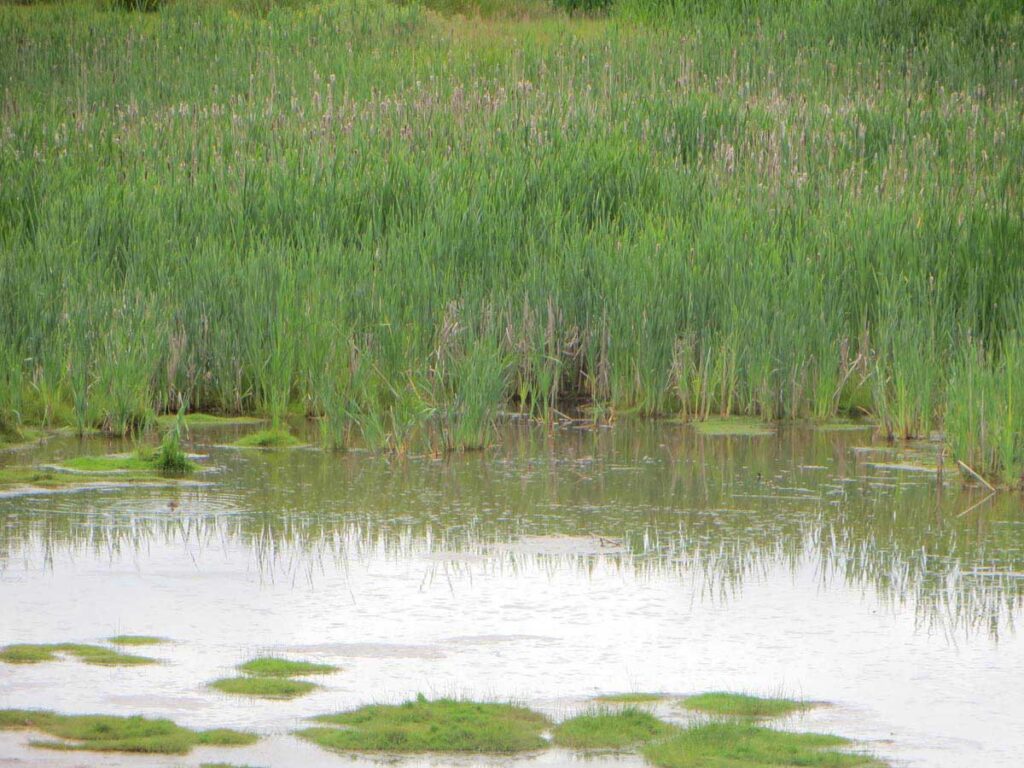
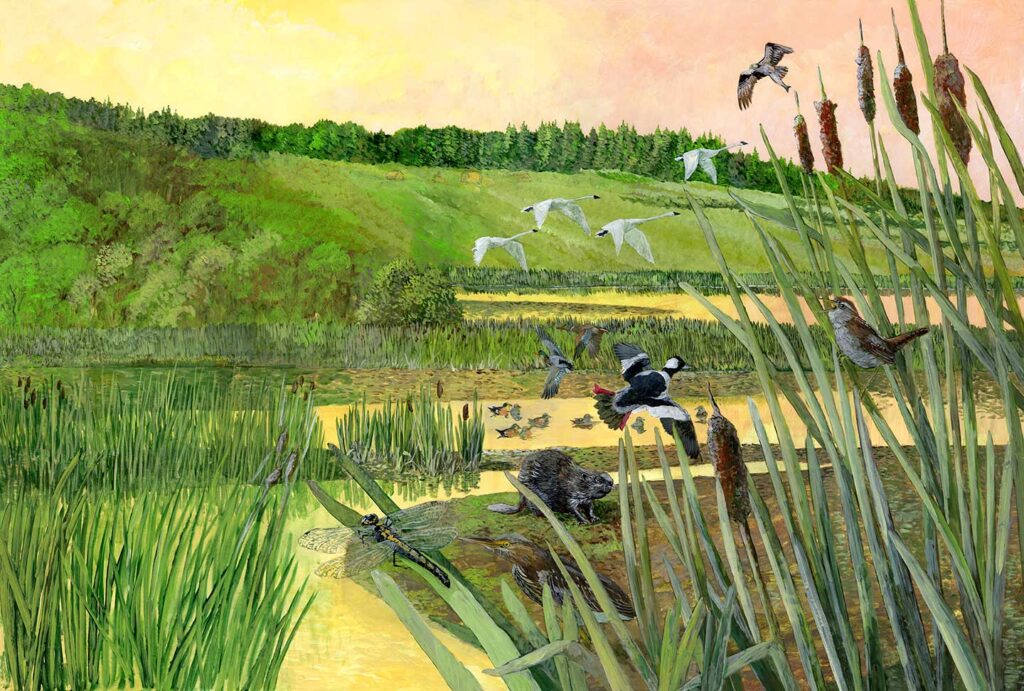
This first painting is the freshwater side, a rich habitat of cattails and critters from western toads to trumpeter swan – and I can’t say I’ve ever painted THOSE two in one painting before! The wetlands have water levels that rise and fall with the seasons and on a site visit a few months ago I took some reference shots, not very good as you can see, but somehow I built an interesting painting with what I had.

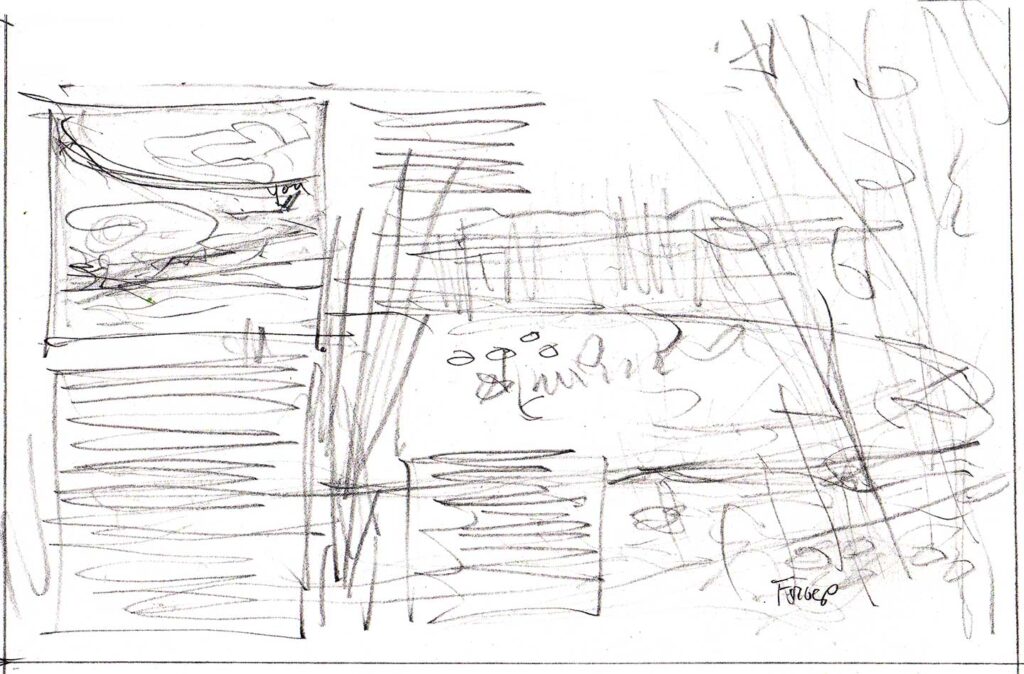
I started with a quick gesture drawing, a concept sketch showing cattails on the right, map and text on the left, maybe wildlife in the center. It’s sort of amazing to me that the final painting was very close to this.

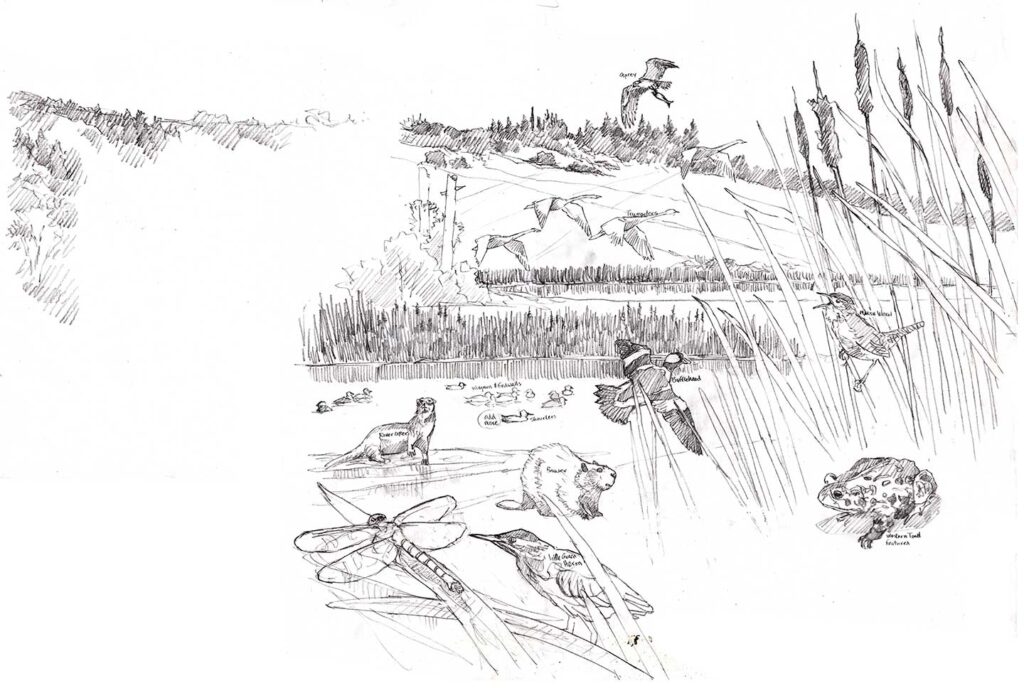
Then a more refined drawing came with a better understanding how the wildlife fits in, getting their sizes and spatial separations set for a good piece of art. The toad couldn’t be down with the rest of them in the marsh since they’re up in the drier meadows, so I just floated it in midair – a toady blimp.

And this is how the final painting looks. Click on it to enlarge in your browser. These things are certainly not just a nice painting like my days of gallery painting. It takes a bunch of planning to get the other components to all fit.

It all came together with the text, a map I did in Illustrator using the National Park Service’s map software – and the text the Land Trust supplied me. Very skilled efforts go into doing text for these panels and these are really well written. Too many words it becomes a ‘book on a stick’ and no one reads it. Too few words and no one learns anything. And this type of art is all about learning something – which I hope you did with this blog. I hope you liked it.

Thanks for reading this week.

Larry Eifert

Here’s my Facebook fan page. I post lots of other stuff there.

Click here to go to our main website – with jigsaw puzzles, prints, interpretive portfolios and lots of other stuff.

Nancy’s web portfolio of stunning photography and paintings

And here to go to Virginia Eifert’s website.

Dismal Nitch – Chinook Salmon Story

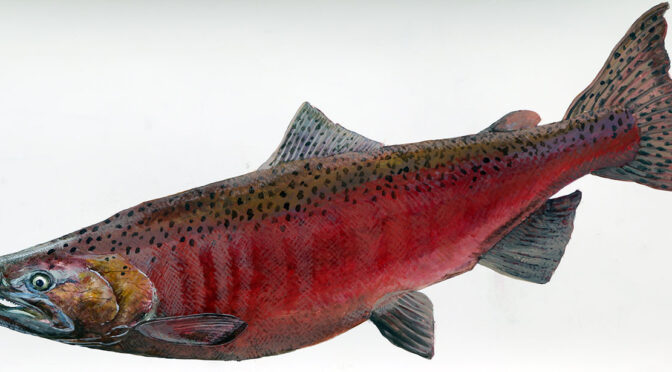
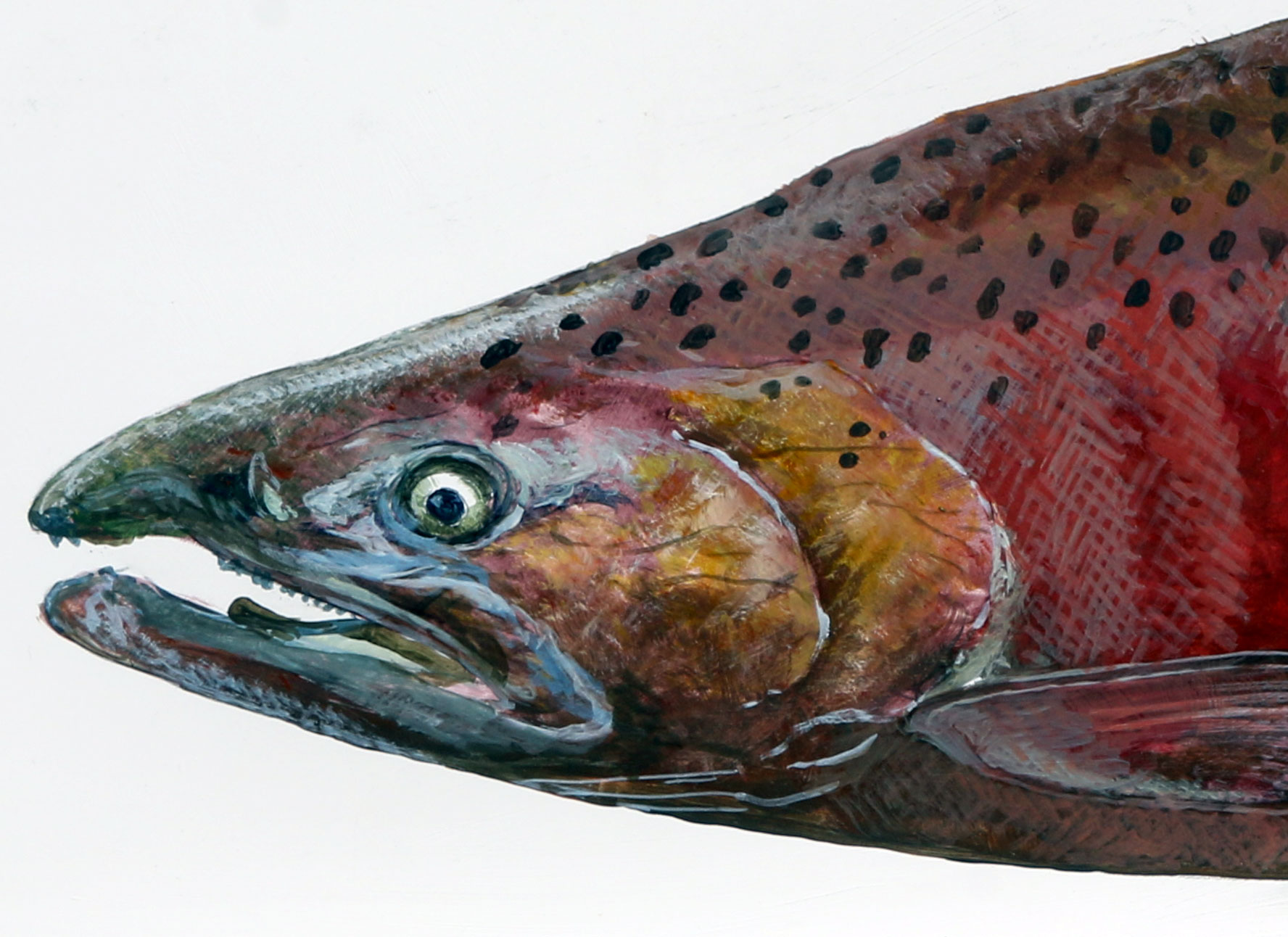
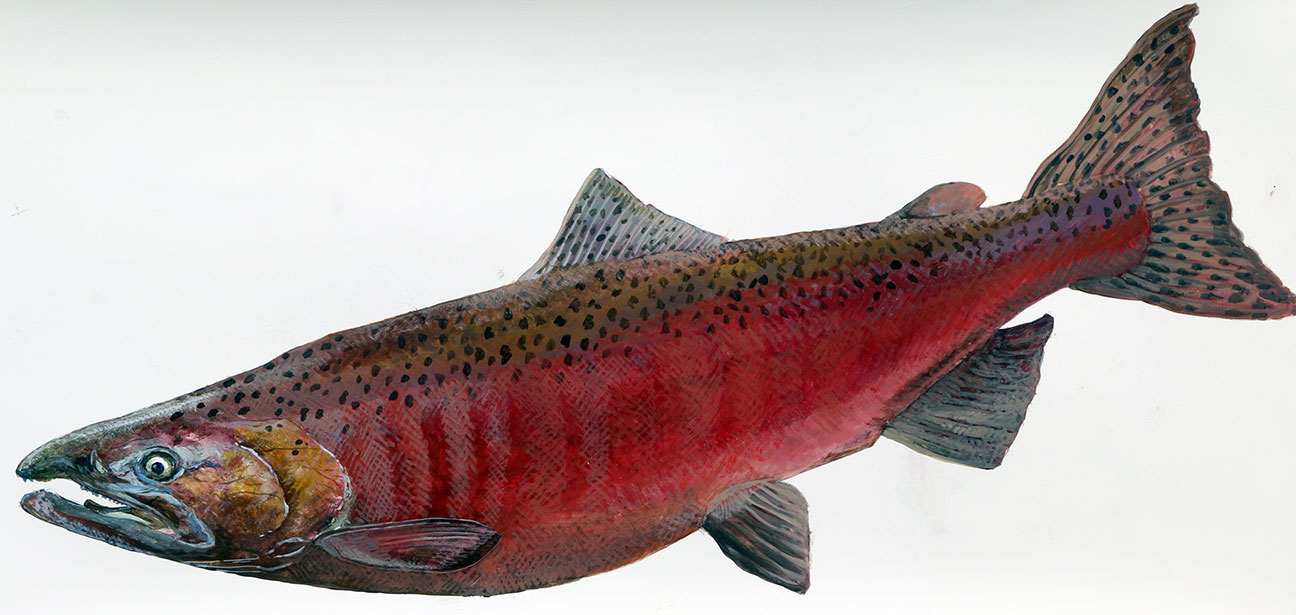
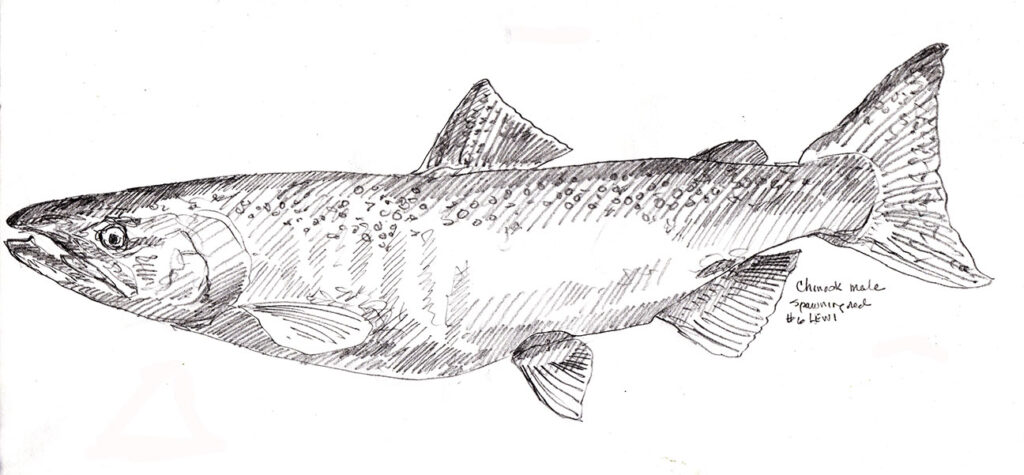
I like this Chinook salmon painting but it’s going to change, so I thought I’d post it here so at least there’s a memory of it. What’s wrong with it, you ask, well, the National Park Service says it’s not fat enough! Welcome to MY life, and I guess I’d agree. They have some compelling reasons – so, back to the easel.

Here’s the entire fish. The final painting will go on one of seven waysides stands at the Dismal Nitch area beside the Columbia Estuary, part of Lewis and Clark National Historic Park. This is where ‘The Corps’, in 1804, spent a week hunkered down, starving, wet and miserable before a group of Chinook Indians paddled by and sold them some salmon. It’s a good story, and one I knew from my childhood when Virginia wrote a book about the wildlife and flora this bunch found and named, not to mention the Lewis River, Clark’s Fork and others. Now, here I am 50 years later painting exhibit art for the same place! The apples didn’t fall far from her tree, did they?
This painting of spawning salmon is one of over a dozen I’ve painted in the past couple of years, most for salmon restoration areas around the Salish Sea where I live. I’ve gotten much better at understanding these amazing fish and what they look like, how they live and suffer in their final days in fresh water. They feed us, they feed the riverside forest trees and all the creatures that live next to salmon streams. They’re not a gift to be taken lightly.

Thanks for reading this week – and the entire year for that matter.
Larry Eifert

Here’s my Facebook fan page. I post lots of other stuff there.

Click here to go to our main website – with jigsaw puzzles, prints, interpretive portfolios and lots of other stuff.

Nancy’s web portfolio of stunning photography

And here to go to Virginia Eifert’s website. Her books are now becoming available as Amazon Kindle books.