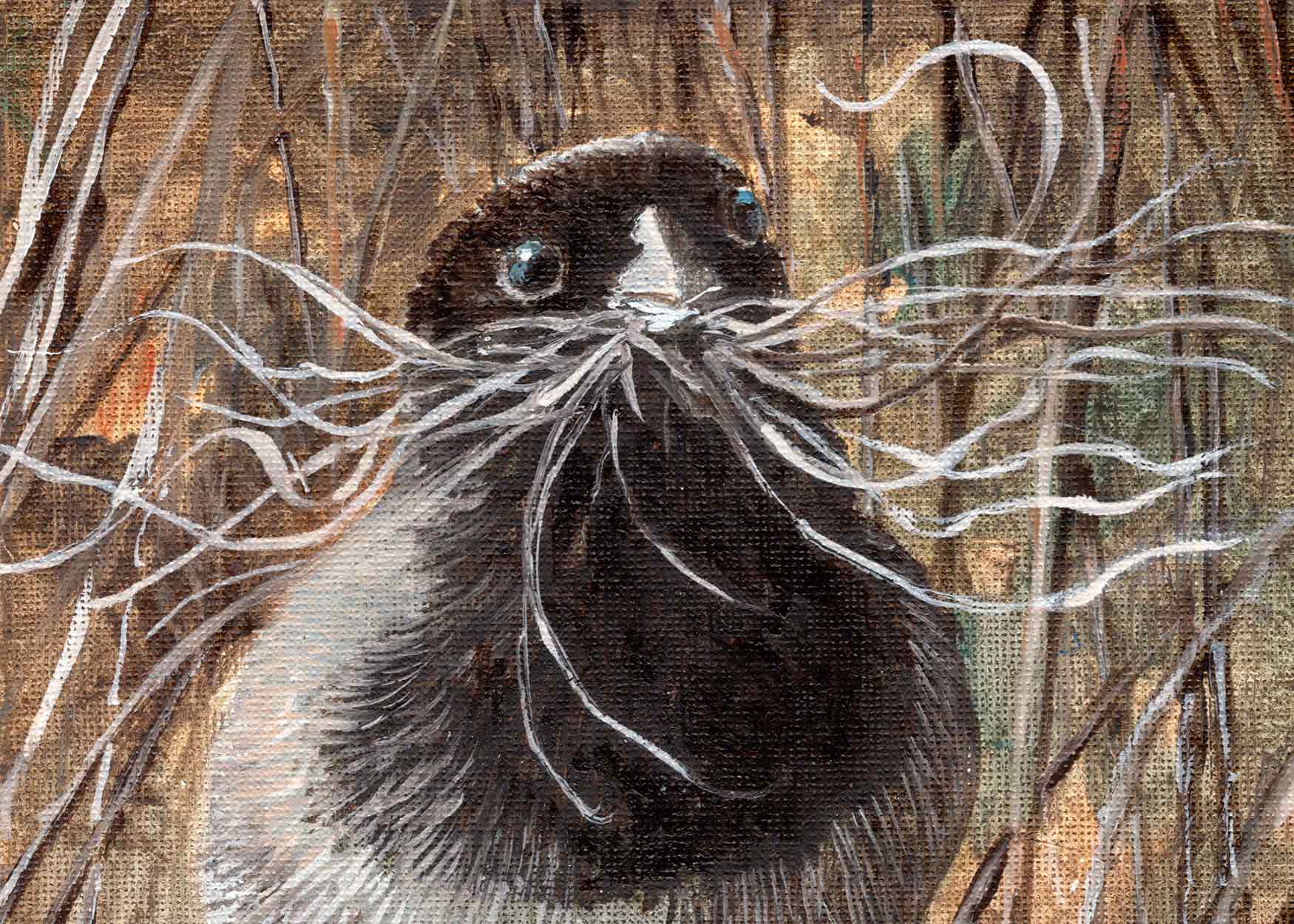
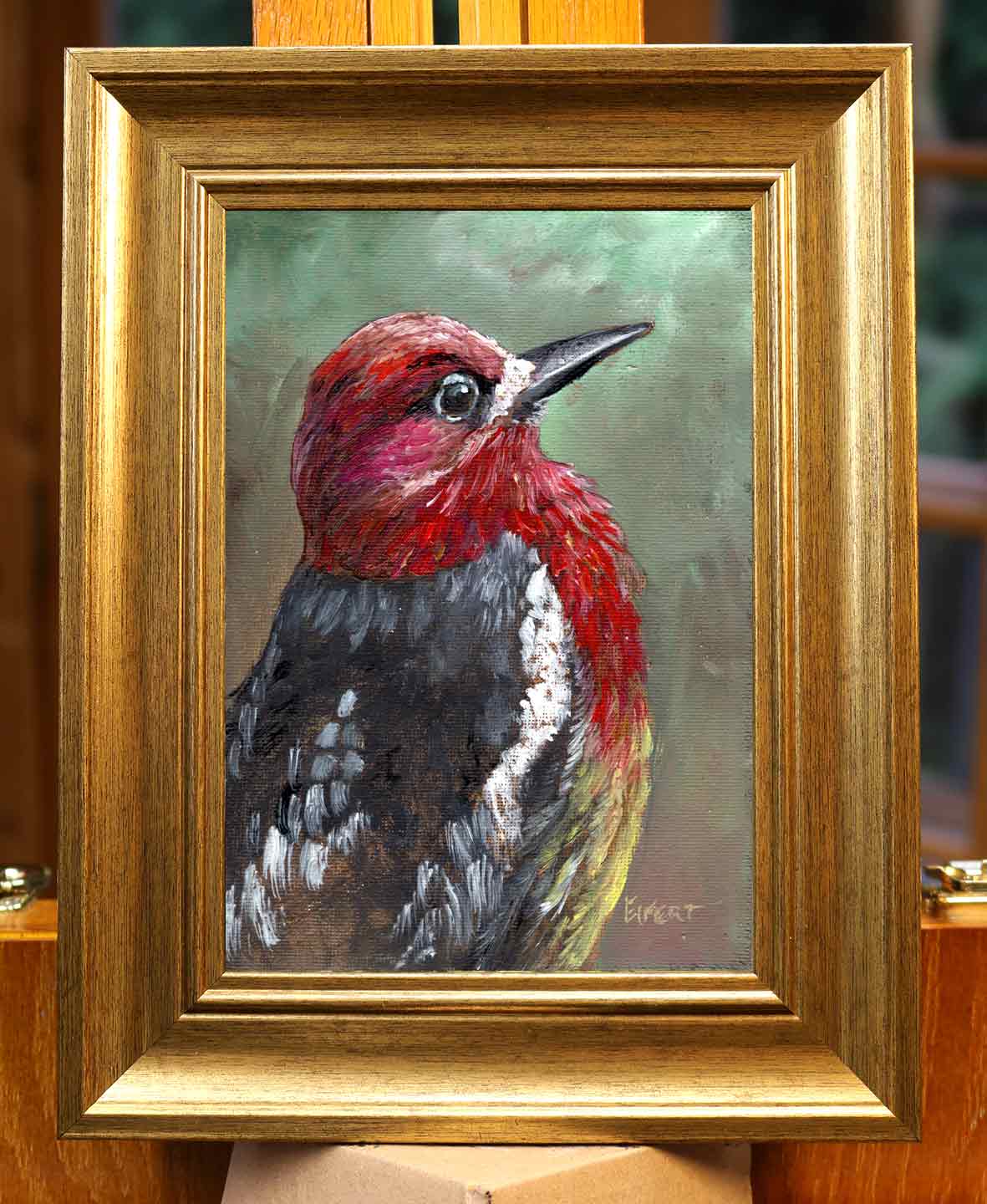
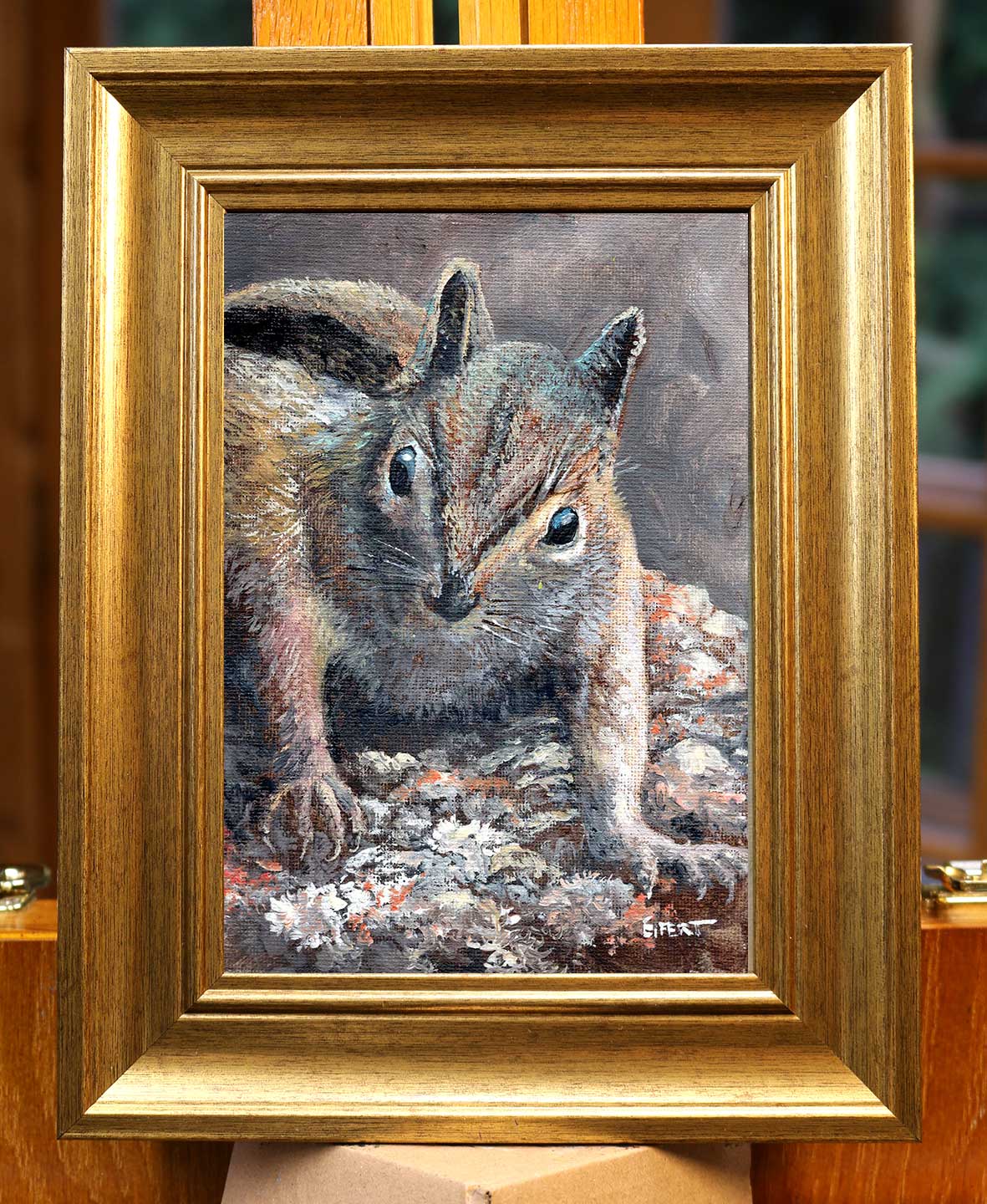
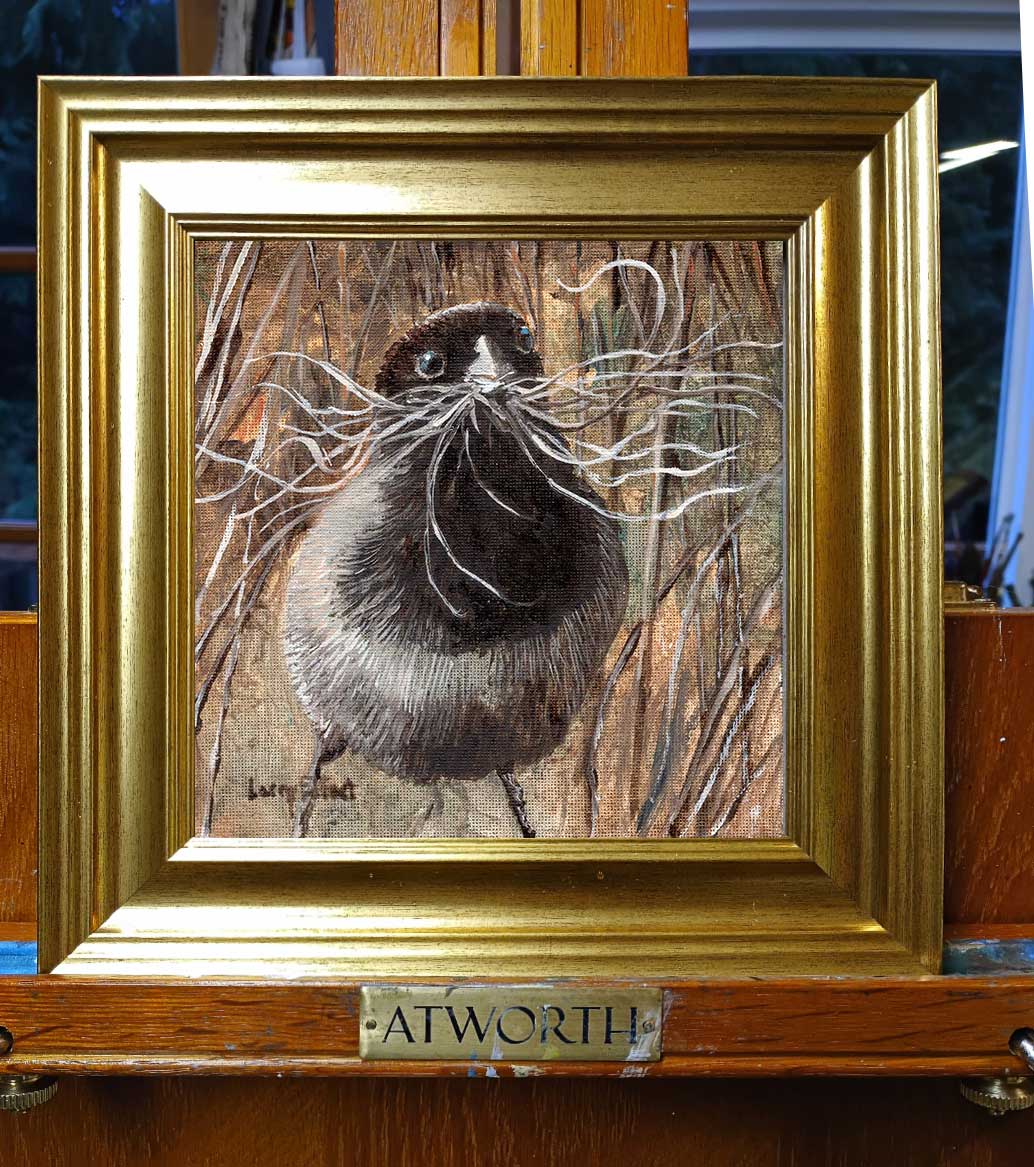
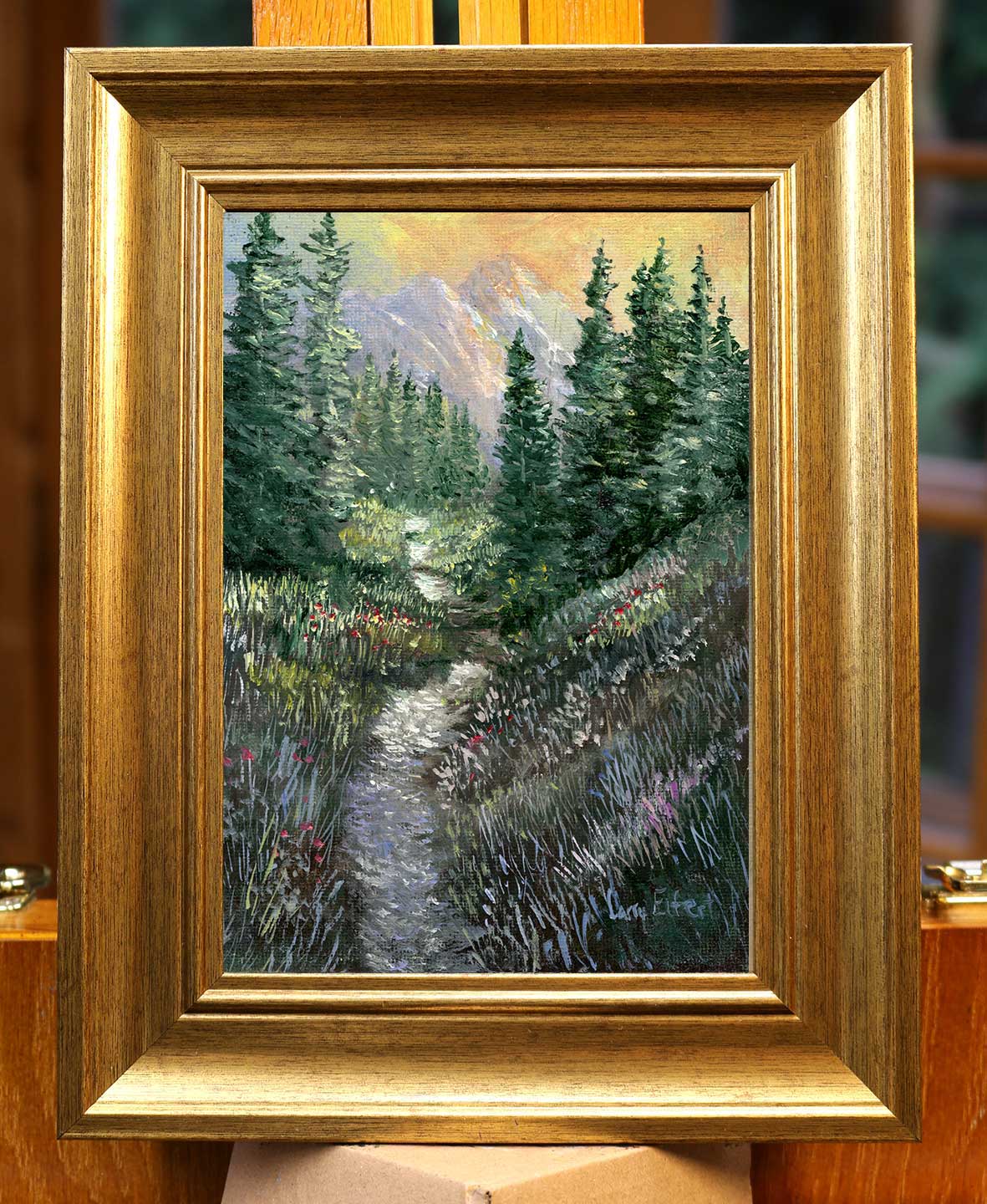
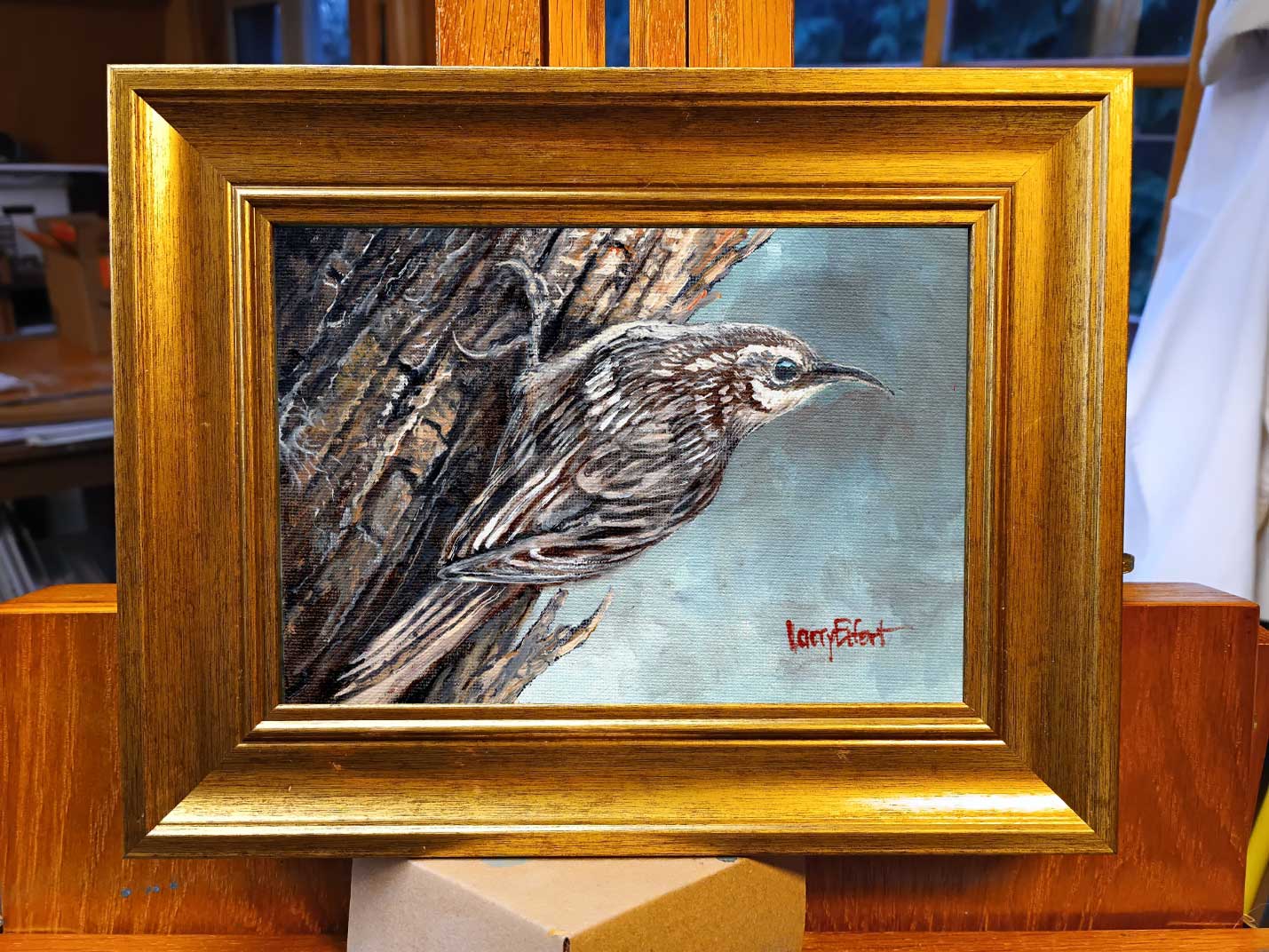
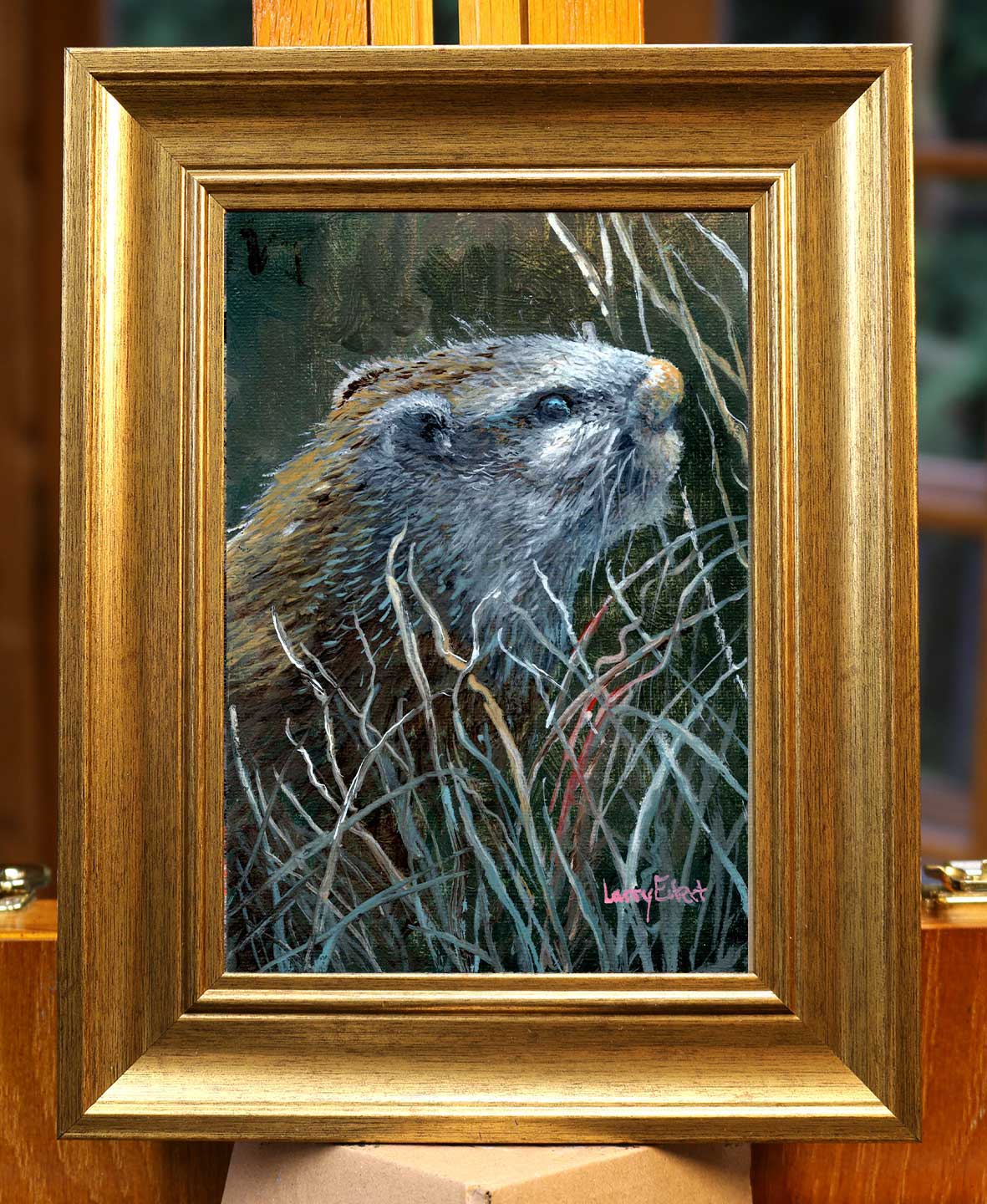
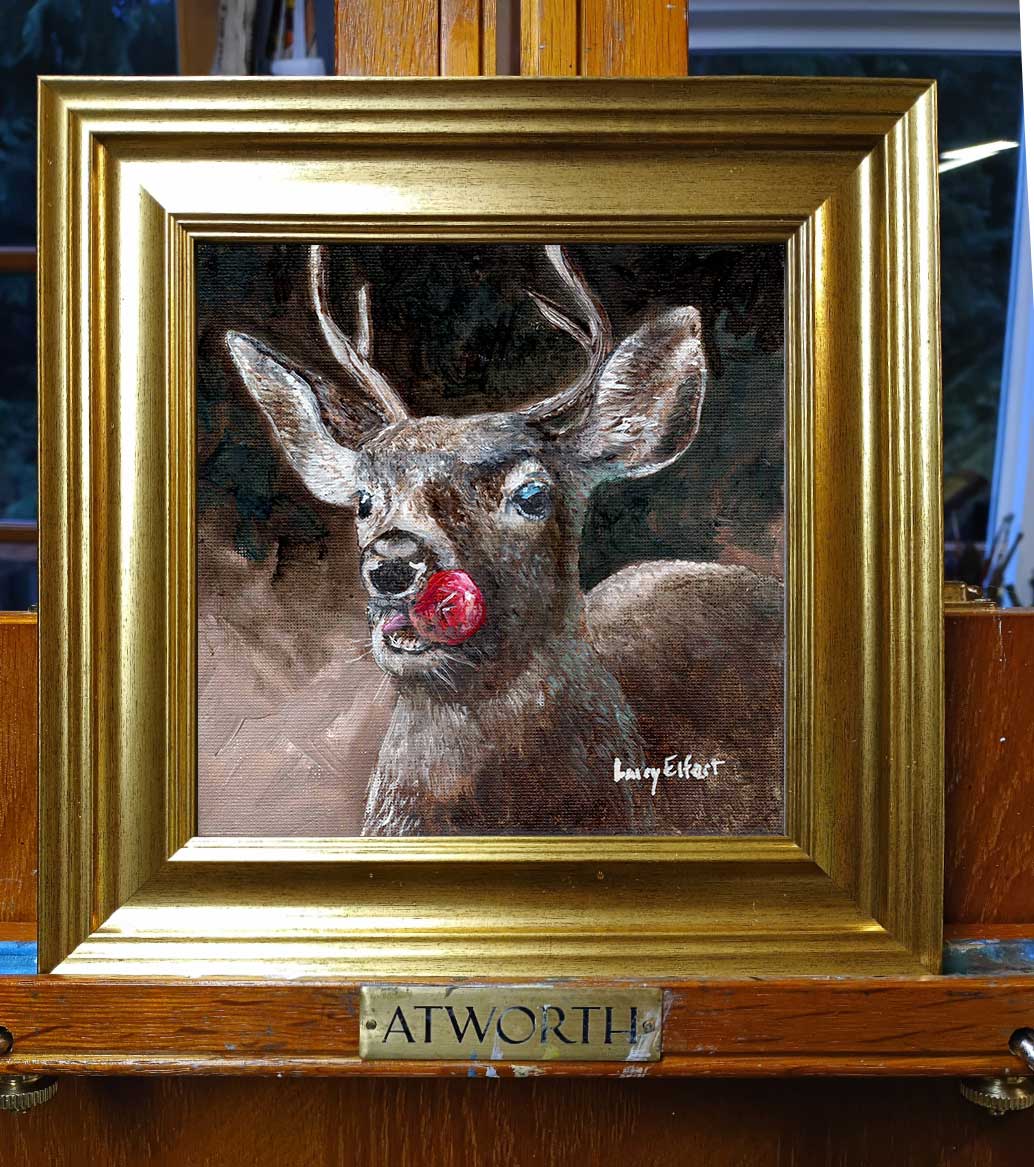
All of these are available and I think we have enough time to get them to you before Christmas. All are oils on canvas, framed as you see them here. Outside measurements are 8″x10″ or 9″x9″ for the square ones. $125 each, postage paid. A click should enlarge them in your browser.
These are all painted from personal experiences I’ve had in the last few months. Some just a few days ago, like the deer with one of our apples here in our meadow. Very rewarding to have the experience, then live it again by painting the event. I’ve always loved the idea of sealing an experience with something that will stay around, probably longer than I will.
Yesterday I sent this and it wasn’t pleasant to view on computers. So, I apologize, but here it goes again. You know, old guys, new software. I don’t need to say more, except thanks for sticking with me.
I just finished these last week so wanted to share. A click will enlarge them nicely.
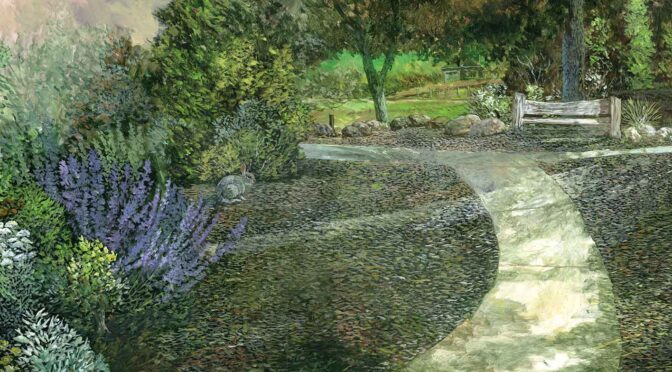
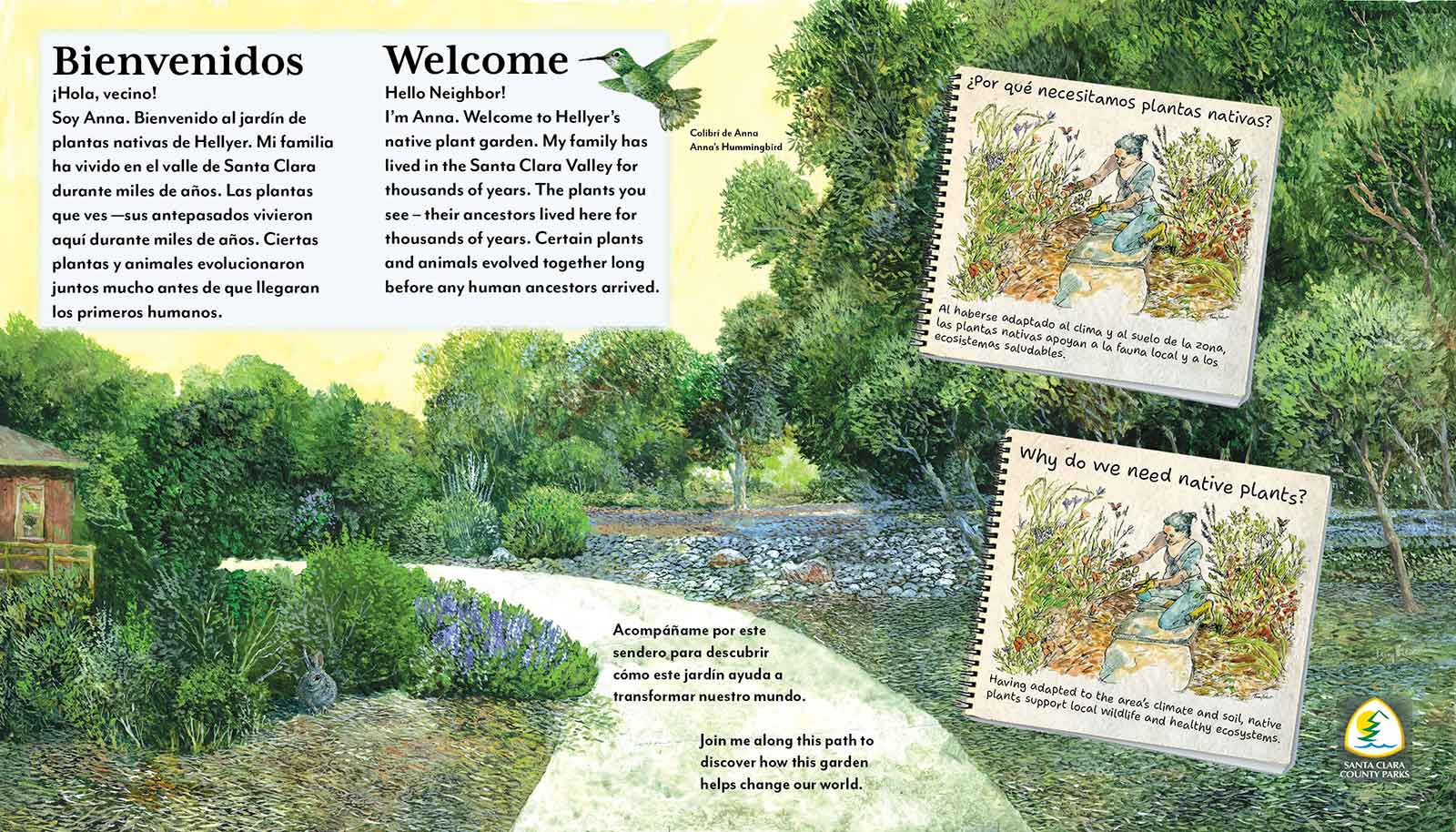
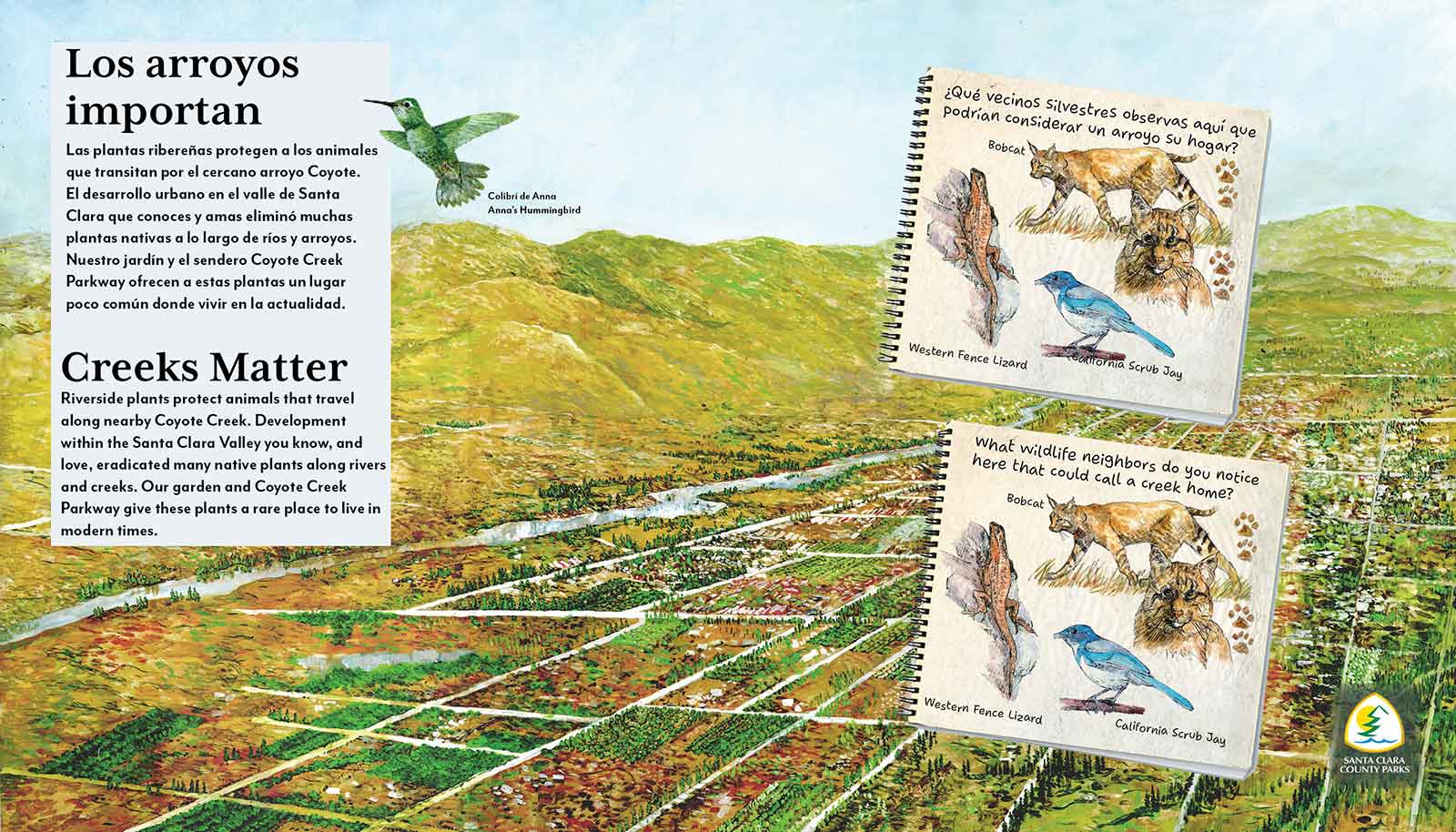
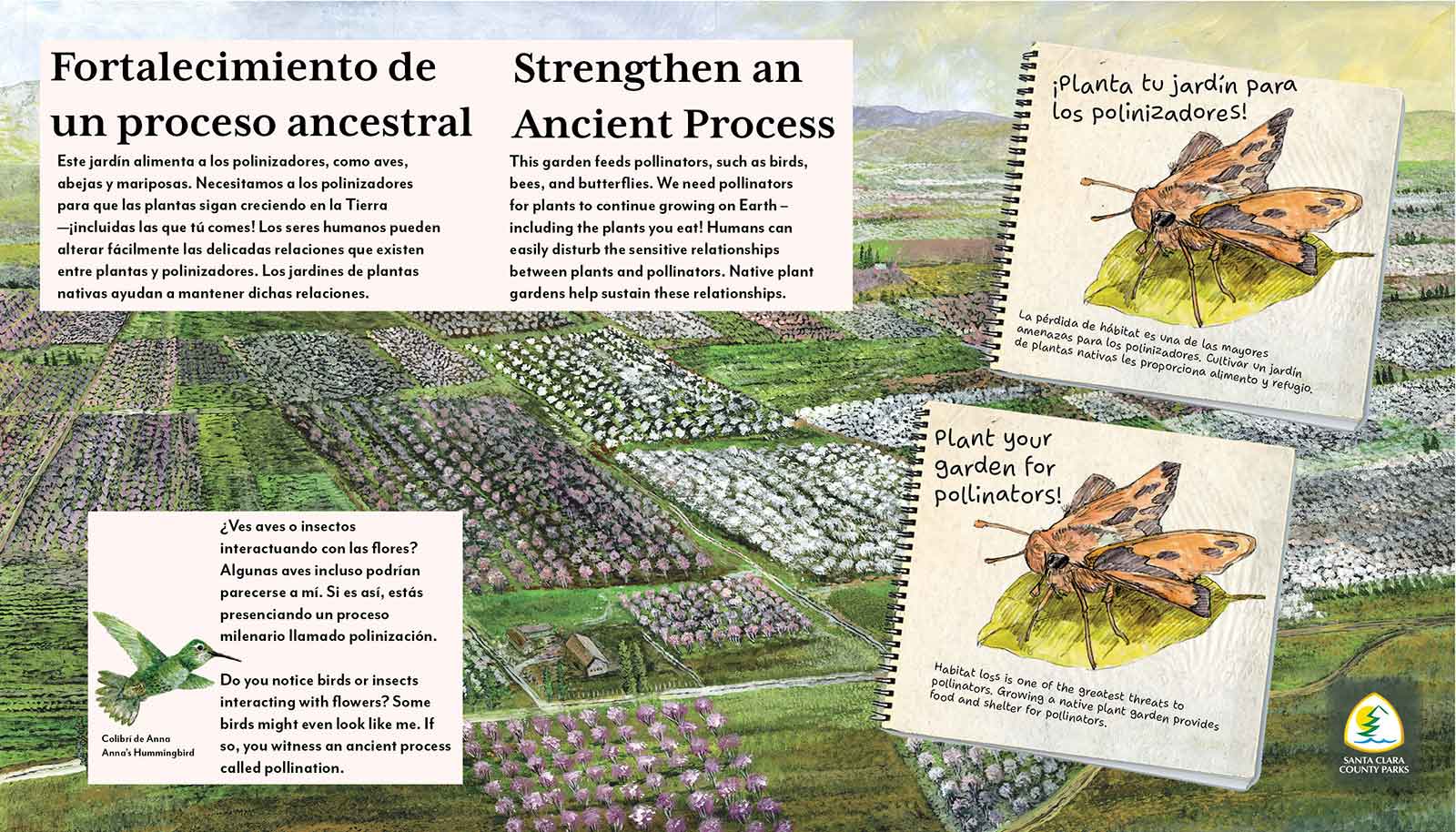
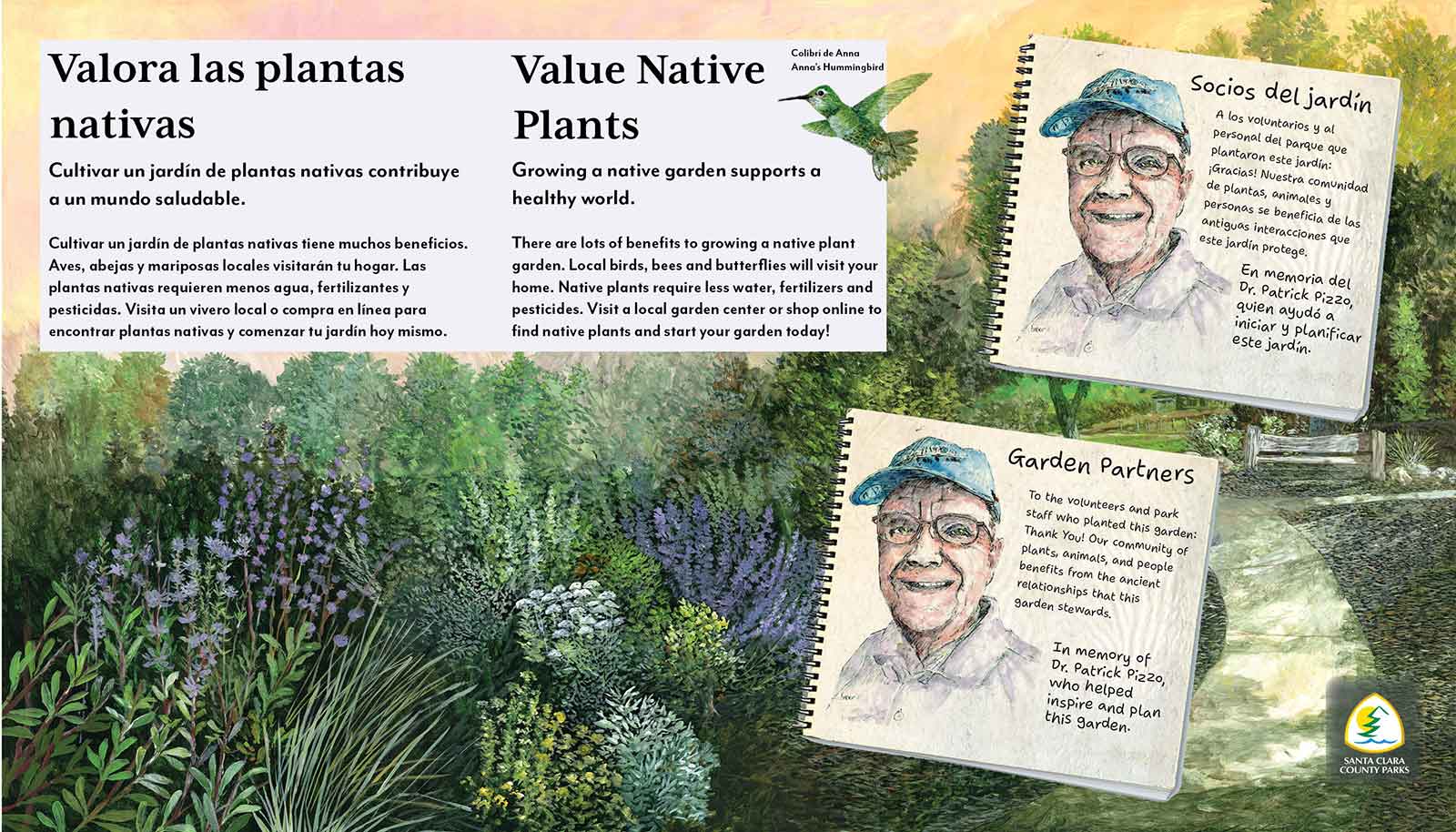
This project was for a native plant garden in Santa Clara County California. It’s a place surrounded by my art in other parks, Mt Diablo, up to Muir Woods, Big Basin Redwoods to Fort Funston and Angel Island, Golden Gate National Recreation Area are some. This park is urban, running along Coyote Creek through San Jose, with a sea of people living along the south shore of San Francisco Bay which includes nearby Silicon Valley and Stanford. Shown here are big background landscape paintings that I was given a fairly free hand it painting – like a gallery show right here in this little park.
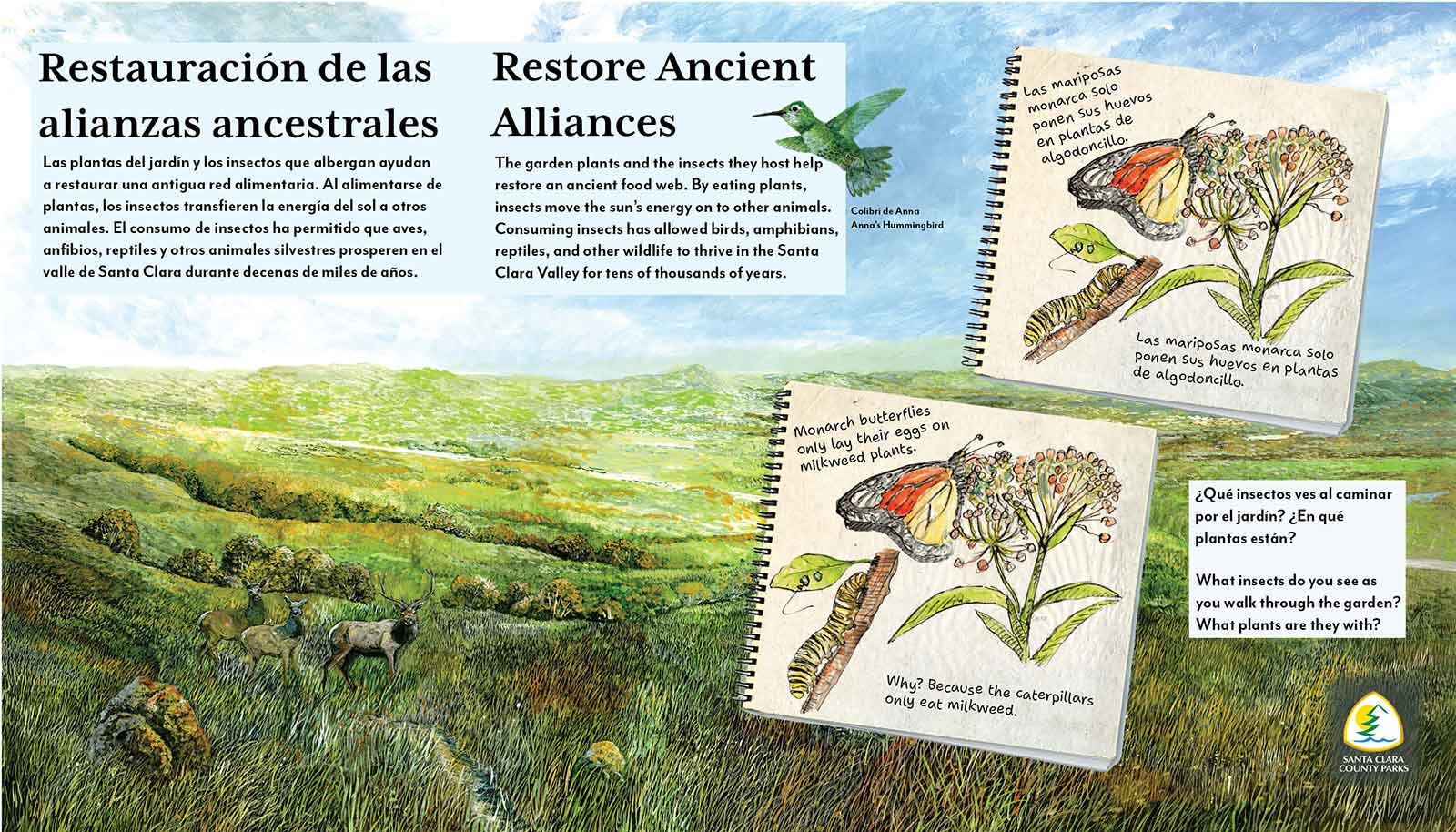
Spanish First! So that’s the redundancy of the two sketchbooks in every panel. Took me a bit to accept it, but I’m okay with it now.
These are the very first wayside panels I’ve ever painted with Spanish as the primary language, which says lots about who uses this urban park. I’ve made many of park panels with Spanish as a second language, but never Spanish as the first language – which shows how far this country has changed in the past few decades. I’m proud to be involved in change.
The other interesting direction taken here is that the text isn’t necessarily connected to the art. It’s common to have background art connected to the rest of it, but this is refreshingly ‘wide’ vision of presenting these are more art than school. The sketchbooks are my pencil and watercolor paintings, with canvas acrylics as the backgrounds. All are 42″ wide.
There are elk in this panel, and the title ‘Restore’ suits it. Yes, they’ve introduced Tule elk back into the landscape above the East Bay, and so you can see them here at Hellyer Park up on the ridgetop fairly often.
This last panel is also different, using the entire panel as a thank you to the community’s efforts to repair a landscape much in need of the natural plants that are the foundation of a healthy city.
I want to thank Carolyn at Santa Clara County Parks and Recreation for these, for giving me a free hand at design and art. As I move forward with my art, replacing the almost extinct National Park Service with a path forward in continuing to do what I love – which is to make art that teaches people about their surroundings. It’s clear I didn’t really loose my job as our National Parks closes up shop, and I don’t mean any temporary government shutdown, but these great parks will soon become something else I’m not going to be a part of.
Thanks for reading this week. You can sign up for emails for these posts on my website at larryeifert.com.
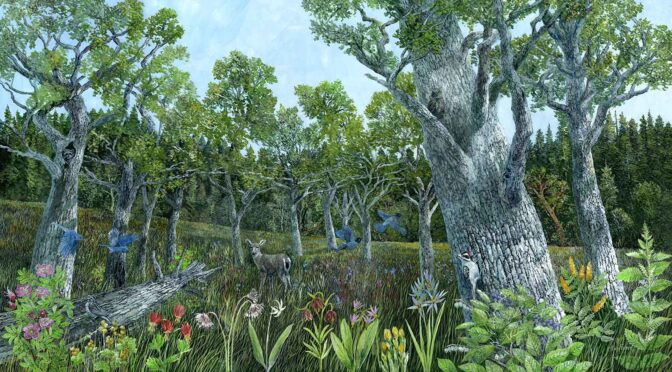
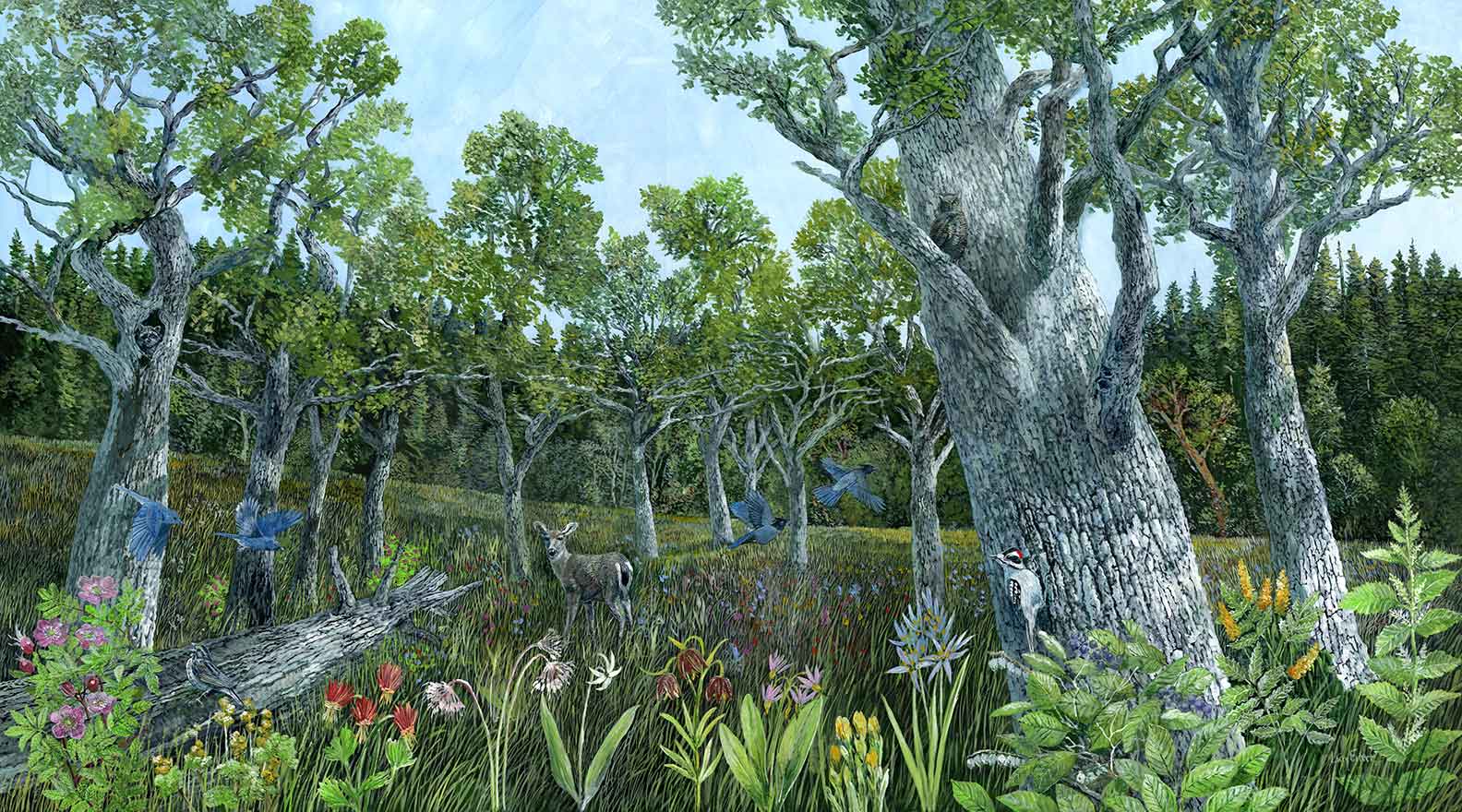
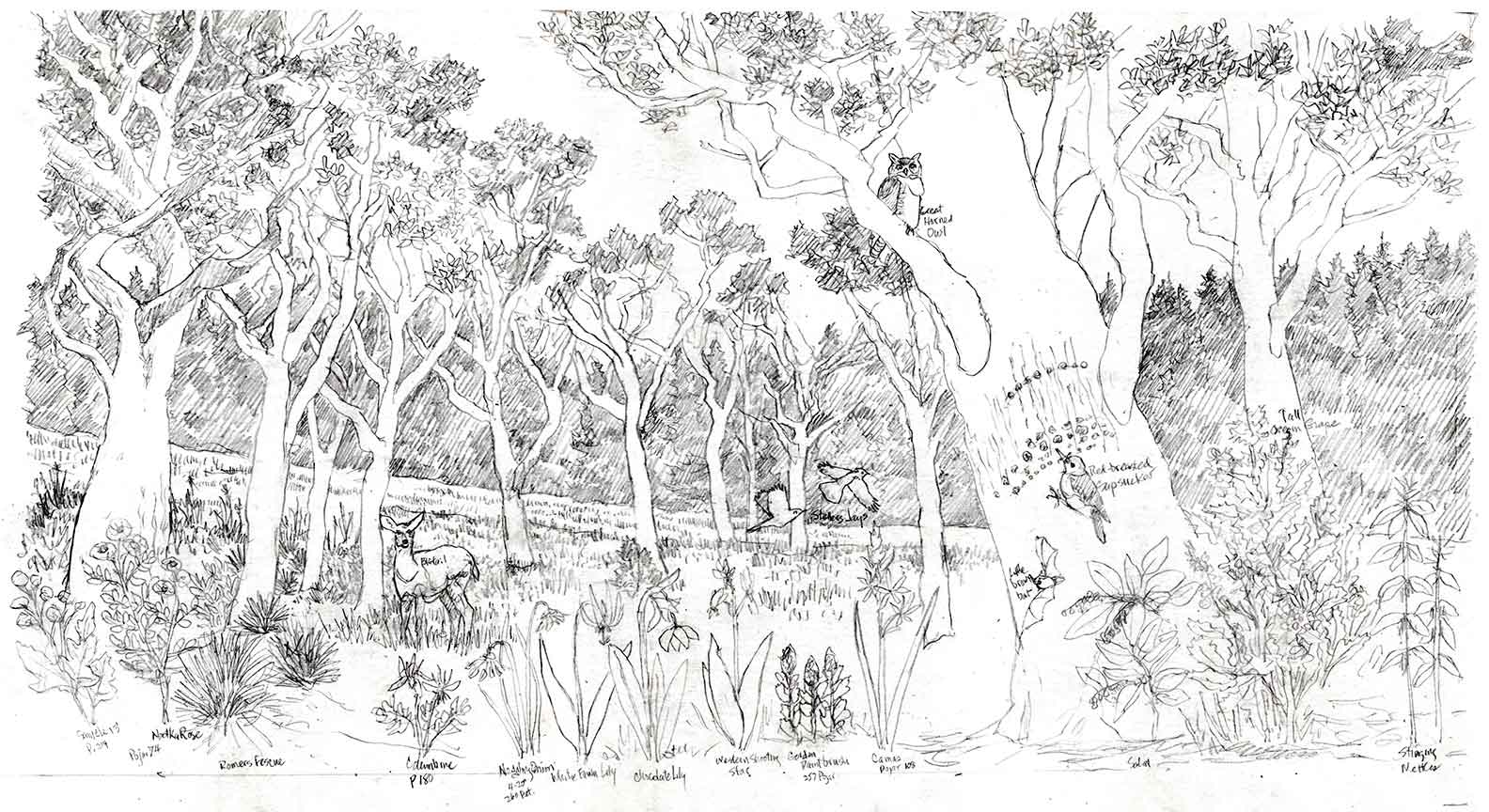
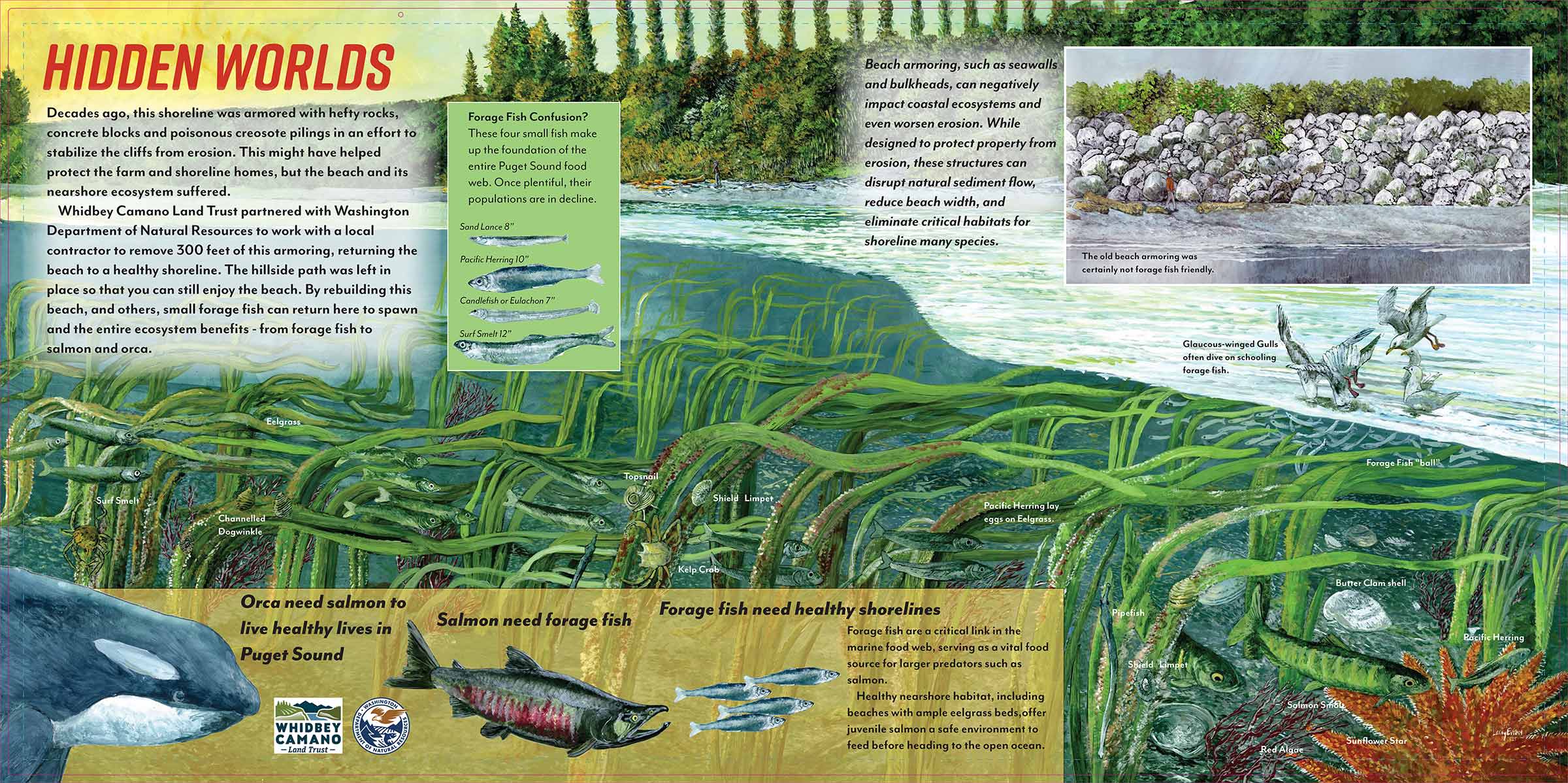
I recently made two panels for the Whidbey Island Land Trust and Oak Harbor Garry Oak Society. Here’s the oak panel. This and a panel about nearshore restoration will be installed at the new Keystone Preserve on Whidbey Island very soon. I’m pleased how this all finished up, from concept designs, to making the art and finally making it all work with a text story. Art telling stories, we’ve been talking about that lately.
Garry oaks are the only oak trees in the Pacific Northwest, and they’ve become very rare. This is the same tree as the Oregon white oak, stately and slow-growing forests that were actually cultivated crops for thousands of years by the Indian tribes. These trees provided food and an open forest designed for other important plants such as camas and the other root vegetables for the first people who lived here.
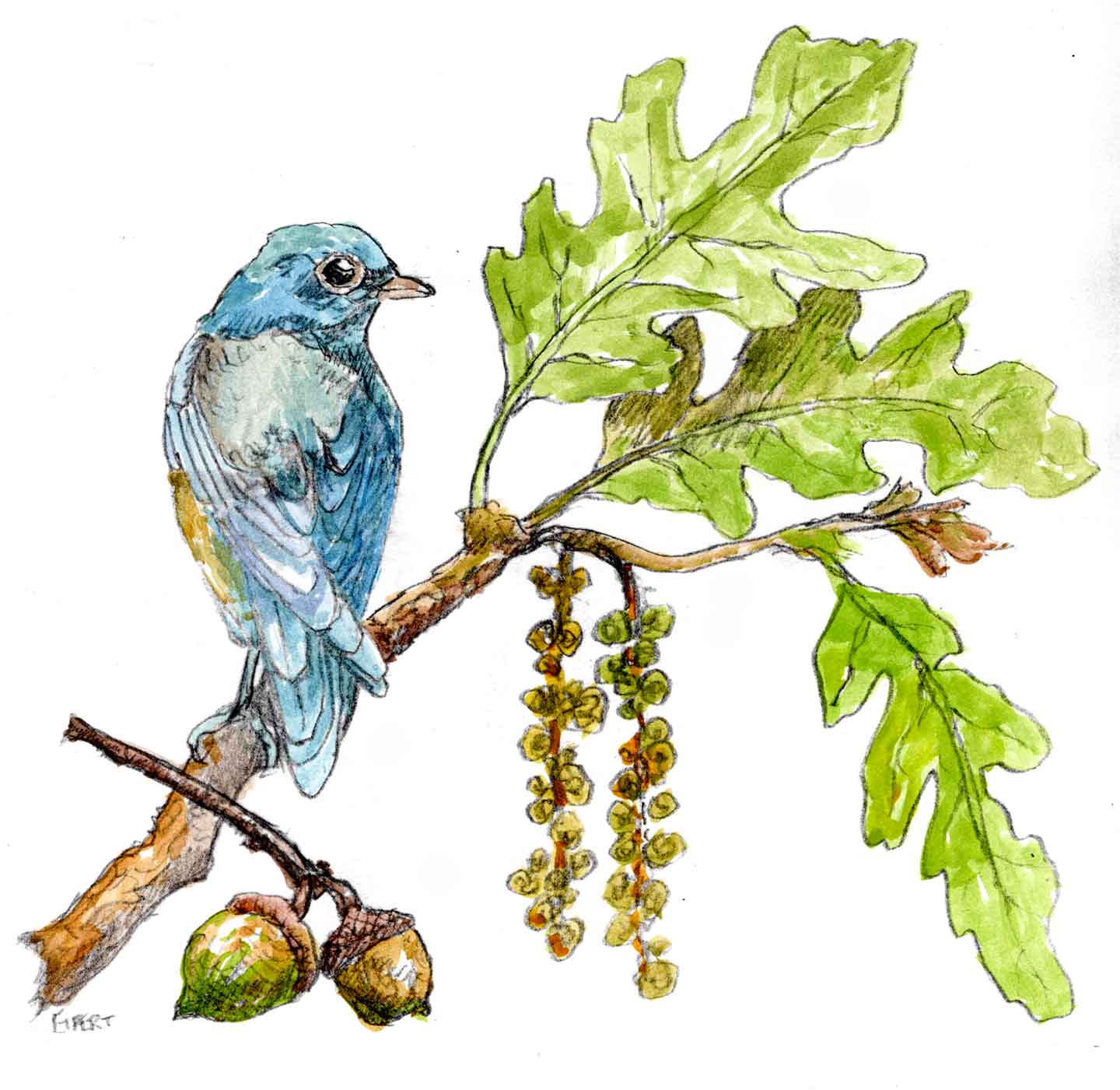
Above is my refined sketch for the painting. I was trying to find a way to show the forest and some way to identify the important native plants that are rare as well. And this bluebird, below, gives a scale to the oak leaves and bird that could fit in the palm of my hand. Watercolor and pencil drawing.
And below, the second panel for this project, about the restoration of the bluff at the Reserve, eelgrass beds, orcas, salmon and forage fish.
People have been asking, are you still painting for the National Park Service as it spirals down to non-existence? Yes, I currently have two projects and two more awaiting for them – but it’s a sad story that shows my work with them is going to end soon – thanks to the Fascist leadership who is setting up the NPS for total failure. It’s been a wonderful experience for me to spend these past decades painting art for a grateful bunch of people who cared more about their country than making money.
Thanks for reading this week. You can sign up for emails for these posts on my website at larryeifert.com.
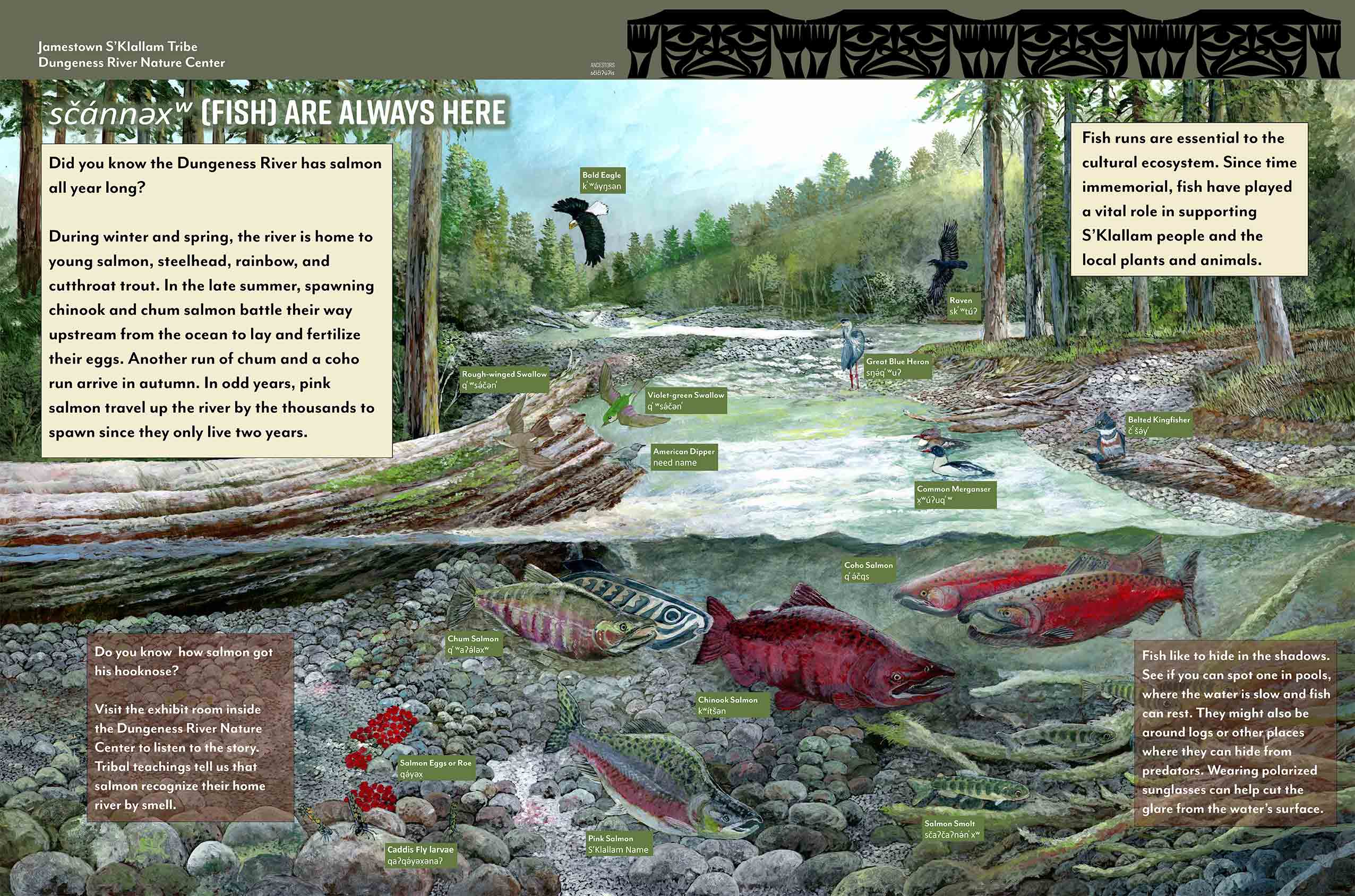
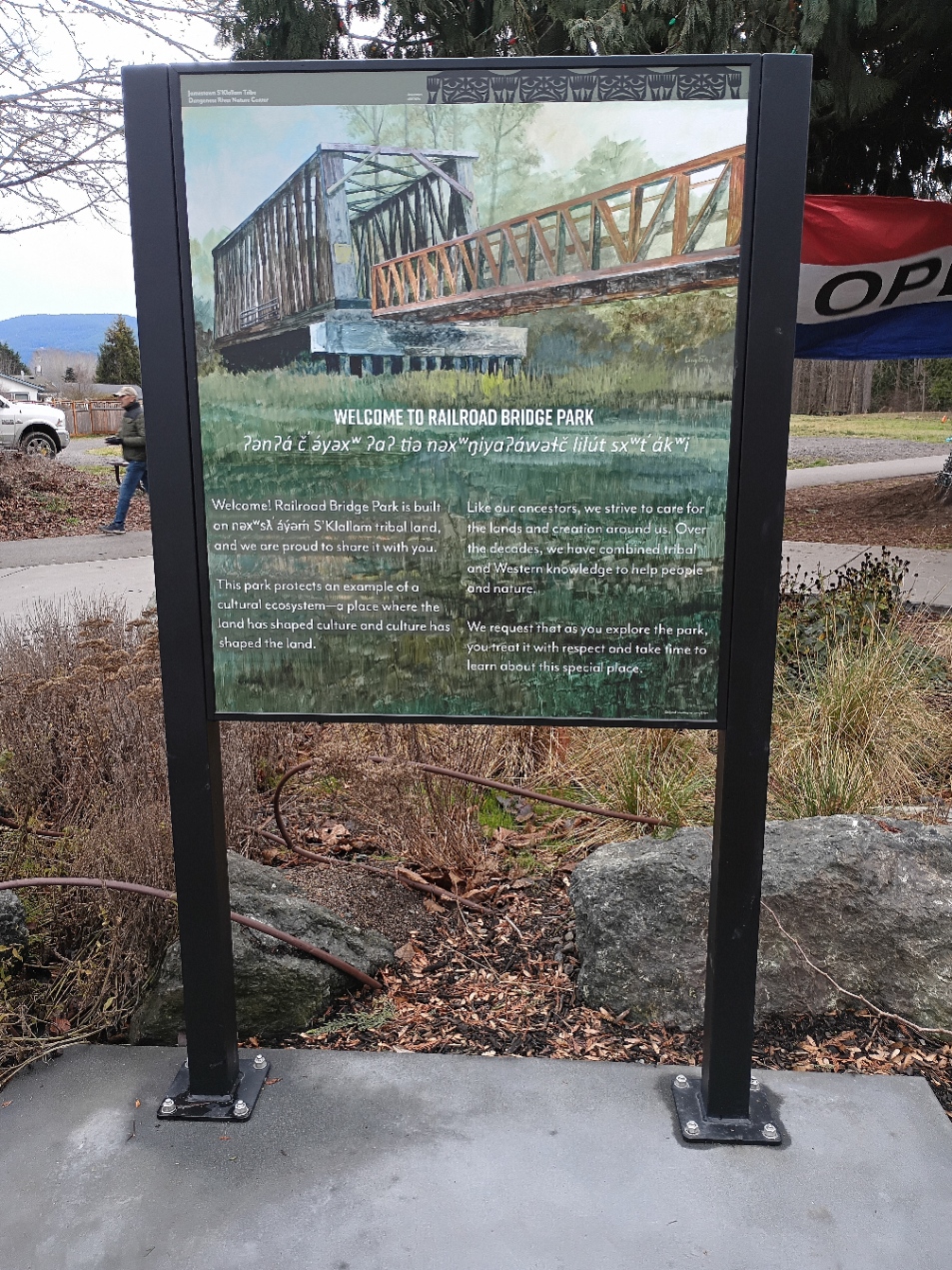
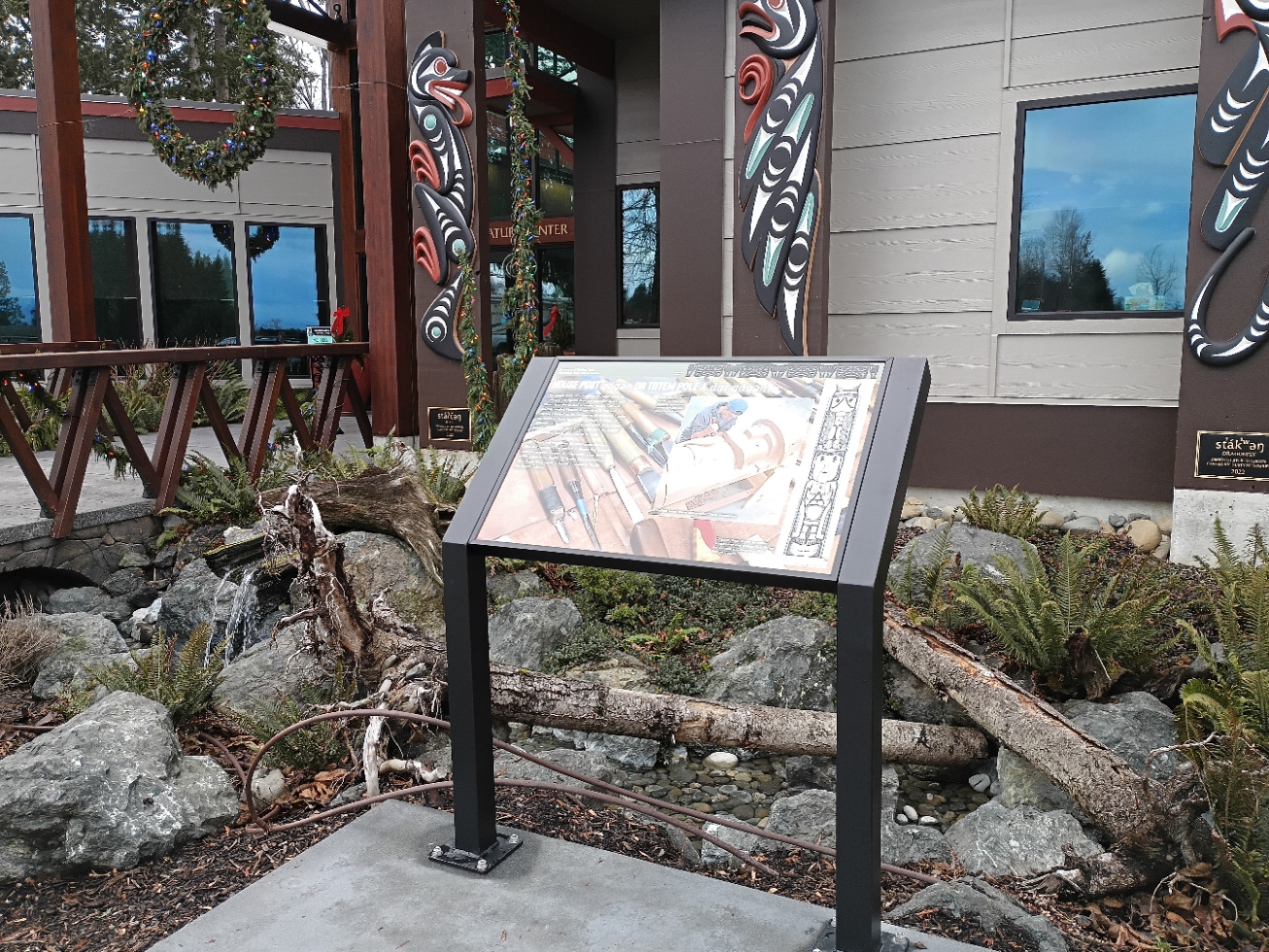
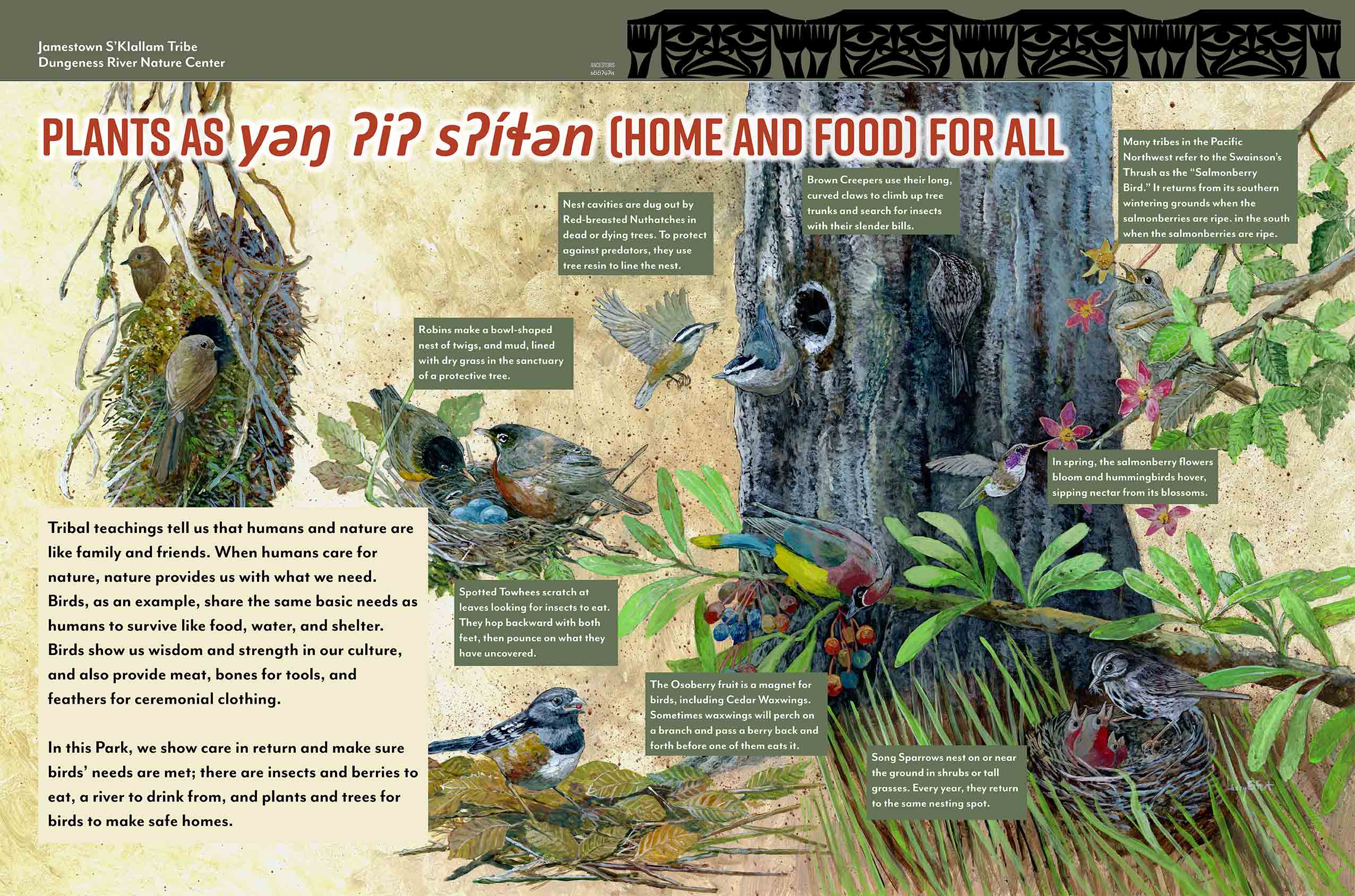
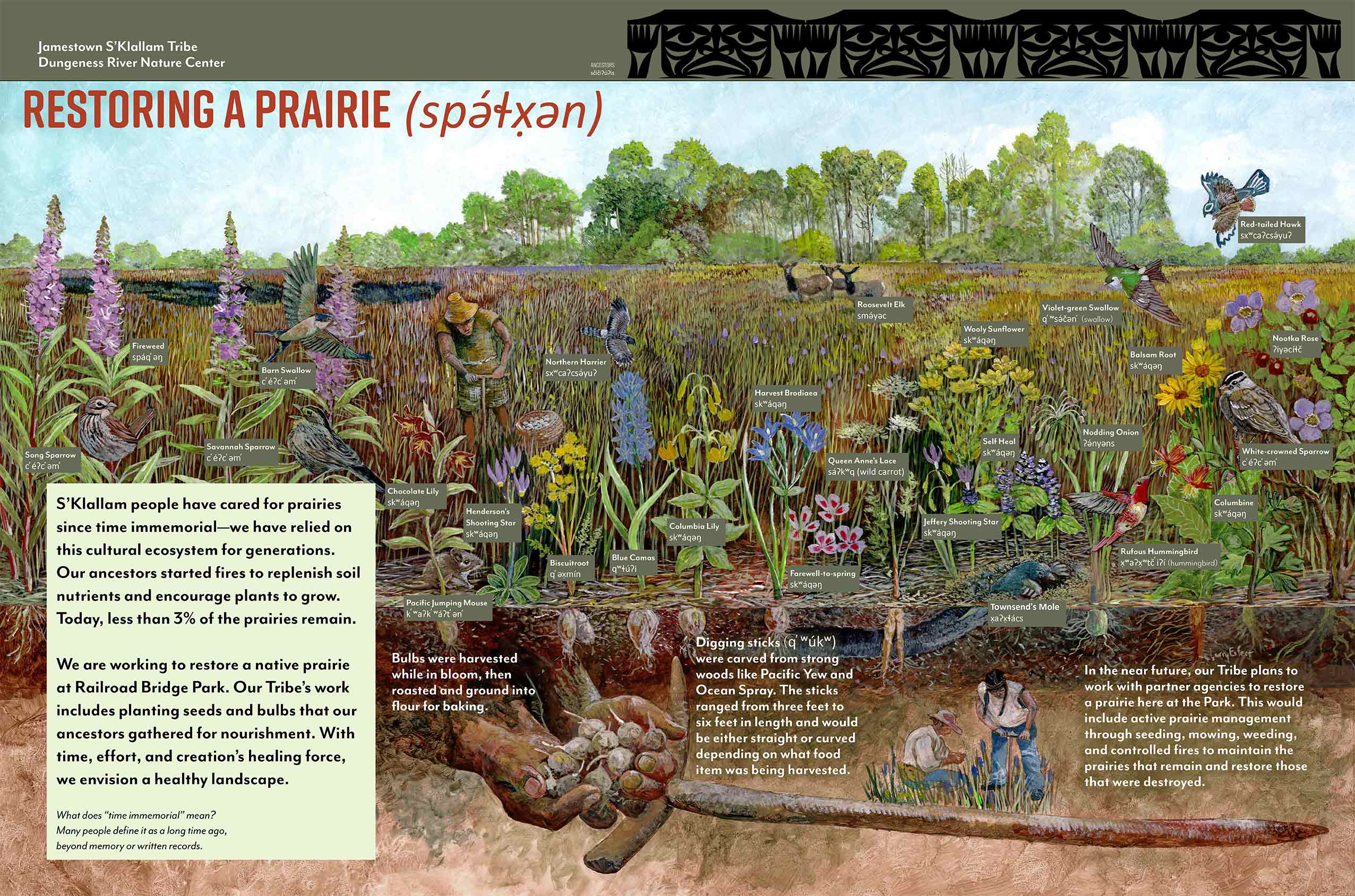
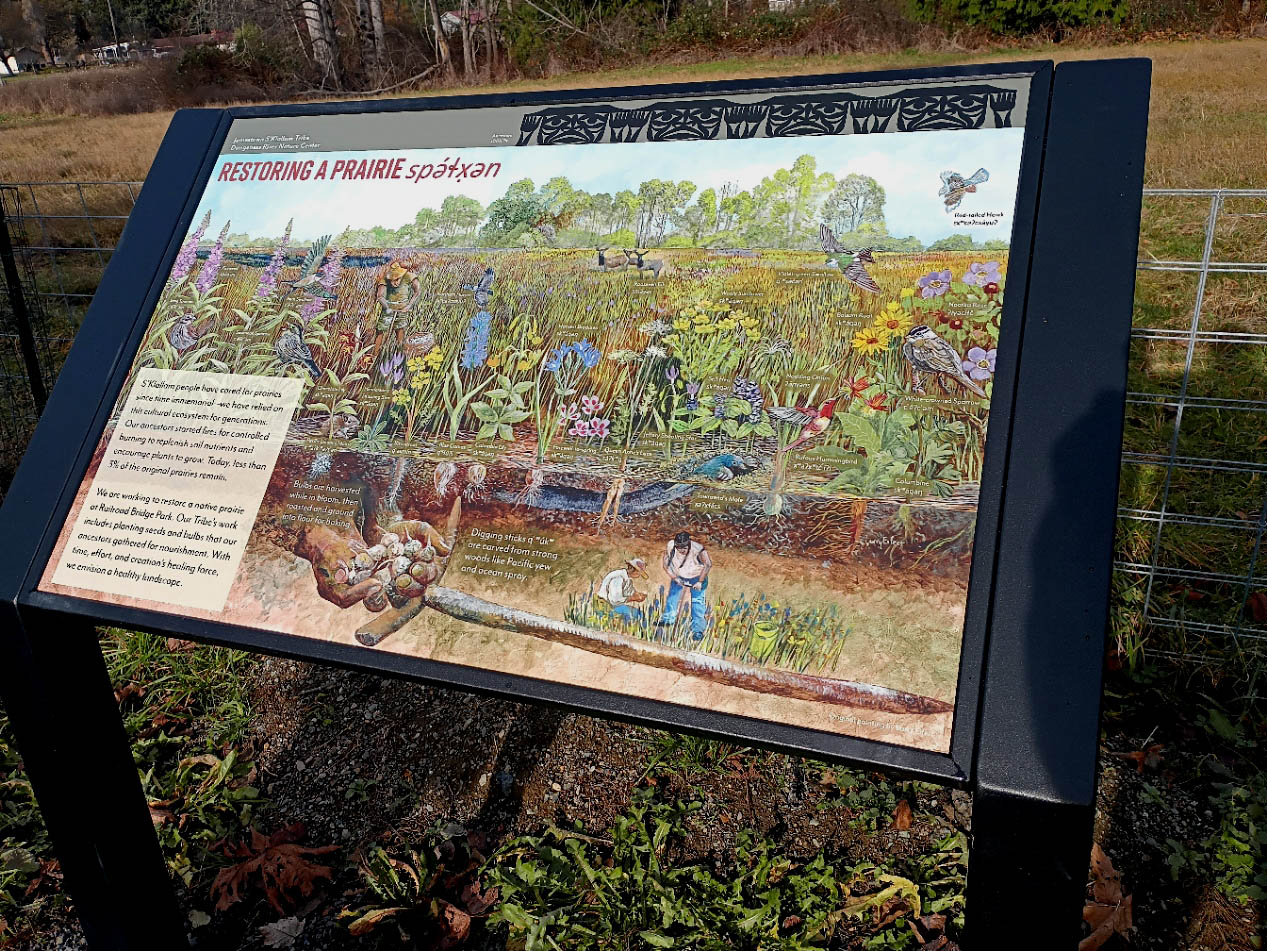
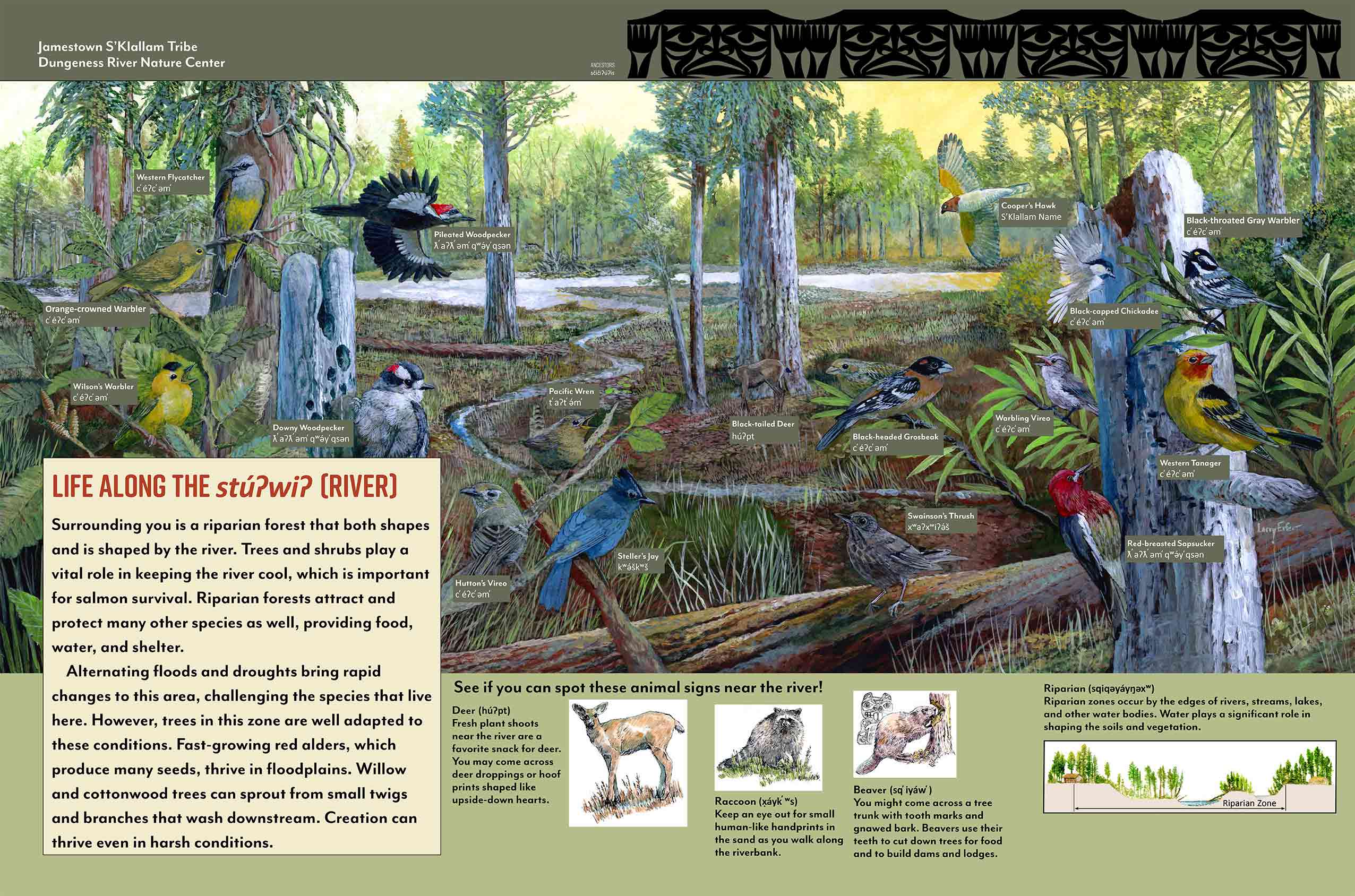
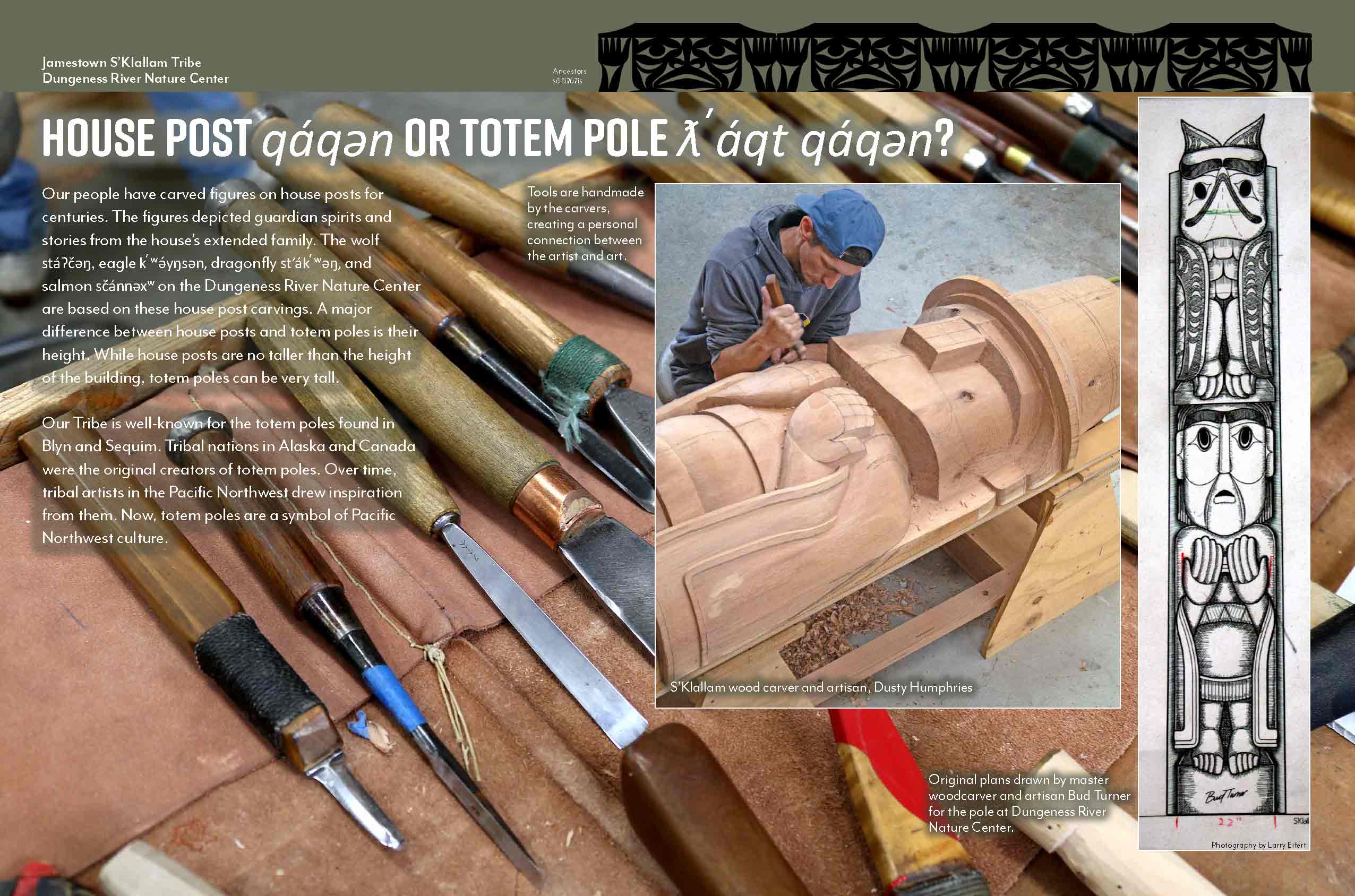
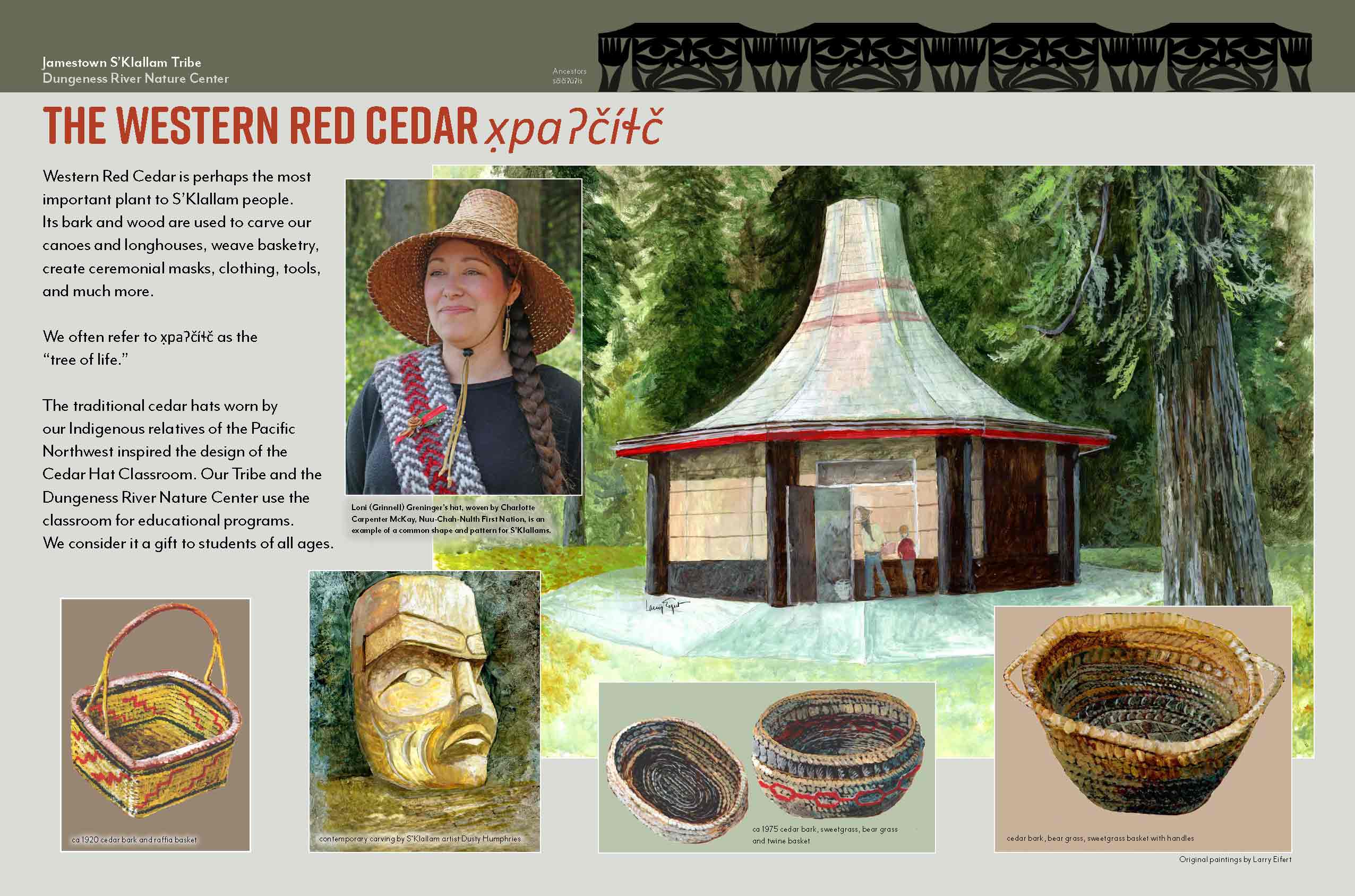
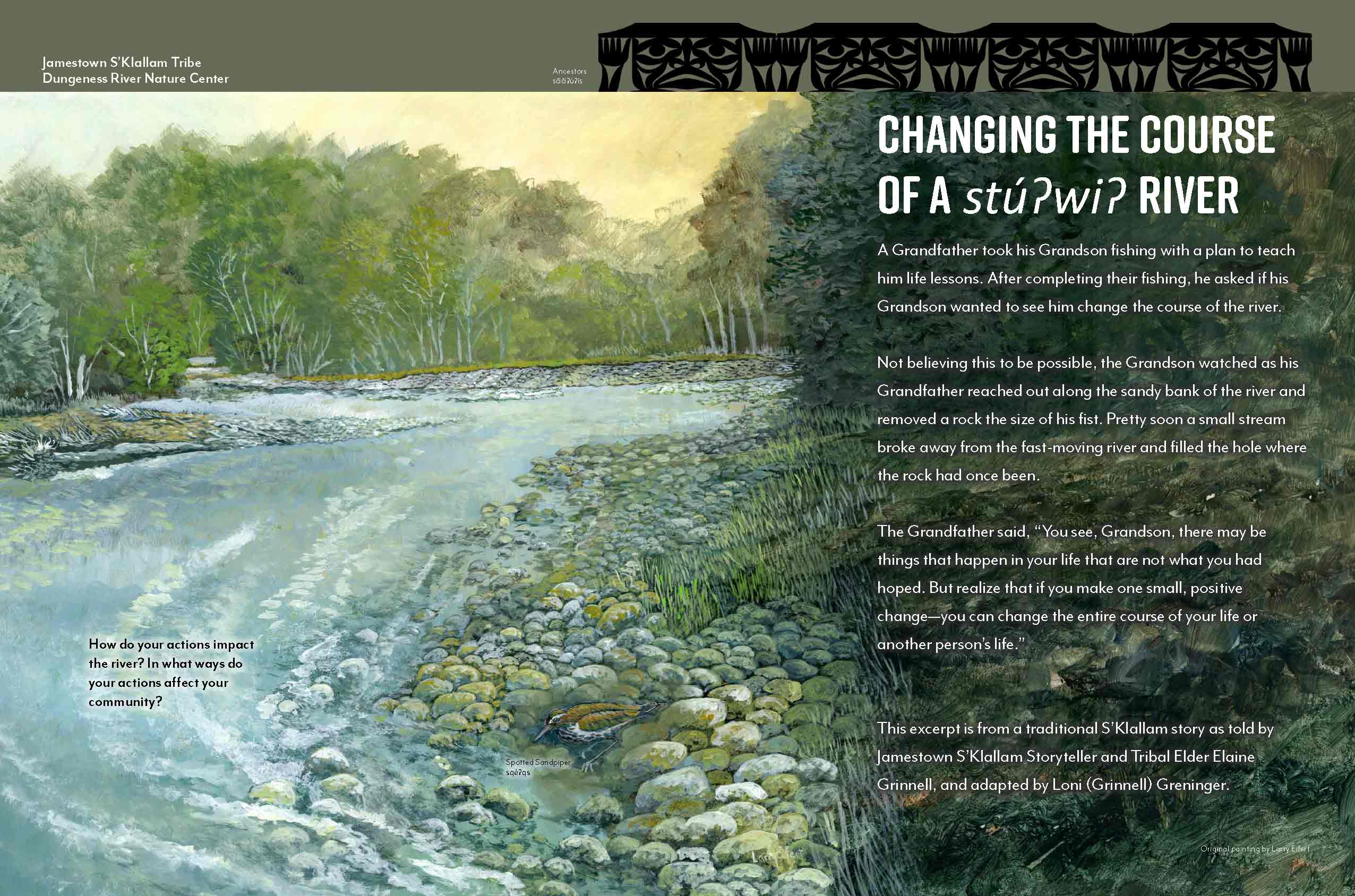
In 2024, I was commissioned by the Jamestown S’Klallam Tribe in Sequim, Wa to make a series of wayside panels for the Dungeness River Center. This is an interpretive center, exhibits and classrooms, for the wild and free Dungeness, one of the steepest watersheds in the country. The project went on half a year, but I never posted a word about it here. Too many other paintings to talk about, I guess – not to mention finding the time to even sit down to post them.
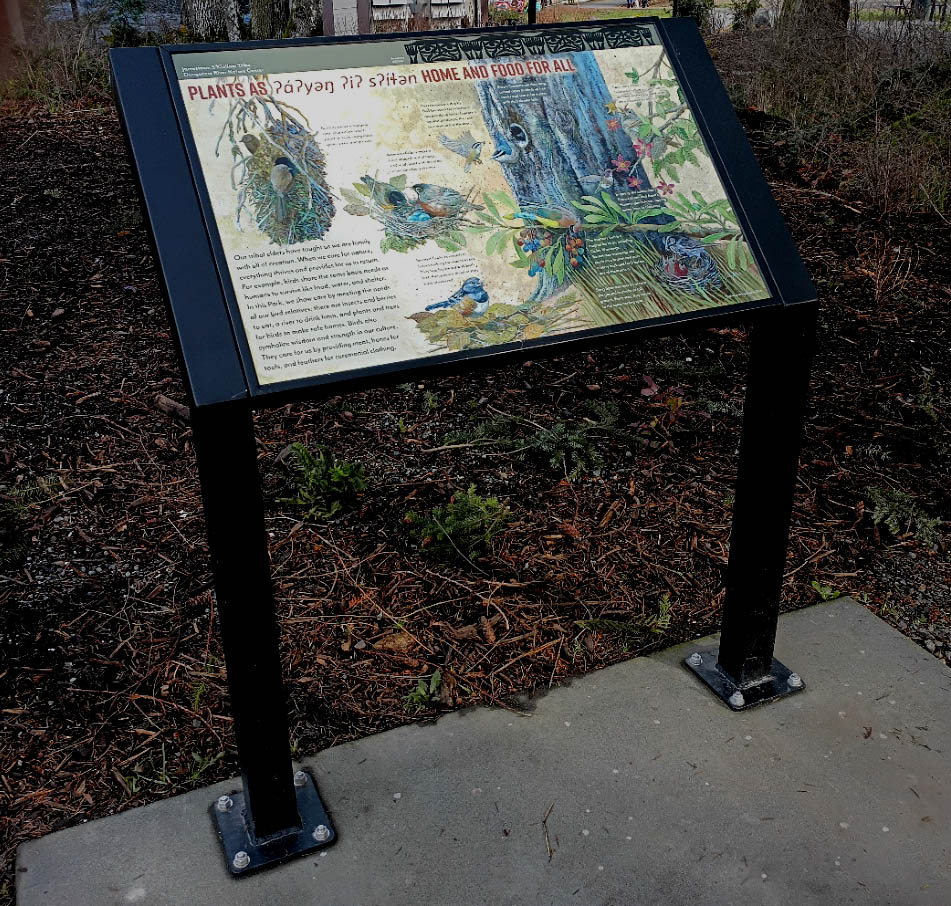
The Tribe asked me to make these outside panels so when the visitor center is closed, visitors still have a visual learning experience. The panels are around the building, but also along the Olympic Discovery Trail that passes nearby. This trail is also part of the Pacific Northwest National Scenic Trail from Glacier National Park to La Push WA on the Pacific Ocean.
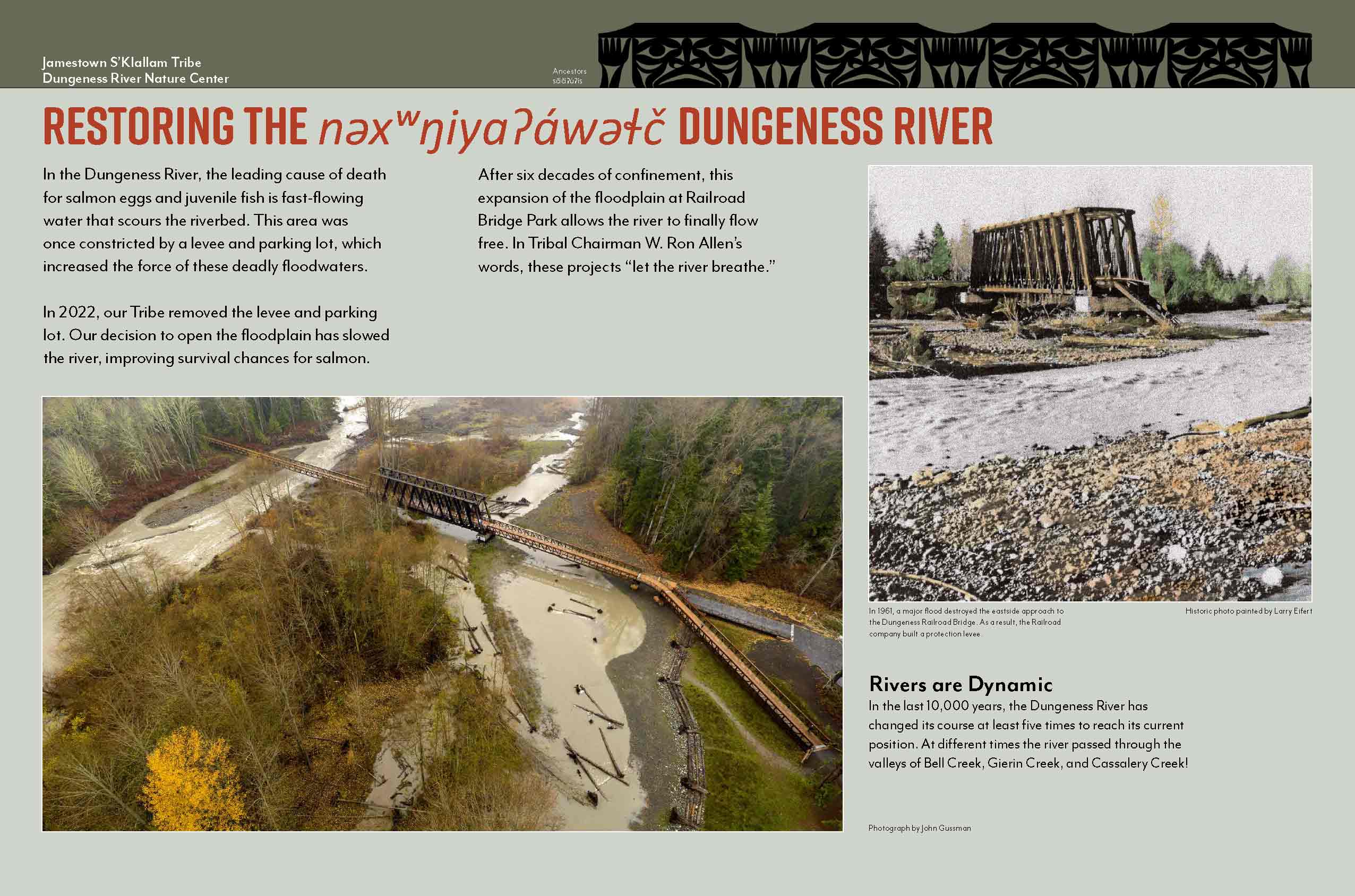
I’m happy with the results. This place is centered around an old railroad bridge (Railroad Bridge Park) and the Tribe bought it, gaining back a bit of their original land they had for thousands of years. In the process, we got to know a rather amazing group of S’Klallam people – and learned a lot doing it. We both felt privileged to be involved.
You’ll see both English and S’Klallam languages on these. The Tribe has programs in the local schools teaching this ancient language, and we tried to blend the languages, especially on the species captions. I think it worked pretty well, although it was a real challenge to figure out a font that has all the characters. Try finding a ADA compliant font with a backwards question mark, or a word that means Belted Kingfisher!
There’s a lot more than just painting that goes into this stuff. I don’t do it all, but from the ground up there’s the concrete pad, an ADA-approved installation of the legs and frame that will last 30 years, the aluminum panel the image is etched on is made only in South Dakota. The entire Adobe Suite of software (usually 4 programs that I use to design it) makes it print-ready. Then a committee has to approve what is written and painted so that it’s an accurate story. The art seems a secondary bit of this, but it takes the most time, and without good art, what is this but a book-on-a-stick!
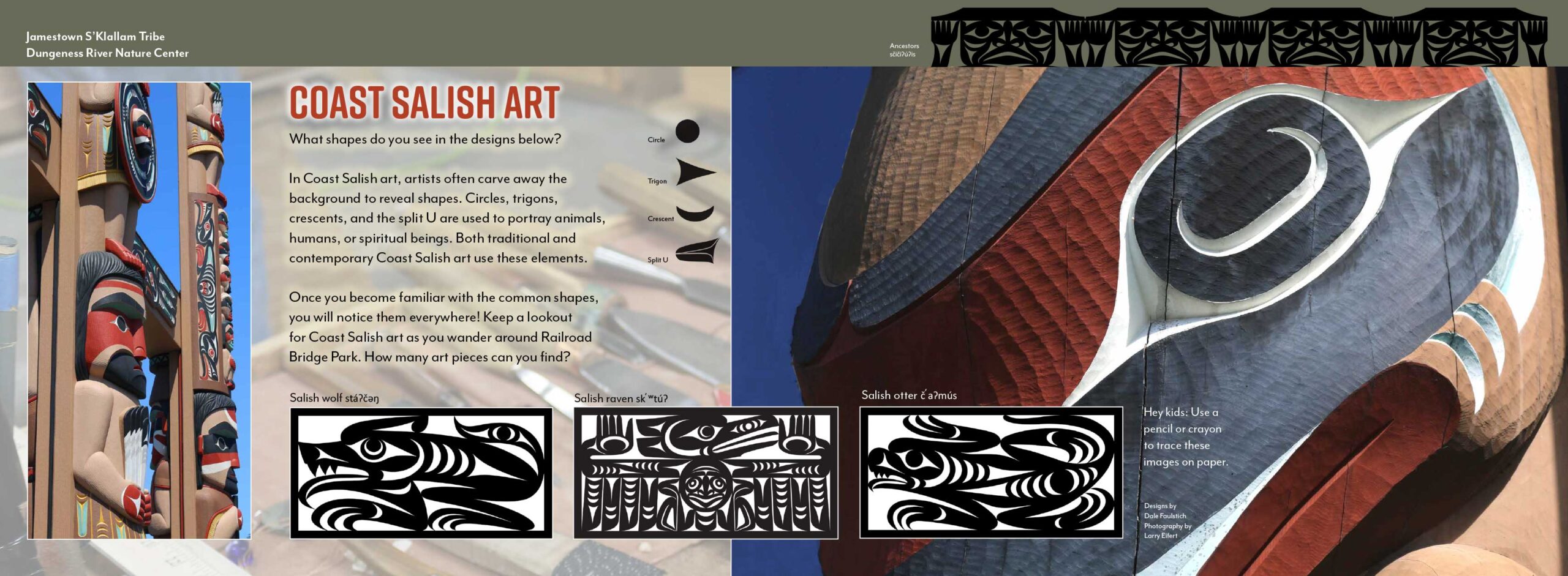
We tried something new on this panel (above), making the three insets from laser-cut plastic that can be traced with pencil or crayon. School groups can trace the image onto paper to take with them – sort of a hands-on approach to a visual object.
Dusty Humphries, an artisan at the Tribal carving shed (actually a huge new building, not a shed) allowed me in to photograph his work. A truely amazing place.
Lori Grinnell Greninger seemed to be all over this project, giving us help in many ways – and not just modeling her hat – which the building was modeled after.
This last panel has the only image not of my own art or photography. Thanks to John Gussman for the drone image. Also a great thanks to Kathy Steichen for recommending me to the Tribe for this project in the first place. After a lifetime of painting, these new challenges keep me young, and I’ve worked with Kathy on many projects now.
Thanks for reading this week. You can sign up for emails for these posts on my website at larryeifert.com.
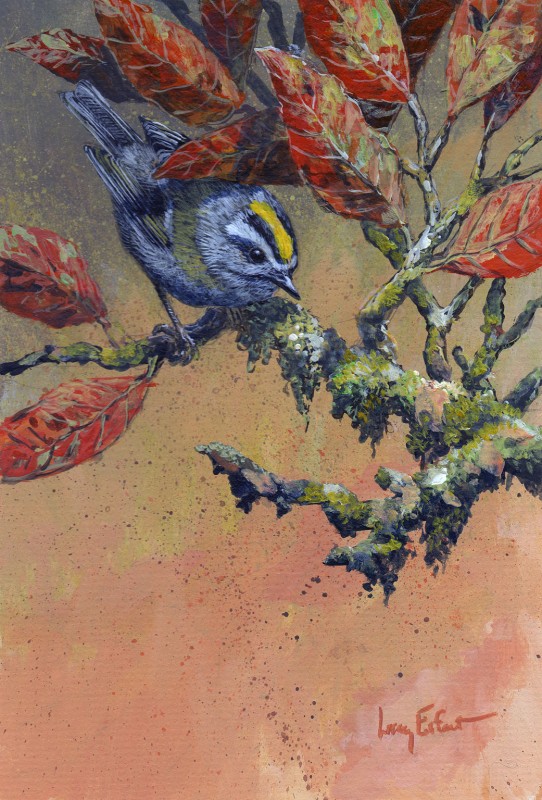
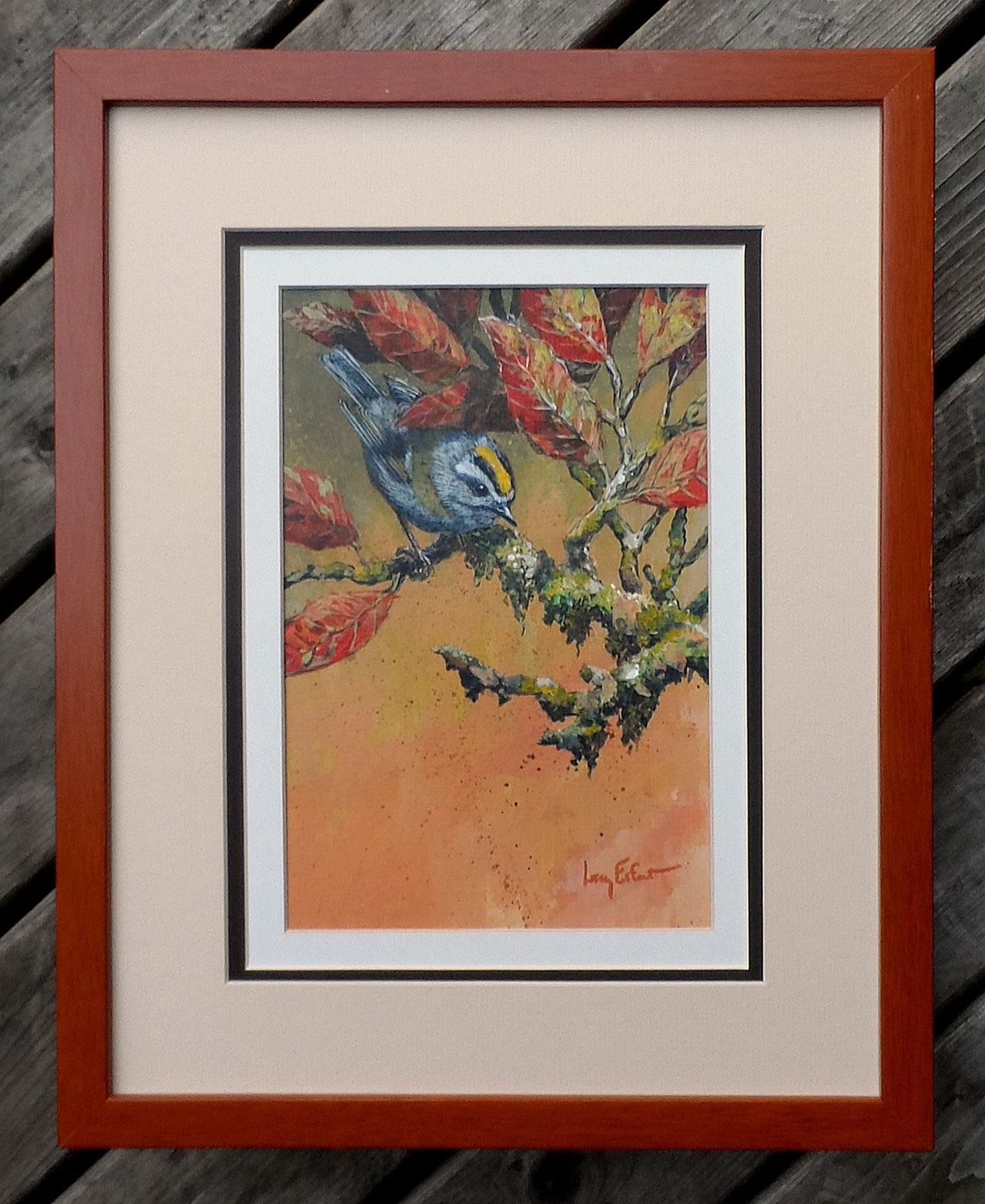
Not 20 feet out the studio window, Nancy’s blueberry leaves are showing some amazing fall bronze, green and yellow. So, then a little golden-crowned kinglet came along. This painting was just meant to be, I guess. Someone asked me how these small paintings feel to paint after miles of paint on big murals. To tell the truth, what I like is the simple fact they’re not commissions andI have to please someone other than myself. Other than that, it’s all the same, just the brush sizes are different, and maybe the fact that I use my fingers on these – and the back of my hand of the bigger stuff.
One of my last posts sold to a past client who bought it for her budding artist grand-daughter. I wrote a little card to go with it which gave me a chance to speak of what I actually liked about the painting, what to look for if I were her. It was fun to think about.
This one? Look at the cool feathers compared to the rest of it, but not ‘cool’ in the 60’s sense. The slight coolness of the bird should make it recede (cool colors generally recede in a painting), but they just blow out at you because the rest of it is so hot.
This ORIGINAL painting is acrylic on board, 6″ x 9″ and $145 framed.
The custom frame has a triple liner and glass. Outside measurements are about 12″ x 15″ Shipping adds just a bit more depending on your zone. This is the original painting, NOT a print. Email us for details.
Thanks for reading this week. Send this to someone who might appreciate what I’m painting and tell them to sign up for more posts. I’m trying to expand my list. An email to me with their address will work.
Larry Eifert
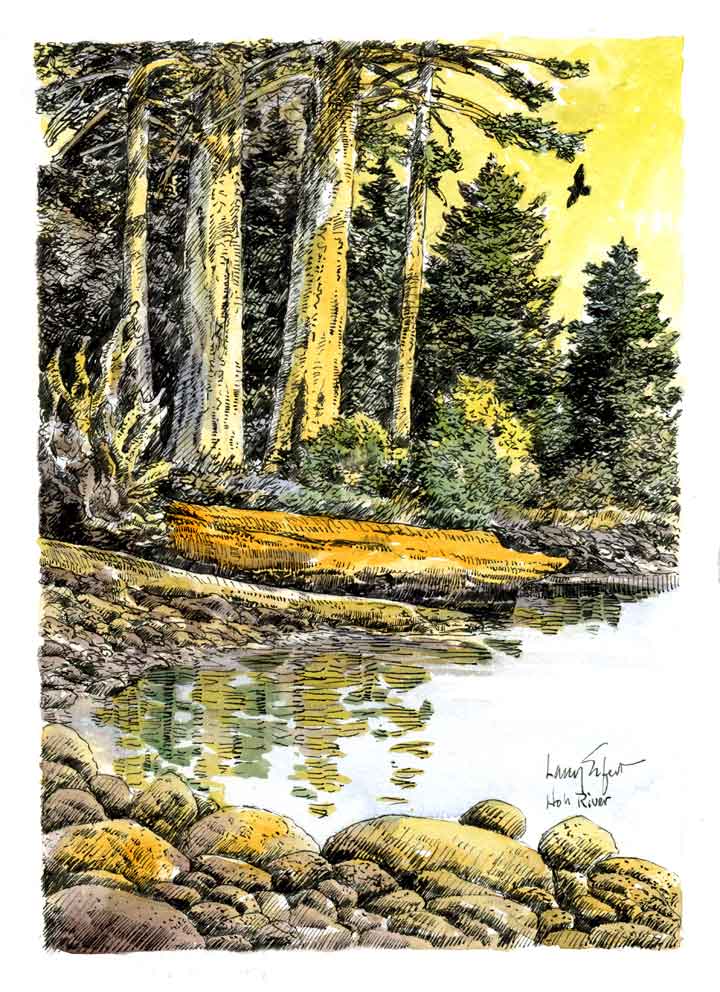
Forgot to post this when I painted it – but it’s never too late for new art, right? This little painting was created with me in the camp chair, paints balanced on my knee – glass of wine nearby. Life was good.
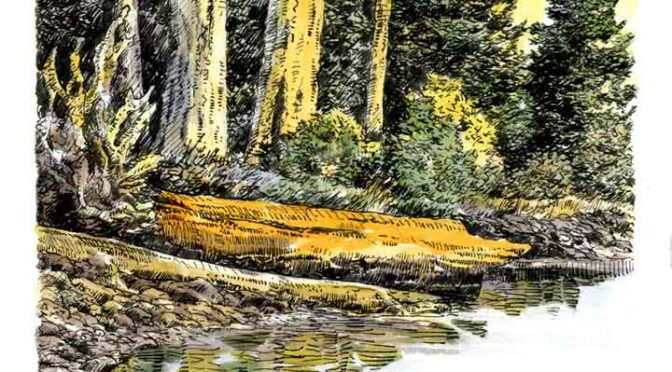
On the Olympic’s west side, the Hoh River is a pretty messy place. Just below our campsite was this little backwater. Big water from the rainiest mountains in the United States tear out enormous trees and drag them along, crashing into the shore and causing all sorts of mayhem. A tree could be dragged along in periodic storms for decades until they finally come to rest in places like this, backwaters that stack up the 8′ diameter trees like cordwood. For the next hundred years or more they’ll slowly decompose, create rich habitat for all sorts of birds and animals, and shelter young salmon. Without these big trees in this wild river, the Hoh wouldn’t be as ecologically healthy as it is. It’s quite a place – to put it mildly.
This original painting is watercolor and ink on paper, 9″ x 12″ and $125 unframed. If you’re interested in a frame, we can do that too. This is the original painting, NOT a print. Email us for details.
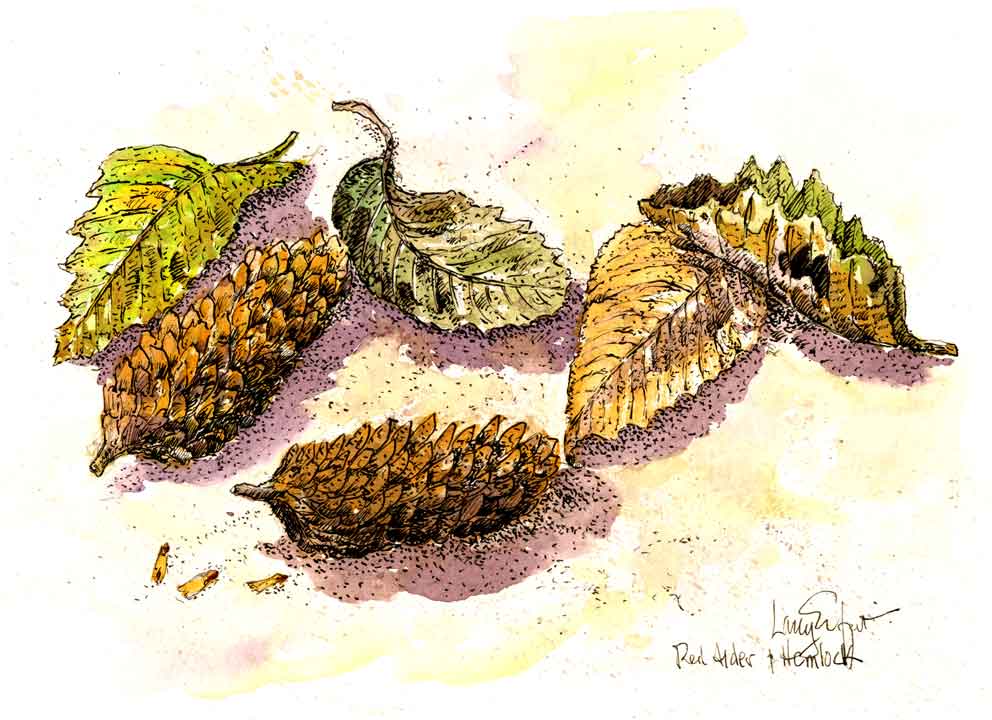
That’s what my life is about these days – especially big-leafed maple leaves. About the size of a dinner plate (some are platter-sized), our enormous southside maple STILL has a few thousand leaves to drop. And the red alders have barely begun to even think about it. Don’t get me started. I love this forest place of ours, but this time of year the trees are definitely in charge of my life. Autumn blows comes though, I vacuum them up with the mower and haul’um down to the huge compost pile. In a couple of years they’ll magically transform into the best mulch money could buy. The garden loves it, but getting the process started is what I’m painting about today. Maybe paying homage to them will hasten the process.
Got to run. Leaves are awaitin’.
If you’re interested in this original mixed media on paper, just send me an email.
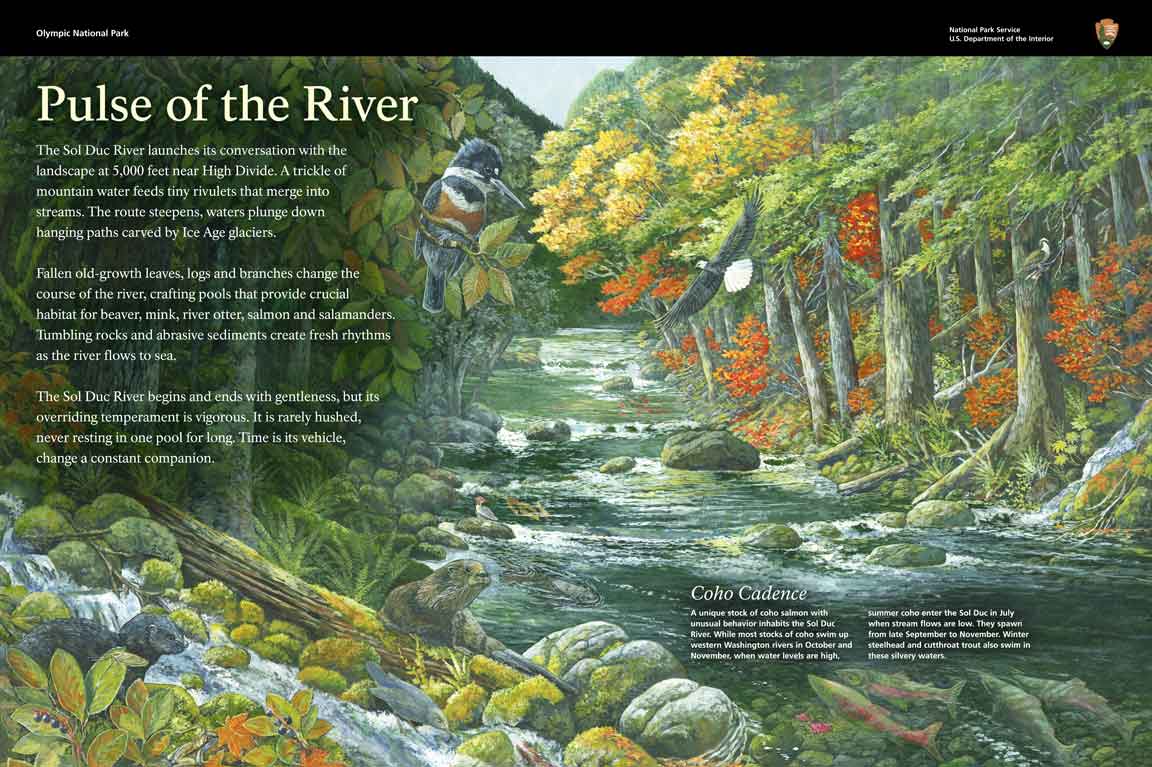
We’ve been away on a field trip to the Shulman Bristlecone Pine Grove near Bishop, CA for some new paintings soon to come – so I don’t have a fresh painting this week. But it’s glorious Fall here now, with the maples and alders loosing their leaves – so here’s a wayside panel I just received the digital file for. It’s already installed, but I had never seen this in its final digital form.
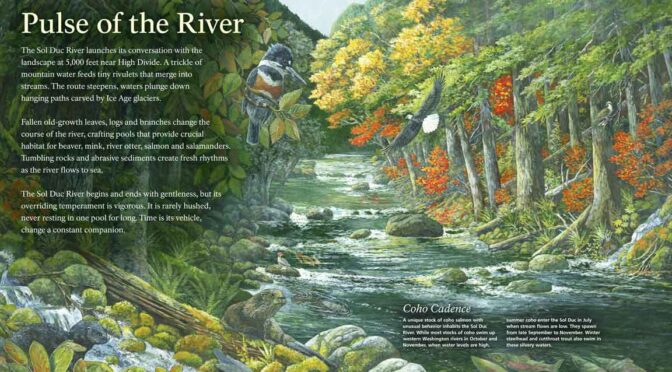
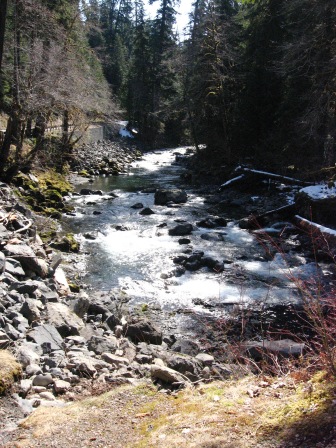
This one is installed at the same location it was modeled after, right along the river. As you can see in the photo, snow was still on the ground when I did the field research, but along the way the painting turned into a Fall scene with bronzed vine maple and returning salmon. Paintings can do that, while photography has a more difficult time – which means I still have a great job because of it.
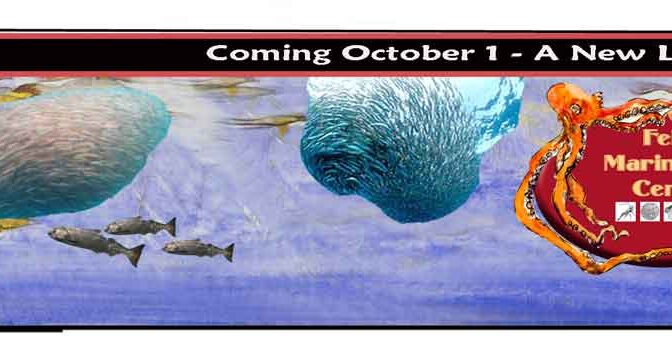
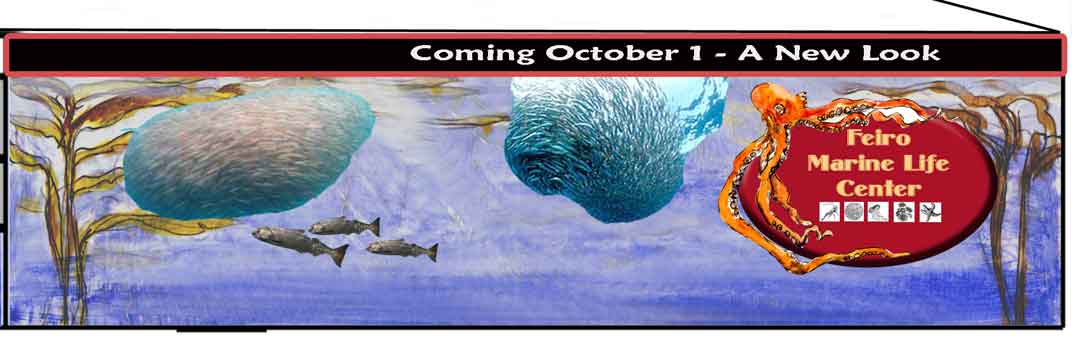
Feiro Marine Life Center gets a dozen Eifert exhibit panels and new “look”.
(Click the image and it should enlarge)
The Feiro Marine Life Center in Port Angeles Washington. We’ve been working on this for a seven months now, and it’ll be probably another year before it’s completed, but I thought I’d pass some of it around here today.
The place needed some freshening up, so they asked us to help. Much of this is centered around the ‘big deal’ that’s coming down locally in Olympic National Park – the removal of the Elwha River dams, largest dam removal in the US to date – and it really is a big deal, at least around here and at least for me. I’ve been involved with the dams project for several years now as a provider of art showing what the river will look like post-dams, so it was logical I also help create some exhibits about it at the Feiro. Here’s a link to some of that other Elwha River work.
The image above is only the quickie-watercolor concept sketch, but I thought it interesting enough to pass around. Everyone sees the finished products – complex paintings or big visitor center exhibits – but few see where it starts, the basic skin and bones of ideas. And while it may (read: probably) not end up this way at all, it’s a good view into the creative process. So here goes: This wall is actually three times longer than this. It goes off to the left where there are also windows, so to keep it simple, I just focused on this area for a concept sketch. The sign is all they really requested, which includes a changing banner up top for programs. I’ll do all that here in the studio, but the rest will likely be done on-site. We went to the big Seattle Aquarium for some field research into how kelp and fish look underwater, how fish circle, and how light filters down into the ocean. The two herring balls – thousands of little fish circling for protection, will mimic the oval sign, and the octopus encircling the sign shows a popular critter they have in their tanks. There will be more and larger fish, likely salmon, and more extensive bull kelp, but this shows the basic idea.
Stay tuned, I’ll send more as this goes along.
For local readers: Nancy is opening a show of her photography at Gallery Nine in Port Townsend Saturday night, 5:30 to 8pm. Come on down and see her new work.
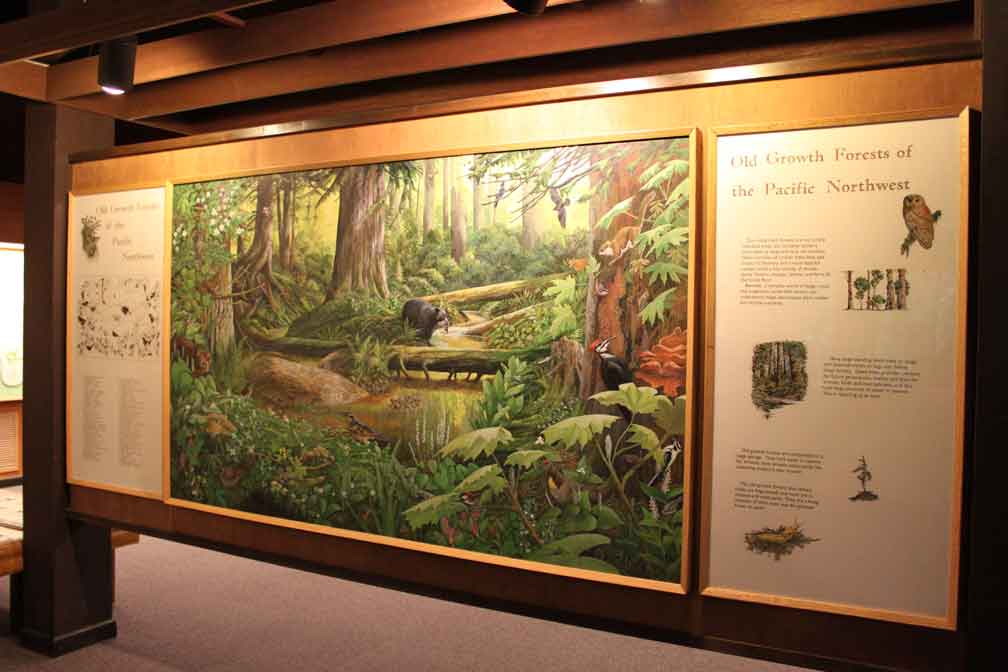
Ohanapecosh Visitor Center – Mount Rainier National Park (click photo to enlarge)
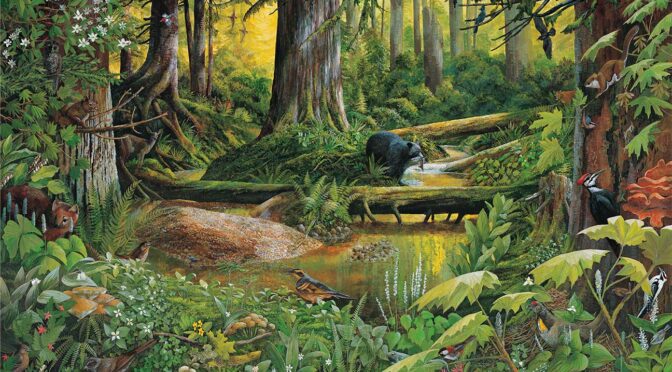
Last week we were over at Mount Rainier and Mt St Helens for a field trip and stopped by the Rainier visitor center where one of my old-growth murals is installed. We hadn’t been there since the Great Flood of 2006 that closed the park for 6 months, and while there remains evidence everywhere of the 18″ of rain in 36 hours, the v.c. looks great. I have never taken good photos of this installation, so Nancy spent some time there doing just that while I filled out some paperwork on annual mural maintenance for the NPS Rangers.
This mural was painted in the Spring of 1995, making it over fifteen years old now. I’m happy to say it looks just as vibrant as when it was installed. It’s acrylic on MDO plywood, and while it was for Ohanapecosh, the forest itself was modeled after the wetter Carbon River Forest over on the opposite side of the mountain. I involved interpretive staff from the other two ‘big’ parks nearby, Olympic and North Cascades, because we wanted to make sure it fit all three. We also planned to create posters, puzzles and cards to sell at all these parks, so species had to fit for all of them. One park has lots of elk, another none, so no elk. Grouse or not? It wasn’t until one guy saw one on the way to work that the grouse was IN. It went that way with about 30 species until everyone was happy – except the painter who didn’t get to paint any elk.
And me? I’m now happy that after 15 years those posters and puzzles are still selling well in all three parks (and many others, including the major redwood parks in California). I’m sure the Rainier non-profit that funded the original painting (and sells the products) has, by now, actually made a profit off the painting they commissioned. And the Chief of Interpretation that originally gave me the commission? He’s retired and lives here in Port Townsend – and has crewed for me in a few sailboat races. It’s a small world that is endlessly big.
Click here to go to our main website – packed with jigsaw puzzles, prints, interpretive portfolios and lots of other stuff. You can find this poster and puzzle here if you dig.
Click here to check out what Nancy’s currently working on with her photography.
with more art in America's national parks than any other artist