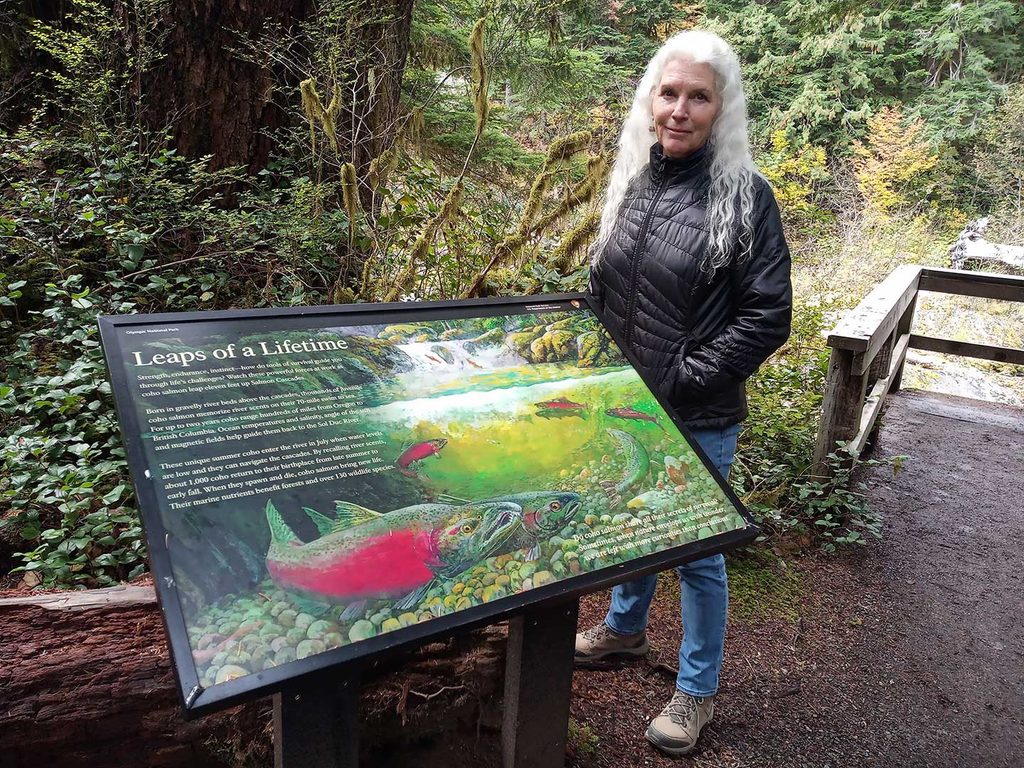
The first wayside panel of several more to come, this is going on Freeland Beach, a county shoreside park that has just rebuilt their beach to accommodate forage fish. Sure, people get to be here as well, but this is yet another effort to save endangered Orca whales in Puget Sound. Freeland is on Whidbey Island, just east of my studio here in Port Townsend, Washington.
Here’s the jobsite on the beach, an ancient wayside’s soon to be replaced by my new panel.
Just looks like a beach, doesn’t it? But there are good beaches for little fish, and not-so-good ones. The idea is make the beach useful for safety and spawning for little several kinds of small forage fish. These are small, schooling fish that serve as a vital food source for larger predators. Eaten by salmon, then the salmon are caught by orca – because orca are starving. This map below shows the three forage fish species, blue, green and red. The beach is right in the middle of the map.
So, enough science and thanks for reading to here. Here’s the panel sketch with my initial text.
And below the new beach with logs, beach grasses and other native plantings.
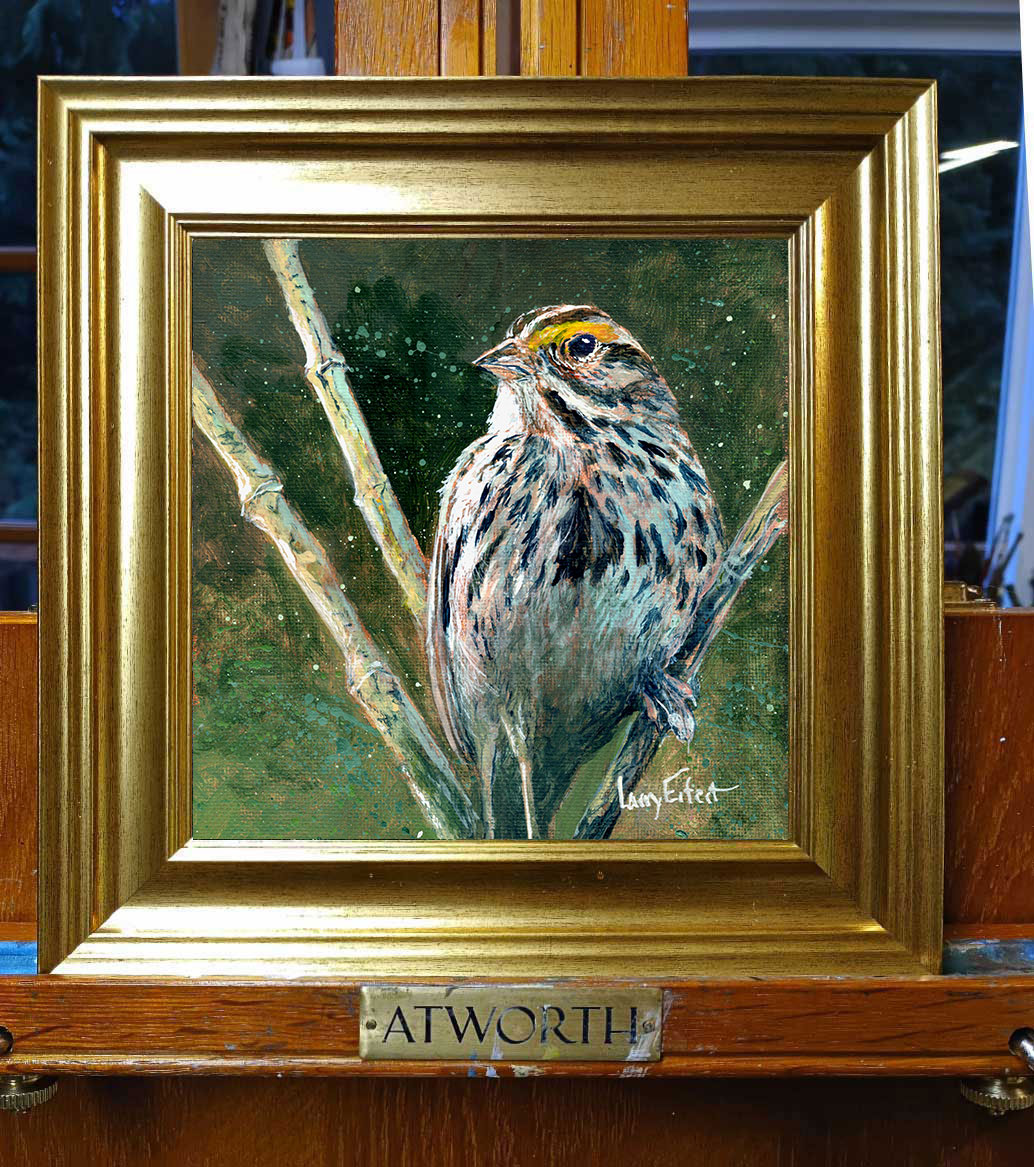
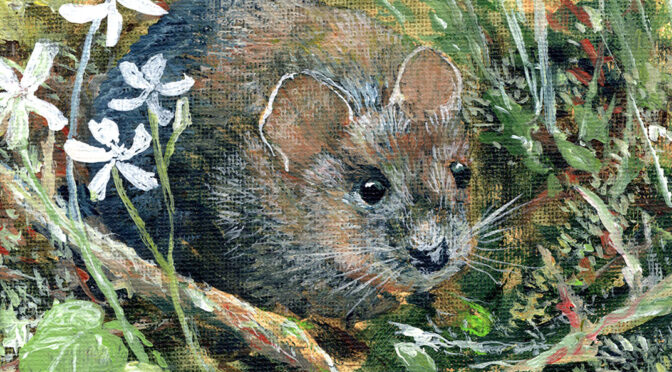
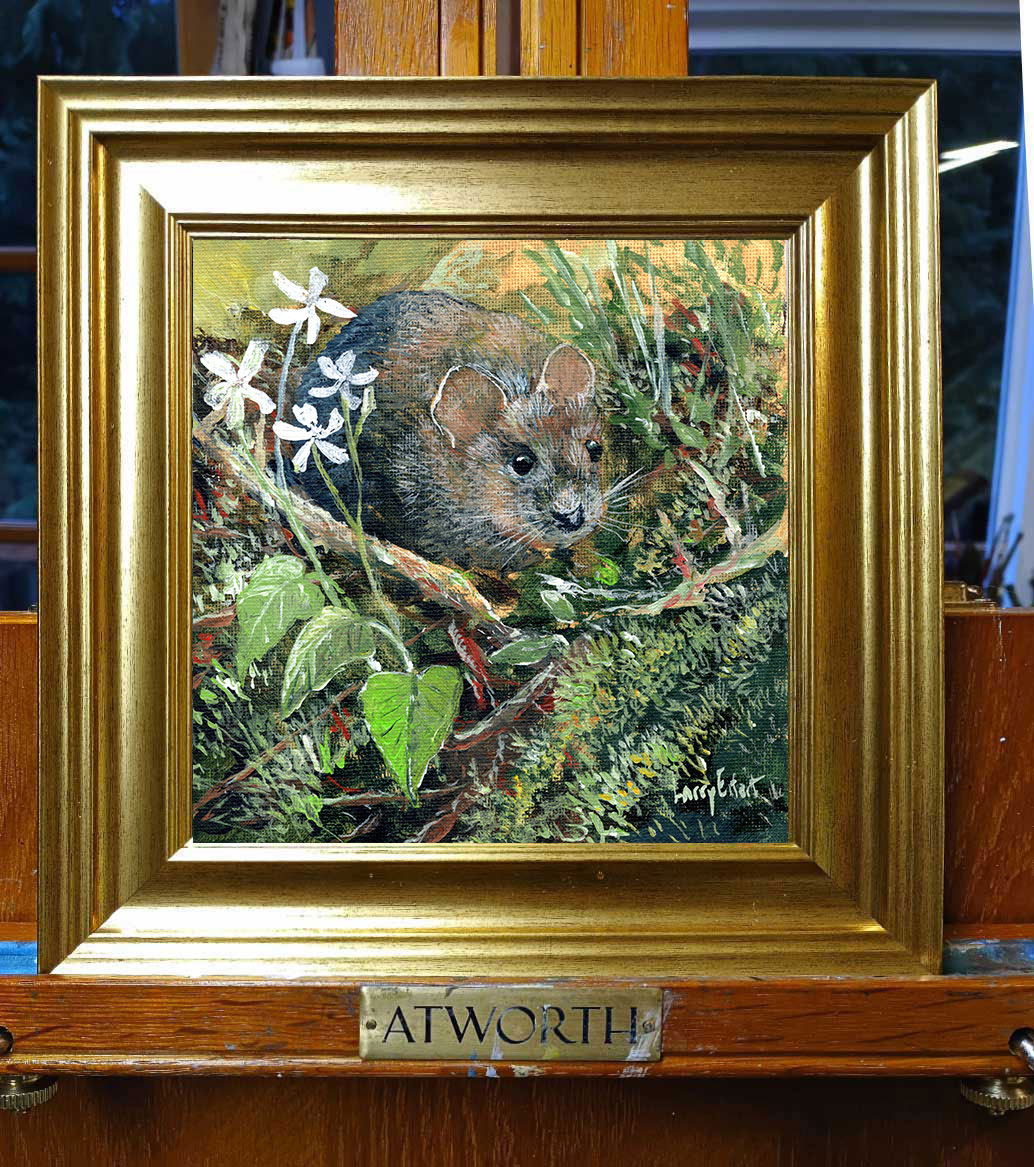
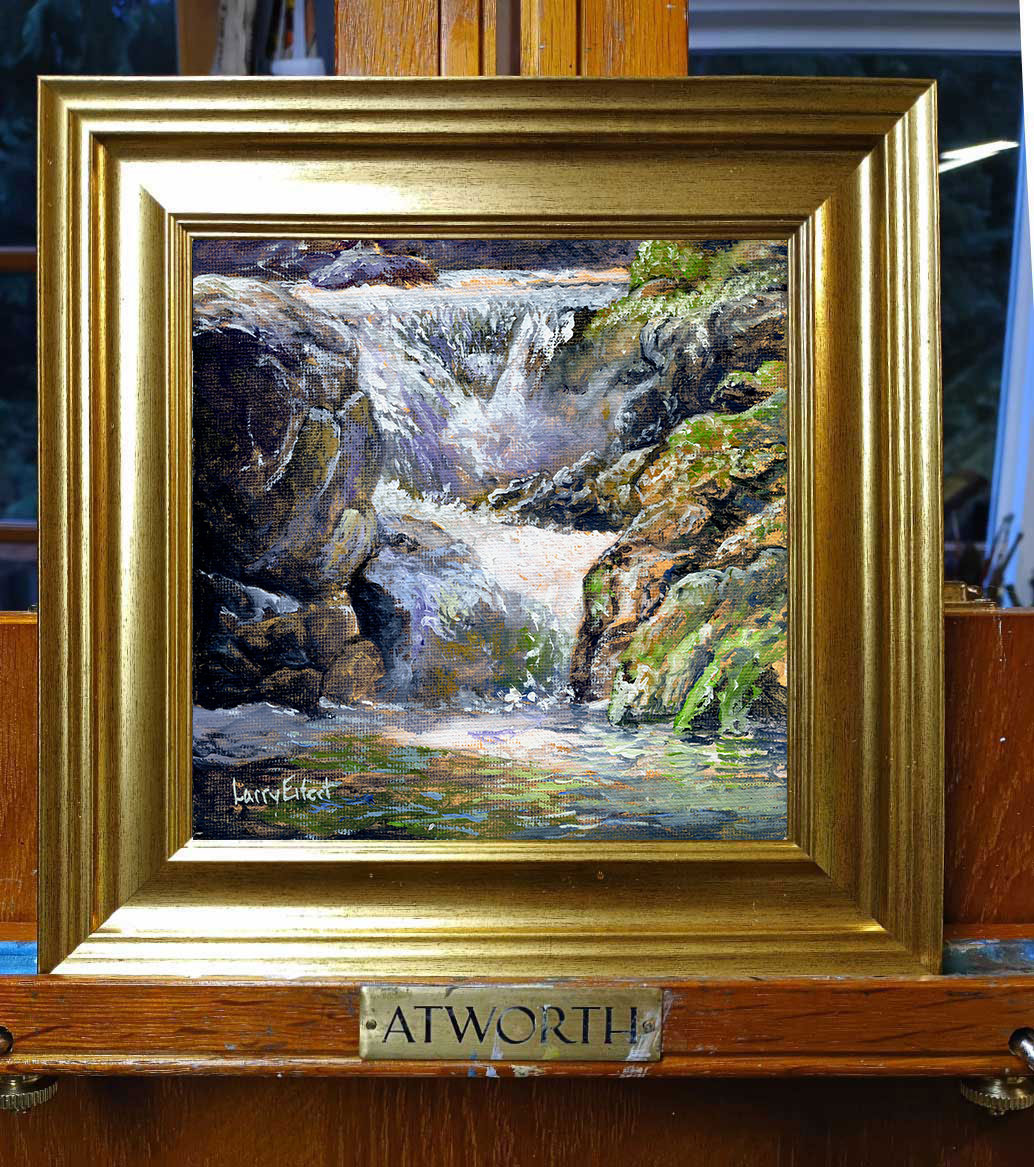
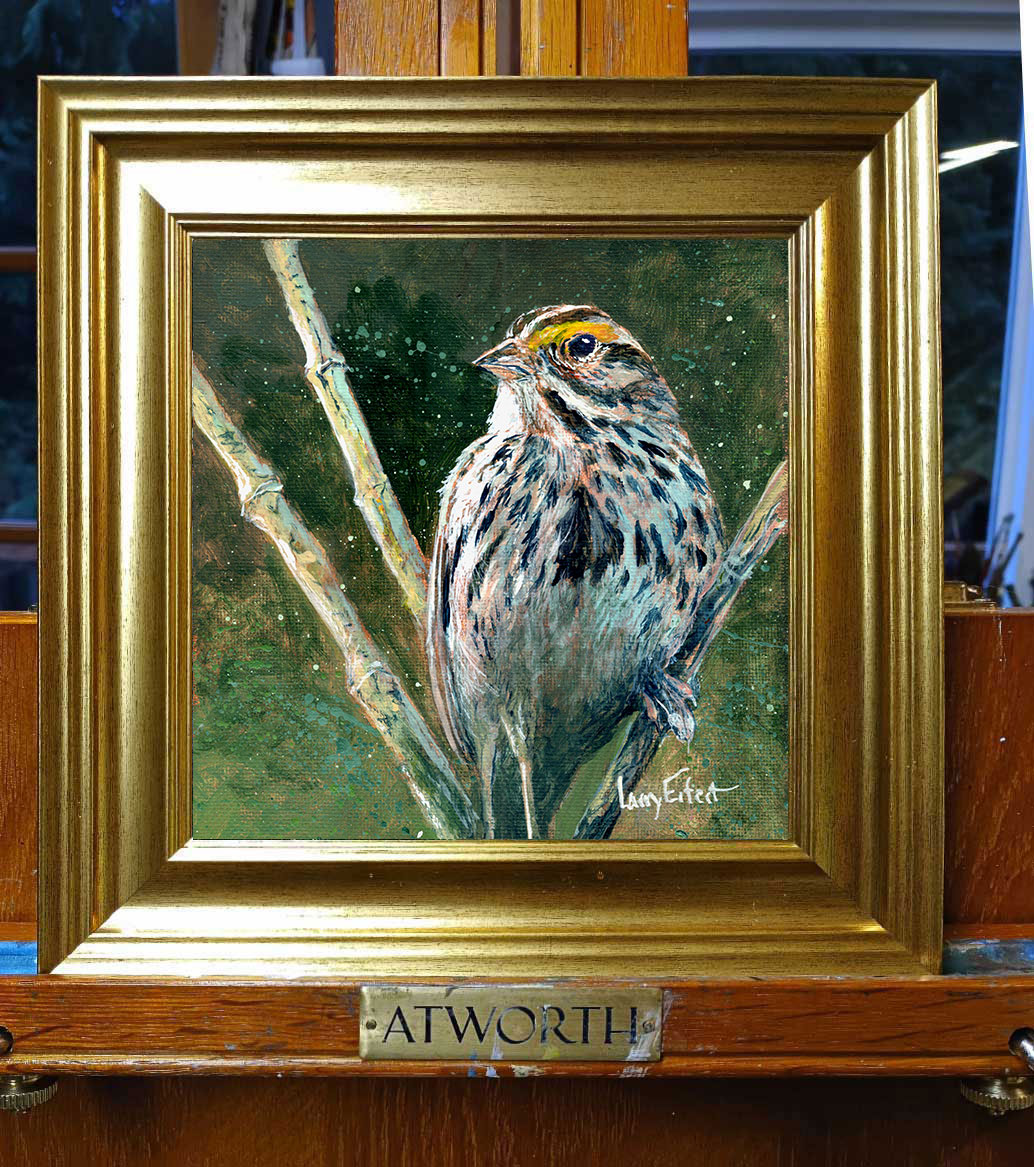
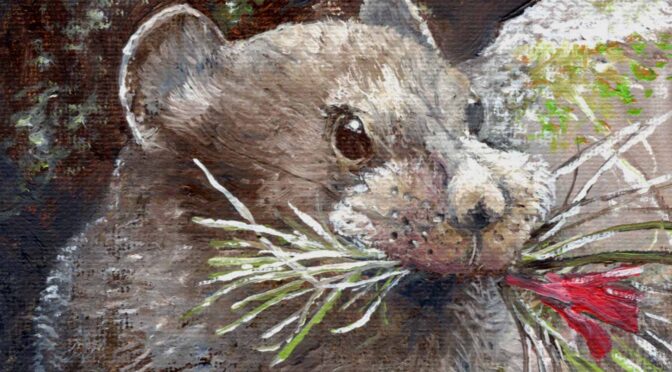
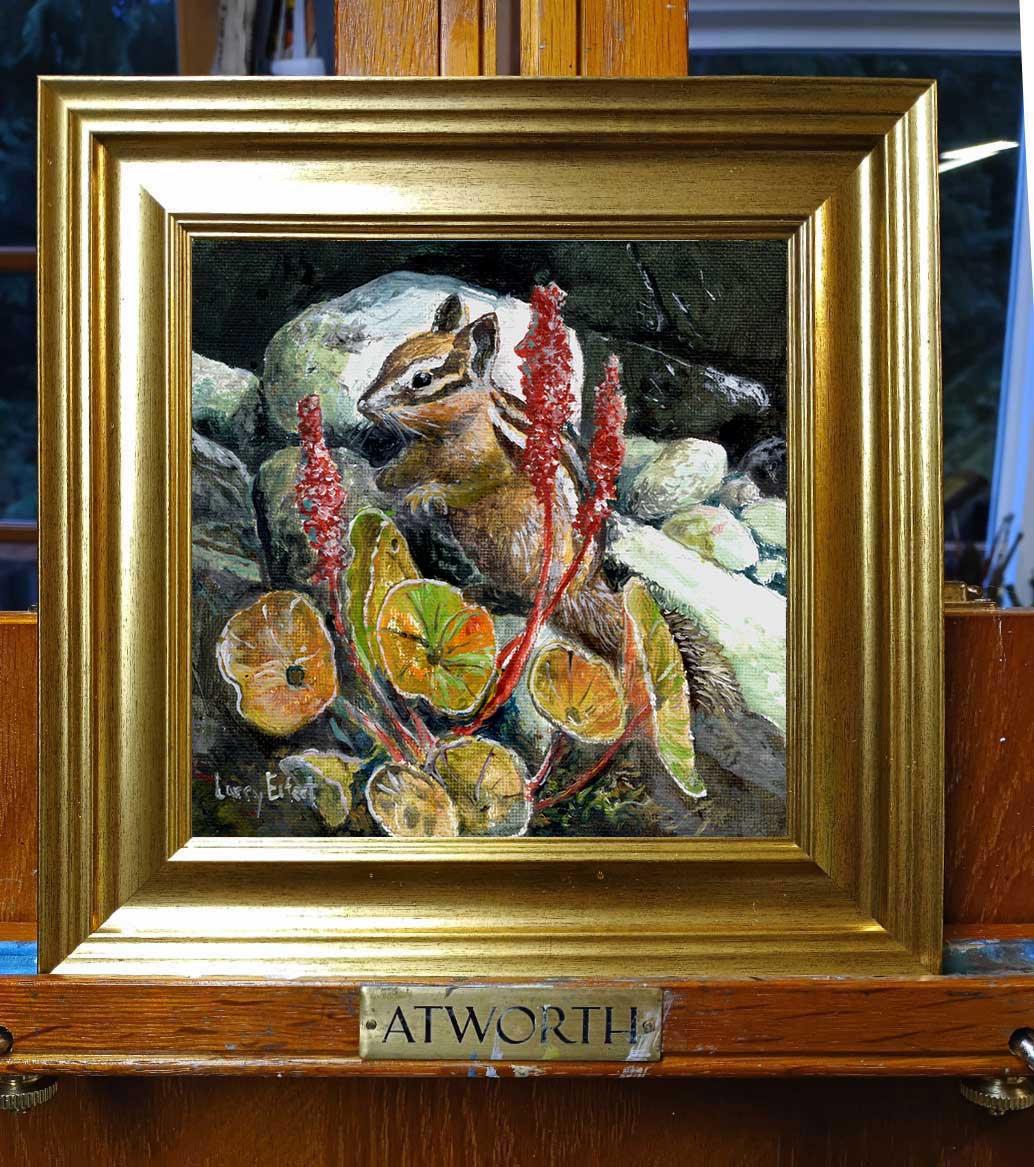
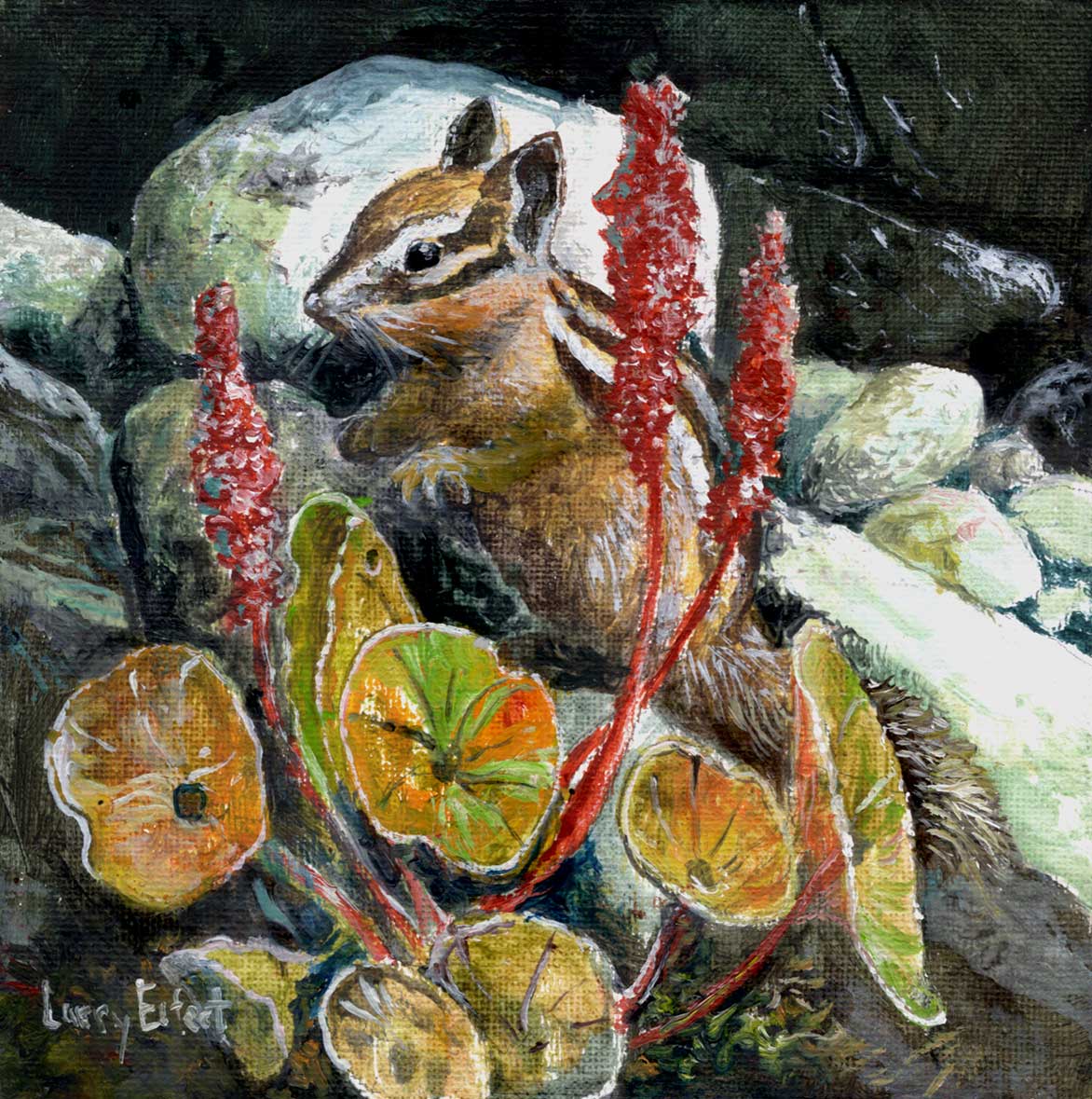
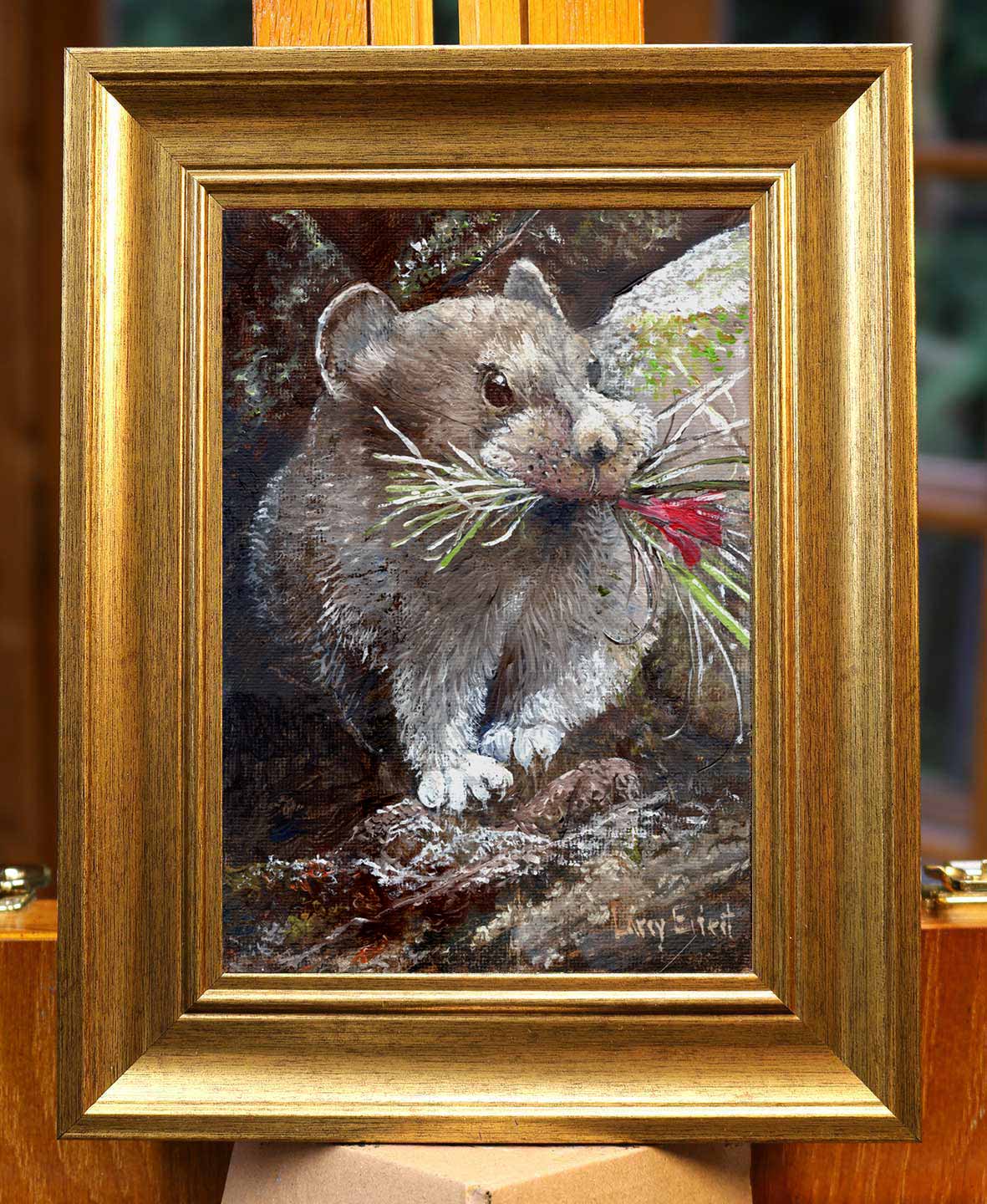
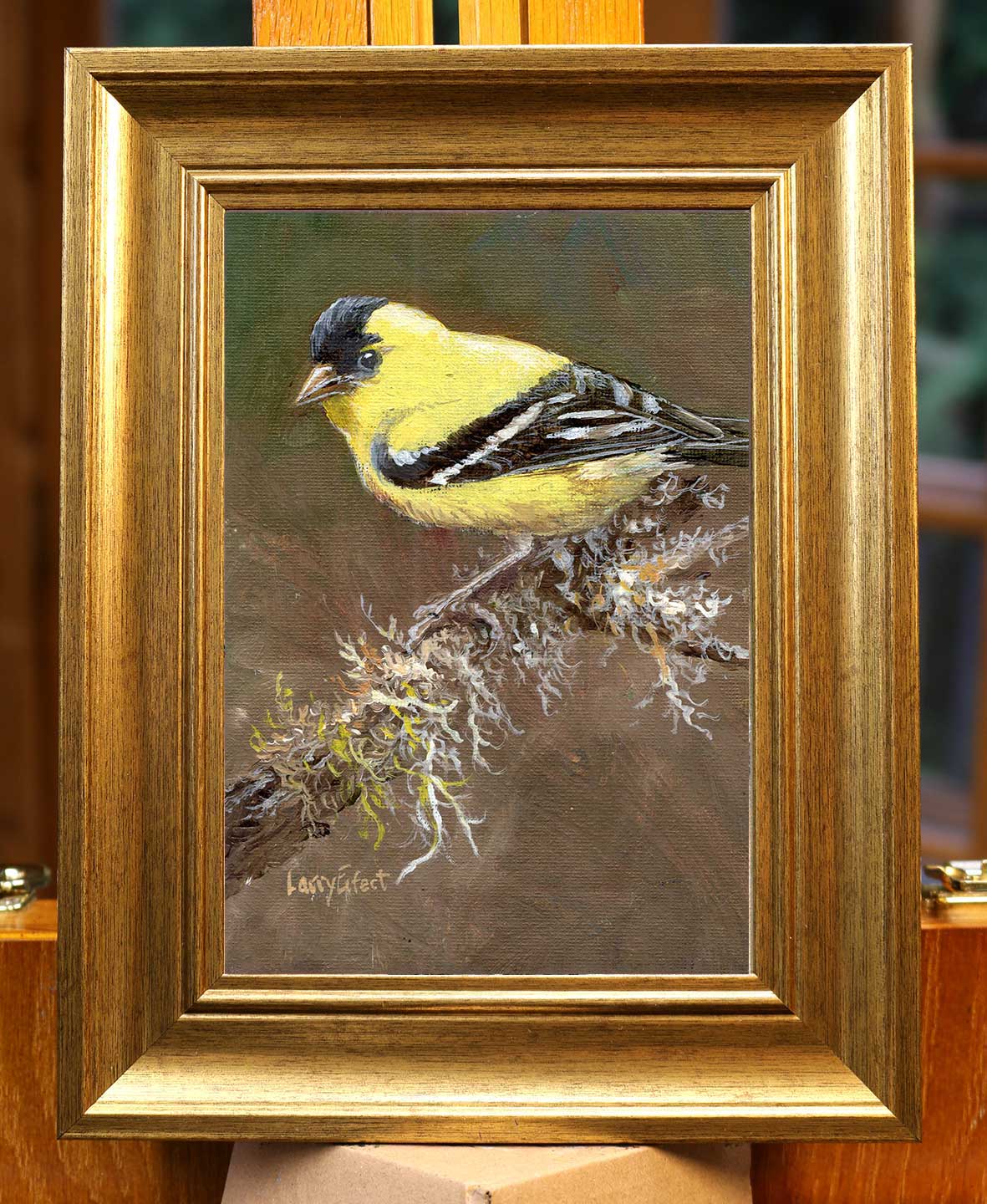
Several new efforts here from the same on-going series of small oils on canvas board. This week I sort of jumped all over the ideas, as you can see, because I’m also onto bigger park projects now. These small paintings are all either 5″x7″ (framed outside is 7″x9″), or 6″x6″ as with the square one. All are currently available on my Etsy Gallery. They’re all $125 framed and freight-free. https://eifertgallery.etsy.com
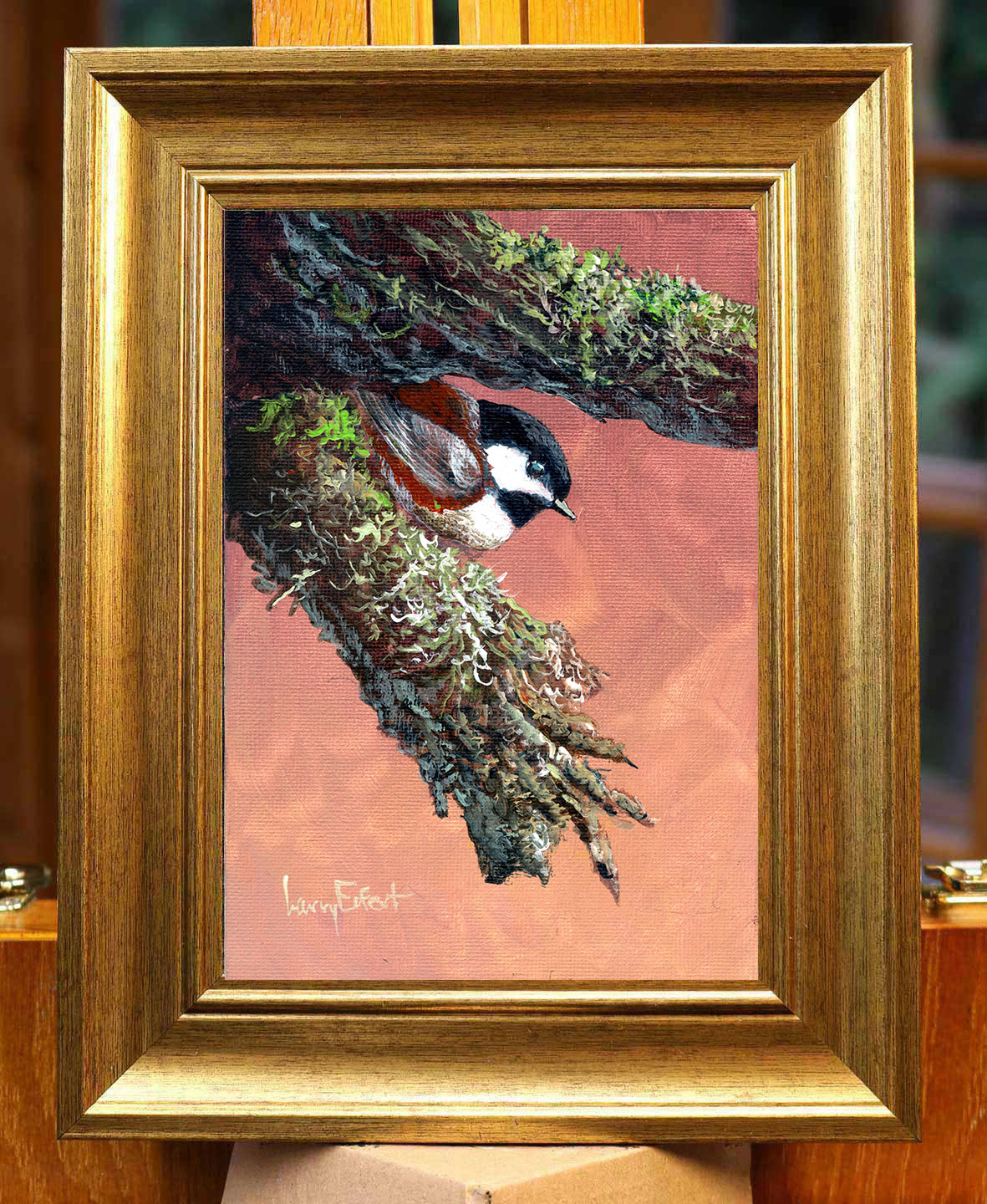
The top painting is a chestnut-backed chickadee, a local guy I see every day here. I had another project going on that needed a mossy log and found this great example down our driveway. The mushrooms are inky caps, but young enough they weren’t really ‘inky’ yet. Here’s a link if you’re interested. https://eifertgallery.etsy.com/listing/4469193245
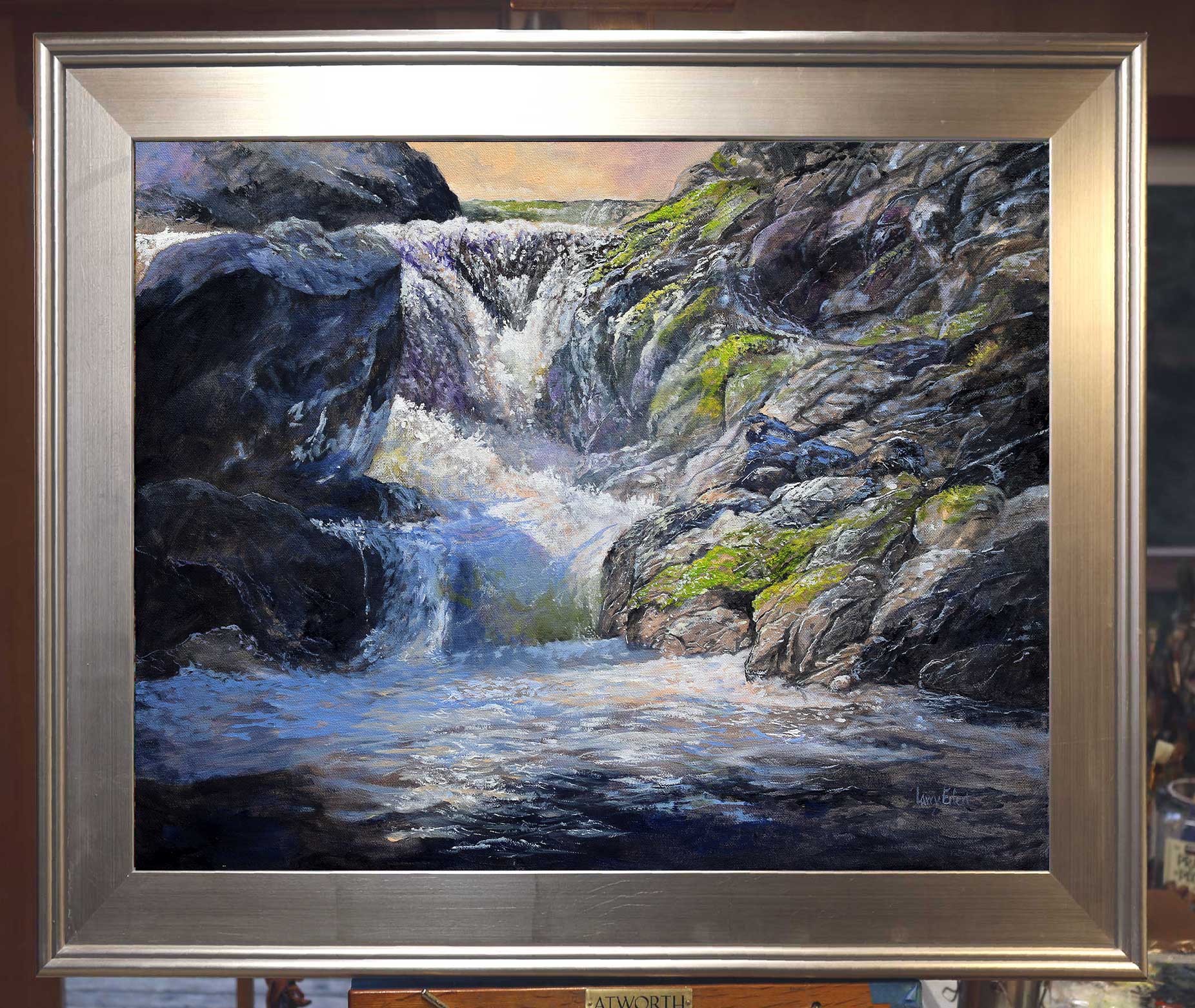
This second painting, American dipper, is a little portrait of a gray bird on a gray rock. These little guys are river-specialists, walking underwater to find food, nesting behind waterfalls – and John Muir’s favorite bird. Maybe mine, too. https://eifertgallery.etsy.com/listing/4468115377
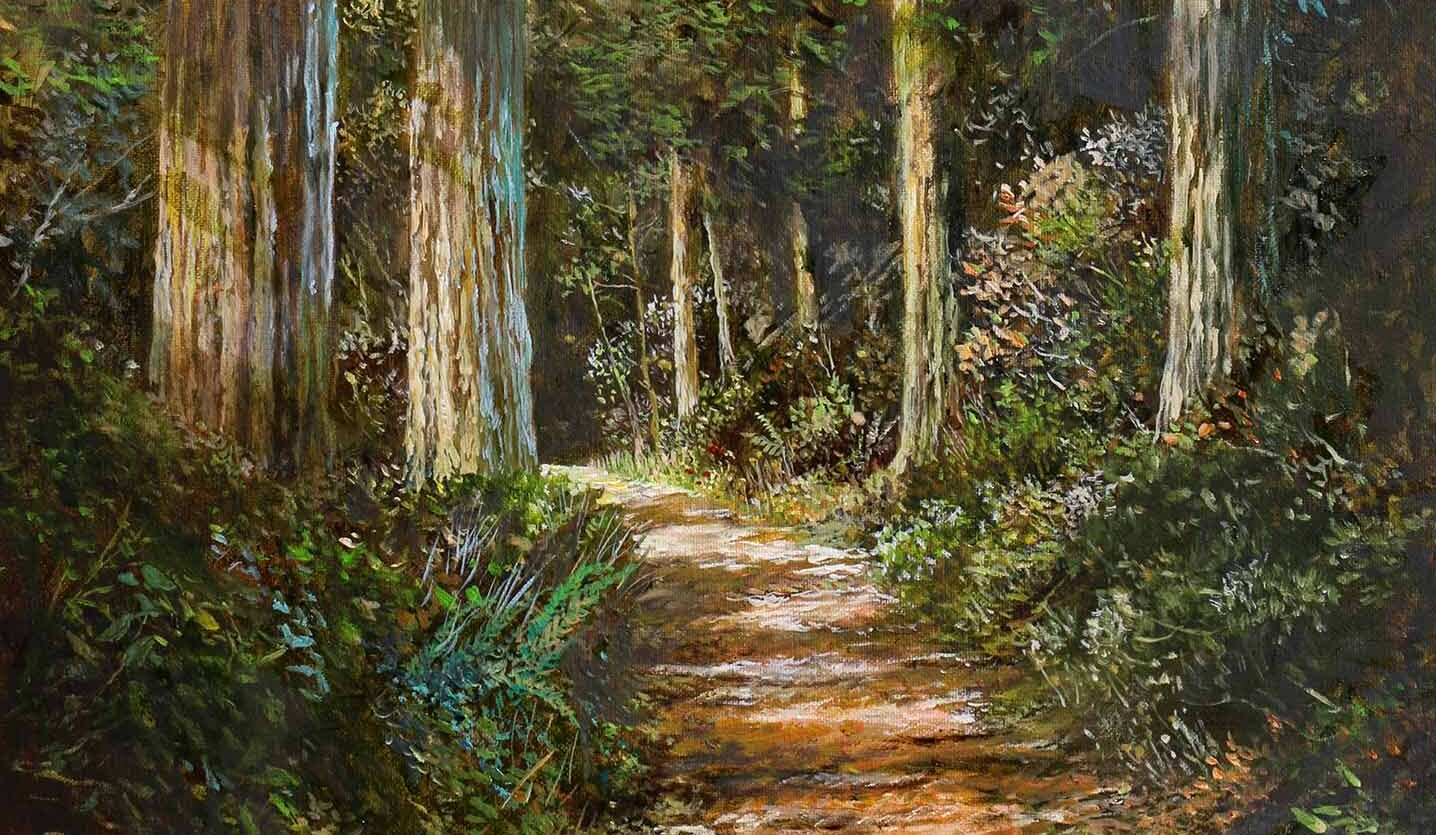
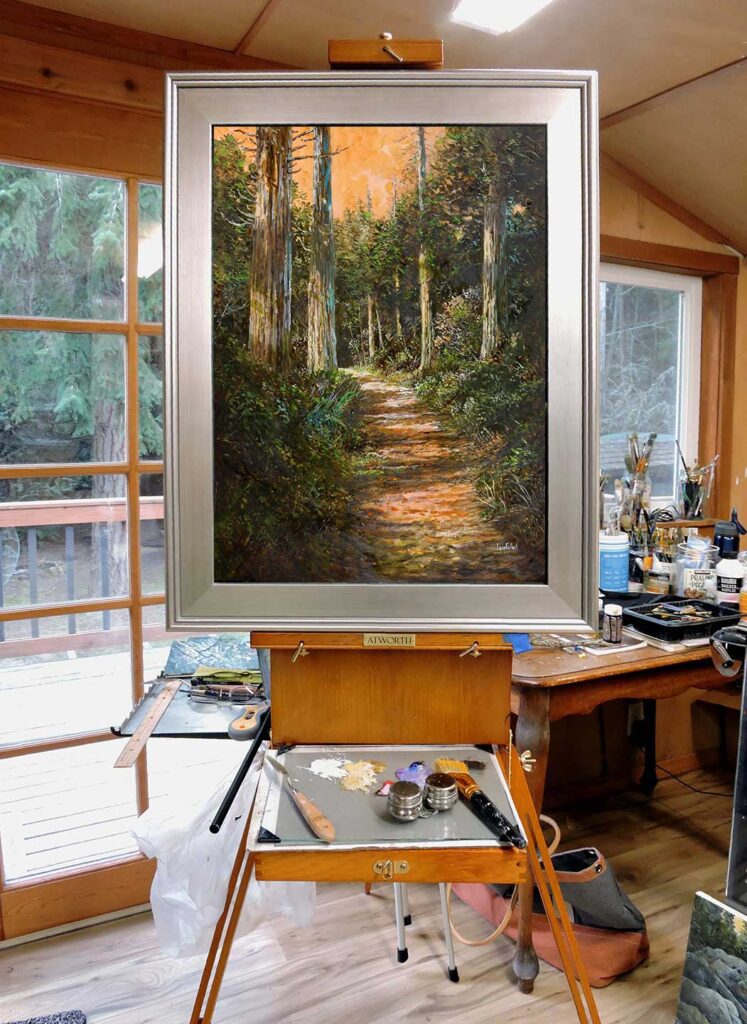
This trail is right around the corner from our place in Port Townsend, in a state park with some of the best forest trails I know. I originally made the right side dense with ferns and salal, a rhododendron – but changed it to a more simple scene to focus on the trail. 6″x6″ canvas, it’s available here: https://eifertgallery.etsy.com/listing/4464943181
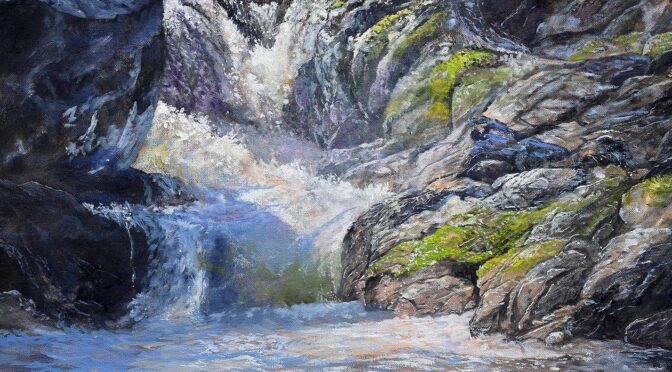
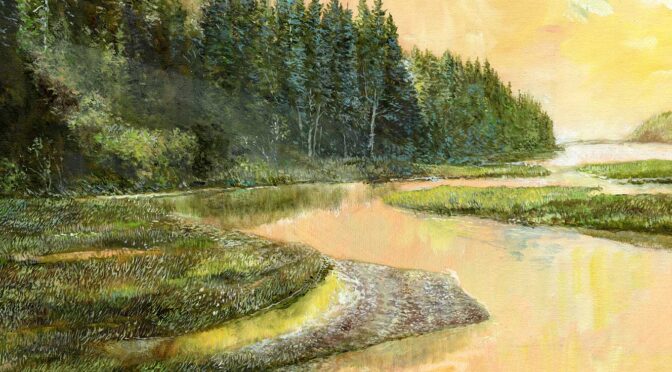
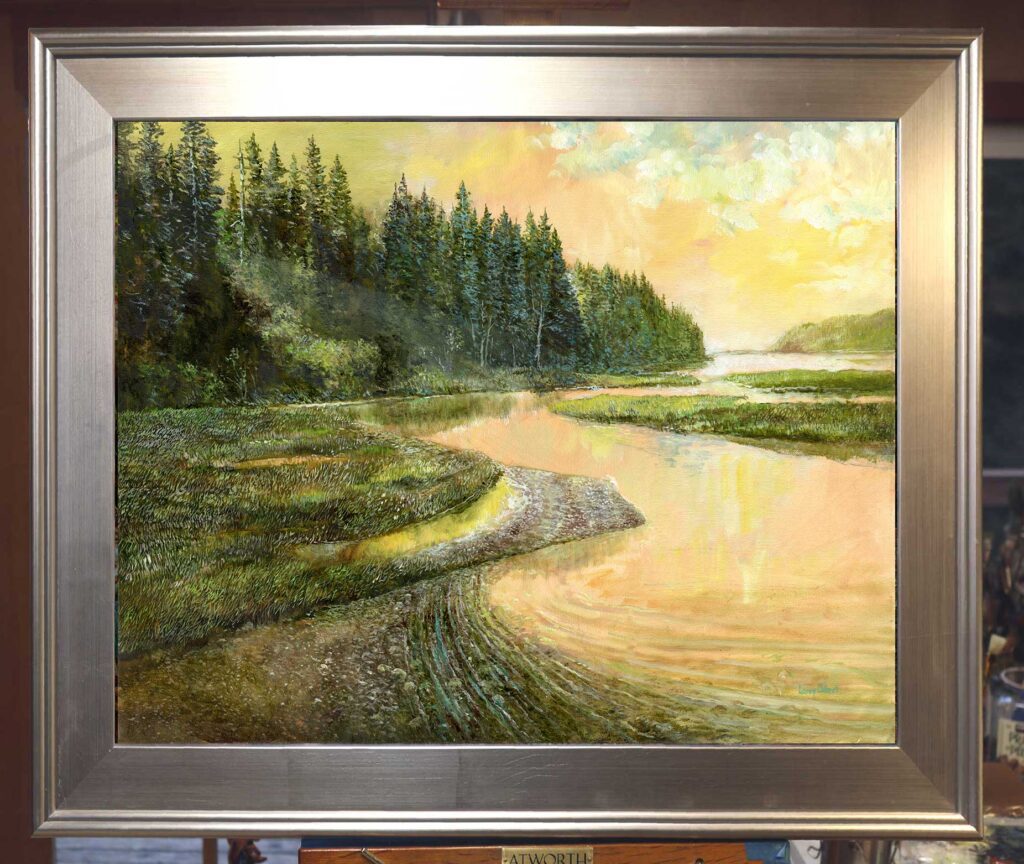
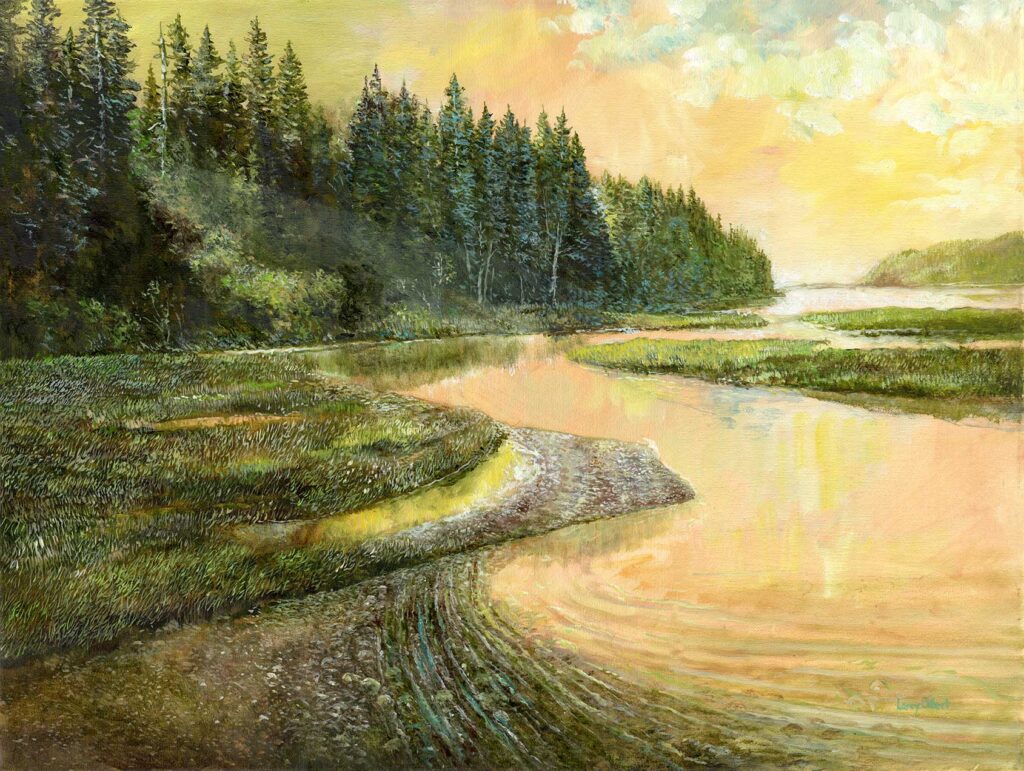
And finally I was trying to remember a special spot on the Upper Dungeness River, about 25m south of home. I get that way in late winter. I was there last fall when the late afternoon sun was streaming in and lighting up the river with golden afternoon sun. The big glacial erratic rock had me sitting on it, so I reversed the scene as if I were on the far shore. This one is available here. https://eifertgallery.etsy.com/listing/4466197478
Below: A new little bonus portrait of my partner of many decades, Nancy Cherry. It’s acrylic on watercolor paper, and it was painted on a little card for her birthday. Happy Birthday, my partner in life, as well as countless trails and places I’ve painted in a very long and fantastic ride of being an artist.
Nancy Cherry Eifert, March 2, 2026.
Thanks for reading this week. You can sign up for emails for these posts on my website at larryeifert.com.
Another group of new oil paintings are now available. These little guys are now competing with larger park and shoreline restoration art projects, but I enjoy making these. I think all of them worked pretty well. All are on my Etsy Gallery here and are framed for $125, shipping included. If you’re on your phone, here’s a bigger link. https://www.etsy.com/shop/eifertgallery
Nuthatch in the Lichen This was inspired by a commission for two lichen-loving ladies in Minnesota. While doing lichen-research out in our forest here in Port Townsend, I had some good lichen models and so made this, a second painting. Yes, the Red-breasted Nuthatch was there wondering what I was doing.
Chestnut-backed Chickadee Most of the shrubs are still bare this time of year, but with buds showing on a few. I found this Nootka Rose a great model.
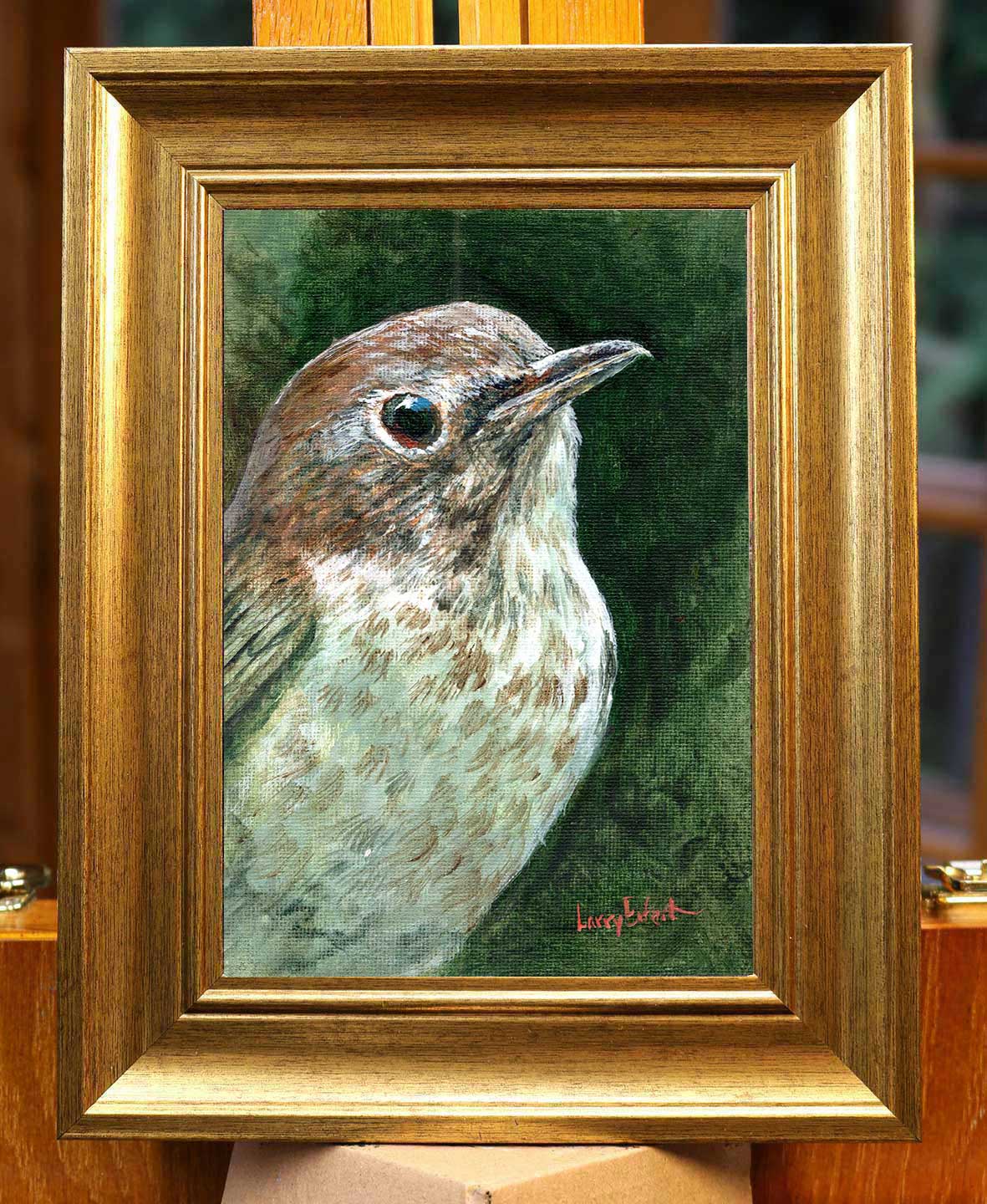
Swainson’s Thrush Nope, not here yet, but the other day I thought I heard th amazing song-spiral of a Swainson’s just at dusk. Could it be? Still pretty early for these songsters to be here, but I could hope – and make this painting.
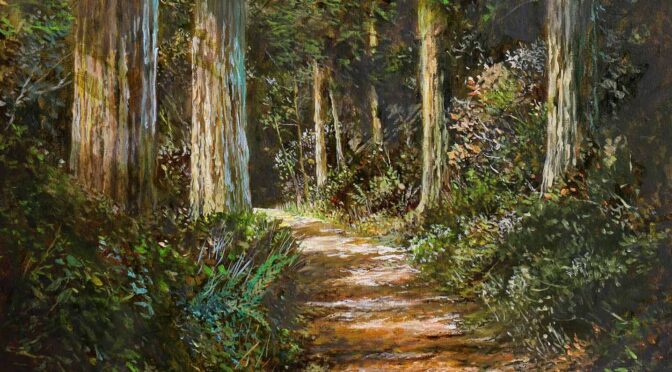
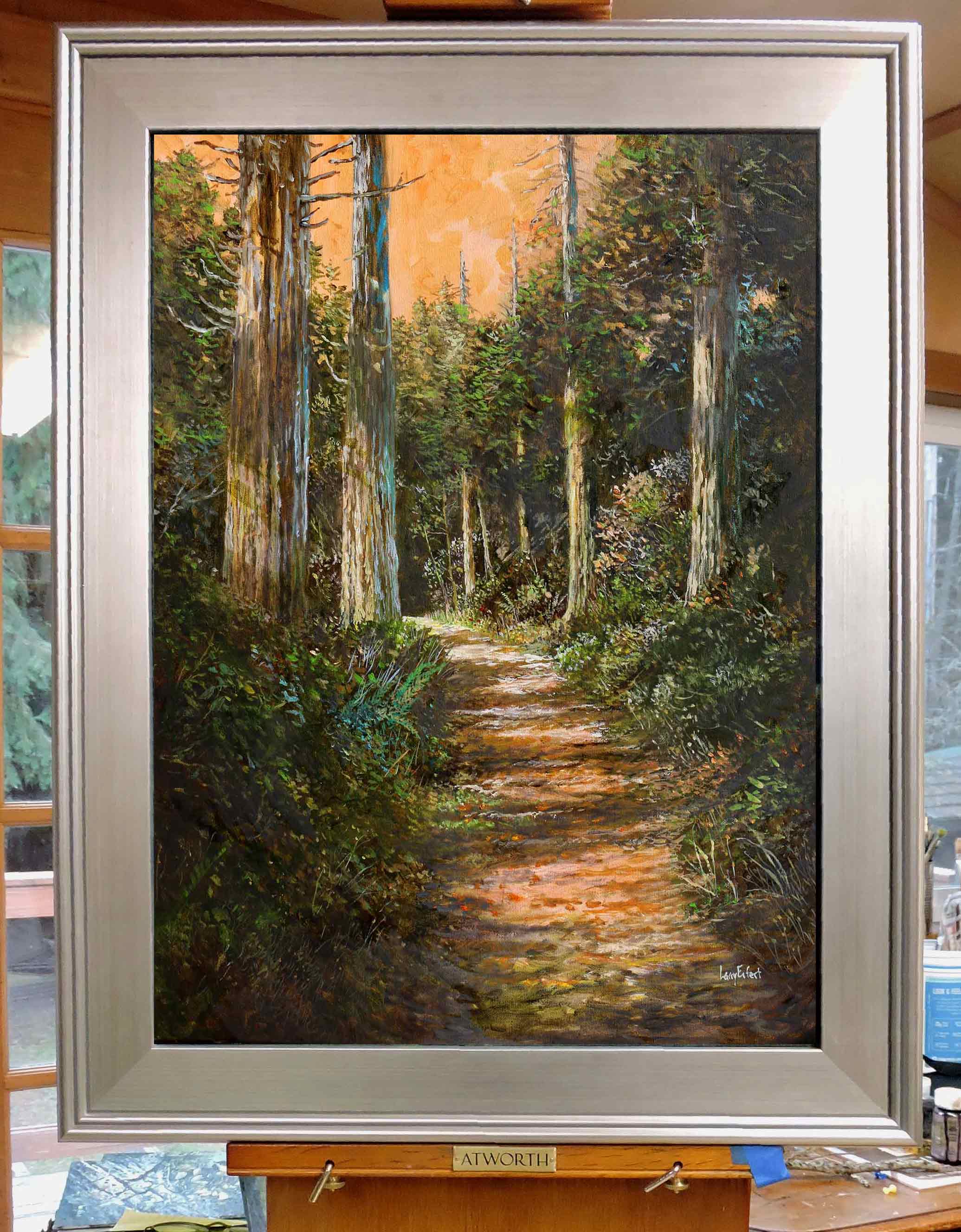
Forest Trail is in Fort Townsend State Park, about a mile from the studio. This is Big Tree Trail, which it sure is. Many of these big trees are well into old-growth status, and some show fire scars. which means over a century old. I get a charge out of figuring h out trunk colors, cool blue on the shadow side as it reflects sky colors, and warm yellow on the sunnier side, reflecting sun beams.
Chickadee Just down the Big Trees Trail (above), there’s a small Douglas-fir that died last year, and already the woodpeckers and sapsuckers are into it. Nature does not like anything not being used, so now I’ve seen chickadees inspecting the woodpecker holes for possible nesting sites later in spring. And suddenly there’s a painting about it all. That’s sort of my life these days, painting oil paintings as daily journals. All of these are almost ready for varnish and framing.
Thanks for reading this week. You can sign up for emails for these posts on my website at larryeifert.com.
I’m back to painting a large acrylic National Park ‘mural’ for Thomas Stone National Historical Park, but still moving forward with these little oils. Quite the challenge of switching from oil to acrylics and back throughout the day. These are all available and $125 each, including the frame. Shipping is free.
Wilson’s Warbler is also new this week, varnish isn’t even on it yet. I was interested in loosening up the feather structure details and how the foot gripped that little twig – wrapped it. I loved the contrast with the frame color – like the entire thing is glowing. Wilson’s Warbler is available here.
When I started to seriously paint back in the 1970’s, my method was to go out and park beside a country lane that held promising ideas. I learned to paint this way, making an average of 250 paintings a year, most of them by sitting beside dirt roads. It appears to have become a habit, because here I am, decades later and getting involved much the same way with these little oils. Back then it was gauche and watercolors but now it’s oils on canvas in the studio. Judging by the dozens I’ve found homes for in the past couple of months, I think I’m getting better at it. Want to see one of those 50 yr old paintings. Here it is, available on Ebay for $447.00.
These are framed original oils and all quite reasonable. All are either 7″x9″ or 8″x8″ outside measurements and available on my Etsy Gallery. They are currently all available for $125 each. Here’s a direct link to the Northern Flicker shown above.
This one is of a big log we have here, and a very little chickadee probing for insects. A good story of wildlife finding a meal. Here’s the link to Chickadee – Big Log.
Big Tree Trail is a local favorite place of mine. I was there just a few days ago, so, made a painting of my time there. Here’s a link to it on my Etsy Gallery.
American Robin – a flock of these wintering birds were in our meadow recently. This far north, it’s rare to see them here, but it’s been a mild winter. This painting is 8″x8″ framed as you see it. More details are over on my Etsy Gallery.
There are also a few others there. These don’t seem to be lasting long, so if you have interest in any of these, you might now want to hesitate.
Thanks for reading this week. You can sign up for emails for these posts on my website at larryeifert.com.
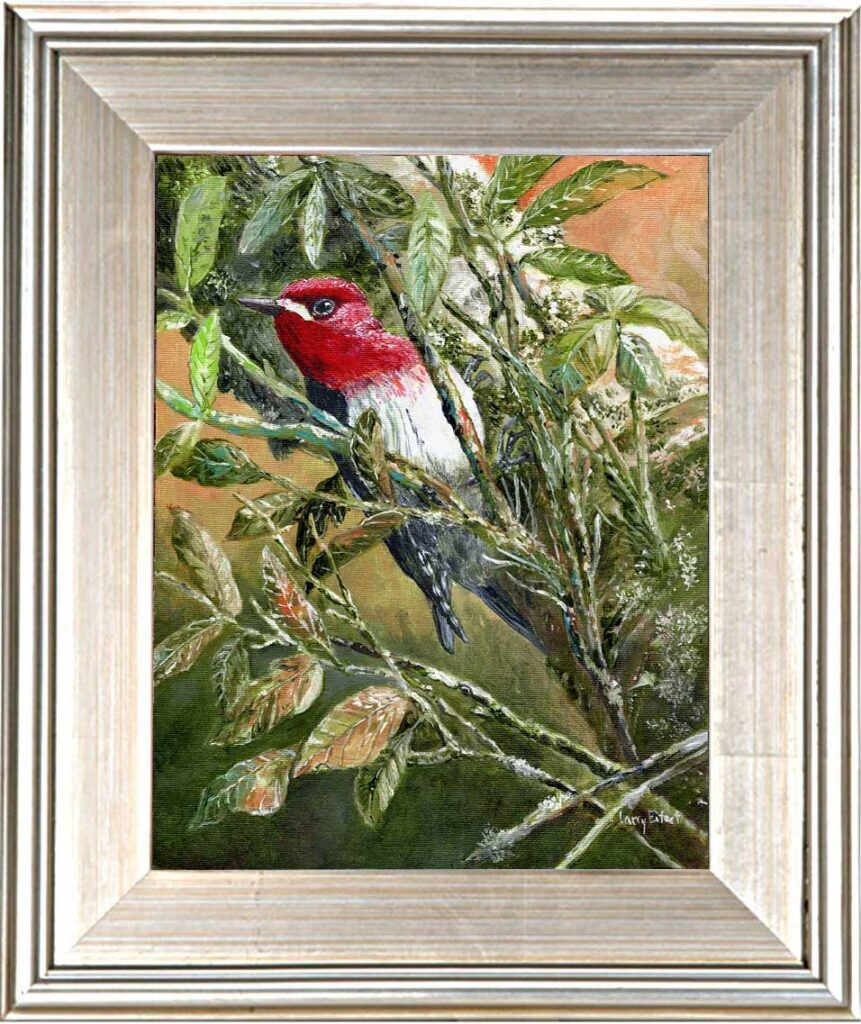
Purple Finch portrait. Click the link to get to my store on Etsy. Outside frame measurements are 7″x9″. This finch was a regular on the seed feeder all last summer. I’d see it often on the old madrona log in our nearby pond, jumping between the pond and little waterfall where all our birds go for baths. They properly wait turns, and this guy did so as well. Good manners. Maybe if I paint it, we’ll see this little guy again. All these are my usual, framed as you see them for $125, free shipping in the US.
All of these are new oil paintings on canvas board, framed and available. I painted them all at 5″ x 7″, the frame makes the outside edge 8″ x 10″. All are $95 each, shipping included, which is a bit cheaper than what it says on Etsy. Live in Port Townsend or the Quimper Peninsula, I can deliver.
A few months ago I painted similar offerings as these, now mostly sold, and tended to focus on entire stories with little birds involved. They were more like the chickadee painting, above, with the bird a center of interest in an entire ecosystem. These new paintings are more focused on the bird itself, as if the viewer were eyeball-to-eyeball with a little ball of fluff.
Fun for me to have enough information to understand how the eye sits in relation to the bill and head shape. If you’d like to learn more, or want any of these, just drop me an email at larryeifert@gmail.com.
Thanks for reading this week. You can sign up for emails for these posts on my website at larryeifert.com.
Yesterday I sent this and it wasn’t pleasant to view on computers. So, I apologize, but here it goes again. You know, old guys, new software. I don’t need to say more, except thanks for sticking with me.
I just finished these last week so wanted to share. A click will enlarge them nicely.
This project was for a native plant garden in Santa Clara County California. It’s a place surrounded by my art in other parks, Mt Diablo, up to Muir Woods, Big Basin Redwoods to Fort Funston and Angel Island, Golden Gate National Recreation Area are some. This park is urban, running along Coyote Creek through San Jose, with a sea of people living along the south shore of San Francisco Bay which includes nearby Silicon Valley and Stanford. Shown here are big background landscape paintings that I was given a fairly free hand it painting – like a gallery show right here in this little park.
Spanish First! So that’s the redundancy of the two sketchbooks in every panel. Took me a bit to accept it, but I’m okay with it now.
These are the very first wayside panels I’ve ever painted with Spanish as the primary language, which says lots about who uses this urban park. I’ve made many of park panels with Spanish as a second language, but never Spanish as the first language – which shows how far this country has changed in the past few decades. I’m proud to be involved in change.
The other interesting direction taken here is that the text isn’t necessarily connected to the art. It’s common to have background art connected to the rest of it, but this is refreshingly ‘wide’ vision of presenting these are more art than school. The sketchbooks are my pencil and watercolor paintings, with canvas acrylics as the backgrounds. All are 42″ wide.
There are elk in this panel, and the title ‘Restore’ suits it. Yes, they’ve introduced Tule elk back into the landscape above the East Bay, and so you can see them here at Hellyer Park up on the ridgetop fairly often.
This last panel is also different, using the entire panel as a thank you to the community’s efforts to repair a landscape much in need of the natural plants that are the foundation of a healthy city.
I want to thank Carolyn at Santa Clara County Parks and Recreation for these, for giving me a free hand at design and art. As I move forward with my art, replacing the almost extinct National Park Service with a path forward in continuing to do what I love – which is to make art that teaches people about their surroundings. It’s clear I didn’t really loose my job as our National Parks closes up shop, and I don’t mean any temporary government shutdown, but these great parks will soon become something else I’m not going to be a part of.
Thanks for reading this week. You can sign up for emails for these posts on my website at larryeifert.com.
I recently made two panels for the Whidbey Island Land Trust and Oak Harbor Garry Oak Society. Here’s the oak panel. This and a panel about nearshore restoration will be installed at the new Keystone Preserve on Whidbey Island very soon. I’m pleased how this all finished up, from concept designs, to making the art and finally making it all work with a text story. Art telling stories, we’ve been talking about that lately.
Garry oaks are the only oak trees in the Pacific Northwest, and they’ve become very rare. This is the same tree as the Oregon white oak, stately and slow-growing forests that were actually cultivated crops for thousands of years by the Indian tribes. These trees provided food and an open forest designed for other important plants such as camas and the other root vegetables for the first people who lived here.
Above is my refined sketch for the painting. I was trying to find a way to show the forest and some way to identify the important native plants that are rare as well. And this bluebird, below, gives a scale to the oak leaves and bird that could fit in the palm of my hand. Watercolor and pencil drawing.
And below, the second panel for this project, about the restoration of the bluff at the Reserve, eelgrass beds, orcas, salmon and forage fish.
People have been asking, are you still painting for the National Park Service as it spirals down to non-existence? Yes, I currently have two projects and two more awaiting for them – but it’s a sad story that shows my work with them is going to end soon – thanks to the Fascist leadership who is setting up the NPS for total failure. It’s been a wonderful experience for me to spend these past decades painting art for a grateful bunch of people who cared more about their country than making money.
Thanks for reading this week. You can sign up for emails for these posts on my website at larryeifert.com.
In 2024, I was commissioned by the Jamestown S’Klallam Tribe in Sequim, Wa to make a series of wayside panels for the Dungeness River Center. This is an interpretive center, exhibits and classrooms, for the wild and free Dungeness, one of the steepest watersheds in the country. The project went on half a year, but I never posted a word about it here. Too many other paintings to talk about, I guess – not to mention finding the time to even sit down to post them.
The Tribe asked me to make these outside panels so when the visitor center is closed, visitors still have a visual learning experience. The panels are around the building, but also along the Olympic Discovery Trail that passes nearby. This trail is also part of the Pacific Northwest National Scenic Trail from Glacier National Park to La Push WA on the Pacific Ocean.
I’m happy with the results. This place is centered around an old railroad bridge (Railroad Bridge Park) and the Tribe bought it, gaining back a bit of their original land they had for thousands of years. In the process, we got to know a rather amazing group of S’Klallam people – and learned a lot doing it. We both felt privileged to be involved.
You’ll see both English and S’Klallam languages on these. The Tribe has programs in the local schools teaching this ancient language, and we tried to blend the languages, especially on the species captions. I think it worked pretty well, although it was a real challenge to figure out a font that has all the characters. Try finding a ADA compliant font with a backwards question mark, or a word that means Belted Kingfisher!
There’s a lot more than just painting that goes into this stuff. I don’t do it all, but from the ground up there’s the concrete pad, an ADA-approved installation of the legs and frame that will last 30 years, the aluminum panel the image is etched on is made only in South Dakota. The entire Adobe Suite of software (usually 4 programs that I use to design it) makes it print-ready. Then a committee has to approve what is written and painted so that it’s an accurate story. The art seems a secondary bit of this, but it takes the most time, and without good art, what is this but a book-on-a-stick!
We tried something new on this panel (above), making the three insets from laser-cut plastic that can be traced with pencil or crayon. School groups can trace the image onto paper to take with them – sort of a hands-on approach to a visual object.
Dusty Humphries, an artisan at the Tribal carving shed (actually a huge new building, not a shed) allowed me in to photograph his work. A truely amazing place.
Lori Grinnell Greninger seemed to be all over this project, giving us help in many ways – and not just modeling her hat – which the building was modeled after.
This last panel has the only image not of my own art or photography. Thanks to John Gussman for the drone image. Also a great thanks to Kathy Steichen for recommending me to the Tribe for this project in the first place. After a lifetime of painting, these new challenges keep me young, and I’ve worked with Kathy on many projects now.
Thanks for reading this week. You can sign up for emails for these posts on my website at larryeifert.com.