Tag Archives: Interpretive Panels

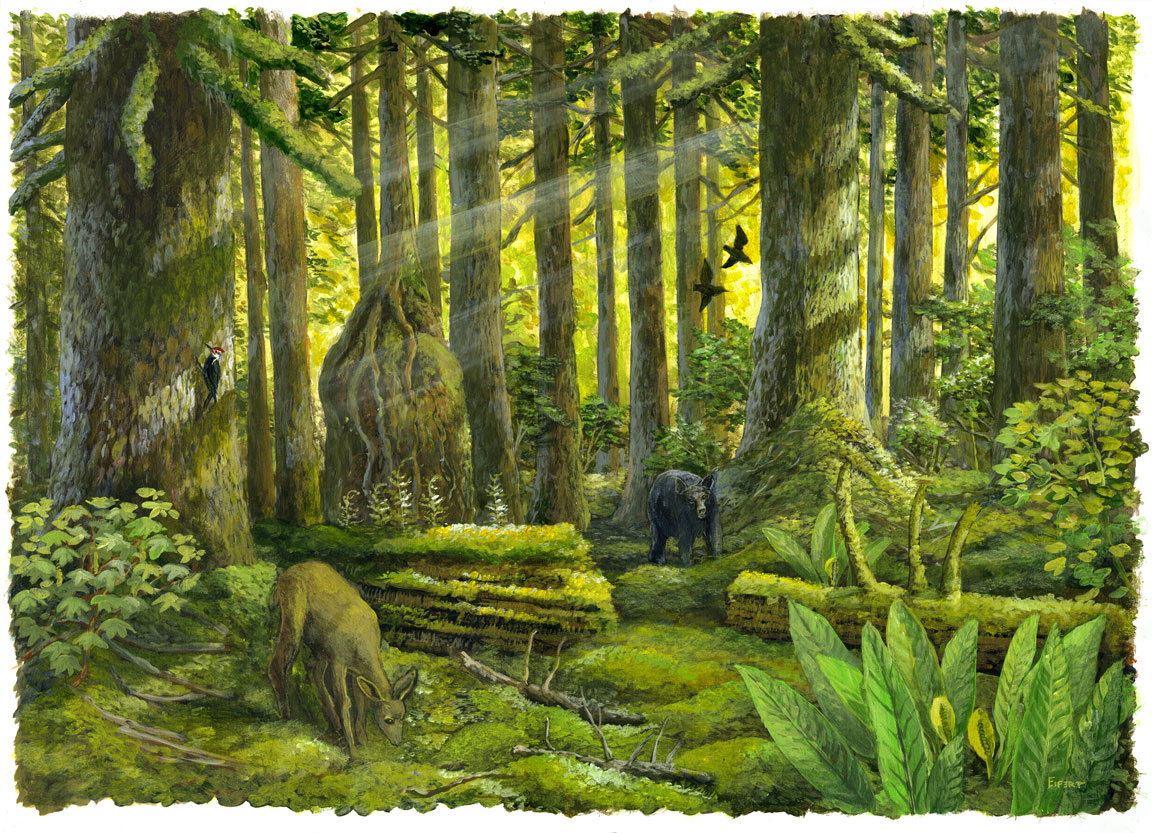
The Old-growth of Fort Townsend State Park


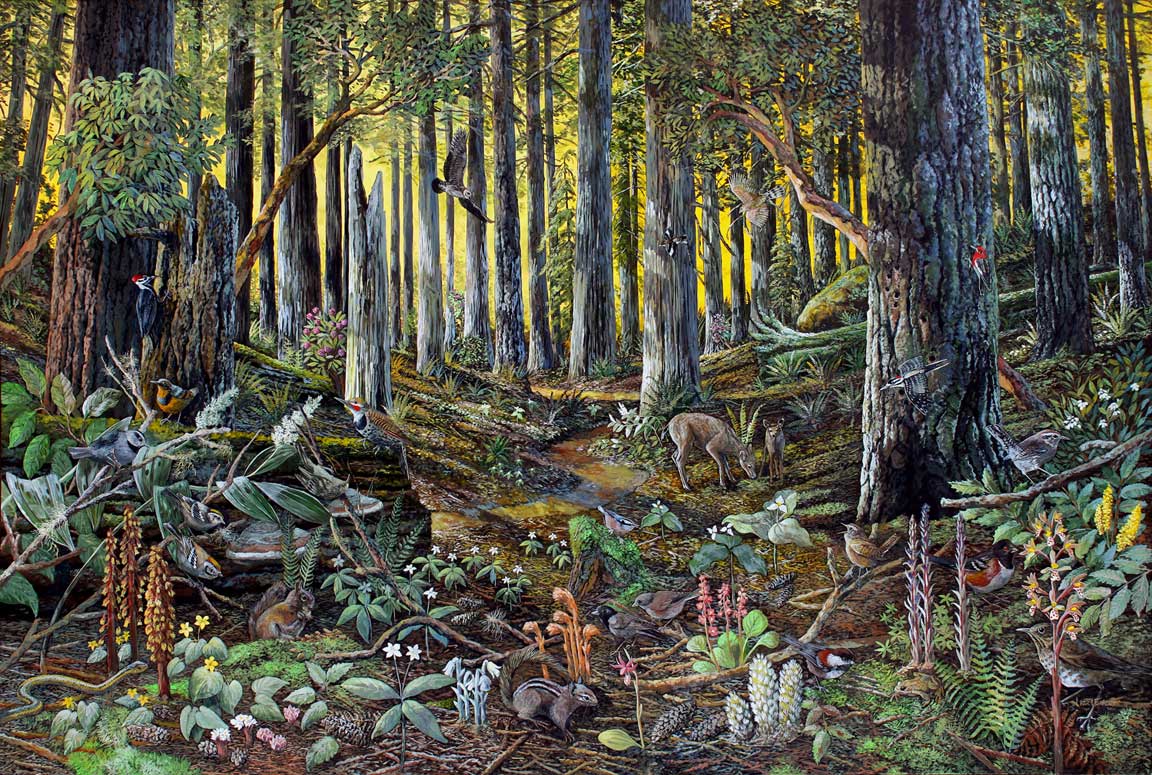
This should enlarge with a click. Please do so as there are lots of details.

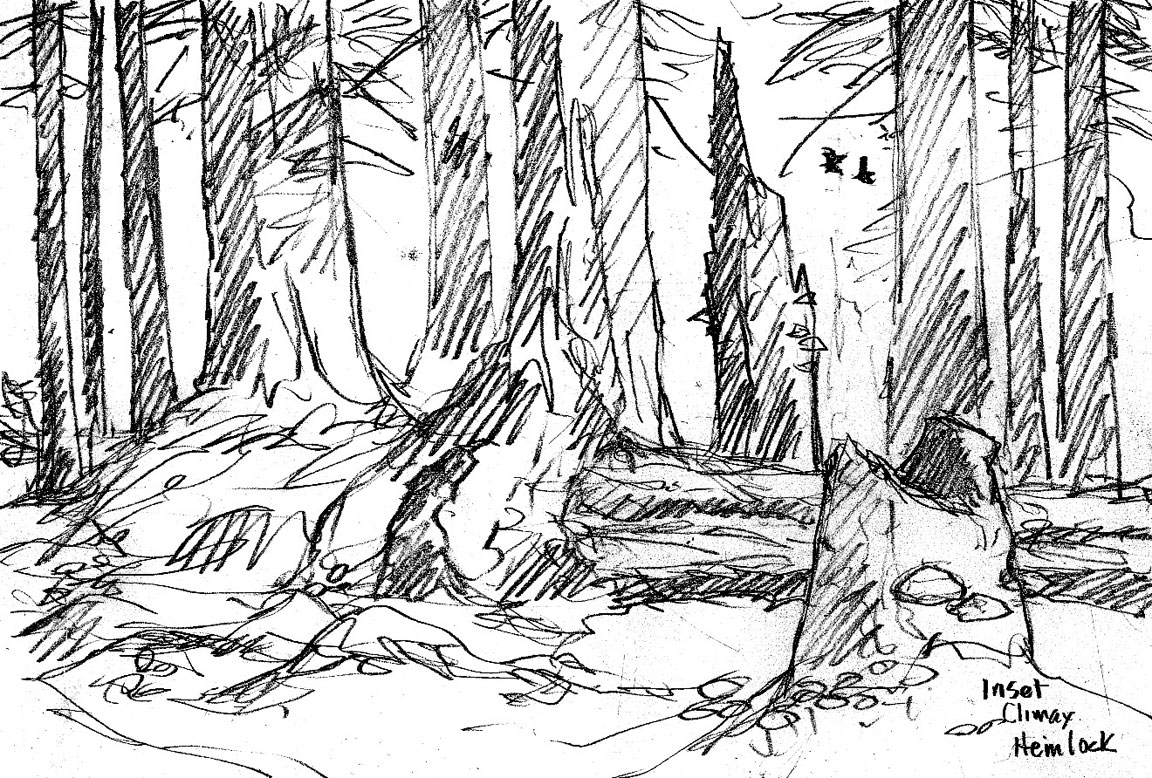
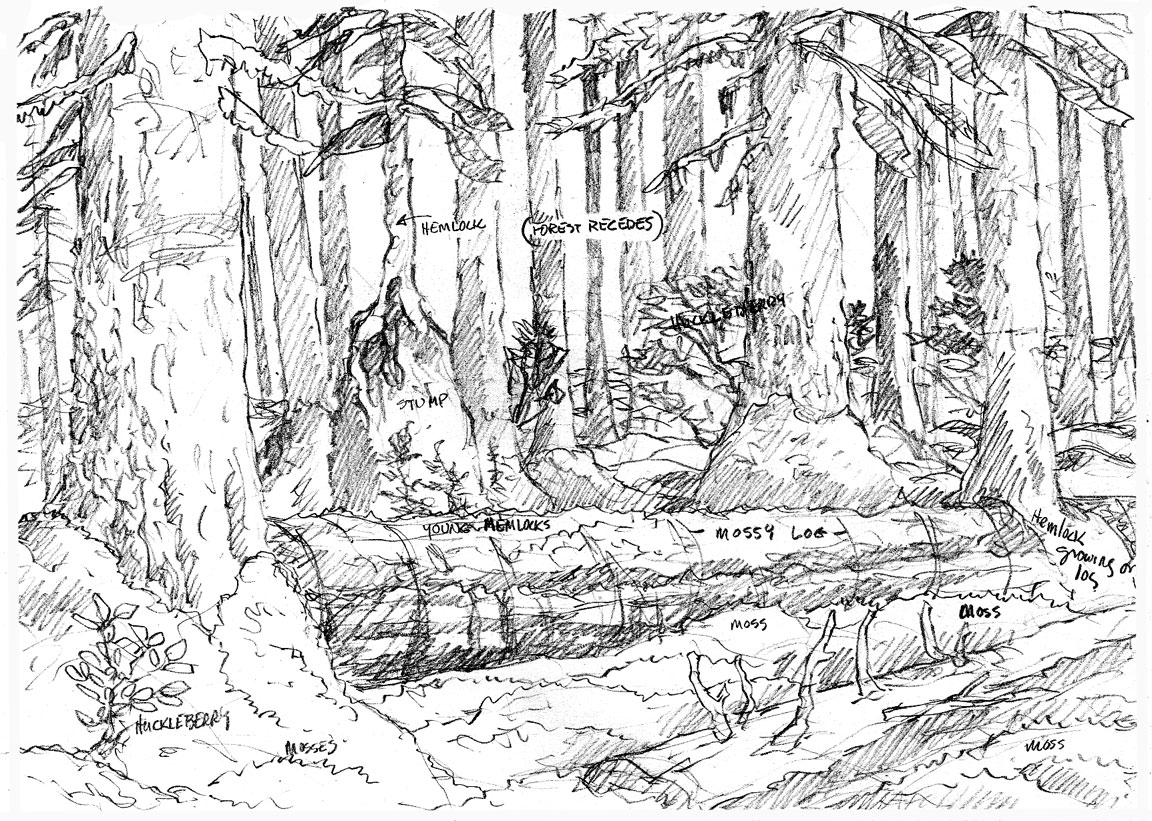
Just a mile or so from our studio is one of the rarest of all Northwest places – a lowland old-growth forest. It’s quite a park, and for Nancy and me, just walking the road into this place is often almost spiritual. Here in Port Townsend, we’re on the dry side of the Olympics so these trees aren’t huge like rainforest giants, but there’s an open and ancient feel here that always gets my heart going. Giant glacial boulders dot the forest. Signs of old wildfires are evident. We watch pileated woodpeckers hammer out old snags. Cougar warning signs abound. For about 8,000 years or since the last ice melted, this place has been left to itself. Even when there was a small military garrison here, the only trees cut were a few for firewood.

So, while thousands of miles of forests, our heritage, have been whacked away and the land irreputably ruined, this place has what few lowland forests have these days – some very, very rare plants. All those weird and odd plants that line the painting’s foreground are saprotrophic fungi, plants that don’t produce their own food but instead borrow it from the trees. You won’t see them in cut-over forests – if the forest goes, so goes most of the other stuff like gnome plant, sugar stick and pinedrops. Even calypso orchids won’t reappear. I won’t go into it more here, but I consider this forest to be something of a sacred place, a place much like a world-class museum that holds our most meaningful treasures – our  heritage. These great forests won’t return ever again while humans are here, and so along with the few other scattered lowland patches of old-growth, this is IT!

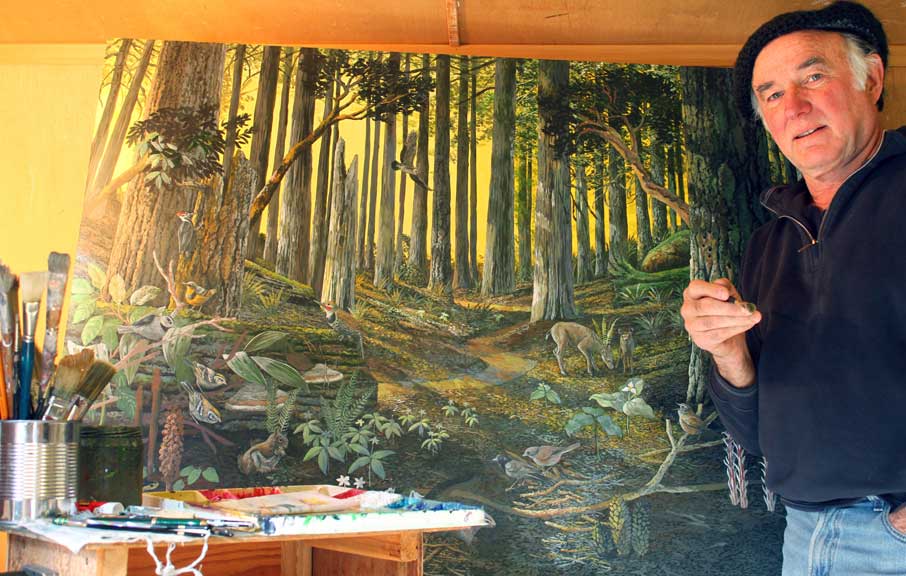
Somehow the very active local friends group for the park, The Washington State Plant Society, came up with some funding for me to paint a mural for an exhibit at the park. Seriously, I can’t imagine anything more fun for me to do than paint this exceptional forest. I mean this is like a gift, a chance to actually paint my own backyard. It just doesn’t get any better than this. Here’s a picture by Nancy of the ol’ guy at the easel, half way through this effort. Was he dragging his feet? Well, maybe! 

Thanks Ann and Nancy of the friends group, this was just plain fun.

And as usual, thanks for reading this week.
Larry Eifert

Click here to go to the online blog this was to.

Click here to go to our main website – packed with jigsaw puzzles, prints, interpretive portfolios and lots of other stuff.

Click here to check out what Nancy’s currently working on with her photography.
Fairbanks Alaska Greenbelt

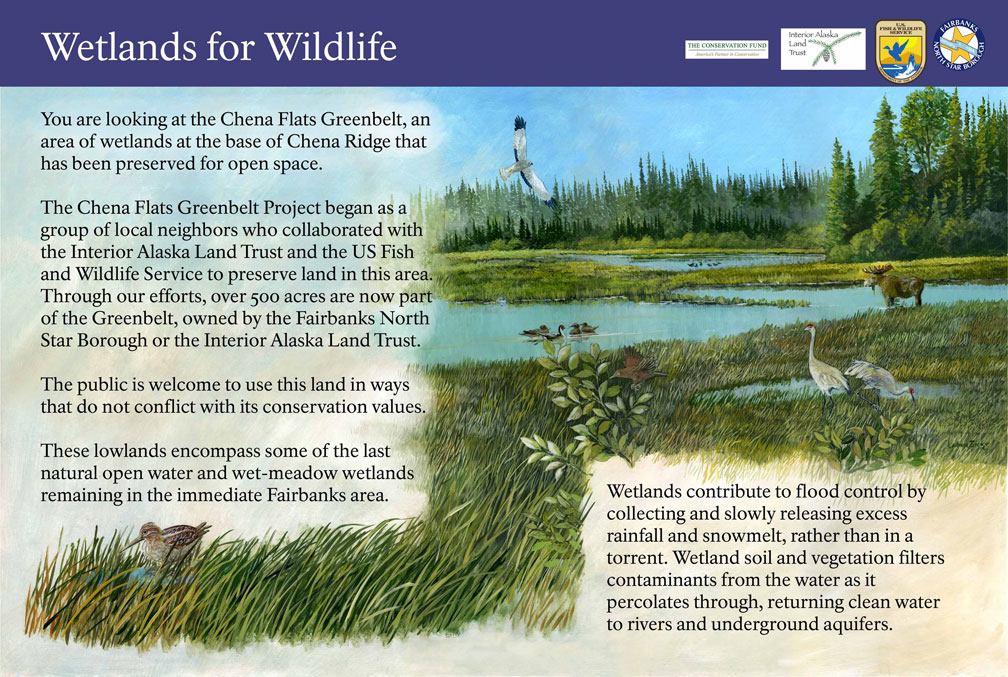
I’ve painted images of city greenbelts before, but nothing like this. In fact, for those of us in the Lower 48 and used to concrete-surrounded greenbelts along city streets, it’s probably difficult to image spruce swamps with moose and sandhill cranes in one. But then this is Fairbanks, Alaska, northern most metro in America. Last week I passed around the first effort with this project – and now here’s the second. Boy, it was fun painting the nature from this far north. Wish I could have gone up for a field trip, but it’s not quite looking like this yet. Thanks to everyone on this project for giving me such free-reign to have some fun.

Thanks for reading this week.
Larry Eifert

Click here to go to the online blog this was to.

Click here to go to our main website – packed with jigsaw puzzles, prints, interpretive portfolios and lots of other stuff.

Click here to check out what Nancy’s currently working on with her photography. She has some new and wonderful galleries in her album sections.
Fairbanks Alaska Gets Some Eifert Paintings

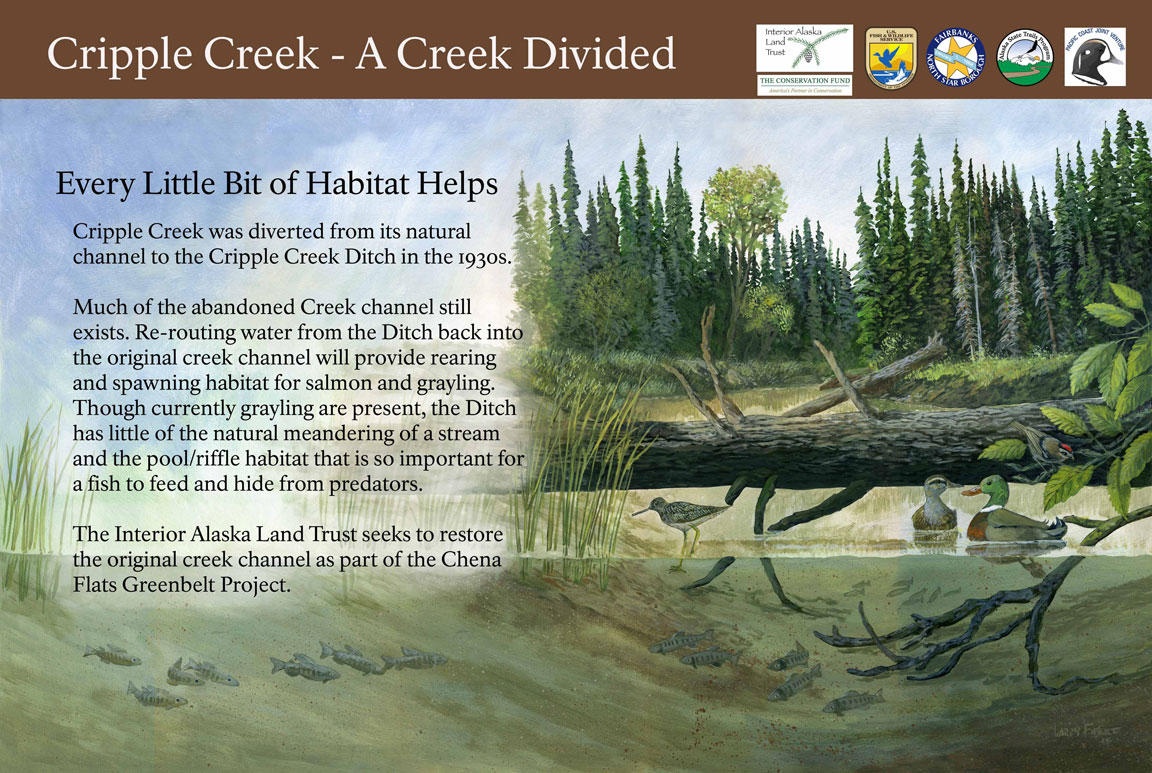
This week I finished up two pieces of art for outdoor installations destined for the Chena Flats Greenbelt Project in Fairbanks, Alaska. Lots of mining – lots of messed up watersheds have left this area in need of lots of repair. These paintings are about what I seem to do a lot of these days: show how a landscape MIGHT look if we give it a chance. There are many agencies and non-profits involved in this, but it really seems to be just a small group of involved citizens doing their best to improve their backyard. I’ve been working with a very impressive and diligent woman there who was willing to pare down text and make this look good – and I think together we developed it into a pretty nice piece of interpretation.

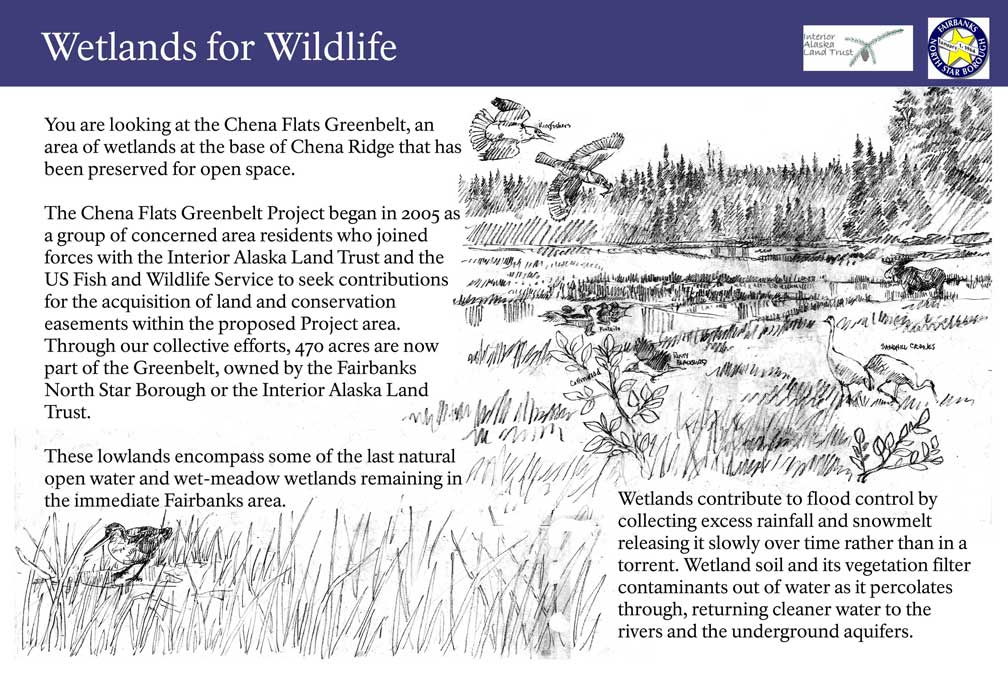
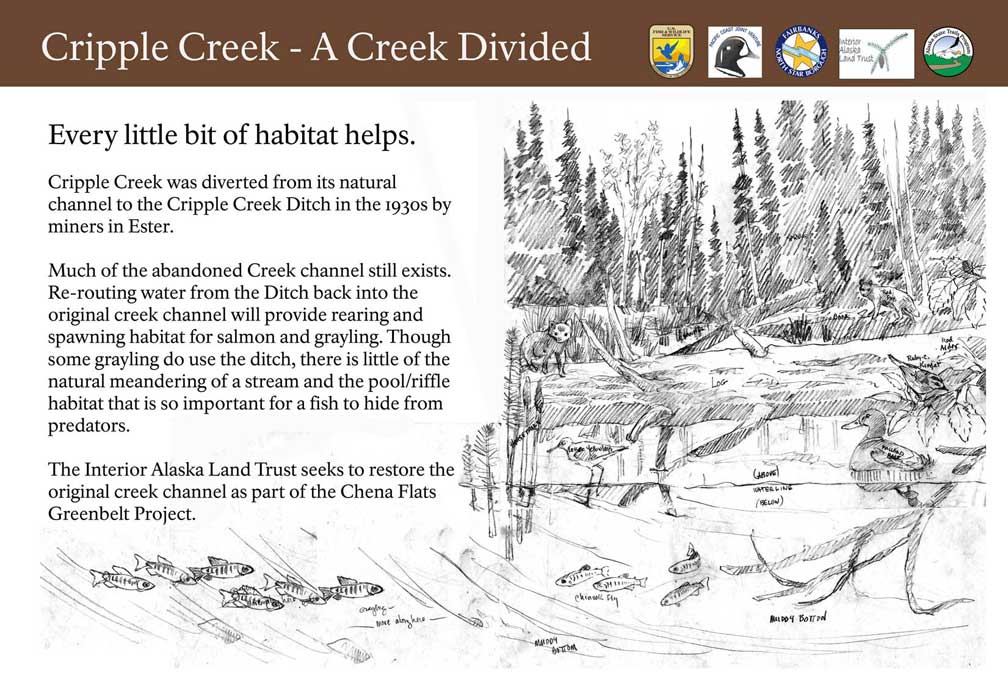
And here’s the original, first-draft sketch. Critters came, left, changed – but in the final it’s pretty much like the first idea. That’s how art should be, I think, because the first flash of thought is usually the best. Thanks, Sally.

Thanks for reading this week.
Larry Eifert

Click here to go to the online blog this was to.

Click here to go to our main website – packed with jigsaw puzzles, prints, interpretive portfolios and lots of other stuff.

Click here to check out what Nancy’s currently working on with her photography.
Sketchbook of the White Mountains

Click each image to enlarge – there are nice textures here and there.

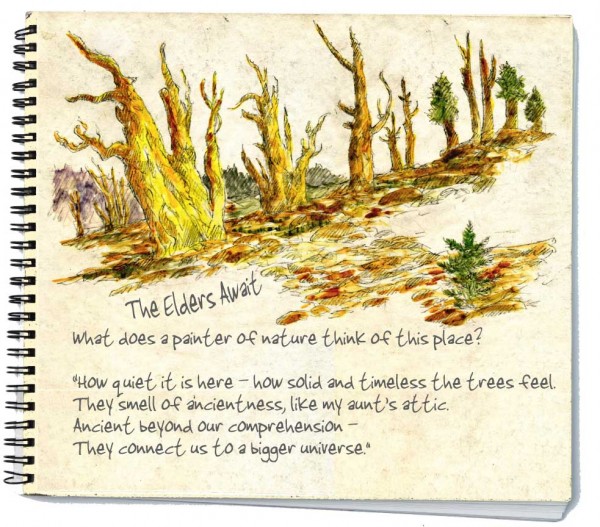
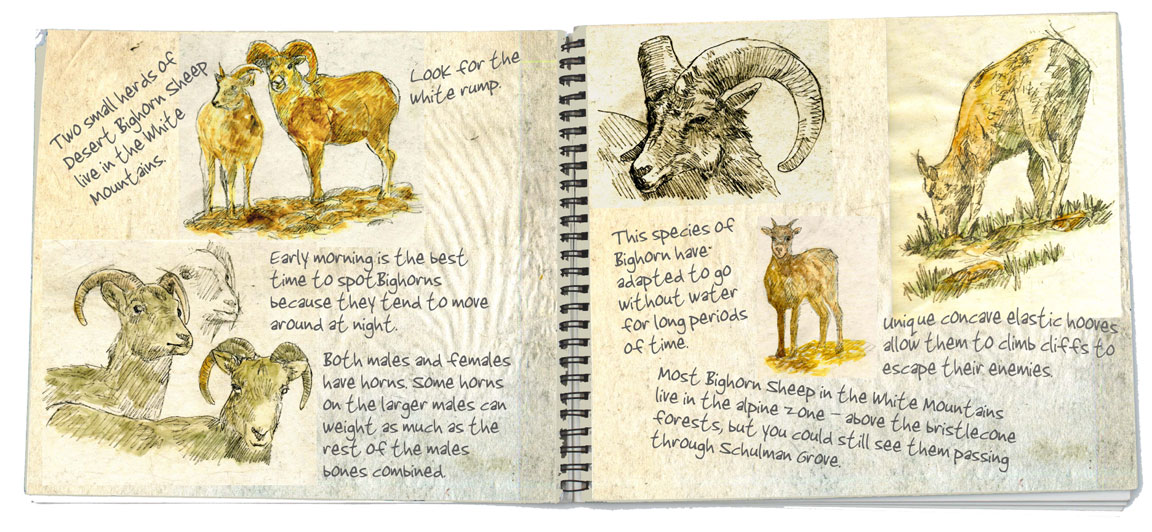
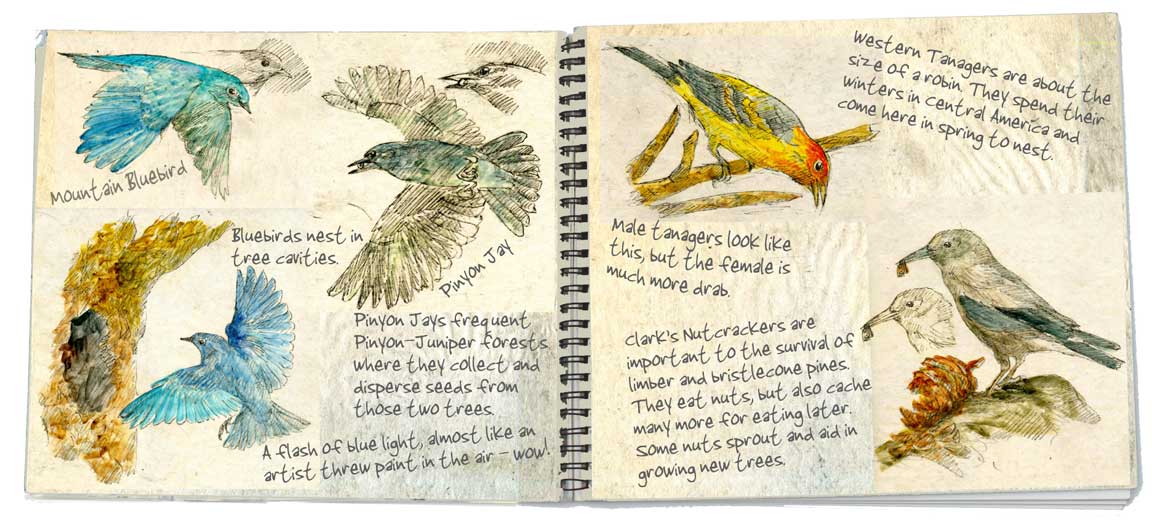
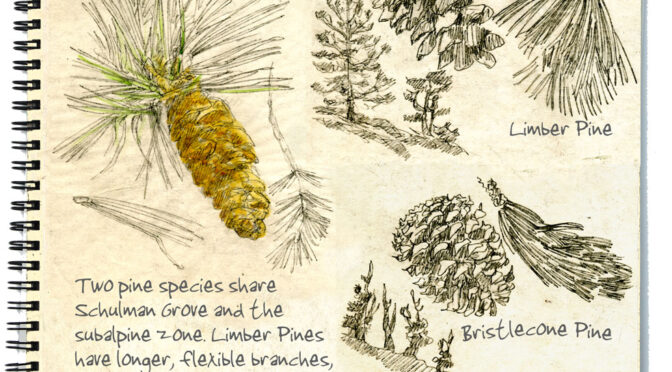
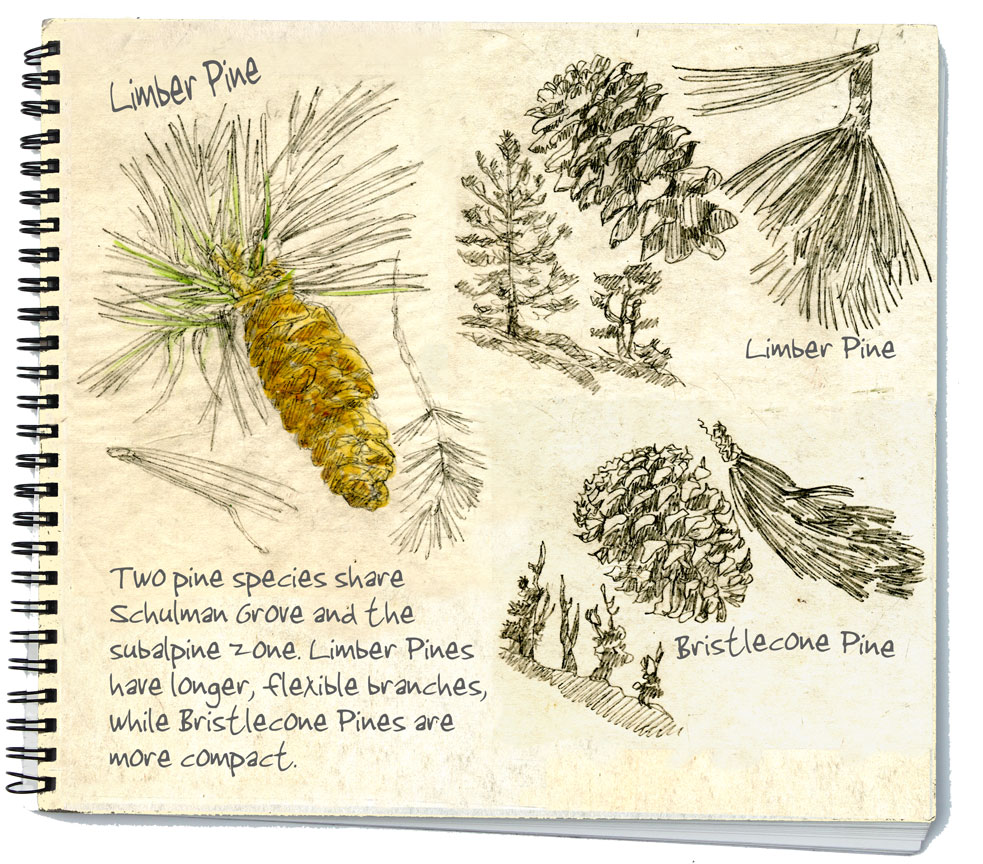
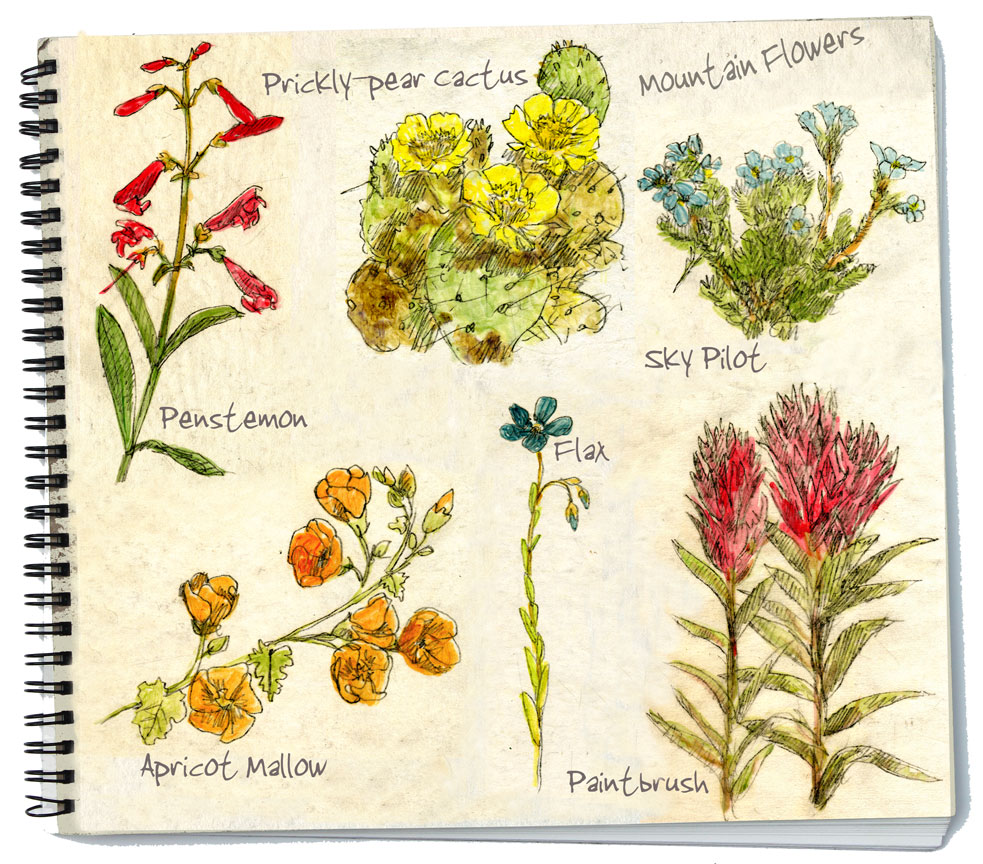
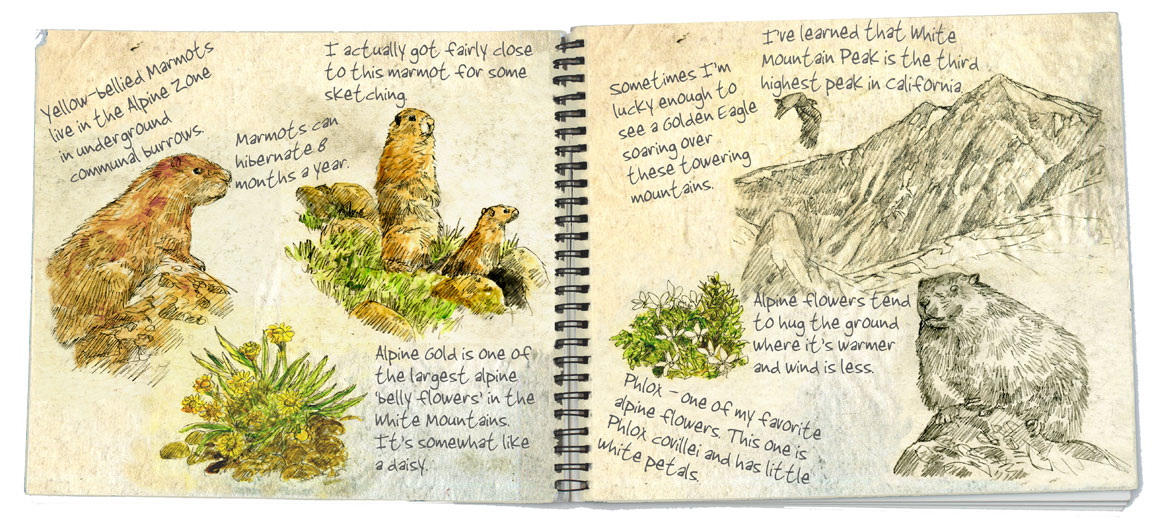
This week I painted more art for Schulman Grove’s new visitor center in the White Mountains of California. This group is a series of seven sketchbook pages for exhibit panels below my three murals. These three need to be cleaned up a bit, so you’ll see some ragged look and blocky edges here and there from all the Photoshop layers. It’s a work in progress, but this way you can see assembly process.

I hope not, but I may need to move some of the sketches around or change the wording, so I thought it best to create EACH drawing seperately and even the color is seperately layered so it can be changed. Each text passage is put in with Photoshop too, so it can be edited if necessary. I first did the pencil sketch, then put tracing paper over it and painted the color layer. Both were scanned, pieced together and put on a photo image of one of my blank sketchbooks. I think the results look pretty good, like they’re old field sketches drawn on location a century ago. I was shooting for those old botanical illustrations on faded yellow paper, and I think I came close. Once I get approval from the Forest Service, I can clean up the rough edges. The reason I didn’t hand letter the captions is that all this has to be ADA compliant, so the characters have to be an approved font. Ah, the world of public art these days is pretty complex!

Computers can be maddening, but then again they can help produce wonderful results. On the other hand, if I didn’t have a few drawing skills in the first place, none of this would have happened at all, so don’t send me emails about computers replacing artists. They’re just tools, like paint brushes or pencils.

Thanks for reading this week.
Larry Eifert

Click here to go to the online blog this was to.

Click here to go to our main website – packed with jigsaw puzzles, prints, interpretive portfolios and lots of other stuff.

Click here to check out what Nancy’s currently working on with her photography. She has some new shots of Sequi, the new sea otter she’s been photographing.
Another Bristlecone Pine Painting

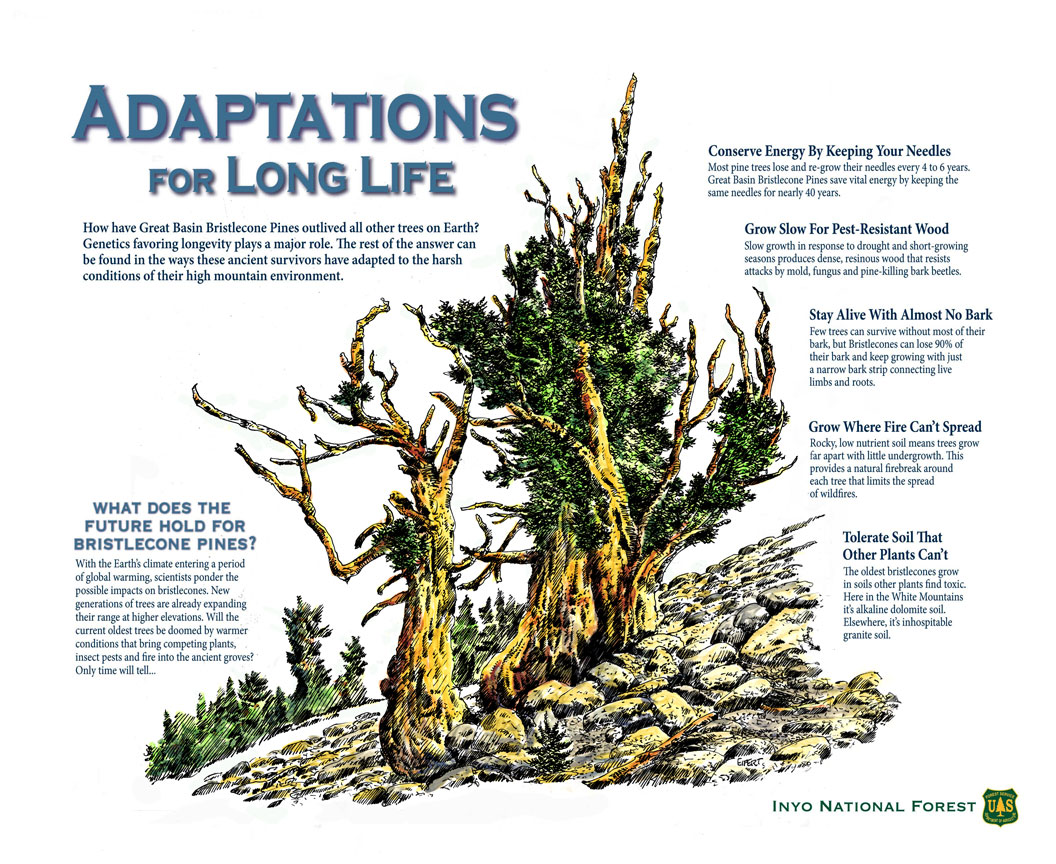
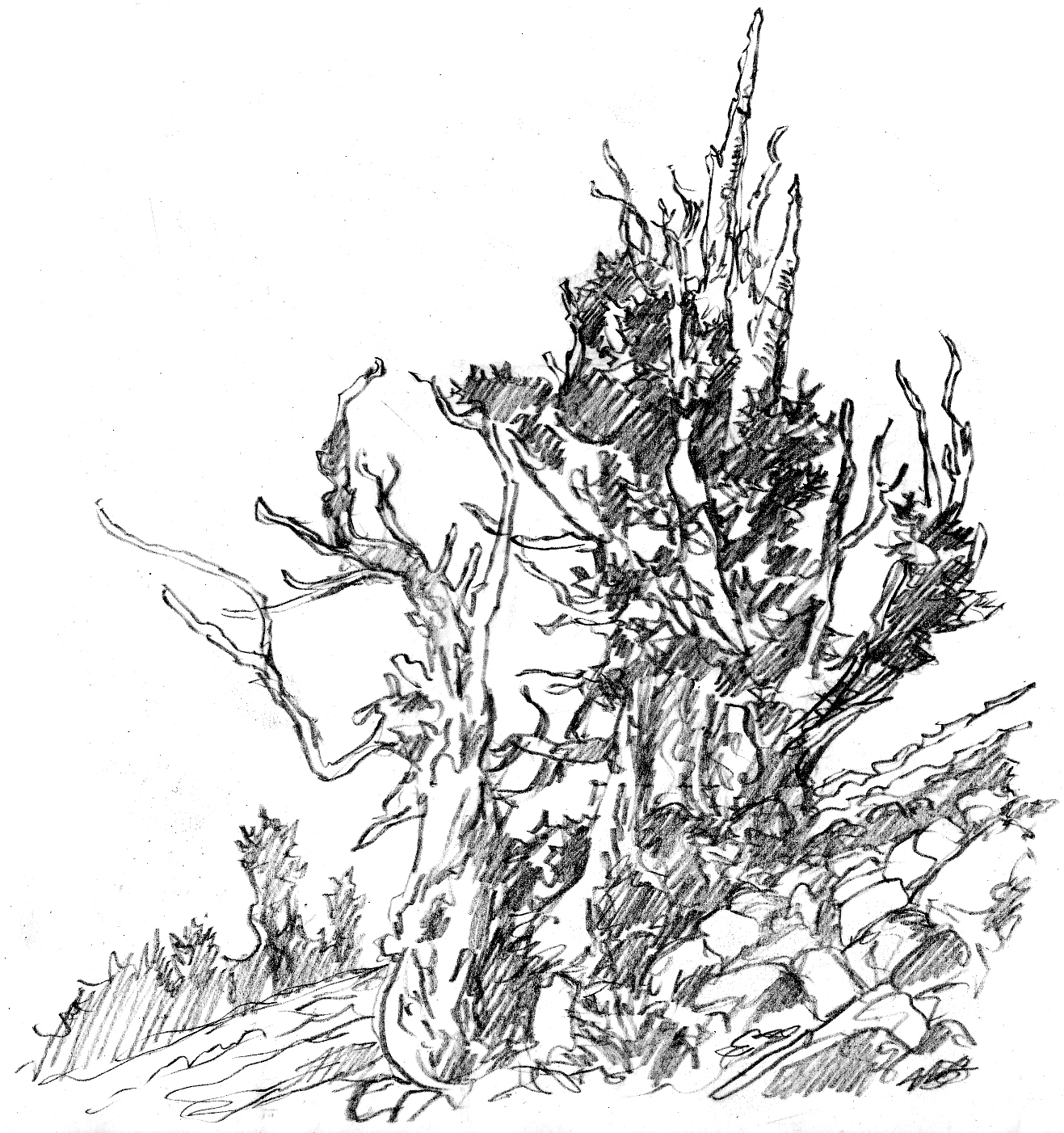
A few weeks ago I posted my three large murals just completed for the new Schulman Grove Visitor Center near Bishop, CA. Now I’m working on some smaller art for interpretive panels for the rest of the building, and this one features a big ol’ gnarly ancient bristlecone tree in pen and ink and acrylic wash. Below is the preliminary sketch so you can see the progression from pencil to finished painting. It’s pretty close!

There are a lot of other people involved in this project besides me, but I seem to rarely express thanks to these folks for the help I get and joy I experience in doing my work. I’m sure not saying I’m any better than anyone else here, just that it takes a bunch of people to make a visitor center. There’s Rosie, the contractor and designer from Georgia, Frank the writer from Marin County, CA, John L and Sheryl H from the Forest Service, as well as Scott and John from the team Rosie’s assembled to get all this accomplished. We’re a bunch of people that are all doing specific jobs to create a beautiful installation on a remote mountaintop in the Great Basin – and I get to do the art. What a deal!

Thanks for reading this week.
Larry Eifert

Click here to go to the online blog this was to.

Click here to go to our main website – packed with jigsaw puzzles, prints, interpretive portfolios and lots of other stuff.

Click here to check out what Nancy’s currently working on with her photography.
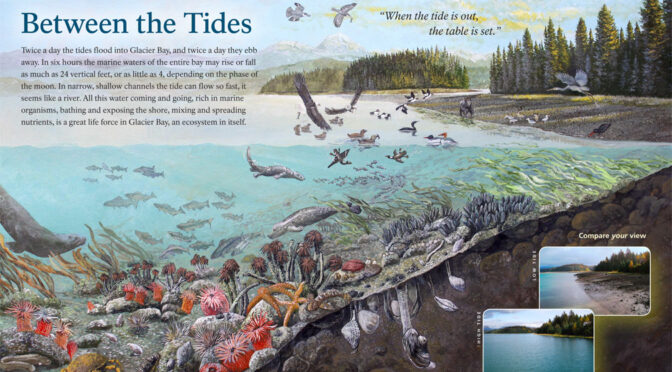
Glacier Bay National Park aquatic painting

Images should enlarge if you click on it.

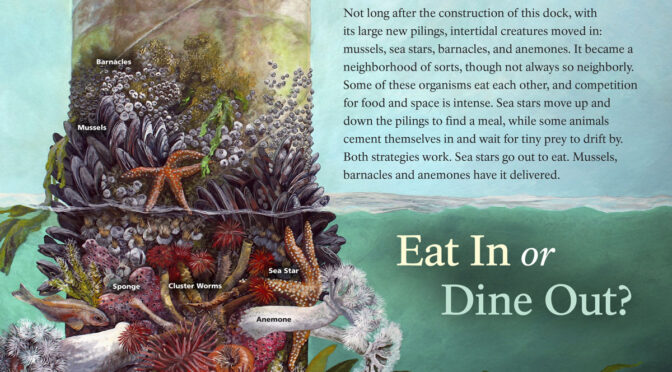
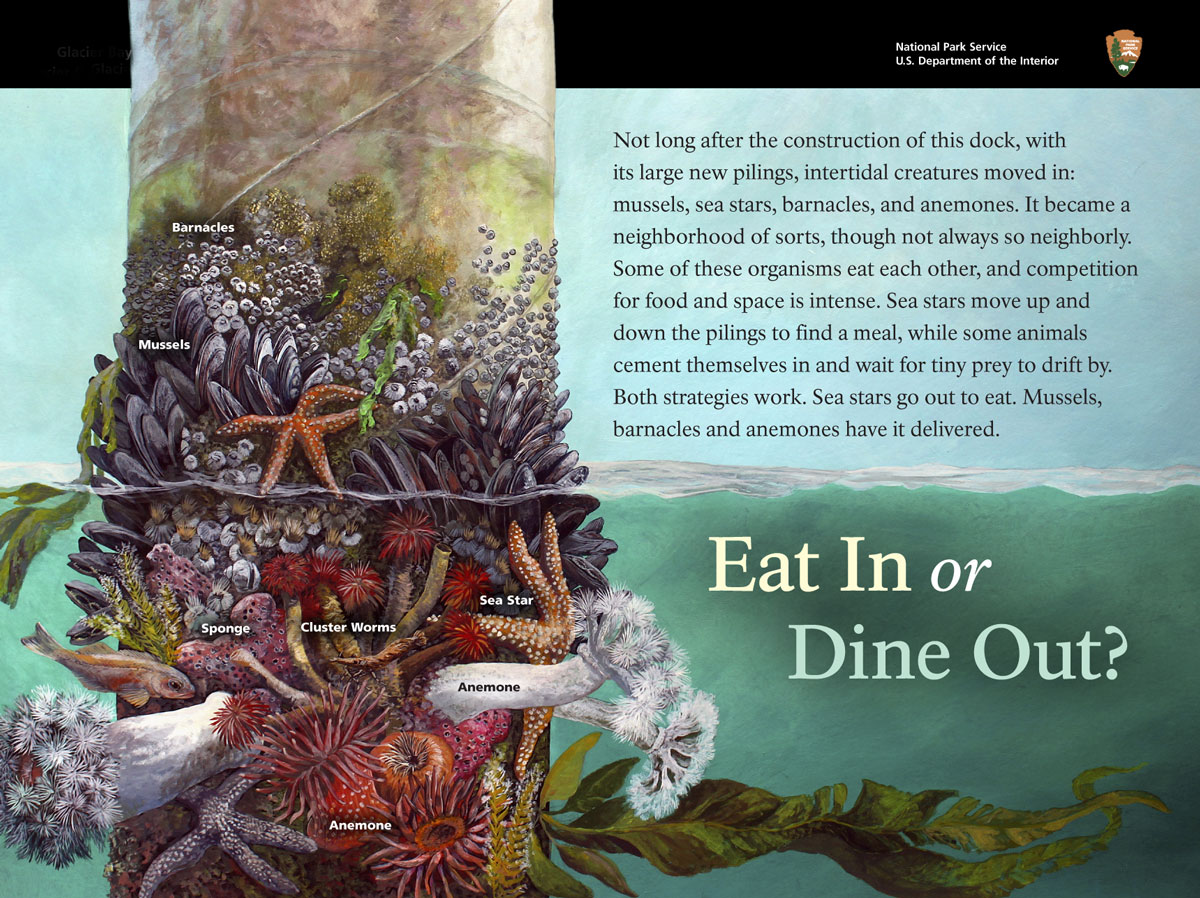
Here is the second painting for Glacier Bay National Park. Two weeks ago I posted the first one showing an above the bay – below the bay painting of the same ecosystem. Both paintings will be made into outdoor panels and installed on the dock at Bartlett Cover in the Park.

Both of these have been fun and interesting for me, because there are great similarities as well as great differences between Glacier Bay’s aquatic landscape and ours right here in Port Townsend a thousand miles to the south. Some of the critters on these pilings are much bigger, some are smaller, and some are different colors and shapes. It takes some close study to figure it out, learning about one species at a time.

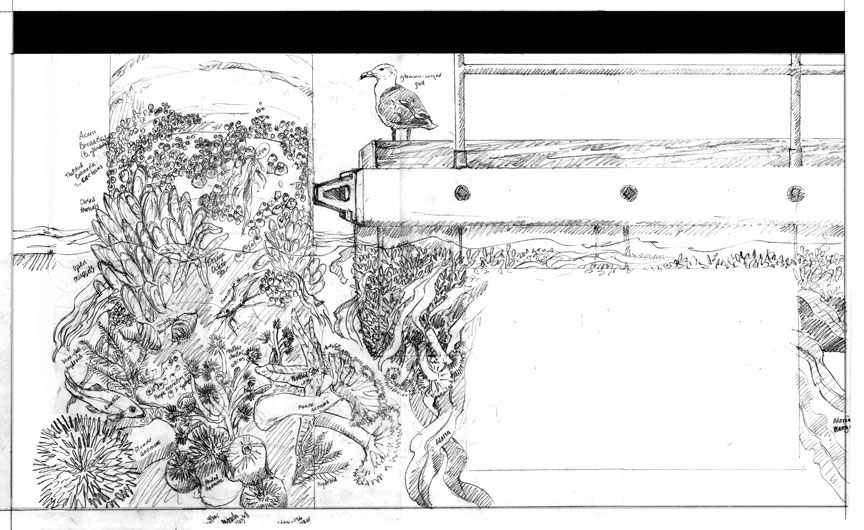
And here’s the preliminary sketch. I get a lot of mail about seeing the evolution of these paintings from concept to sketch to final painting. This one started out with a dock and gull, railing and all sorts of stuff hanging underneath. They even found the blueprints for the dock so I could see what it looks like underneath, but in the end all that was nixed for a cleaner design. What a difference, don’t you think?

Thanks for reading this week.
Larry Eifert

Click here to go to the online blog this was to.

Click here to go to our main website – packed with jigsaw puzzles, prints, interpretive portfolios and lots of other stuff.

Click here to check out what Nancy’s currently working on with her photography. She now has more sea otter pup images posted.
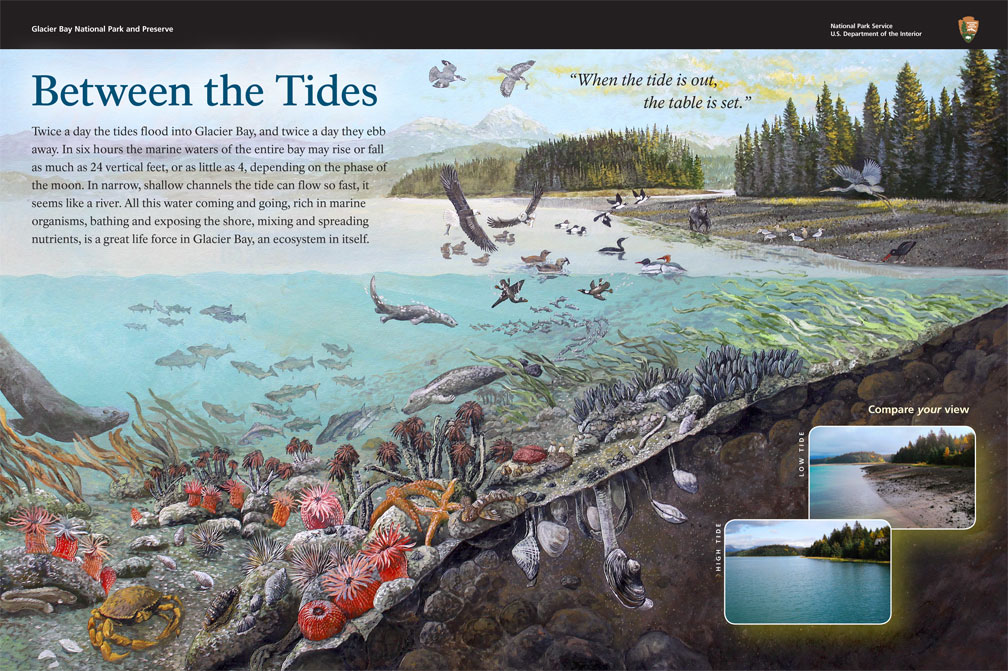
Wilderness Art for a Wilderness Park

90% of the people who visit Alaska’s Glacier Bay National Park come on a cruise ship, and most never get off their boat. But those few that do come ashore get to experience a fantastic ecosystem so complex as to boggle a nature-painter’s mind. This painting and exhibit will get front-row seating in Bartlett Cove, the main staging area for people who have the mind and spirit to personally experience this pristine place – and it gives me a permanent little art gallery on the dock! How cool is that?

I just finished this painting two days ago – so it’s still out for approval. This is the first of two images I’ve been working on for Glacier Bay. They both show the critters living between one of the biggest tidal ranges on the planet. Tides here can swing as much as 25 FEET in one cycle, and all that rushing water makes for a pretty rich table, or, as the caption says: “When the tide is out, the table is set”.

I’ve always loved working with the National Park Service. Unlike many, these folks are not in it for the money – but for the good of nature and society, and I just don’t see much of that anymore. As an example of the lengths they go to so I get the best information for a painting, they sent me a little video link a couple of weeks ago. Photographed in a BLIZZARD and with the staff on skis, it showed where this installation will go! Don’t tell me these folks don’t have their hearts in the right place.

Thanks for reading this week. The second painting will be ready soon.
Larry Eifert

Click here to go to the online blog this was to.

Click here to go to our main website – packed with jigsaw puzzles, prints, interpretive portfolios and lots of other stuff.

Click here to check out what Nancy’s currently working on with her photography. Sea Otters, oh my.
A New Life for Lahonton Wetlands

My first Nature Conservancy commission was this mural of the marshes east of Reno, Nevada. The original painting hangs in their offices in Reno, along with about 2.000 posters floating around the West. Now, almost 20 years later, another image will be installed in the new BLM California Trail Interpretive Center, eight miles west of Elko, Nevada. I just sent the final scan and it’ll be 17 feet wide by 10 feet high, proving that art never dies, it just gets reprinted.

Back when this was painted, there weren’t digital scanners like we have today. I remember I had it photographed in Sacramento and found the 8″ x 10″ film postive transparency still there in our lock box on Kodak film that’s not even made today. It was a color-perfect shot and scanned up 2500% just beautifully. How big was that file for a 17′-wide image? The Photoshop layers file was 2.4 gigabits, and I admit my computer took some time to process it. Smokin’.

It was almost 20 years ago when Nancy and I were doing field research for this painting in the dry lakebeds and marshes around Fallon, Nevada. It was the only time either of us have been on an airboat – basically an airplane engine and prop on the back of a big rowboat. What a thrill it was to just glide over these bull rushes and “fly” around miles of marshes. We eventually ended up at a beach just like this one where the US Fish and Wildlife Service guides showed us fresh water clams, reminders of the ancient Paleo landscape when these dwindling lakes were giants from Ice Age runoff.

I have a new show at Gallery Nine in Port Townsend this month. Here’s press on it from the Peninsula Daily News, and here’s the Gallery Nine website with more information. Come on down if you’re here.

Thanks for reading this week.
Larry Eifert

Click here to go to the online blog this was to.

Click here to go to our main website – packed with jigsaw puzzles, prints, interpretive portfolios and lots of other stuff.

Click here to check out what Nancy’s currently working on with her photography.
Exit Glacier – Kenai Fiords National Park

Commissioned by the National Park Service and funded by Alaska Geographic for the new nature center in Kenai Fiords National Park. My task here was to show the ecosystem of this emerging landscape so recently covered by the glacier. You can see the trail winding through a young forest populating the outwash plain of the giant glacier connected to the even bigger Harding Icefield (bigger than the state of Rhode Island). Just a few miles from Seward, Alaska, this is one of the few glaciers you can actually walk up to and touch. It’s a bright summer scene, the way most people see it, but when we were here in September everything was already turning ochre and there was a rain and flood-event going on. I blogged about that on September 14, 2011 when I got the location sketch posted here. A few weeks later I posted the finished sketch here. It’s fun to see the evolution of the painting from concept to finished mural, but I know you guys don’t like to click through, so here’s the concept sketch again, but this time as it was happening (photo by Nancy Cherry Eifert over my right shoulder).

 And here’s the sketch drawn back here in the studio.

Soon there will be a high-pressure laminate panel of this painting for the center. Since it’s closed in winter, no heat, and it IS Alaska, it was decided that the original will hang downtown in the main offices. Next spring we’re hoping for puzzles and other products, so stay tuned.

Thanks for reading this week.
Larry Eifert

Click here to go to the online blog this was to.

Click here to go to our main website – packed with jigsaw puzzles, prints, interpretive portfolios and lots of other stuff.

Click here to check out what Nancy’s currently working on with her photography.
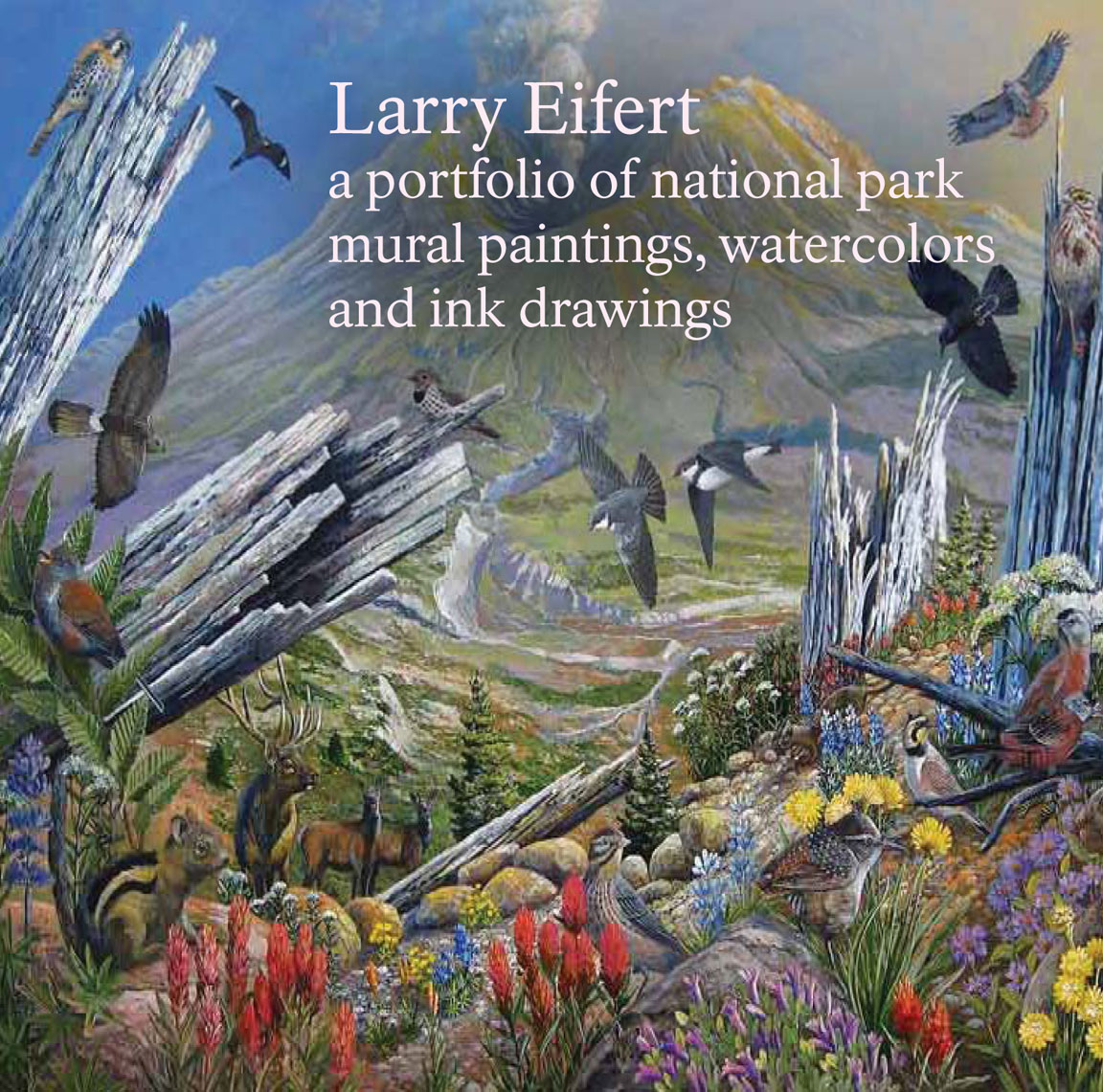
Ancient Bristlecone Pines mural

(There’s a lot to see here, so these images should enlarge if you click them)
The third and center painting for the Schulman Bristlecone Pine Grove east of Bishop, California was finished this week. Put together, this wall is going to be about 17 running feet of pure high-country paintings. This final one is 5 x 8 feet on stretched canvas and I was really pushing it to fit into my little studio. Several times I almost gave up and went downtown to a larger space, but I wondered how I’d get it in the car. In the end we muddled through and now it’s great to see all three together. Since there was really no room for me to line them up to check (inside, at least), this is the first time I’ve seen them all together. I think it’s going to work.

Bristlecone forests are a beautiful but stark and colorless landscape because the trees are all bleached out by thousands of years of sun, the rocks are white dolomite – and flowers are few here at 10,000 feet. And since some of these trees are almost 5,000 years old, the oldest on the planet, they really look gnarled and sculptural, so that’s what I ended up concentrating on. Paintings of sculpture!

For those who want to know more about this project, I’ve blogged about it before here:
Here is the post for the pinyon painting on the left.
Here is the post for the alpine painting on the right.
And here are the original sketches. You’re notice some serious changes between the concepts and final paintings. That’s the fun of it – not to mention I just love this place.

Thanks for reading this week.
Larry Eifert

Click here to go to the online blog this was to.

Click here to go to our main website – packed with jigsaw puzzles, prints, interpretive portfolios and lots of other stuff.

Click here to check out what Nancy’s currently working on with her photography.