Tag Archives: Parks

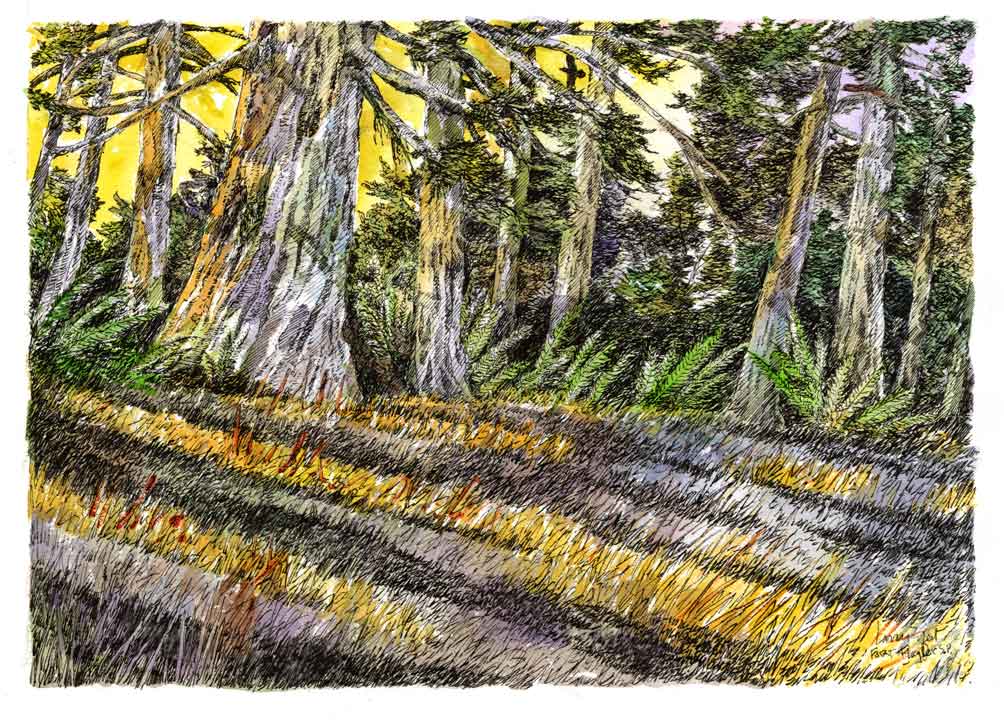
Old Fir at Fort Flagler

I’m still on this pen, ink with watercolor-thing. I recently received an email about one of these I did back in the 1970’s that someone recently purchased in an estate sale, and it jogged my memory that they were fun to do. So, we’ll go a bit more with this.

We trailer-camped beside this stately old Douglas-fir last week. We had planned on a little camp-hike into the Olympics, but rain got in the way (oh, RAIN? in the Olympics – in JUNE?), so we simply drove over to Fort Flagler on Marrowstone Island just east of here. The Rain Shadow Effect was doing its thing, and the sun was out. We could see the rain right over across Port Townsend Bay, where it stayed, but here it was clear, soft and nice, so I got busy with the paints. Long  cool later afternoon shadows, tall spring grass that hadn’t been trimmed and a few crows flying overhead.

There are lots of old-growth trees here, but here in the lee of giant mountains, they never grew huge. You can tell they’re old trees because the lowest 8 feet or so are all fire scarred and pocked with woodpecker holes. A dead giveaway. And the reason they’re still here? This is old fort was one of the many ringing Point Wilson, gateway to Puget Sound, and they guarded it from the bad guys a century ago. The forts never fired a shot in defence, but they never cut many of the trees either, preferring to use them as camouflage for the big guns. The guns were melted down and turned into tanks in the next war, and the state of Washington turned the forts into parks. A great idea, don’t you think?

This ORIGINAL painting is watercolor and ink on Arches paper, 10″ x 14″ that fits a 16″ x 20″ matted frame. It’s $239 unframed.
A dark mahogany frame with a double mat makes it a total of $279 and shipping adds just a bit more depending on your zone or if you take the frame. This is the original painting, NOT a print.
Email us for details.

Next post I’ll have the new Bristlecone Pine jigsaw puzzle to brag about, so stay tuned.

Thanks for reading this week.
Larry Eifert

Click here to go to the online blog this was posted to.

Click here to go to our main website – packed with jigsaw puzzles, prints, interpretive portfolios and lots of other stuff.

Click here to check out what Nancy’s currently working on with her photography.

“Vanna White” – 20 Years Remembered

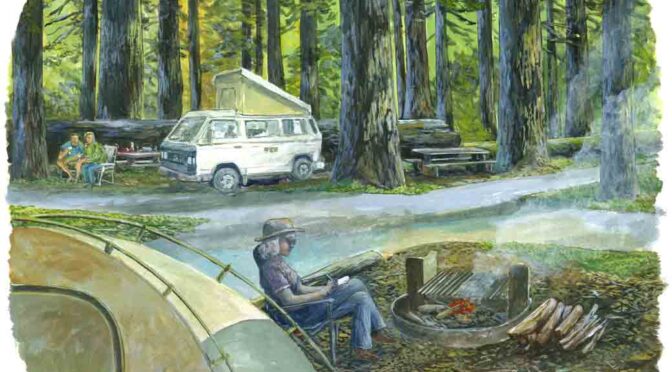
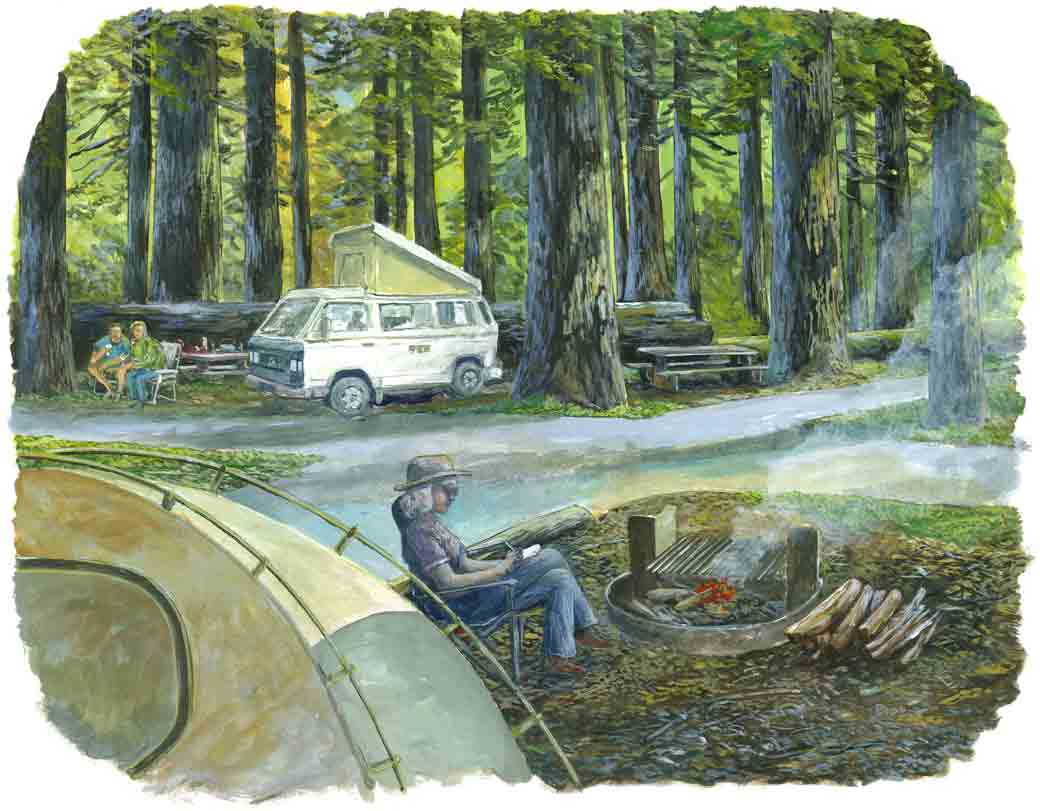
Painted just last year, my two best friends, “Vanna White” and Nancy in an interpretive painting for Olympic National Park. For decades to come, visitors will see but not fully understand what this painting represents to us.

I’m greaving  today over a separation from my second best friend, “Vanna White”. For 20 years and a third of a million miles, as a research vehicle I’ve driven this VW Westfalia Camper to just about every park in the Western United States. We’ve camped in her in places you wouldn’t think a 2-wheeled car could go,  talked to her like a person, and some people thought I would be buried in her – a ready-made coffin! 

One favorite story is the burned-up water pump-event north of Bakersfield. We got her stopped before the engine blew up, and were hauled into town by a good-hearted Chicano tow operator. Saturday night, all shops were closed (and there’s almost no civilized camping in Bakerfield), so he took us over to a friend’s house for the night, where we slept in the driveway in a neighborhood filled with Spanish-speaking kids and dogs. Early morning, our new friend found a pump somewhere and had it in by nightfall –  and event that included tasty food being brought over by the neighbors. I remember lots of fried chicken and lots of kids, all very interested in who we were and what we did. Vanna was like that – drawing a crowd no matter where we landed.

Now, while my Dad would buy a new car every three years no matter what, we camped more times than I can count in Vanna during the past 7,300 days, from Mexican beaches to Banff in the Canadian Rockies. I wrote park guides in her, painted watercolors on picnic tables and woke up with snow on the roof.  Burning through 17,000 gallons of gas, most parts were replaced as we went along. Cosmetic surgery and new paint (by me – after all, I am an artist and own a spray rig), but also a new engine, transmission, three clutches, four or five water pumps, three stereos and more carpets than I can remember. And, like another Vanna White we all have known for decades, she just never seemed to age!

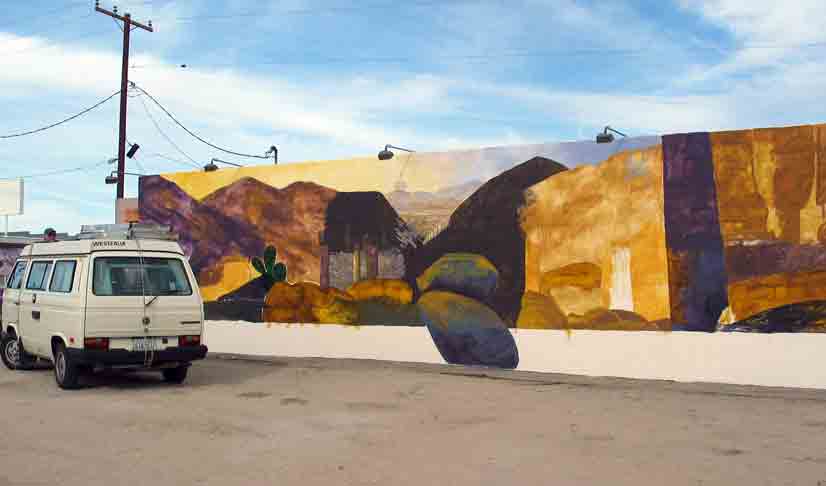
2006: Here’s Vanna next to a 90′ mural we were working on in 29 Palms California. We painted two murals here, a decade apart, and Vanna was there both times.

And so, after driving her a distance of from here to the Moon and half way back, we recently decided to find her a new home. It didn’t take long!  Just a couple of days on Craigs List and yesterday Vanna went off to Portland with a delightful younger couple who, we’re sure, will have the time of their lives continuing on with this same boundless spirit of adventure. AND, I’ve been told of a local support group I can go to of former Westfalia owners.

And why did we do this heart-wrenching thing? Well, we now have a little Scamp trailer waiting for us in the Tampa area. That’ll be a 6,600 mile trip to bring her home – and a good start on the next 340,000-mile adventure!

Vanna on her last adventure with us. California’s Anza Borrego Desert State Park, December 2009.

Thanks for reading this week.
Larry Eifert

Click here to go to our main website – packed with jigsaw puzzles, prints, interpretive portfolios and lots of other stuff.

Click here to check out what Nancy’s currently working on with her photography.

Flying Baked Potatoes

Winter-Murrelet
Flying Baked Potatoes
How a little seabird helped save some big trees

(Published in 48-North Magazine last month. It’s a pretty good read, I think, but it’s long enough that I posted the entire thing on the web blog.) I also think I’ve worked out all the bugs on this new software, but if it’s not working for you, please bear with me.

Here’s the story!
“Things are bad – really BAD around here!” he said, “And it’s all because of that stupid owl and the purple murel-thing that shut down the logging.” “You know, that STUPID purple. …bird!” Docks are interesting places, aren’t they? There I was, just heading for our boat and now I was thrust straight into some big environmental debate. Didn’t even know this guy very well, but after I heard his blathering, I took a deep breath and realized I probably needed to stop and do some ‘splainin’ – as Desi used to say. For some reason, I continue to think that a little honest and friendly education might just result in social change at the ballot box, so: “It’s a marbled murrelet,” I answered, “I saw one just the other day out in the bay, fishing with some cormorants. Probably a juvenile from the Olympics or North Cascades. Got a minute? I’ll tell you about them.”
Flying-Murrelet

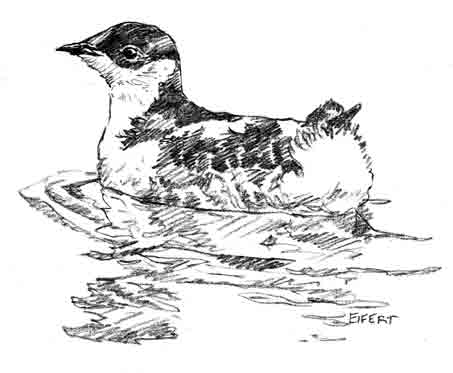
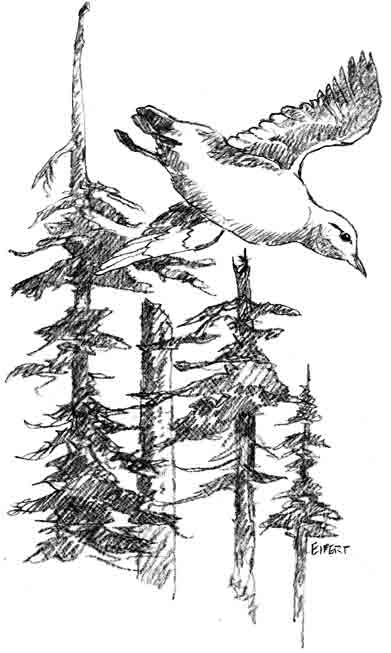
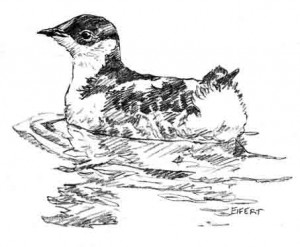
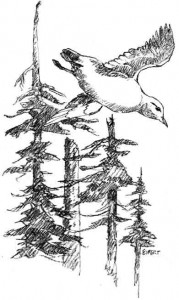
Marbled murrelets! For 30 years I’ve heard them lovingly described by biologists as a flying baked potato with a beak. But not just ANY flying baked potato, for this little chubby ocean bird was once America’s biggest ornithological mystery. While we were putting men on the moon and gloating about how smart we were, no one knew where these local birds even nested. Science ‘discovered’ the murrelet in 1789, but it took another 185 years for us to find a single nest! (Thank goodness murrelets knew where their nests were, or they’d be even worse off than they are.) And while we knew that Alaskan marbled murrelets nested on mossy rocky cliffs, no murreletnest had ever been found between San Francisco and Southwestern British Columbia at the south end of their range. The birds were often seen oddly out of place flying around the big trees in coastal old-growth forests and loggers referred to them as “fog doves,” but why were they there if they live on the ocean?

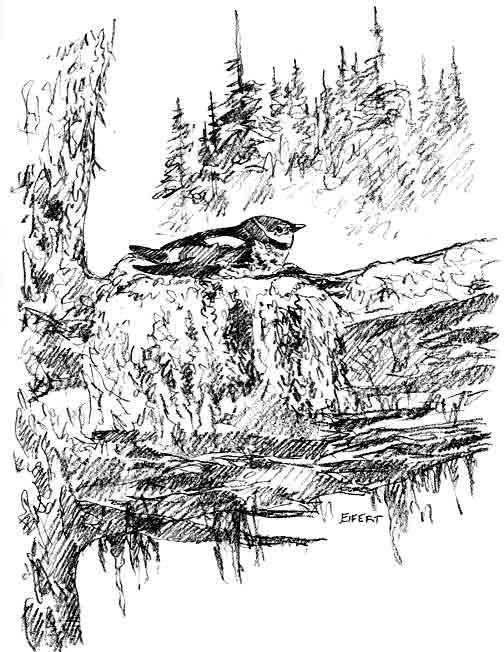
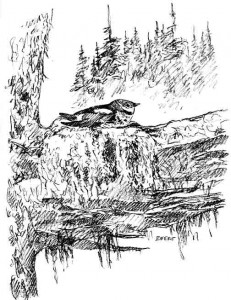
Then, in 1974, in the Santa Cruz area of California, a tree climber almost stepped on a chick in the canopy of an old-growth redwood, and the mystery was solved. Instead of nesting on mossy rocks, to increase their range southward the birds had adapted their nesting habits to the huge horizontal upper limbs of the giant coastal old-growth, often hundreds of feet in the air, and sometimes upwards of 45 miles from salt water. They hunt for small fish like herring by day in the ocean and return to their nesting duties in the evening. And, what caused this dock guy to think murrelets were Armageddon is that without old-growth trees, murrelets wouldn’t be able to nest on the West Coast of the Lower 48. It’s not just big trees they need, but big horizontal branches thick with moss and lichens, and trees don’t become like this until they’re centuries old. Because of this, and all the logging we’ve done in the past 200 years, the marbled murrelet is now listed as federally threatened and state endangered in Washington (12,000 birds), Oregon (7500) and California (4500). Some scientists believe that it’s not whether murrelets will become extinct, but when, because old forests are now few and far between, and what’s left have badly fragmented murrelet populations. Sometime later this century, when the only birds remaining are small population pockets in our national parks, this strange and unusual sea bird will simply not be viable as a species any more. And if that happens, I hope I’m not here to witness it.

I have some interesting connections with this bird, the one loggers loved to hate and conservationists used as a poster child to halt logging the last few percent of coastal old-growth forests. During the logging turmoil 25 years ago, I spent some time helping research these birds down in California’s coastal redwoods where the world’s tallest trees hug a foggy shoreline. Only 2.5% of the old-growth redwoods remain, and, as an artist I helped draw attention to the murrelets as a way to raise public awareness to the speedy demise of both trees and birds. It was the good, bad and the ugly. Ugly, because, as an artist, I was black-listed by timber organizations. Good, because business was good because of it. And not so bad when I spent one dark and foggy morning at 4:30 am up Redwood National Park’s Lost Man Creek valley, intently listening and watching for murrelets flying from nests to ocean. I remember that listening to murreletcalls in the redwoods reminded me of sailing. Often, when you’re cruising along with little wind to drivethe boat, you can hear that definitive oceanic call of keer, keer, keer. I’ll bet you’ve heard it too. Those are the bird songs of the ocean, not of the forest. I wasn’t a scientist, but an artist just doing his job of observing and responding, but when the National Park purchased one of my murrelet paintings to present to Bush One’s visiting Interior Secretary, I thought I had possibly made a remarkable coup in nature conservation. Now here was art opening the eyes of the powerful. Not so, one park official dryly whispered. This guy was just a patronage placement, a Midwestern pig farmer that didn’t care anything about birds unless they were stewed, fried and on a plate. Where is that painting now – I’d like to know.
Nest-Sitting-Murrelet

Murrelets have a definite ‘look’ to them on the water and so they’re easy to identify. About the size of an American robin, they’re smaller than gulls and cormorants, but here’s the key. They always hold their short bills slightly upward at a different angle than any other seabird, like the graceful angle of a schooner’s bowsprit. Fast fliers with rapid wing beats both in the air and underwater, they spend most of their lives in coastal waters where they court, feed, loaf, molt and preen. These long-lived birds only visit old-growth forests when they do nesting duties, where nests aren’t built but rather squished into place in the moss. Only one egg usually once a year is laid. Incubation lasts about a month with both parents incubating the egg in alternating 24-hour shifts, and chicks fledge in another month. Summer adults have sooty-brown upperparts and are lighter brown below, colors that make them highly camouflaged against the giant trees they’re nesting on. In winter, adults and young become brownish-gray with white wing patches that more closely match ocean colors of wind on waves.

So, let’s say you’re a very young murrelet only a month old. You were born in the top of a two hundred foot tall Douglas-fir up the Dosewallips River in the Olympics. Your parents had chosen THE nest tree just around a sharp river bend near Little Mystery Peak, where they had located a big mossy branch maybe fifteen stories off the ground. The definition of ‘nest’ is pretty casual here; because it’s just a thick bunch of moss your parents had smooshed into a shallow cavity. When you were born, your egg was pale speckled green, the exact same color of the limb’s moss in spring, not like the dried-out brown stuff of late summer or the lush soft green of winter. It wasn’t much of a nest, and so your parents rarely left you unattended so wandering-babes wouldn’t stagger off into thin air. Small fish your parents brought up to eight times a day ended up creating quite a crusty edge to the platform that helped keep you from falling off. And there were other dangers too. Steller’s jays, crows and ravens didn’t often come here before, but thanks to the nearby road that now brings campers and their food, these birds now threaten young murrelets sitting exposed on mossy branches – so you instinctively stayed low. After a month, wings had grown flight feathers and you sensed you were ready to explore. It felt like you could fly like your parents – but how to learn? And where would you go? Then, one evening just after dusk, and with one death-defying jump into space, flight had to be learned in a half second or a much squashed murrelet would have resulted. Somehow it all came together to happen properly, and you were on your way.

It seems a fairly lame way to survive as a species, but you did it anyway – you just walked off that branch and as you went going down at 32 feet per second, you figured it out fast – and in 30 minutes and 20 miles you made your first awkward sea landing in the Hood Canal. I say 30 minutes, because murrelets normally fly at about 50 mph. They havebeen clocked on radar at over 100, so in theory you could make that 20 miles in five minutes, but a first-flight-flier probably wouldn’t do this. In fact, you’d be lucky to do it at all.

As you learned to fly through the giant forest in growing darkness, alone and without your parents as guides, you somehow steered properly towards an ocean you had never seen. In doing this, you were unaided by anything you’d ever witnessed before, and you began a new life you didn’t know existed, began to catch fish untaught by parents you’ll likely never see again, and eventually you’ll nest in a treetop miles from your watery home. Remarkable!

So, when sailing in Puget Sound, the Straits of Juan de Fuca or outer coast all the way down to Santa Cruz, keep your eyes peeled for a small and chubby seabird, head held up like a schooner’s bowsprit and possibly with a small herring in its bill. If its summer, chances are good that it will soon be flying over some of the tallest trees on Earth to hand that little herring over to a chick on a mossy branch hundreds of feet in the air.

Thanks for reading this week.
Larry Eifert

Click here to go to our main website – packed with jigsaw puzzles, prints, interpretive portfolios and lots of other stuff.

Click here to check out what Nancy’s currently up to.
Salmon Cascades – Olympic National Park

Salmon-Cascades
I spent the entire week drawing concept sketches for a new project, and I couldn’t have imagined a more fun time. And since I have graphite all over the place –  drawings for 130 running FEET of new murals and am completely disorganized, I thought I’d just post this finished painting here instead of showing you the sketches. Maybe it’ll calm me down. When I get the pencil drawings pasted together in some sort of publishable form, I’ll post them.
This painting is of Salmon Cascades – just west of us in Olympic National Park. It’s a favorite for many locals, because in Fall huge salmon come right up along the rock cliff on the left as the big fish prepare to jump the cascades. You can be within two feet of a very powerful fish waiting for just the right moment to make the leap, and it’s pretty thrilling. In late afternoon, the sun comes around to illuminate the mist from the falls, bathing the entire area in silver light.
This painting is acrylic on board, 12″ x 20″ and we’re offering it for $700 unframed. Email us for details. Click the image to enlarge.
Thanks for reading this week.
Larry Eifert

Click here to go to the online blog this was to.

Click here to go to our main website – packed with jigsaw puzzles, prints, interpretive portfolios and lots of other stuff.

Click here to check out what Nancy’s currently working on with her photography.

***previous*** — ***next***

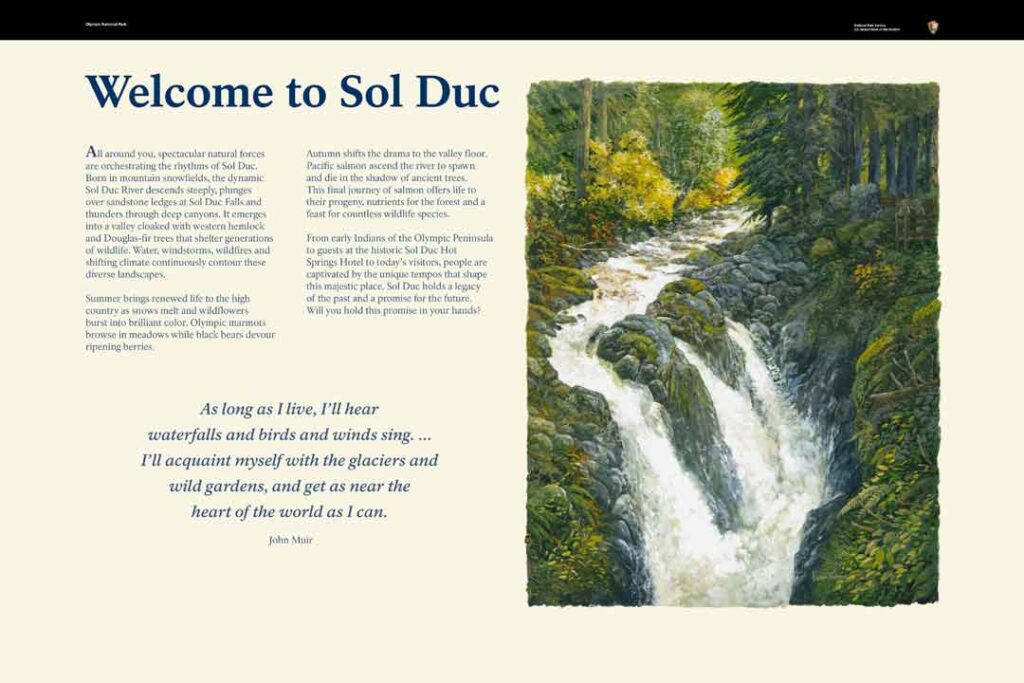
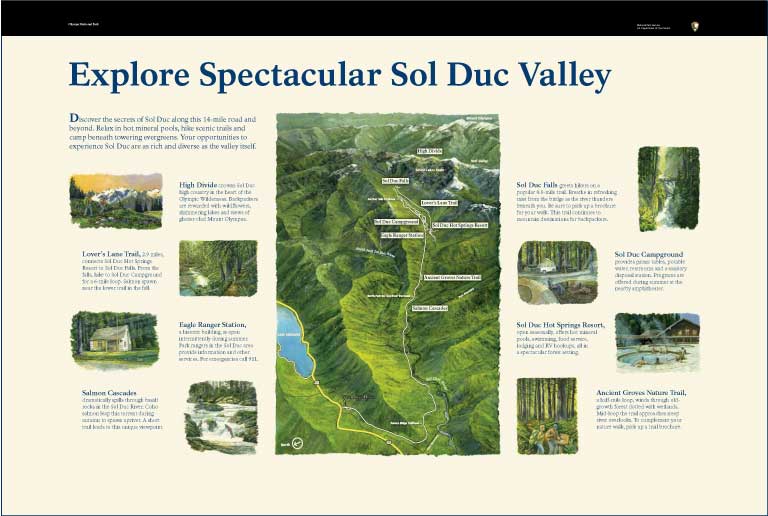
Welcome to Sol Duc Valley

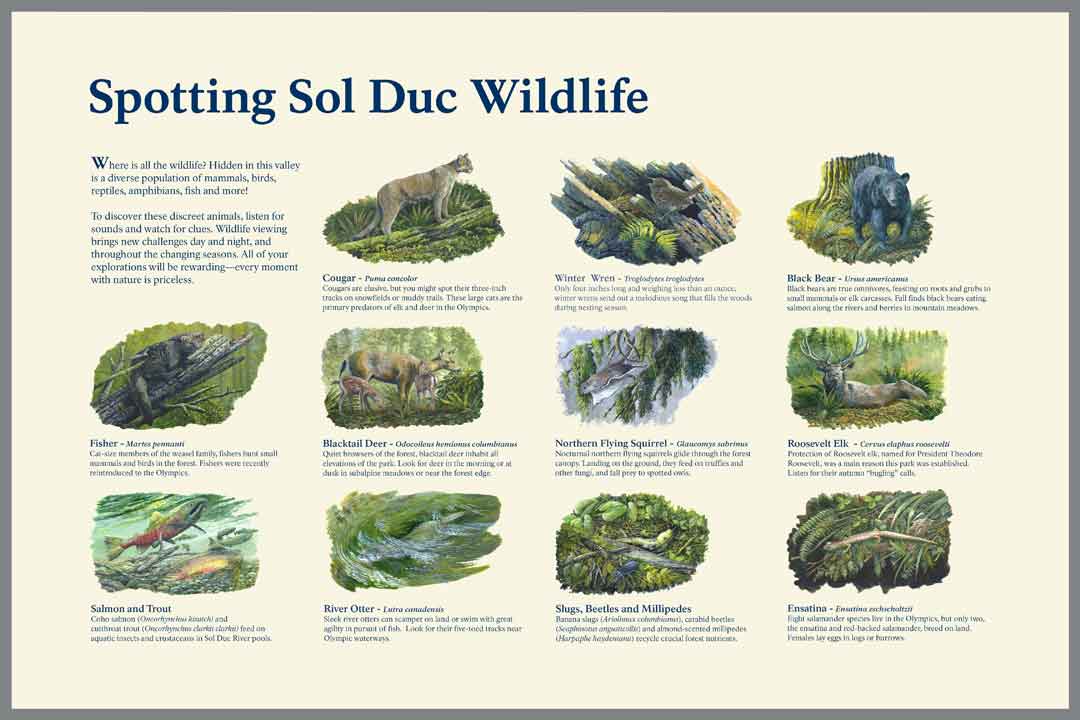
Since this wayside panel is being printed this month, I thought I’d pass it on here. I published another one of these back on November 8th, and you can see it here. For this project, I painted 21 paintings for 3 panels at Olympic National Park’s Sol Duc Valley entry kiosk. With the others last year, that makes 24 images you can see while driving the 17 miles from national park gate to road’s end where a trail leads to this grand waterfall – Sol Duc Falls. At 4′ x 6′, these are pretty large panels.

So what? Well, I like to call these efforts “public art galleries in our parks”, and I now have hundreds of these things in parks, preserves and wildlife refuges around the West. You’re hiking or driving along, and suddenly there’s a piece of art and a small story to tell you, or interpret, what you’re seeing. It’s just a great way to experience a beautiful place, and, I hope, to heighten your experience beyond what nature is providing (if that’s possible). These panels don’t use the original art itself, but are always fabricated out of fiberglass, stainless steel or a Formica product, so they’ll probably last longer than I will. I’d like to image someone coming along decades from now and stumbling over one of these things – and having it enhance their day.

Thanks for reading this week.
Larry Eifert

Click here to go to our main website – packed with jigsaw puzzles, prints and other stuff.

Click here to check out what Nancy’s currently doing.

Or, send us an email to opt in or out of our email group – or just ‘talk’ with us.

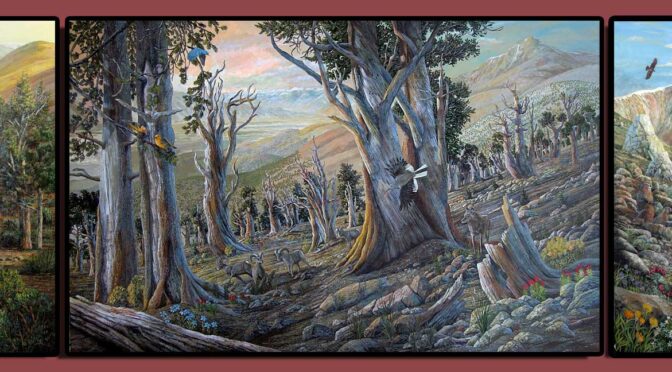
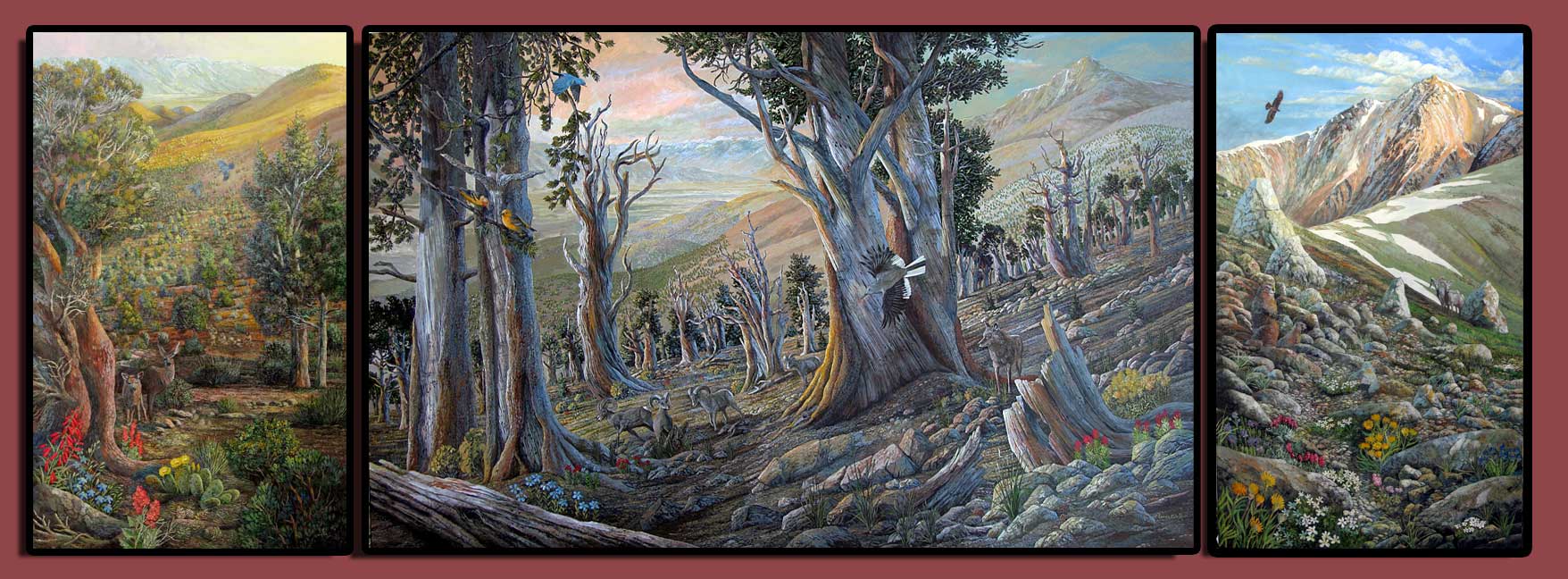
Ancient Bristlecone Pines mural

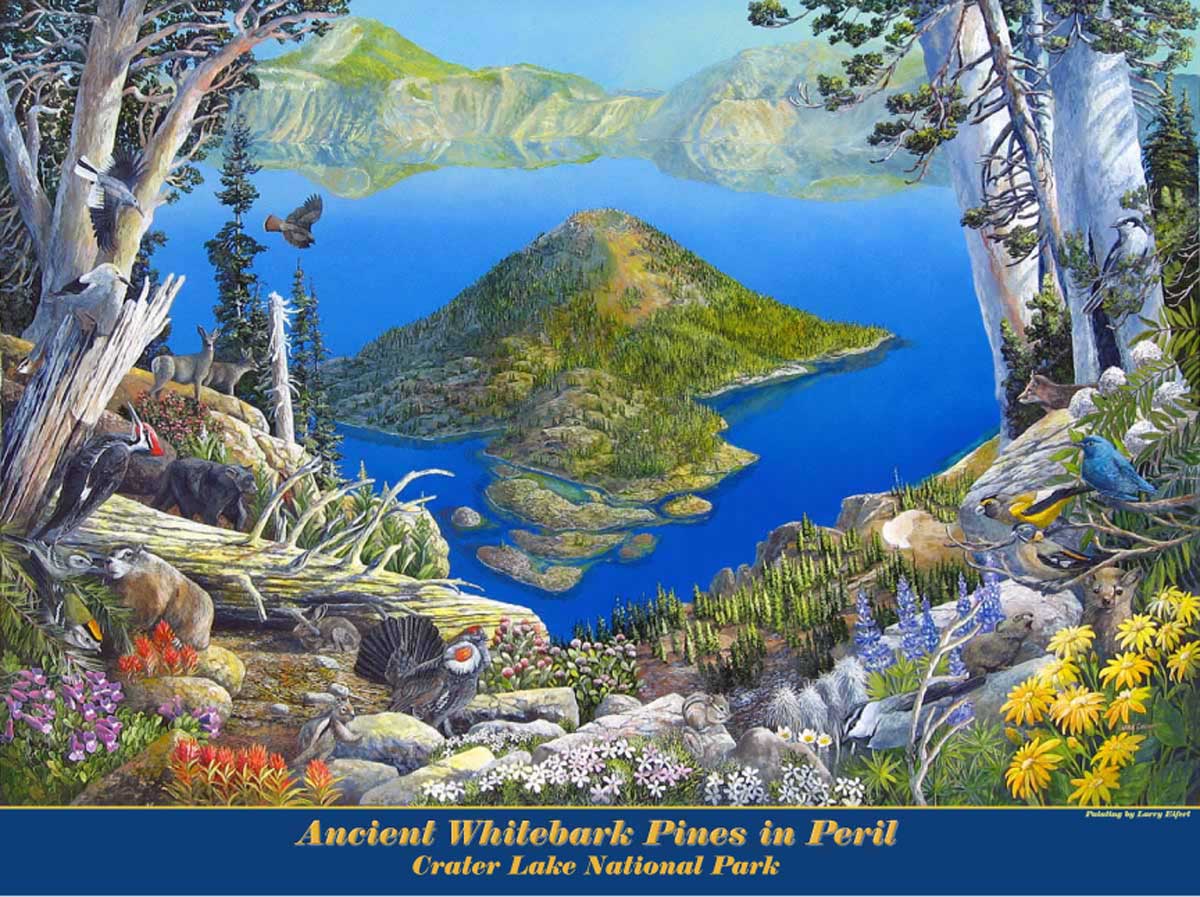
Finally, I got this puppy finished up. It was quite a handful with lots of other work coming and going through the studio. If you click on the image, it should enlarge. If not, go here to the blog.

This is destined for The Crater Lake Institute, that, through the years, has commissioned me for many of these types of paintings. Next summer we’ll have products like puzzles available, but there’s lots of design work to do before that happens.

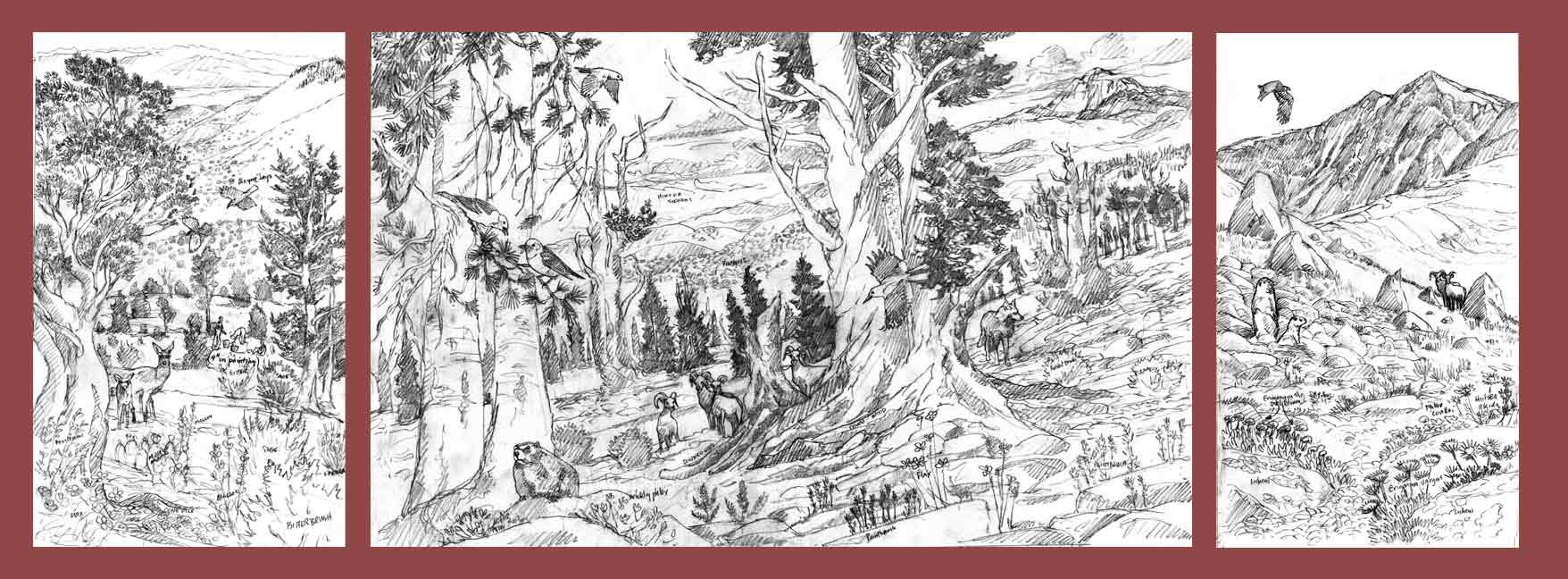
When I sent out the sketch for this awhile ago, I received lots of mail about where to see these trees and just how to do a painting like this. The 3′ x 5′ painting is on hardboard so I had a smooth surface to begin with. I primed it with dry-brush latex to rough it up slightly, making for good textural effects. These are worked up from the back forward, so the foreground flowers are the last to go in, and there’s lots of hidden stuff in that foreground. I recently put up a page on the main website with a page of murals. There’s currently about 50 for you to see, so check it out here.

SO: Where can you see these bristlecones (that DO have bristled cones)? Well, you’re not going to this time of year, but if you’re looking for a great trip next summer, check out the bristlecones east of Bishop CA in the Whites or at Great Basin National Park way out near Ely Nevada, or Brice Canyon National Park in Utah. They’re high-elevation trees – at 10,000 feet or so on dry windswept ridgetops in limestone, a place where nothing else can easily grow. It’s worth a trip to walk beneath the oldest trees on the planet, some dated to almost 5,000 years of age. Even the downed branches are beyond my comprehension – some have been dated back 9,000 years from the present. To put that into context, the woolly mammoth was still around then!

Here’s the original pencil sketch:

Thanks for reading this week.
Larry Eifert

Click here to go to our main website – packed with jigsaw puzzles, prints and other stuff.

Click here to check out what Nancy’s currently doing. There’s some good new stuff here on her blog about the Day of the Dead Celebration in Seattle.

Or, send us an email to opt in or out of our email family – or just ‘talk’ with us. If you know someone else that might enjoy this, let us know. Our list is growing.

First Serious Snow – Olympics

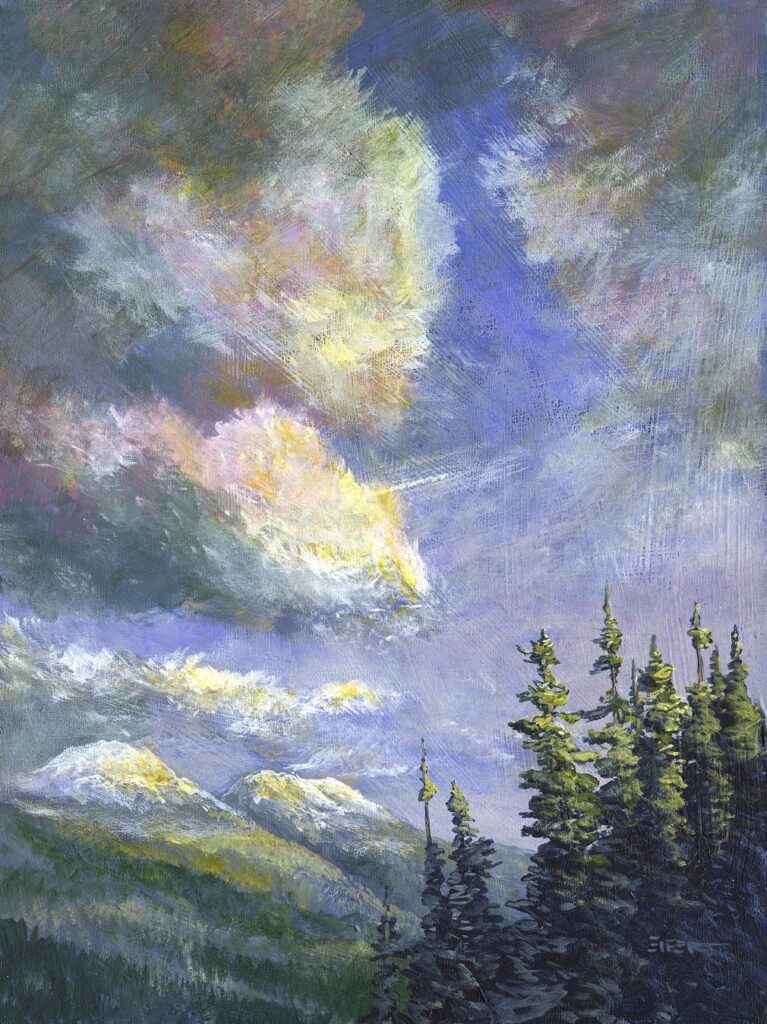
Click the image to see a larger version.

Boy, we’ve had some weather lately. Going into town yesterday, the eastern Olympics showed their best with fresh snow. Strong westerly winds were blowing it off Mount Townsend in great banners, and the clouds were alive. Mile-high Hurricane Ridge was supposed to have gotten 18″, and you can see this for yourselves here at the park web cam mounted on the visitor center roof. The camera lens is currently 90% plastered with snow and you could barely see anything. At night, even on a cloudy evening, you can still see the unearthly glow of the snow, but seeing it on a normal clear day (without the snow on the lens), the view of Mt. Olympus is stunning. The little thumbnail next to the web cam is what you’d see in the summer. This is only about 45 air miles from here and we go there often. And with the web cam, now so can you. Check back to see it ‘unclogged’.

This ORIGINAL painting is varnished acrylic on linen canvas, 9″ x 12″ and $420 unframed.
The gold frame makes it a total of $445 and shipping adds just a bit more depending on your zone or if you take the frame. This is the original, NOT a print.
Email us for details. Sorry, this painting is sold.

To check availability of the other small originals I’ve blogged about the past few weeks, check the blog here.

Thanks for reading this time.
Larry Eifert

Click here to go to our main website – packed with jigsaw puzzles, prints and other stuff.

Click here to check out what Nancy’s currently doing.

Or, send us an email to opt in or out of our email family – or just ‘talk’ with us.

You can also leave comments on the blog here. Every little bit helps me understand how to be a better painter.

Late Afternoon – Lillian Ridge Trail

Lillian-Ridge

SOLD
Obstruction Point area, Olympic National Park.
Acrylic on linen canvas – a small easel painting this time.

This trail is a favorite – I can’t paint it enough. It’s about 35 miles, as the eagle flies, west of our studio in the eastern Olympic Mountains – a serious set of rocks. I painted another version this last spring and posted it here in March. It’s not the amazing scenery or that it’s an almost level trail (well, that might be part of it), but it’s also the fact that, at over 6000′, it’s above any glaciation that’s ever occurred there. To walk here is to trod on the exact same stones and sit on the very same overlook that the mammoth hunters did during the last Ice Age. The shattered shale that crunches under my boots is unchanged, and I could very probably be the very NEXT person since that Pliocene hunter to sit on that rock and look for Olympic marmots, those alpine animals that are only found here. The only difference might be that it would have been the hunter’s dinner and not mine.

For an artist that wishes nature were a bit less mild these days, that wishes he were born a few years earlier so he could have seen more of our now-vanished legacy, this is heady stuff.

This ORIGINAL painting is varnished acrylic on linen canvas, 9″ x 12″ and $140 unframed.
The gold frame makes it a total of $170 and shipping adds just a bit more depending on your zone or if you take the frame. This is the original painting, NOT a print.
Email us for details.

Still working on the bristlecone painting, but painting in the boatyard (our boat) has gotten in the way.

Thanks for reading this week. For new readers, I try to alternate between park interpretive stuff and easel paintings, but they’re all about nature. It’s what I’ve done for over 40 years.

Larry Eifert

Click here to go to our main website – packed with jigsaw puzzles, prints, interpretive art and other stuff.

Click here to check out what Nancy’s currently doing with her photography.

Or, send us an email to opt in or out of these emails – or just ‘talk’ with us.

You can also leave comments on the blog here. Every little bit helps me understand how to be a better painter.

***previous*** — ***next***

Stream Stones and Bristlecones


Progress on the Bristlecone Pine mural
I sent out the pencil sketch for this painting on September 8. and now, after several review comments and changes only a dendrologist (tree scientist) would recognise, I’m moving along pretty well on the final. Many large-scale painters do a complete smaller image first, then recreate it in the larger final version. I’ve never been comfortable with that process because it seems like I’d just be painting something twice. It’d be like remarrying the same person you’ve already divorced – all those little issues you hated the first time ’round are still lurking there. Nancy and I have done several 90′ paintings without a finished ‘baby’ painting and it was truly exciting – for both us and the clients that were scared numb. Nancy once stated: “we are in SERIOUS trouble here” but we still pulled it off nicely. Next week I hope this’ll be close to finished and I’ll send another update.

But that’s not all:

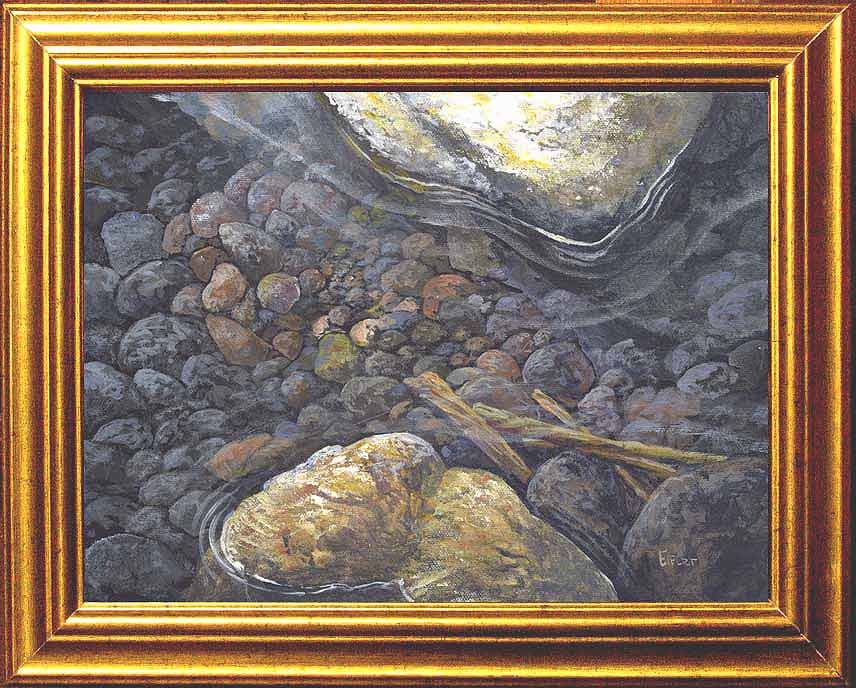
Stream Stones

This is another painting from our recent alpine excursions. If you know your Pacific Northwest geology, you’d pick up that these stones are from the North Cascades and not the Olympics. Cascade stones are very much more diverse in color and texture – brownish iron oxides and lots of gray speckled granites. If you see these stones around the Olympic Mountain edges, they undoubtedly came there from scraped streambeds in the Cascades by way of the mile-high Cordilleran Ice Sheet 80 centuries ago, and they match pebbles you’d find in any Cascade river today.

You might think 80 centuries is awhile ago, but consider this: there are bristlecone pines in the White Mountains and Nevada that approach 50 centuries. And that’s the way I tie the top part of this entry with the bottom part of.

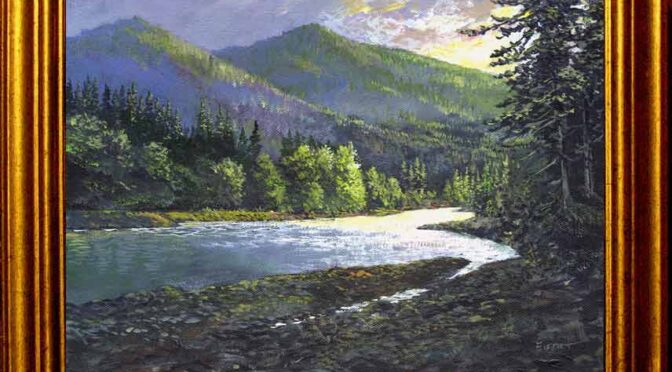
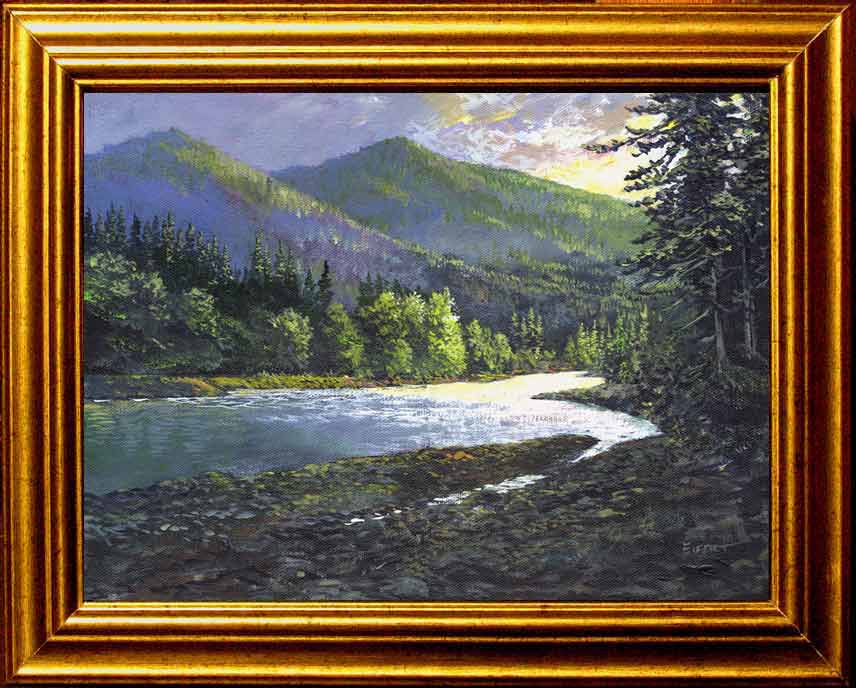
Elwha River at the old Humes Ranch

I’ve painted two large murals of the Elwha River for Olympic National Park, and so in the interest of science, art and fun, of course we had to hike up the river to check it out. We’ve backpacked up this valley several times in the last two seasons. The Humes Ranch area is only a few miles from the trailhead, but its scenic beauty would be worth miles more. As someone said, this is a big messy river, with snags and piles of old-growth trees strewn along its shores. We’ve camped here several times, right on the grassy knoll above the rocks here, taking in the vastness of this place as the sun sets behind the peaks. This is what Western National Parks are all about, experiencing wildness that used to be taken for granted, but isn’t any more.

Oh, and Humes Ranch used to be here prior to the park’s creation. In fact, the oldest building in the park, the old ranch house, was just restored just up the slope. The only livestock left today are the bears, deer and elk.

This ORIGINAL painting is varnished acrylic on linen canvas, 9″ x 12″ and $140 unframed.
The gold frame makes it a total of $180 and shipping adds just a bit more depending on your zone or if you take the frame. This is the original, NOT a print.
Email us for details.

To check availability of the other small originals I’ve blogged about the past few weeks, check the blog here.

Thanks for reading this week.
Larry Eifert

Click here to go to our main website – packed with jigsaw puzzles, prints and other stuff.

Click here to check out what Nancy’s currently doing.

Or, send us an email to opt in or out of our email family – or just ‘talk’ with us.