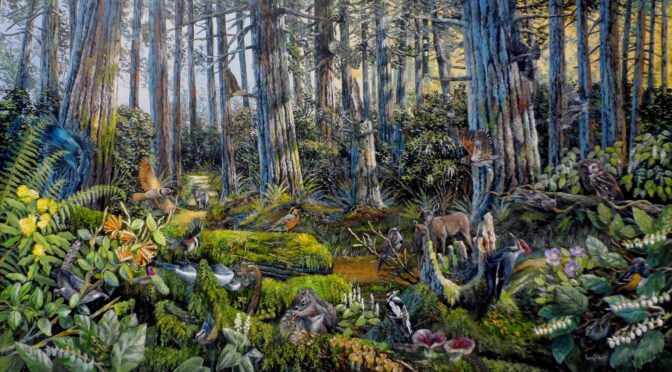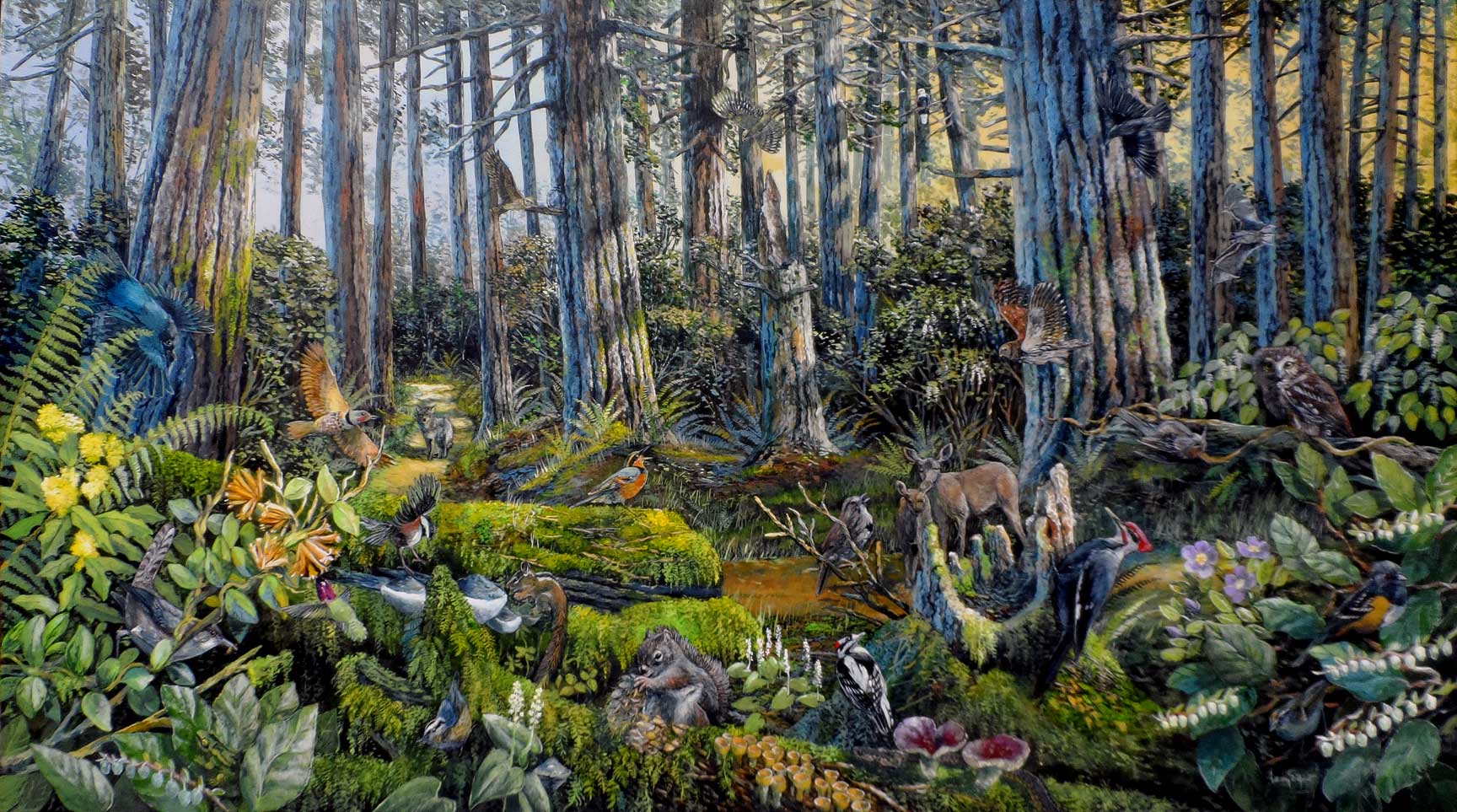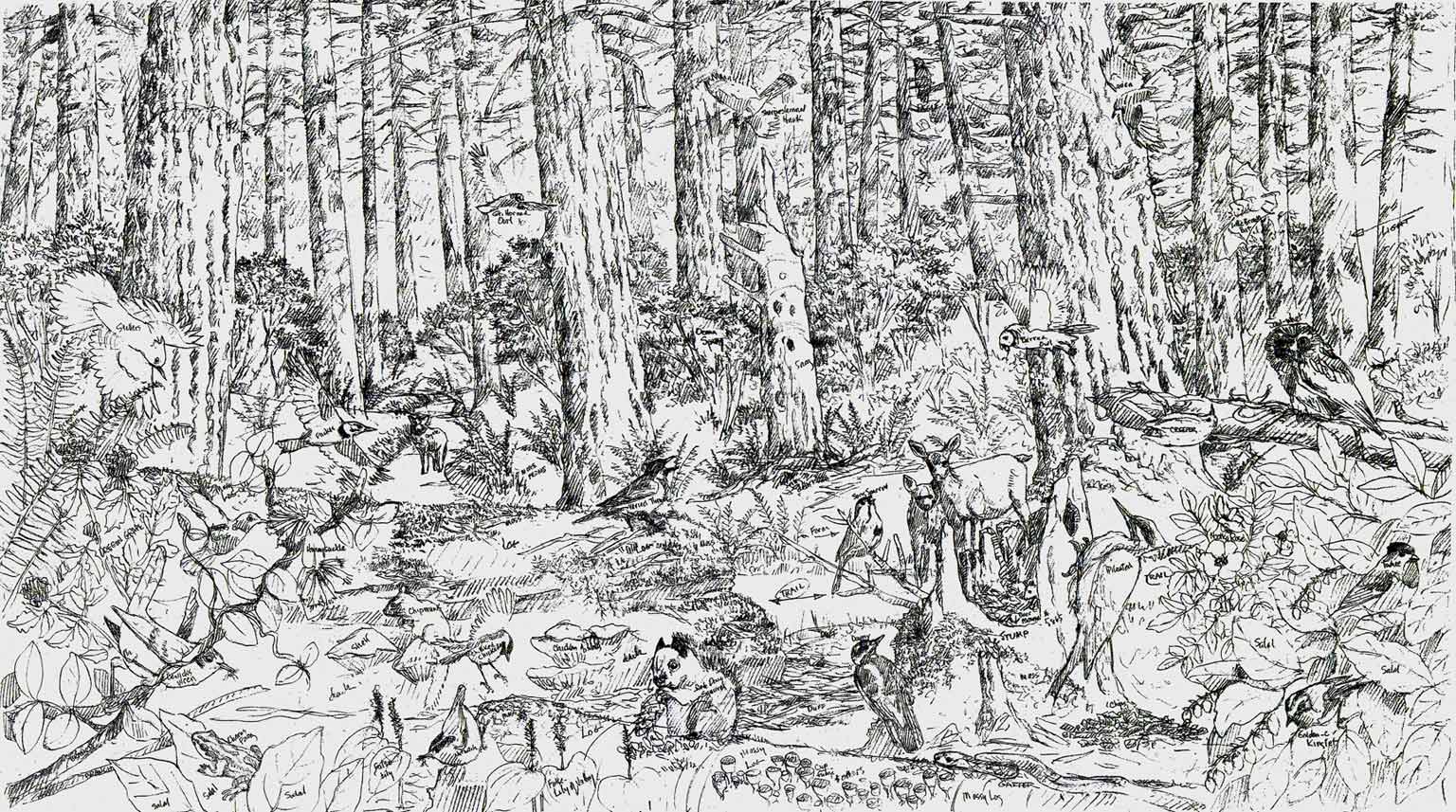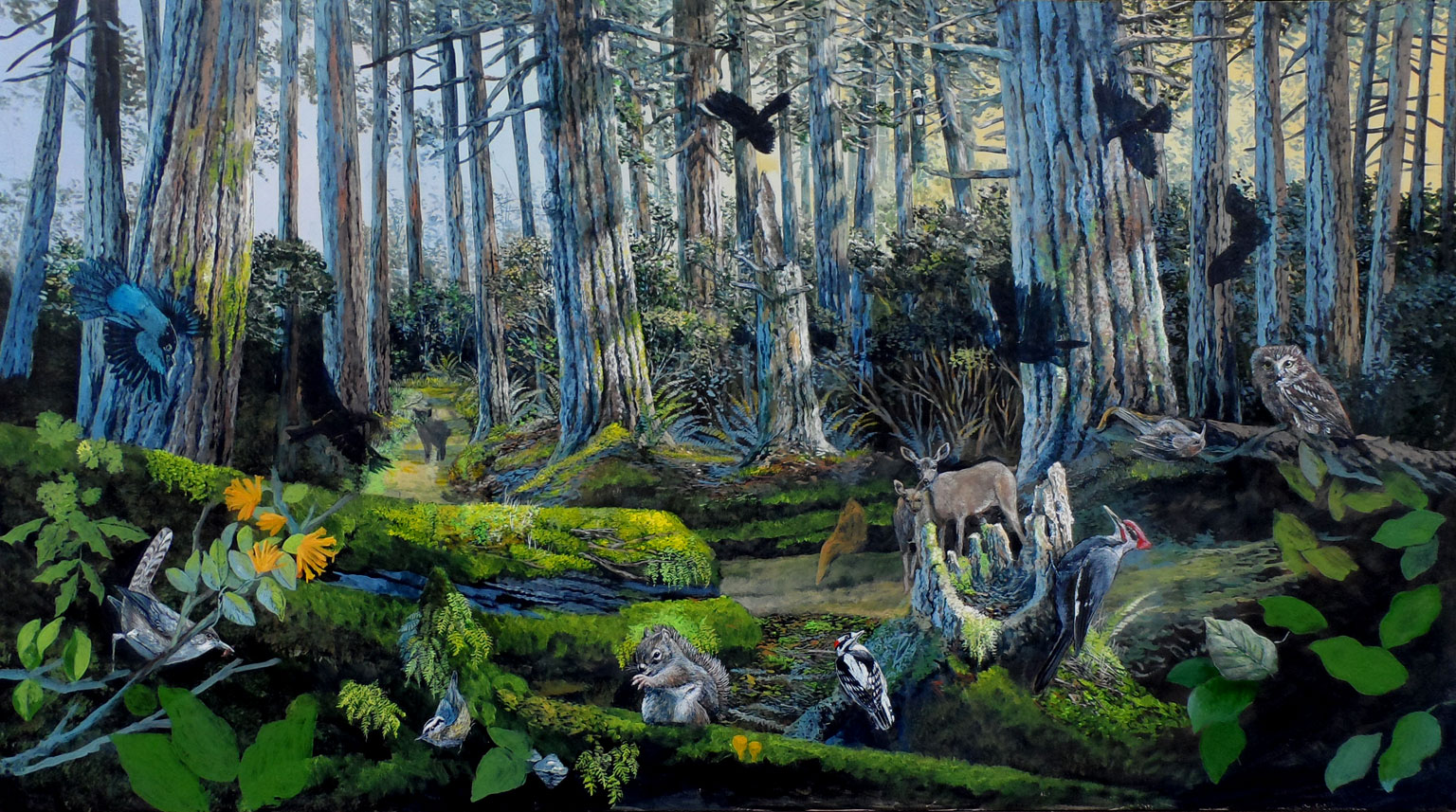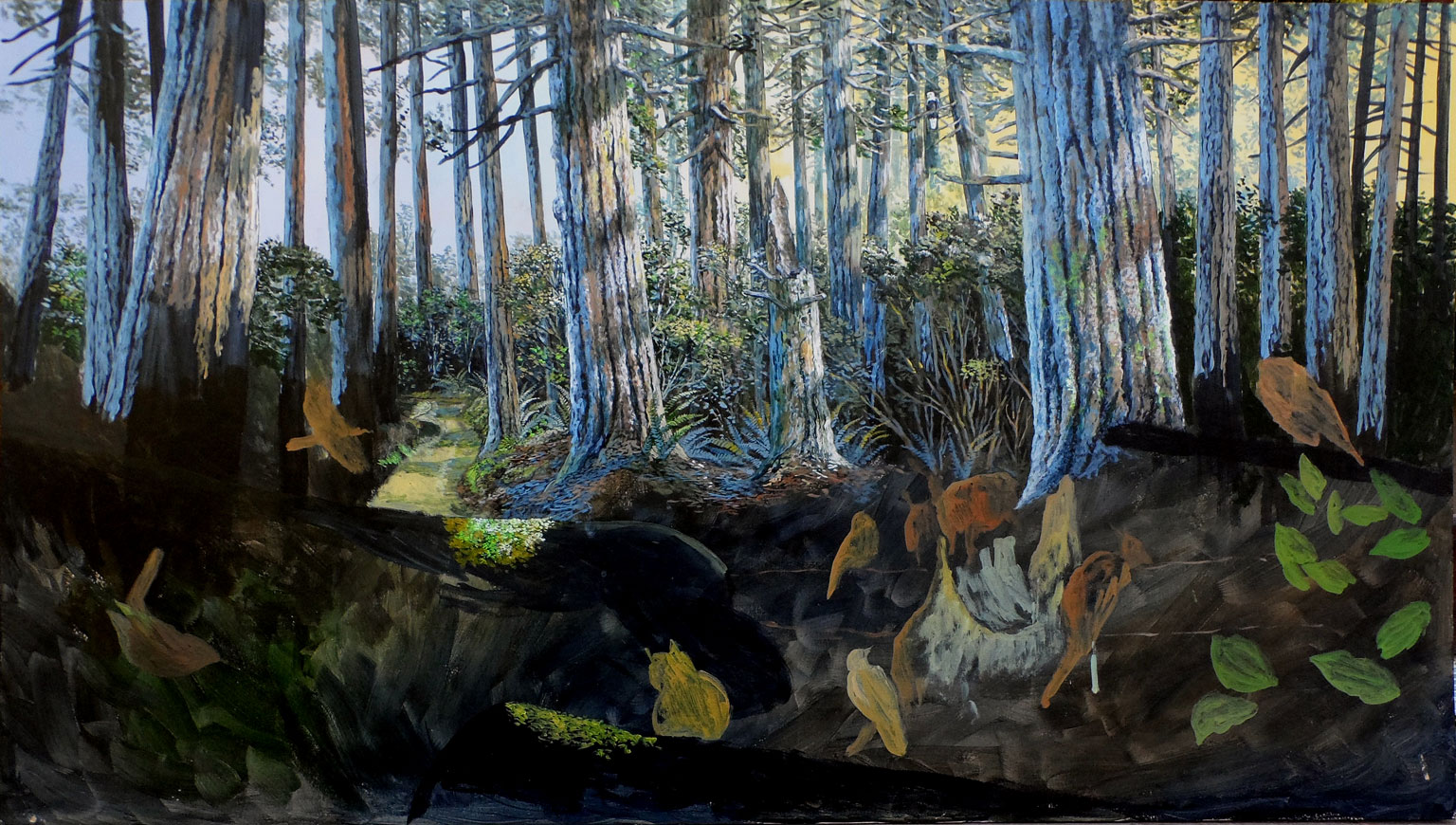
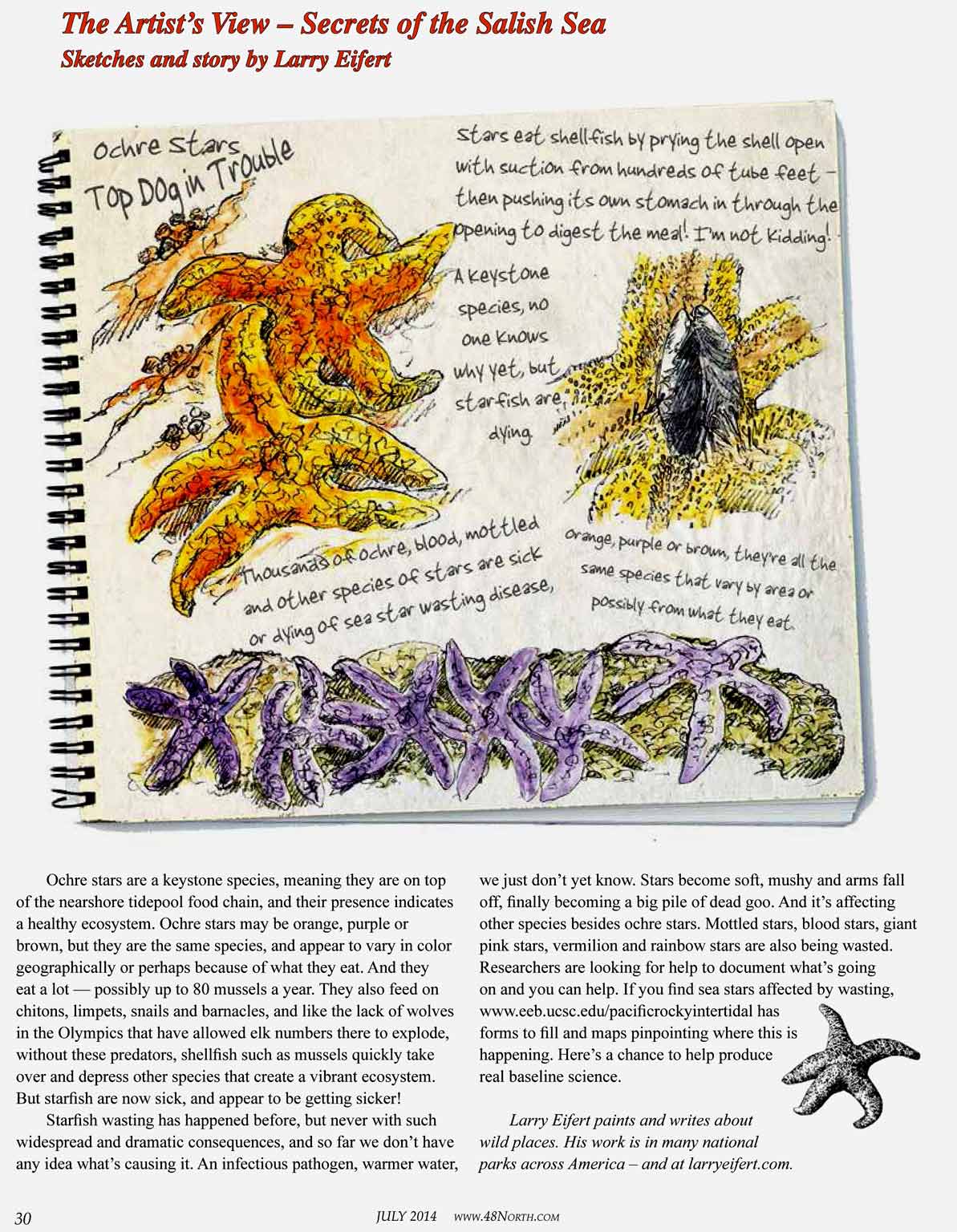
I often get emails about blogging progress reports of these larger paintings. Someday I’ll set my camera up and do a little film of it, start to finish. This painting has some degree of pressure with the calendar, in other words, no time to mess around. So here’s a little progress report in a couple of photos.
Click the images to enlarge them in your browser.
Top image is how it’s looking this morning. Many things get in the way of painting the hours I need to put in, like new spring printed projects, puzzle redesigns, trying to find resource material for the other four paintings – but it’s moving along well. Last week I blogged about the sketch and an overview of the entire project here.
And here’s a couple of days ago. Background’s in place so I can begin defining the foreground’s details, critters, closeups that take the time. There have already been major changes in that area, but only I will know.
And here’s the original sketch I showed last week. Thanks, Mark and Jessica at the Whidbey Camano Land Trust for making this a very fun project. I don’t often get the chance to paint these complex murals of my backyard forest, but this project comes close.
Click the image and it will enlarge in your browser.
A new project unfolds! Rarely do I get to do a bunch of paintings of something I truly love and know already. Or do it for a local park and do it for a group as tasty as this. I’m painting some small murals, doing design and handling fabrication for trail exhibits for the Whidbey Camano Land Trust – just to the north of us. It’s actually part of the Ebey’s Landing National Historical Reserve, and, in fact, I often sail over to Whidbey Island right under the bluff where these installations will soon be installed in the Admiralty Inlet Natural Area Preserve. Here’s the location -right on the bluff-top to the left. Port Townsend is to the right just across the channel.
Photo thanks to Mark Sheehan, WCLT
Above is the first sketch, already underway as a painting. Four other paintings come as soon as possible – and that’s the catch. All five plus fabrication and installation have to be finished up and installed in three months – a daunting task for some, but not the manic me. I’m just a slave to my paintbrush! This first painting is about the forest on the ridgetop, a very rare coastal old-growth forest. Being on a bluff at the downwind end of the Straits of Juan de Fuca, this forest sees some pretty violent weather, so the bluff-top trees have grown very gnarly and wind-flagged. But, back in the quieter part, a more normal forest shelters a marvelous bunch of critters, and that’s what this painting is all about. It’s also an island that was under ice until just 8.000 years ago, so there are some wildly odd critters missing, like native rabbits, moles, bobcats and others normally found around here but not on Whidbey. No moles? Humm. This is the part of my job I dearly love, that of learning all this stuff from people who love it, like Mark, Ida and Jessica and Janelle, Whidbey Islanders who are helping me figure it out. And I, in turn, hope I’m helping them create something that will effect people for years to come.
And I just have to share this. An old friend and fellow artist, John Sturgeon, who teaches video at the University of Maryland recently contacted me, or maybe it was the other way around. There were four of us in the same year, same high school art classes that went on to life-long art careers – a rather high percentage, I think. John told me something I’ve suspected, but never heard from anyone who might know: “The general consensus is… that by five years out of art school about 10% are still practicing, and by 10 years out it drops to 5% . . . then more or less stays there. However, those that make a living from it [making art instead of teaching art] . . . less than .05%, which is astounding. You are among that small % my friend. Pretty damn cool. ” Trouble is, I never really went to art school to learn how to do this stuff.
And Click here to go to Virginia Eifert’s website. Her books are now becoming available as Amazon Kindle books. I currently have five up, with 15 more coming.
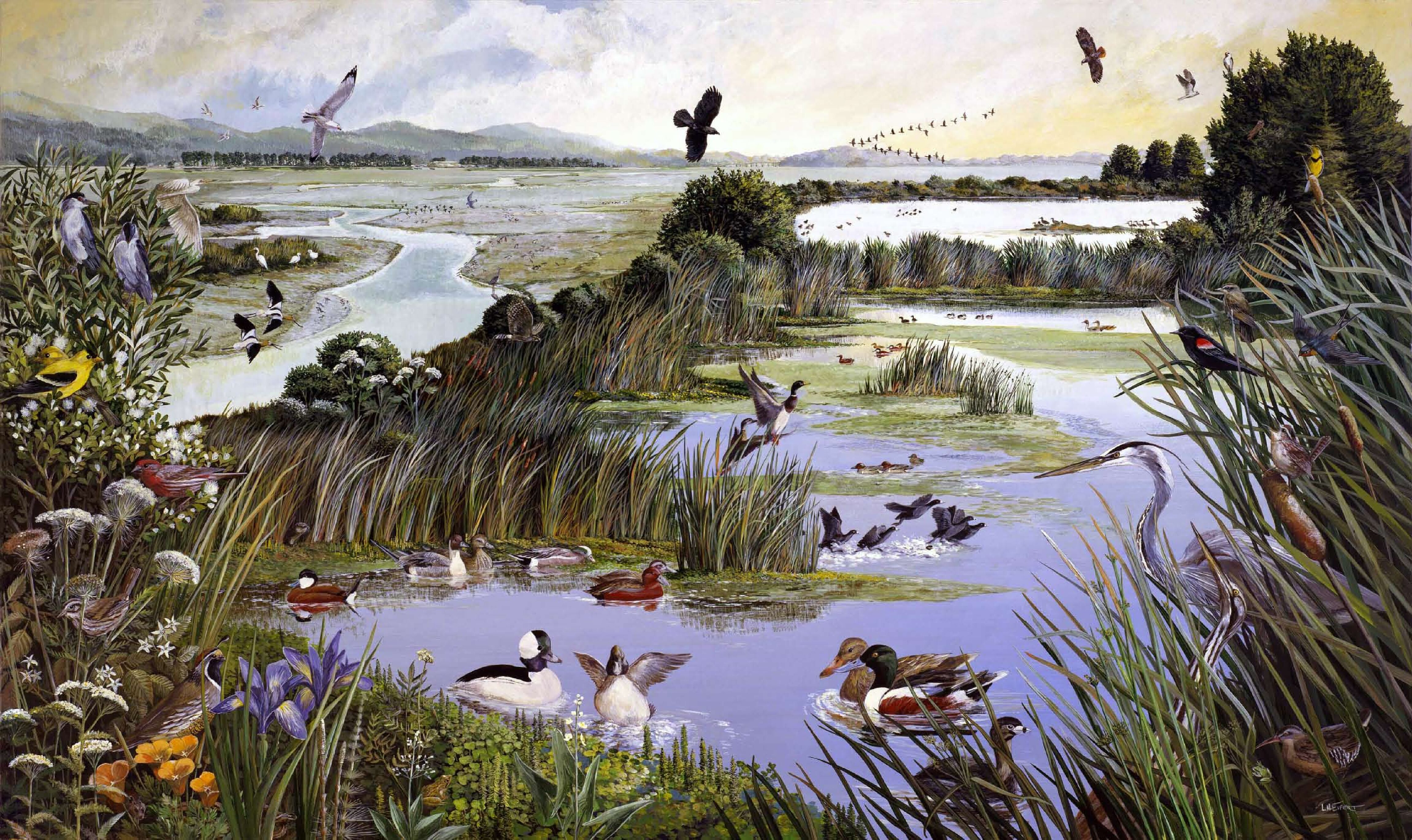
Click the image and read it bigger in your browser.
Okay, okay, I’m not normally into any sort of spectator sports. Can’t see wasting time watching someone else run around when I could be doing it myself – even if it’s far less successful. However, as with everyone else around this part of the country, we got somewhat carried away with the local team that actually won something last month, and so I did sort of an explanatory story on the team’s name. I’d like it better if they called themselves the ospreys, but you’ll have to admit the play on words with Sea – Seattle – Seahawks is pretty good. And,”Go Spreys” doesn’t have much of a magical sound to it anyway.
And, a football team allowed me to paint one of my favorite birds again – and then do a story about it. Almost worth buying a ticket next year if I wasn’t off in the mountains somewhere doing my own ‘sport’. See the story on the web at 48north.com during March, 2013. At my count, it’s my 38th article for them – almost enough for a book.
Click the image and it should enlarge in your browser window.
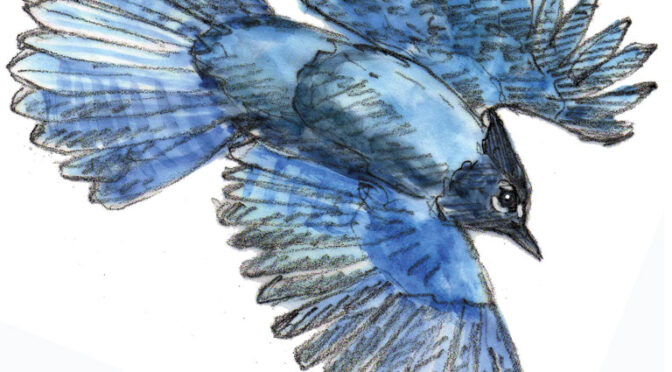
I recently painted another small dipper painting for a very nice client in California. What, another dipper? Yes, and then looking at my dipper reference photos I turned right around and painted this one.
I seem to be evolving into a real dipper-connoisseur. What’s not to like? This little bird lives only by the cleanest and wildest of mountain streams, walks and flies underwater and builds its nest behind waterfalls. Dippers are equipped with an extra eyelid that allows them to see underwater, and sports scales that close nostrils tight when submerged. Dippers also produce more oil than most birds, which may help keep them warmer when they’re walking around underwater. If they migrate, it’s usually just downslope to open water so they can dive into icy creeks, and given a choice of flying the long way around or over a narrow bend, dippers will always take the long way to stay directly over their beloved stream. I was reminded that another name for them is the water ouzel. My mom called them that, and was known to drive 1200 miles west of Illinois to see one.
And here’s the reference photo I worked from. You guys always say you like to see how a painting evolves, so here’s the beginning – a photo taken with my little point-and-shoot last year about 3 miles up the Tunnel Creek Trail just near the shelter. This little guy was sitting on ‘his’ rock enjoying some sun, and stayed long enough for both Nancy and I to get some very tasty shots. Did I get the values close enough?
This ORIGINAL painting is varnished acrylic on linen canvas, 11″ x 14″ and $140 unframed. A custom wood frame makes it a total of $170 and shipping adds just a bit more depending on your zone or if you take the frame. This is the original painting, NOT a print. Email us for details.
And Click here to go to Virginia Eifert’s website. Her books are now becoming available as Amazon Kindle books. She now has her own web domain name at virginiaeifert.com. What would she have thought about THAT?
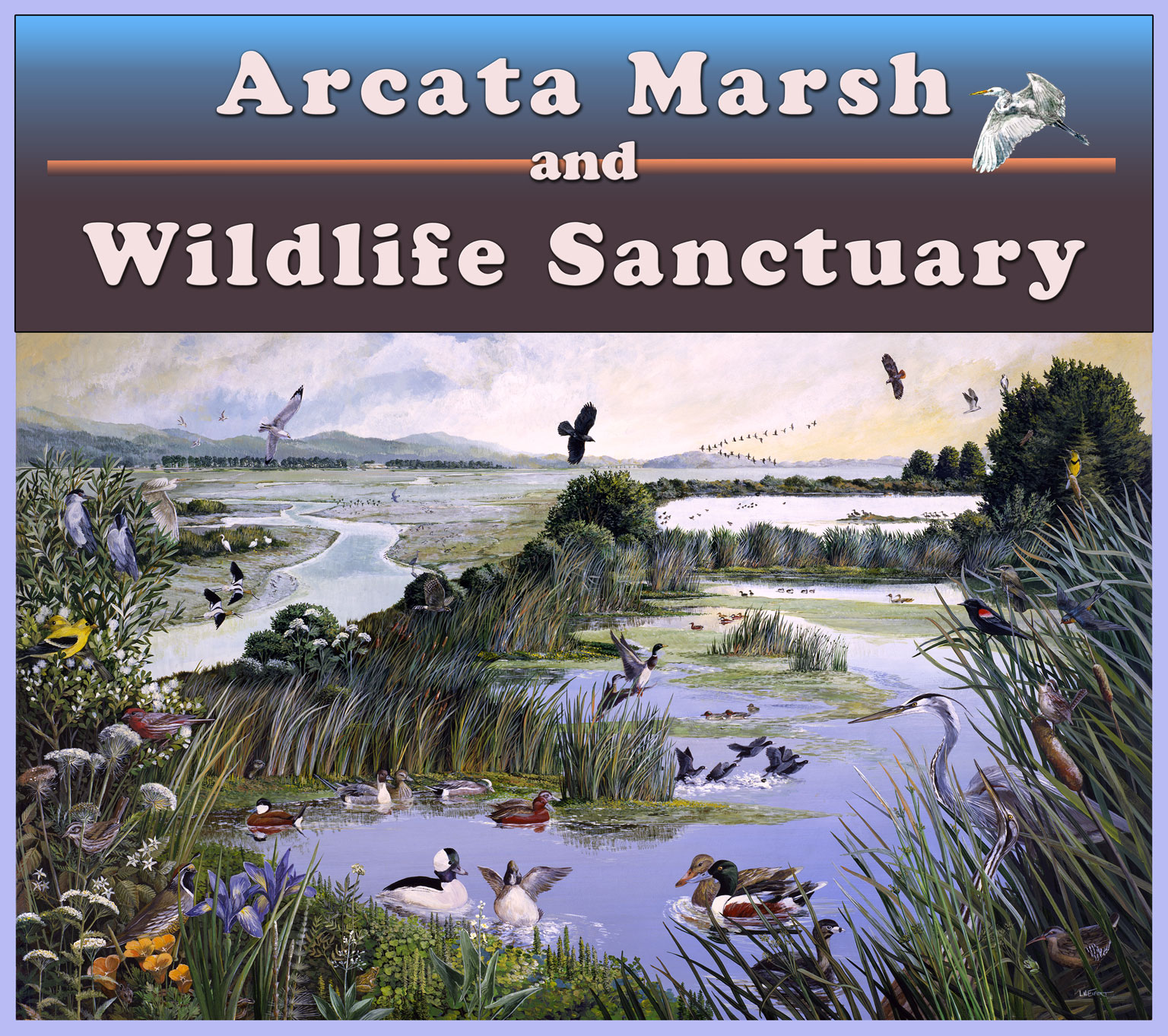
Click the painting and it should enlarge in your browser.
So, we were walking our usual route along the beach trying to get the required 3.5 miles in so we won’t die any time soon. Late afternoon light, a pile of beach rocks, scattered shells and a bit of last year’s bull kelp. Then a family of black turnstones drifted by, twittering as they usually do, and when they all landed, it was as if they just vanished. That dark checkered pattern is so like beach stones as to be, well, beach stones. The entire scene felt like it was glowing, both warm and cool at the same time.
At first, I thought I’d put the turnstones in here as a group on the beach, but then they’d just disappear – so, I placed one as it begins to land. I suspect they’ve evolved these flight colors so they can see each other in flight, but once stationary, they need camo (which they sure have).
This ORIGINAL painting is varnished acrylic on birch board 22″ x 28″ and is going in an upcoming gallery show. But, it’s available here without the gallery commission for $1100.
A custom frame is available, as usual, and shipping adds just a bit more depending on your zone or if you take the frame. This is the original painting, NOT a print. Email us for details.
This is not a new painting, but this week we sold a large custom print of it. The painting itself is in our private collection, just because I liked it, and now I think I like it even more. There’s a quality about the river’s transparency, of water-carved rocks glowing from within – and that reflected glow on the dipper. OR, maybe I like it because of the memory of the moment. That’s important now as spring slowly arrives here and I wish for warmer hiking days. We have 6″ high nettles up in our woods, daffs higher than that, the willows are out – and it surely is an early spring, but not earlier enough for us.
That moment: North Fork of the Sol Duc River in Olympic National Park. Hike up and over a little ridge, ford the river up to your crotch in blindingly-cold ice melt – and you’re on a truly glorious and empty trail for miles. In places there are huge water-carved boulders (where we saw this dipper dipping), and in August it’s a grand place for skinny dipping for sure. Thanks, Kevin, for buying the print so these memories could return.
I think this is why I’m just a painter of life’s memories. I can paint pretty good non-objective images and commissioned fictitious murals of some detail, but when I look back at all the paintings through the years, I get the best emotional charge from painting experiences from the times (good or bad) in my life. I think of the moment, the experience surrounding that moment, who I was with, what it smelled like, felt like, sounded like.
This week I finished up this new mural about Yellowstone Climate Change. I’m happy with it – or at least as happy as I ever get at this stage of working on something for a month and never truly knowing how it’s going to end. This painting and the last Yellowstone mural about whitebark pines (finished last month and seen here), were both funded by the Crater Lake Foundation. I know it seems odd to have someone at Crater Lake fund two Yellowstone paintings, but there’s more to this. First is that this painting is the 12th big painting I’ve done for them, and it’s part of a broad scheme for the funders to create an art collection reflecting various ecosystems and habitats centered around western pines. Whitebarks, bristlecones and now the lodgepoles in this one, are all threatened by Climate Change, and using art to educate is what I’m all about – so I’m thrilled to be able to contribute to this.
And, once again, here is the original sketch so you can see how it evolved for the concept. And, once again here’s the story. Lodgepole pines are built to handle wildfire. Their cones won’t even open unless their heated. But today’s hotter summers, warmer winters and less snow mean many more pine bark beetles are surviving cold winters and killing millions of these trees.
This painting is meant to show the Yellowstone ecosystem, its wildlife and how the forests are being battered into something almost unfit for wildlife to live in. It’s a trick to paint destruction and yet show it as beauty, and yet as musician Jack Johnson says in this Climate Change YouTube video (please take a minute and watch it), we don’t have to think of this as an end point, just change we need to somehow learn how to handle – and leave this beautiful world in a better place than when we arrived in it.
Thanks for reading this week. Pass the video on – I thought it was very good. Larry Eifert
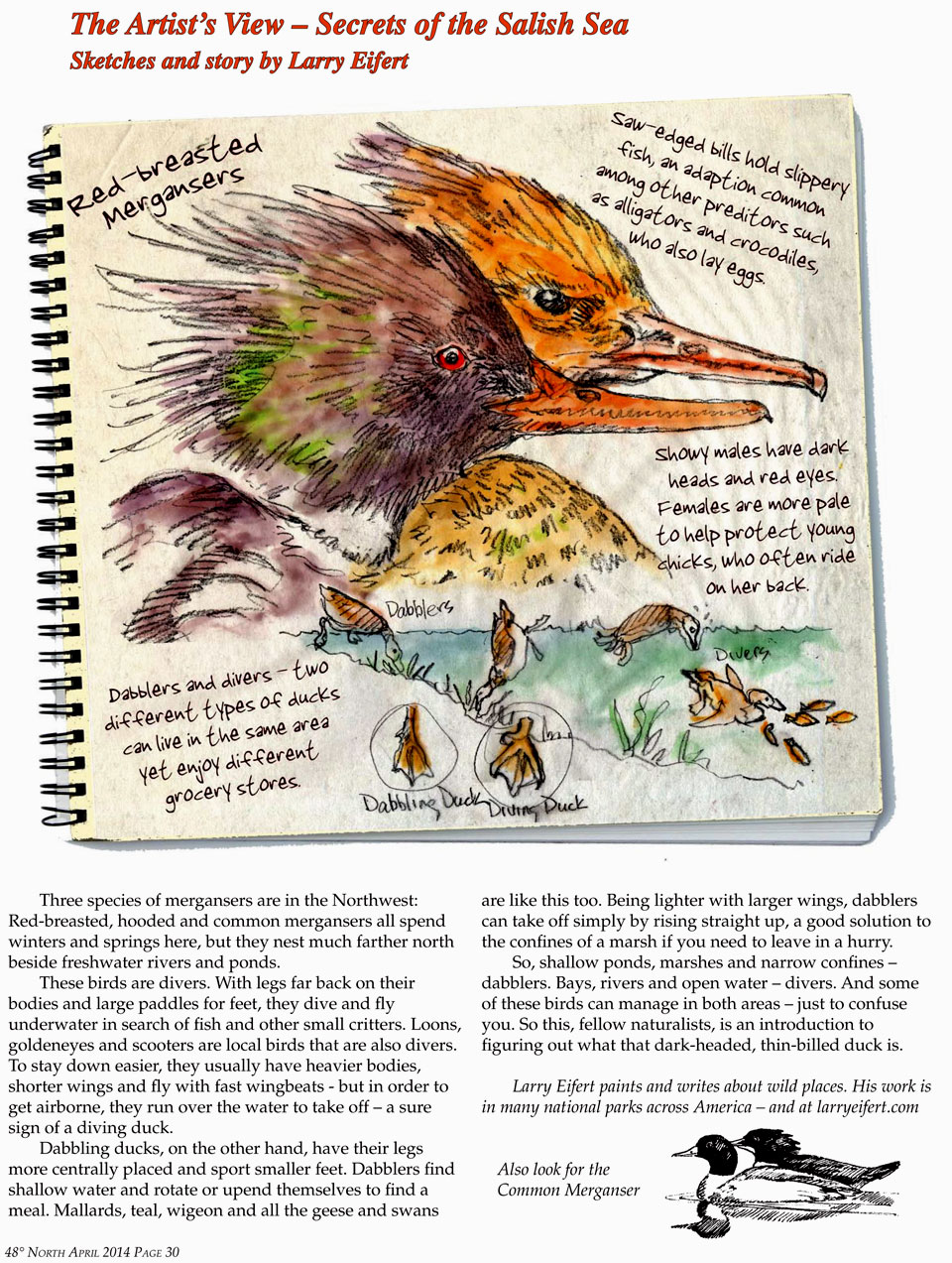
Holiday Fresh Dungeness Crab Eating: it’s like a holiday itself and we’ve been doing a lot of it lately. So, besides the crabs, I cooked up a story about them for my monthly page in 48-North magazine that just hit the stores this week. What a lot of work being a crab!
Each year, over a million pounds of Dungeness crab is caught and consumed here in the Salish Sea. Most everyone knows how to catch, cook and eat this tasty crustacean – we use the third and fourth feet for the meat picks – no metal, please. Yet few know the details of a crab’s life – so here goes. They were named after Dungeness, Washington near Sequim on the north side of the Olympic Peninsula, where the first Northwest commercial crab fishery began. Like most creatures with external skeletons, they must shed their hard shells as they grow larger. By carefully backing out of their shells, they moult between May and August, and mating occurs immediately afterwards before the new exoskeleton hardens on the females. This happens when the male begins a physical embrace with the female that lasts for days. With the female tucked underneath the male and oriented so that their abdomens touch, heads facing each other, the ‘love-making’ begins. Try to picture this. I’ll bet you can’t and not smile.
Ah, but life goes on, and several months later the female ‘lays’ her eggs, possibly up to 2.5 million of them. Completely helpless, they remain attached under her abdomen for 3 to 5 more months until they hatch. Then the free-swimming young crabs go through 5 larval stages and about 10 molts over the next 2 years. Male Dungeness crabs reach legal catch size at 3 or 4 years of age, at which time they weight 2 or 3 pounds. They may live for 13 years.
Thanks for reading this week, and Happy New Year. May it be better than the last one. 2013 – RIP. Larry Eifert
There’s progress on the current painting, Christmas festivities or not. We had a cold spell – at least cold for Northwestern Washington and it got down into the 20’s, even high teens at night. For the first time ever, Nancy told me to move the easel and painting stuff into the house where it’s a bit more climate-controlled. Nice! Now it’s back to normal temps, but I’m still here, painting right beside one of the big east-facing windows and not really wanting to go back to the studio yet. So, here’s the progress in a week, and considering Christmas and all, I think it’s going well. Should be finished by next week.
AND, right out side the window next to where I’m painting, our neighborhood barred owl hangs out during the day. He waits patiently for one of the squirrels or towhees to make a wrong move, but so far, SO FAR, we’ve not seen him get anything. Nancy went out with her camera and got within about 15 feet when he regurgitated a big owl pellet – so he must be catching something. Either way, I’ve been greatly enjoying this closeness to nature – as I paint nature. He stares at me like he knows how to do this Yellowstone-thing better. Maybe he does! (photo by Nancy Cherry Eifert)
Thanks for reading this week. This may be the last post for 2013 and we both just want to thank you for all the support everyone’s given us this time around the sun. This year makes it something like the 45th year I’ve made a living by making art about nature.
Larry and Nancy Cherry Eifert
A second Yellowstone Climate Change painting is evolving on my easel now. The last mural a few weeks ago was about the high elevation whitebark pine forests there and the mass die-off that threatens an entire ecosystem. This one is about the lodgepole pine forests and how Climate Change is threatening that natural community. The center of interest is the Grand Prismatic Hot Spring, biggest hot spring in America. How will Climate Change effect this? Low water levels in summer may possibly turn it into a giant dry brown hole. Broken, burned and dead lodgepole pine forests are happening everywhere in the West, but the giant fires a few years ago in Yellowstone showed something was seriously amiss. As Sally Jewell, Secretary of the Interior stated: “The entire West is one giant tinderbox waiting to go off!” So, I’m trying to show all this with art. Not easy, but definitely worthwhile if I can pull it off.
And here’s the initial laying in of the concept with paint. Distant background is beginning to take shape.
And here’s the original sketch. I blogged about it before here.
Next week, Christmas or not, I’ll be closing in on finishing (I hope). Happy Holidays to everyone and thanks for helping two artists make a living at what they both love. It wasn’t the best year for us, thanks to the Sequester and Shutdown, but we’re still alive and kicking – and looking forward to a better one coming up.