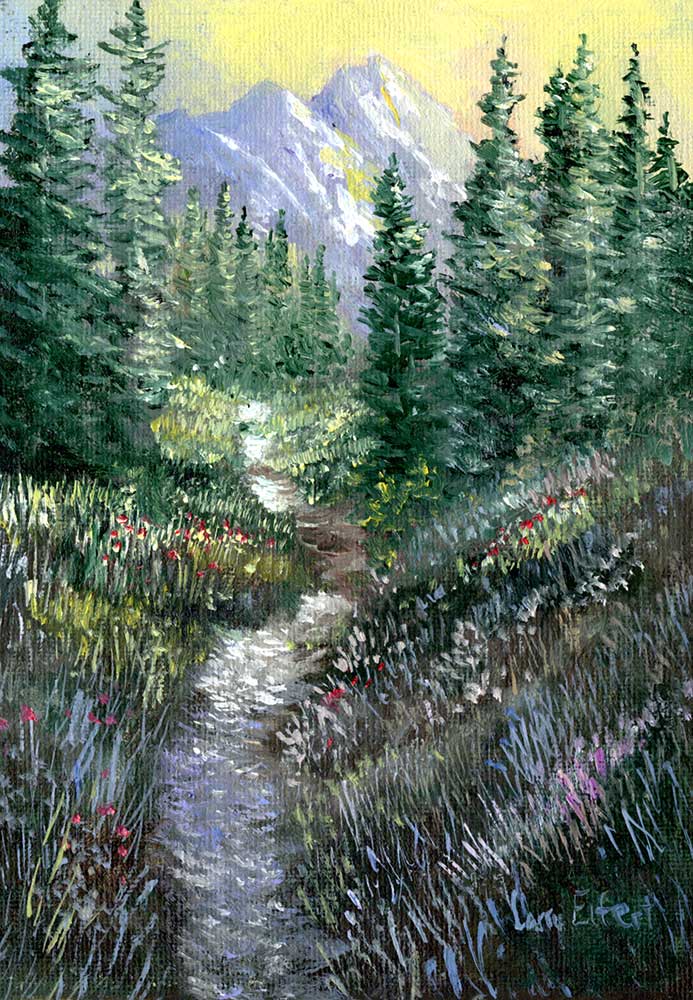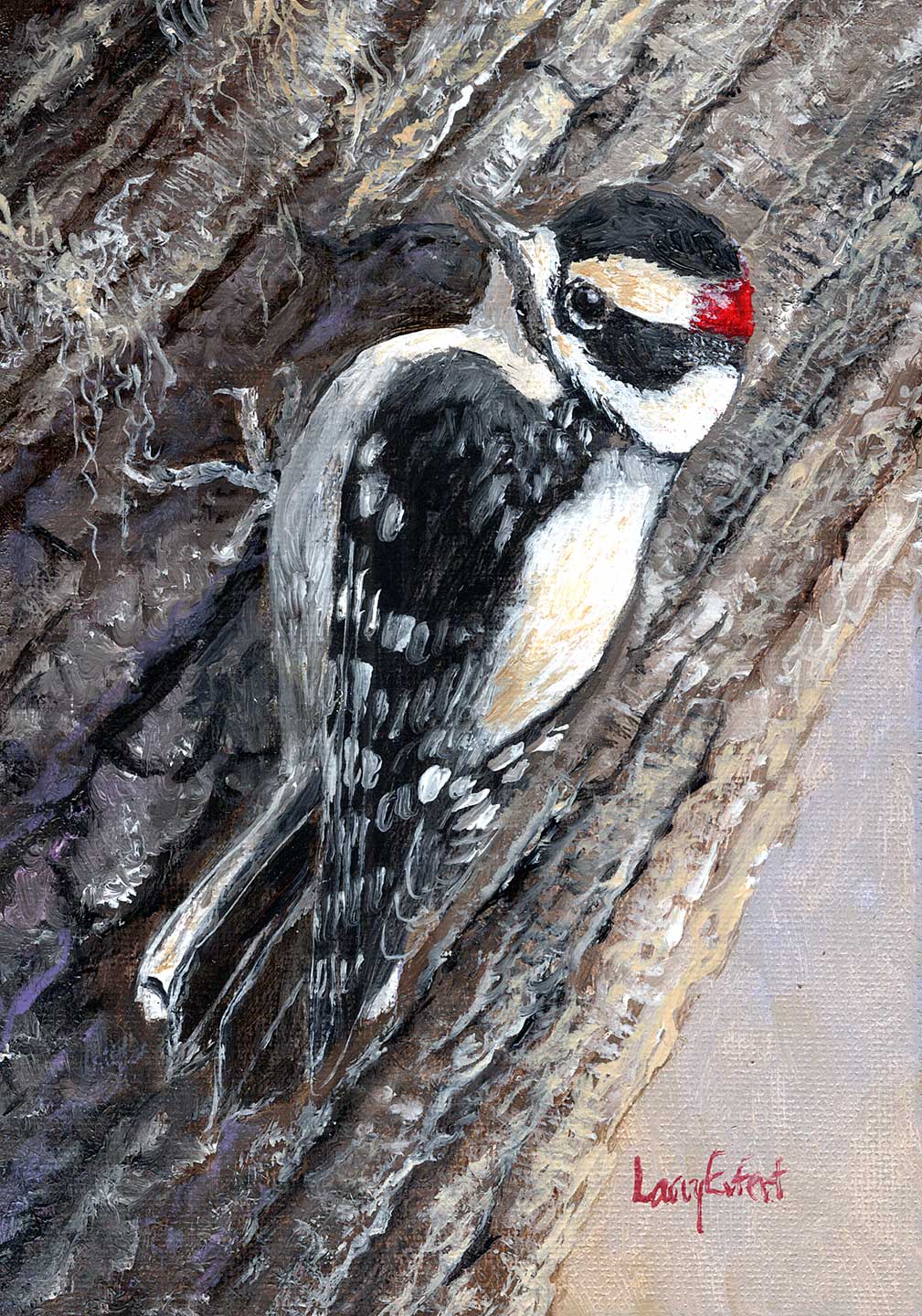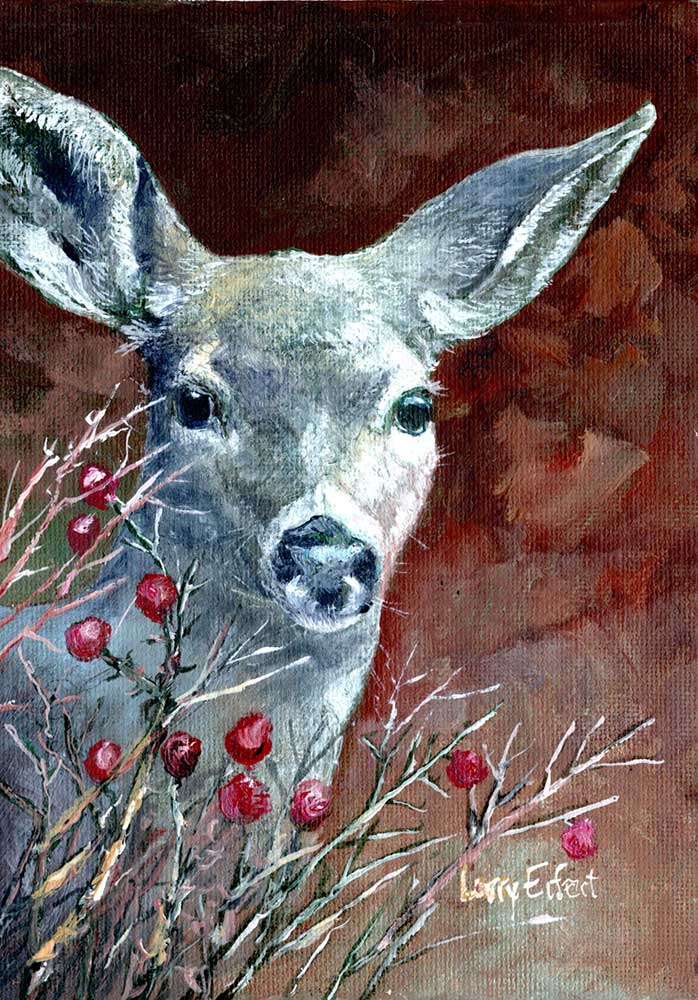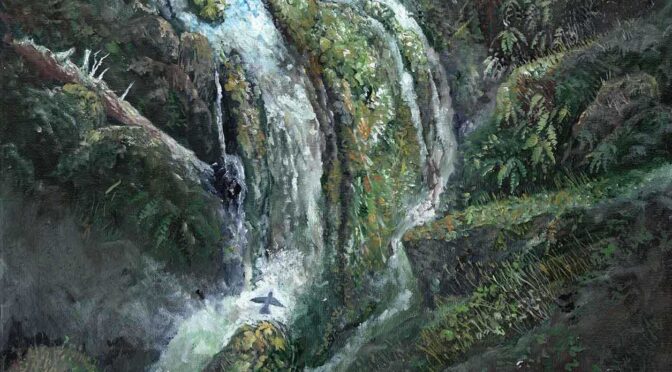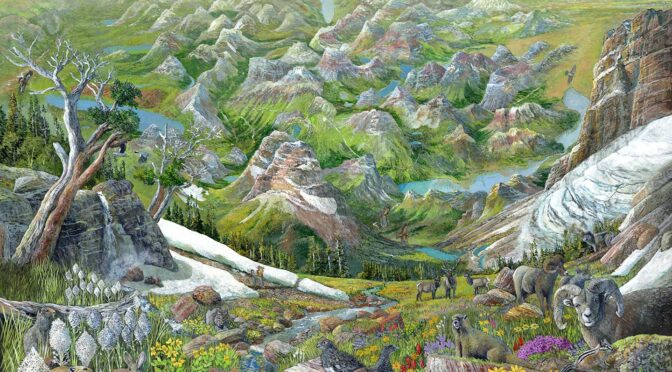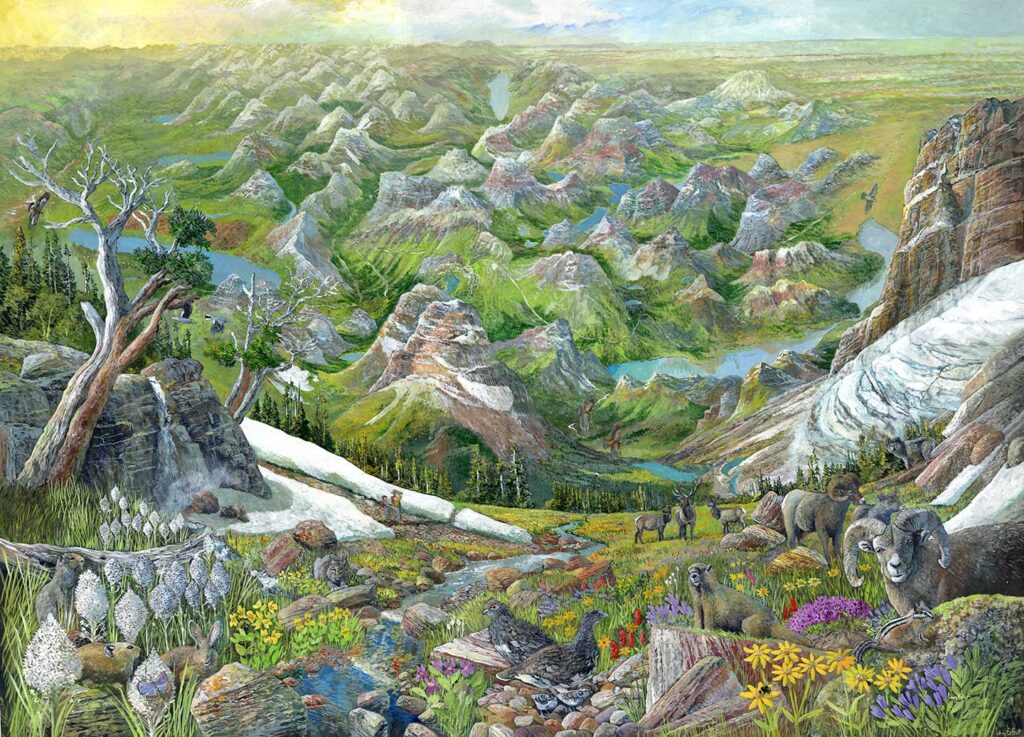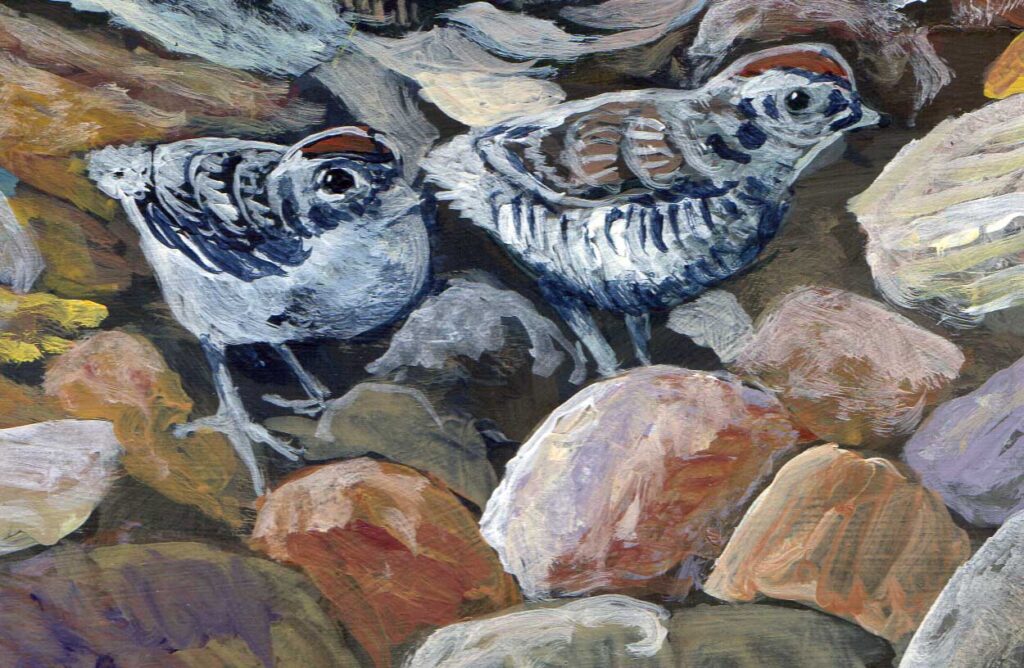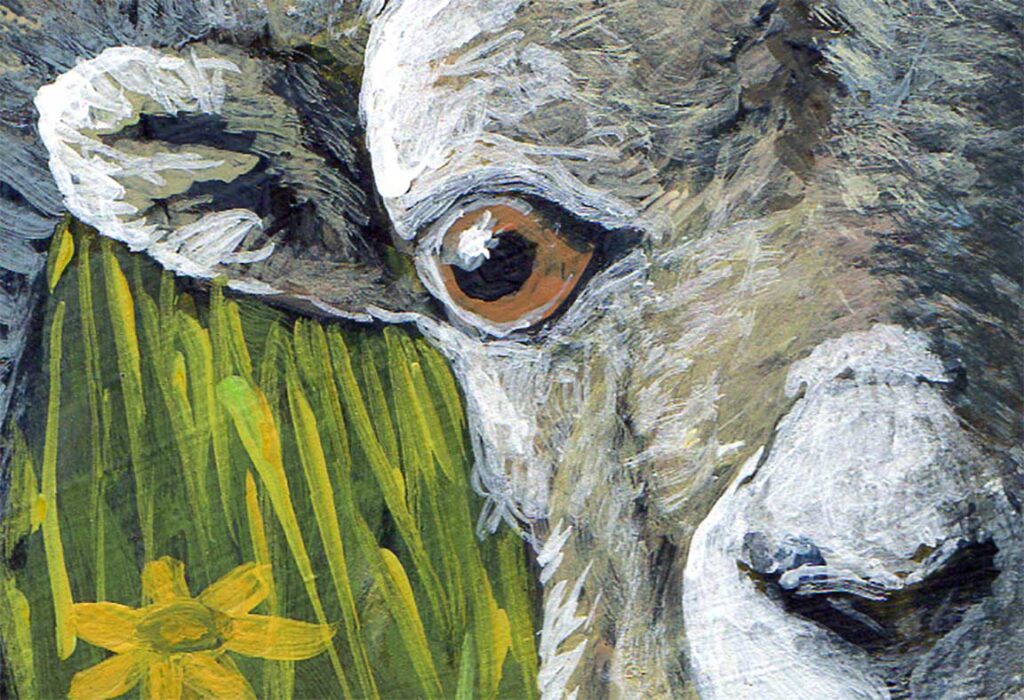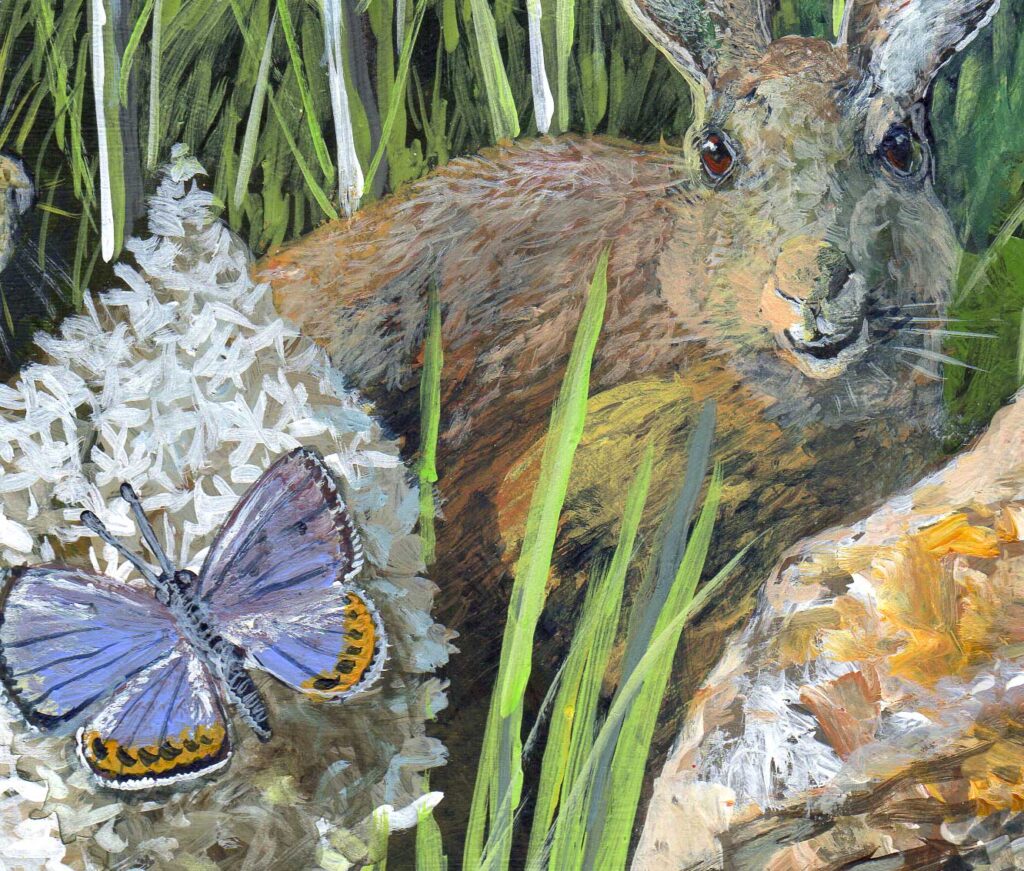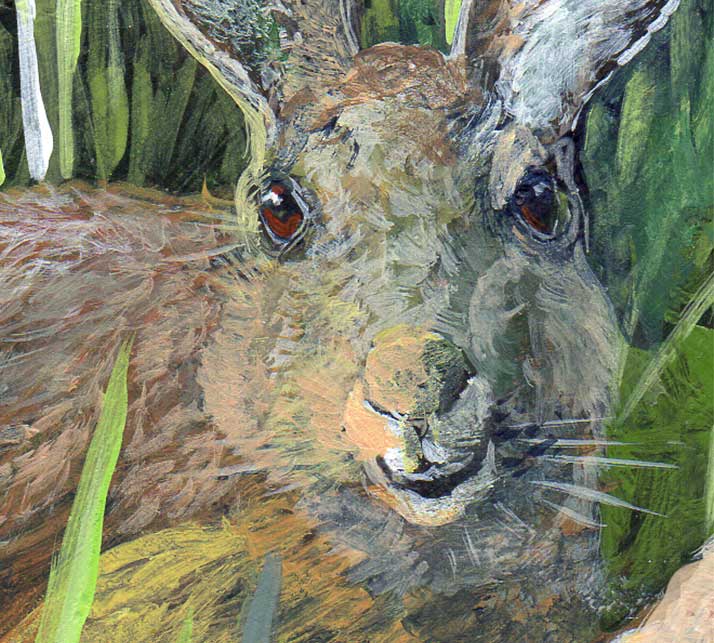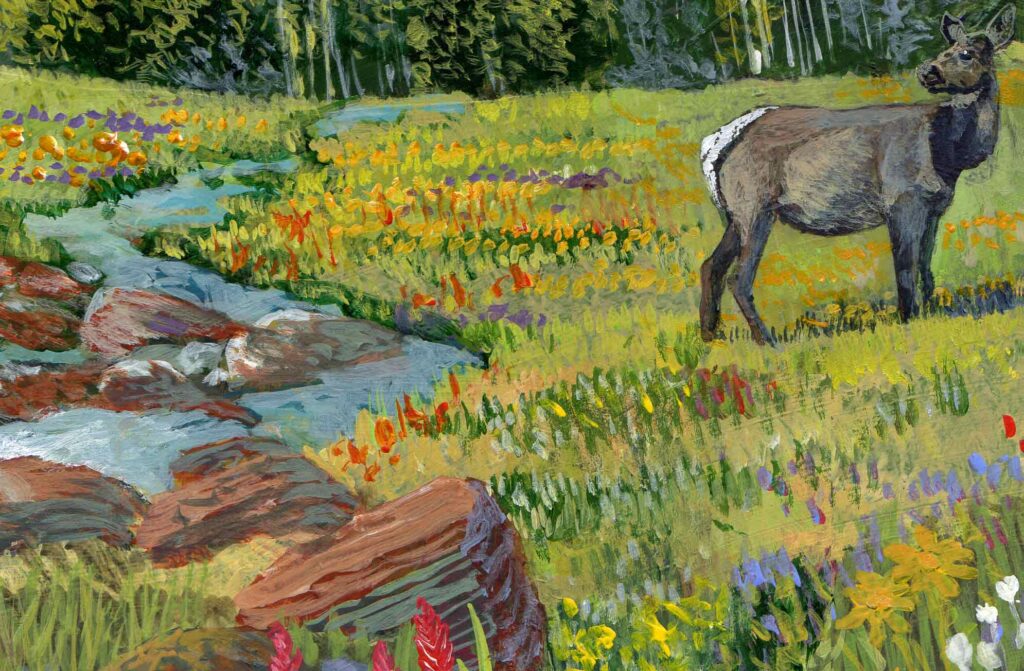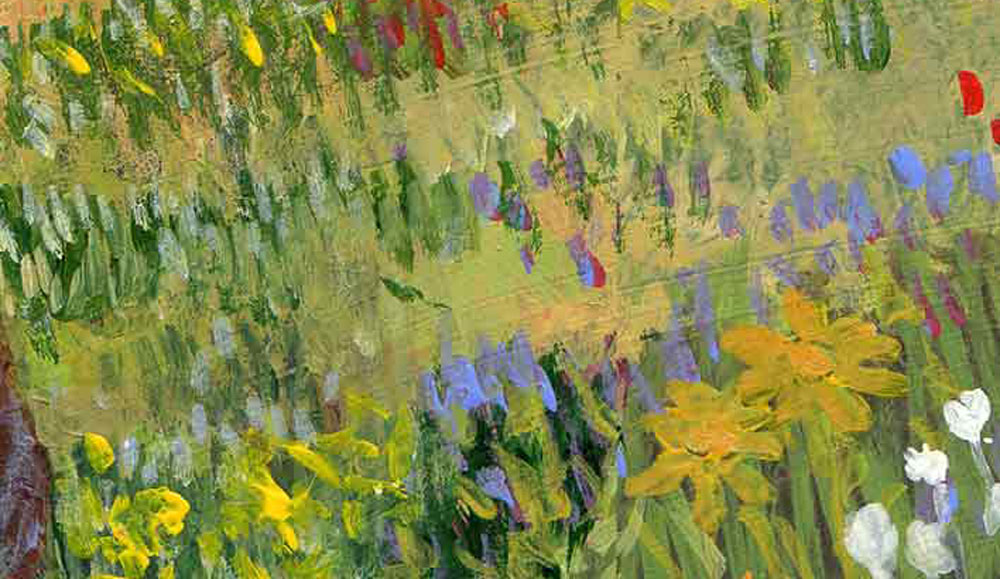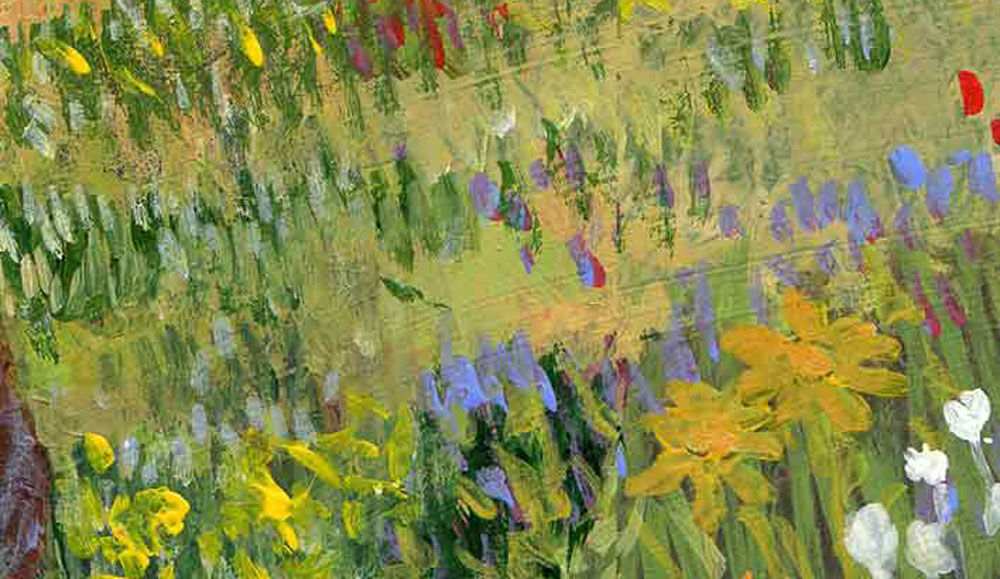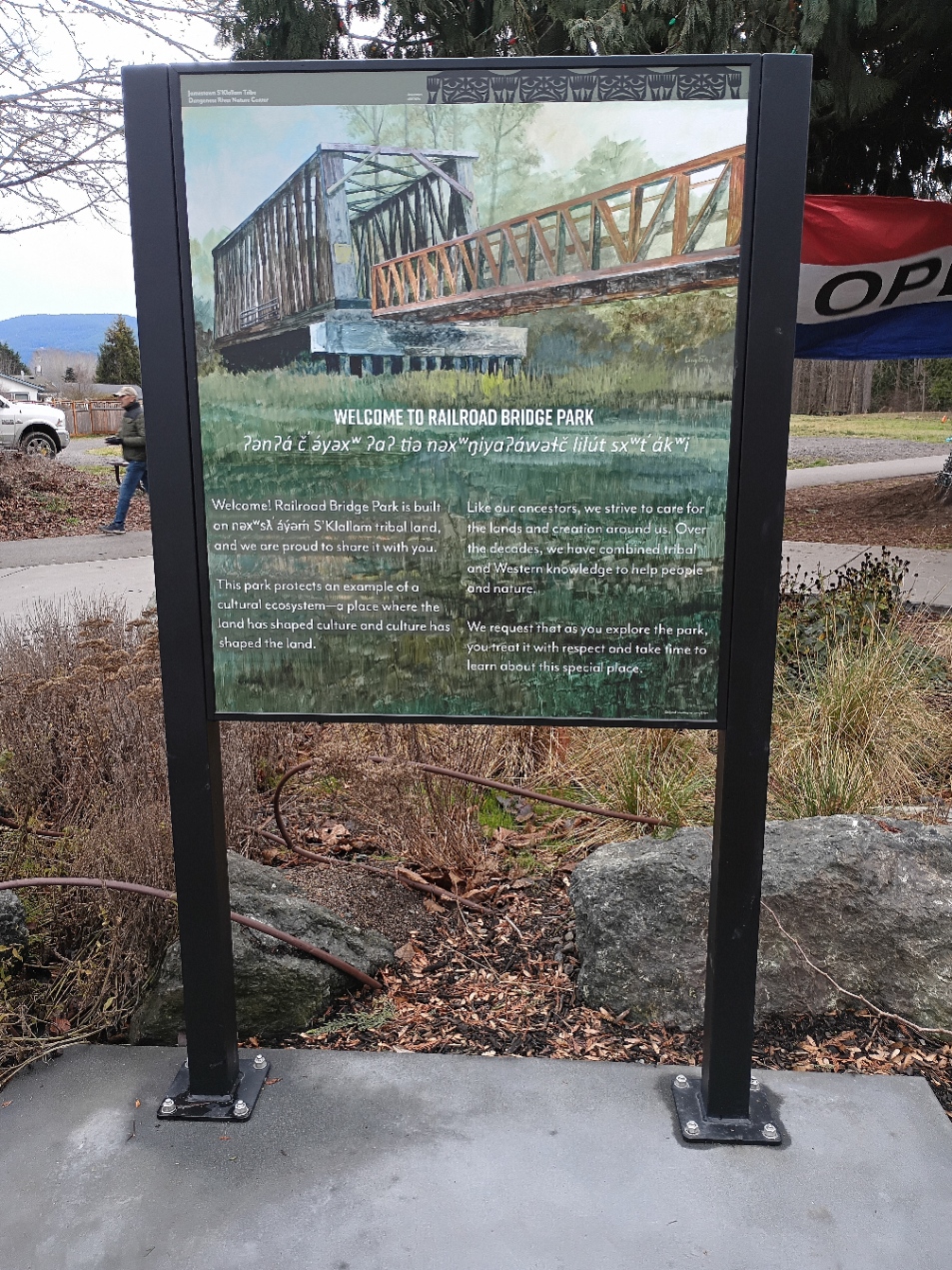
In 2024, I was commissioned by the Jamestown S’Klallam Tribe in Sequim, Wa to make a series of wayside panels for the Dungeness River Center. This is an interpretive center, exhibits and classrooms, for the wild and free Dungeness, one of the steepest watersheds in the country. The project went on half a year, but I never posted a word about it here. Too many other paintings to talk about, I guess – not to mention finding the time to even sit down to post them.
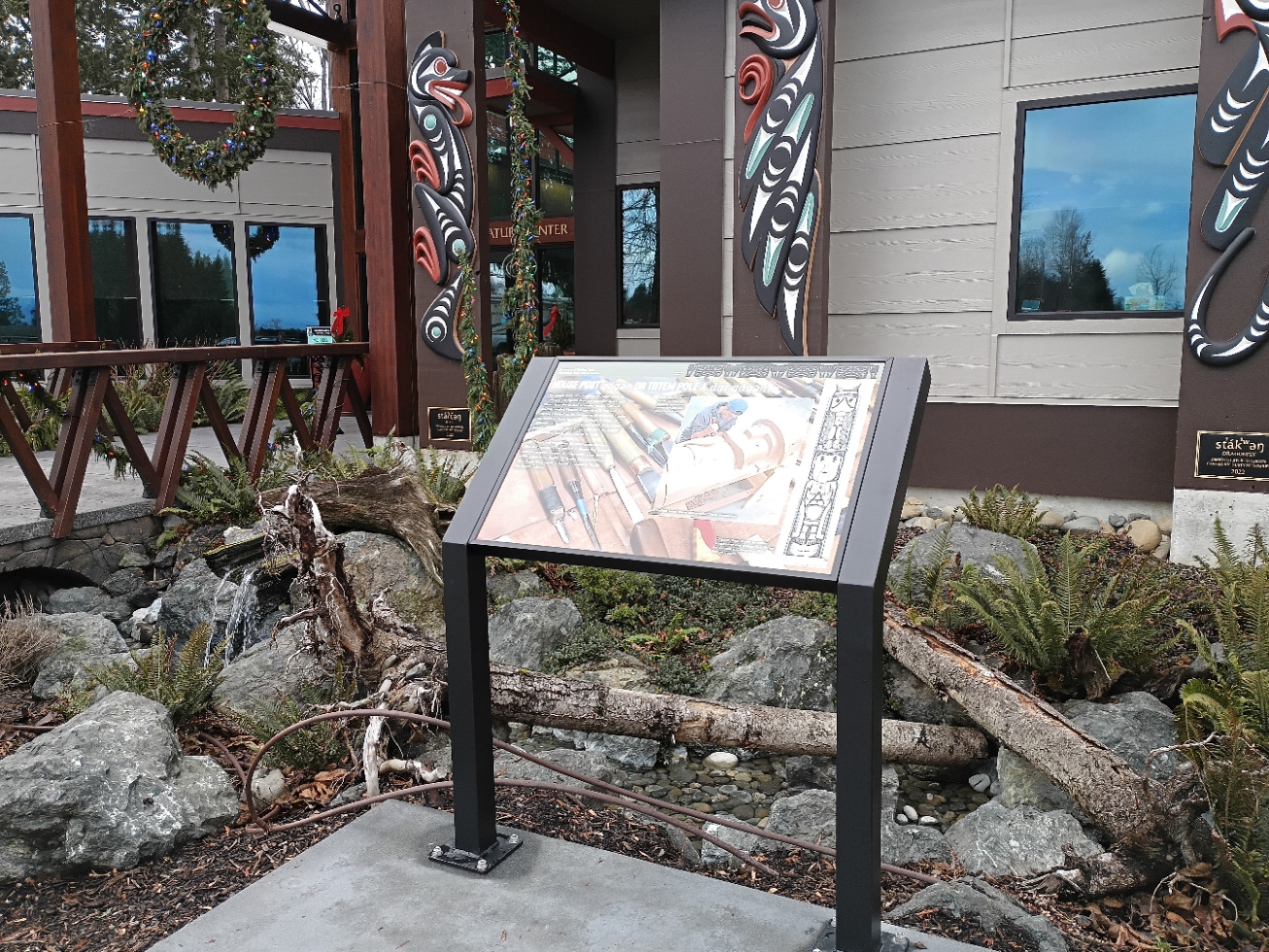
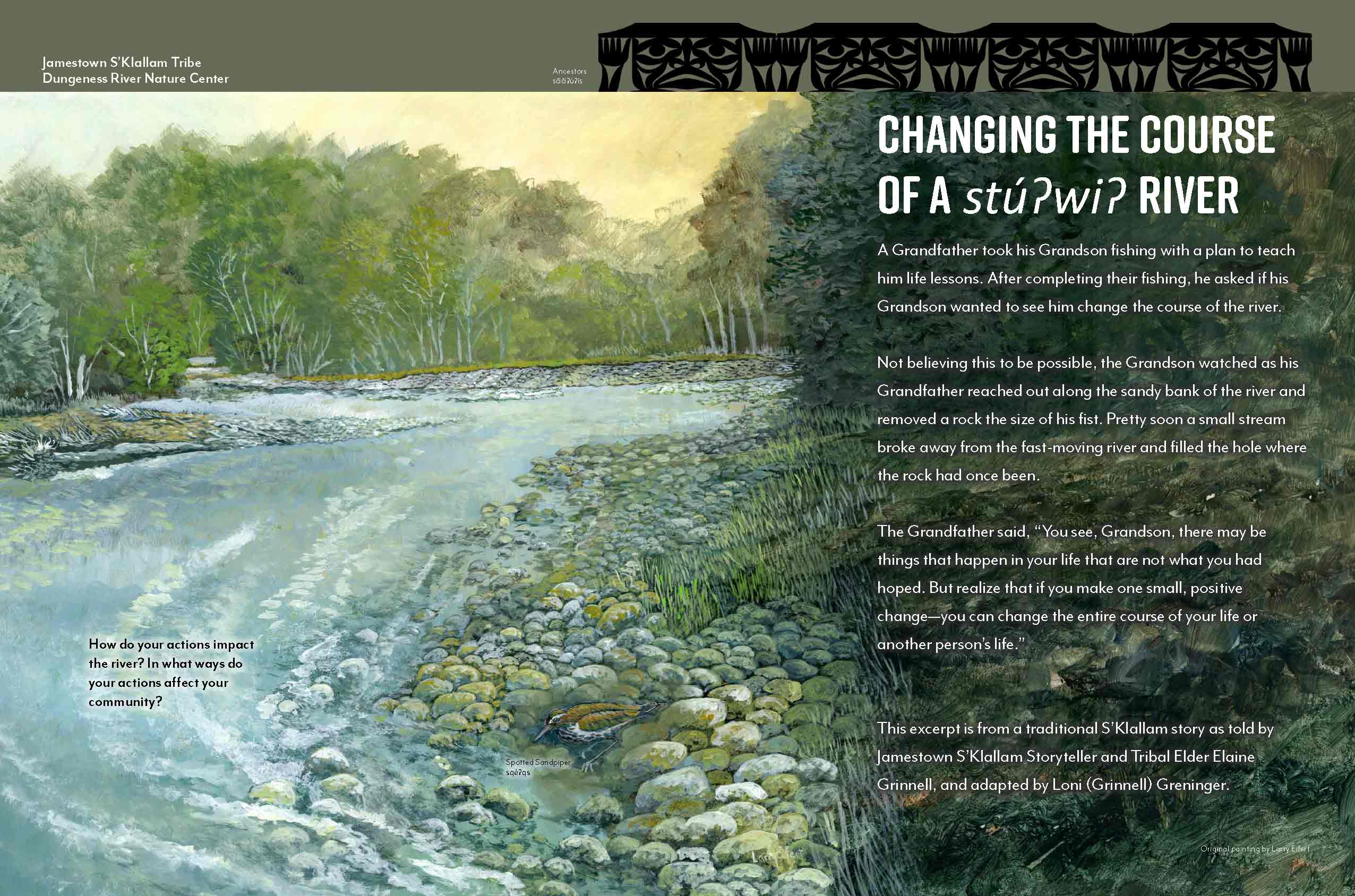
The Tribe asked me to make these outside panels so when the visitor center is closed, visitors still have a visual learning experience. The panels are around the building, but also along the Olympic Discovery Trail that passes nearby. This trail is also part of the Pacific Northwest National Scenic Trail from Glacier National Park to La Push WA on the Pacific Ocean.
I’m happy with the results. This place is centered around an old railroad bridge (Railroad Bridge Park) and the Tribe bought it, gaining back a bit of their original land they had for thousands of years. In the process, we got to know a rather amazing group of S’Klallam people – and learned a lot doing it. We both felt privileged to be involved.
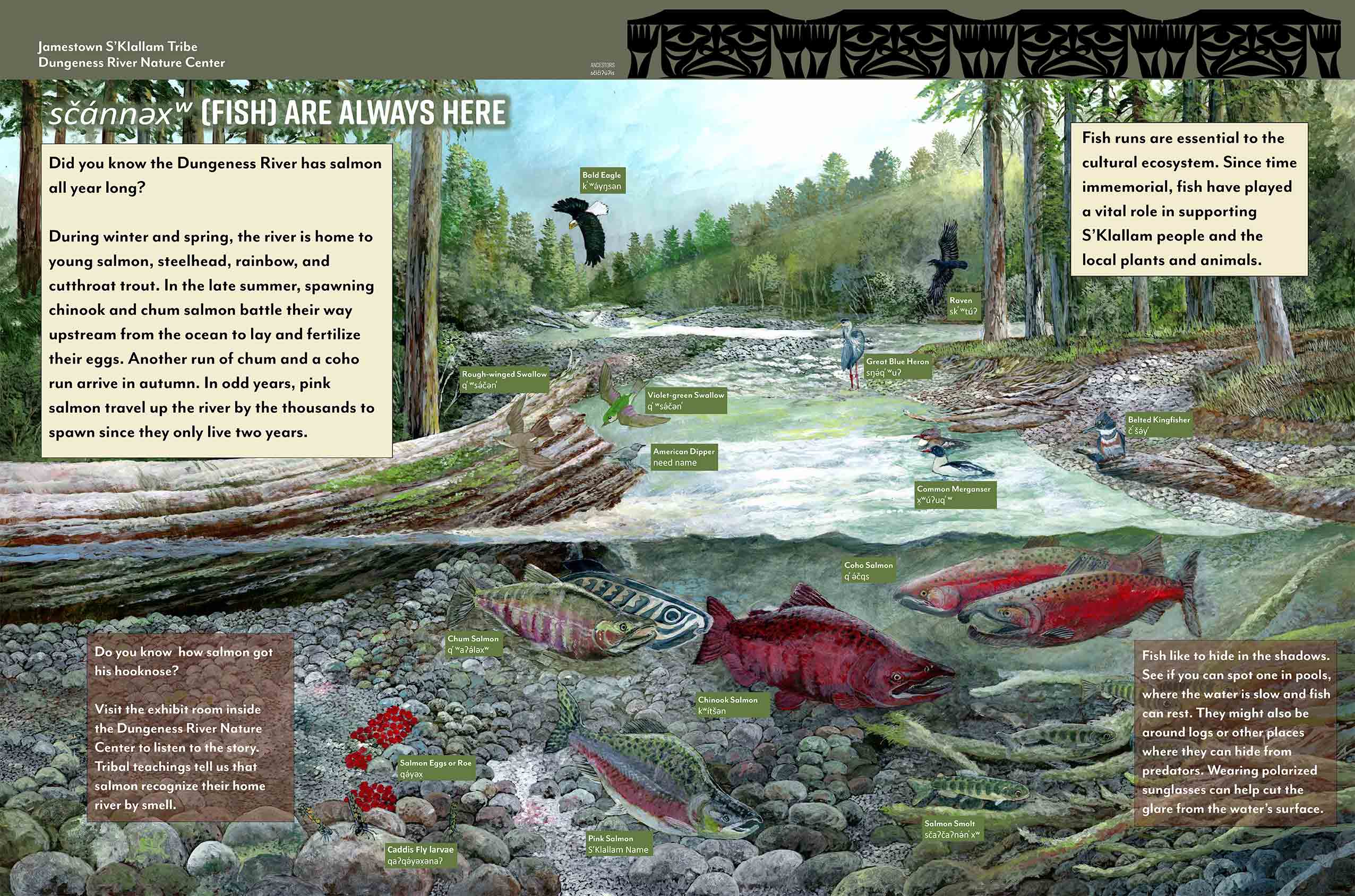
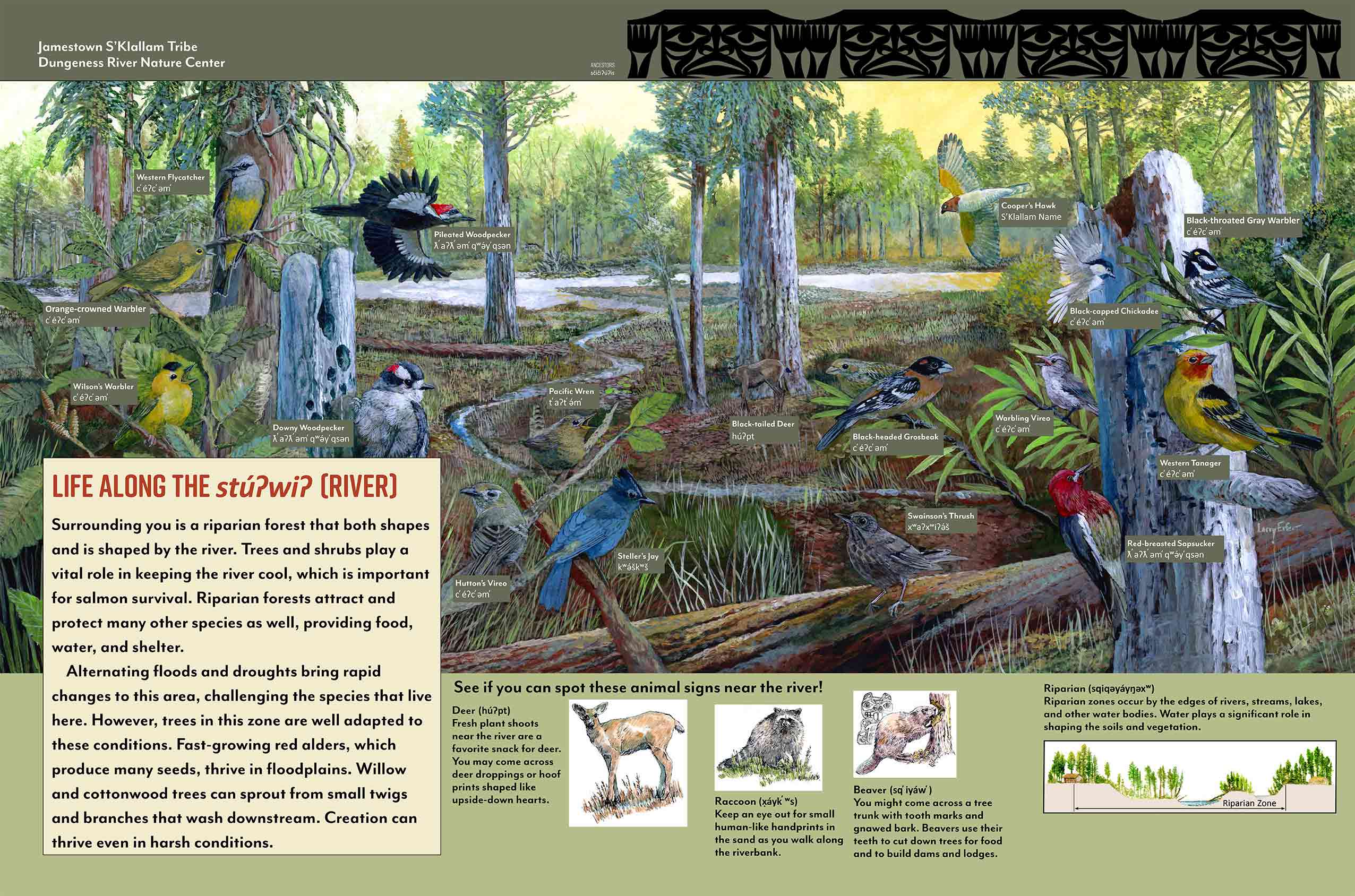
You’ll see both English and S’Klallam languages on these. The Tribe has programs in the local schools teaching this ancient language, and we tried to blend the languages, especially on the species captions. I think it worked pretty well, although it was a real challenge to figure out a font that has all the characters. Try finding a ADA compliant font with a backwards question mark, or a word that means Belted Kingfisher!
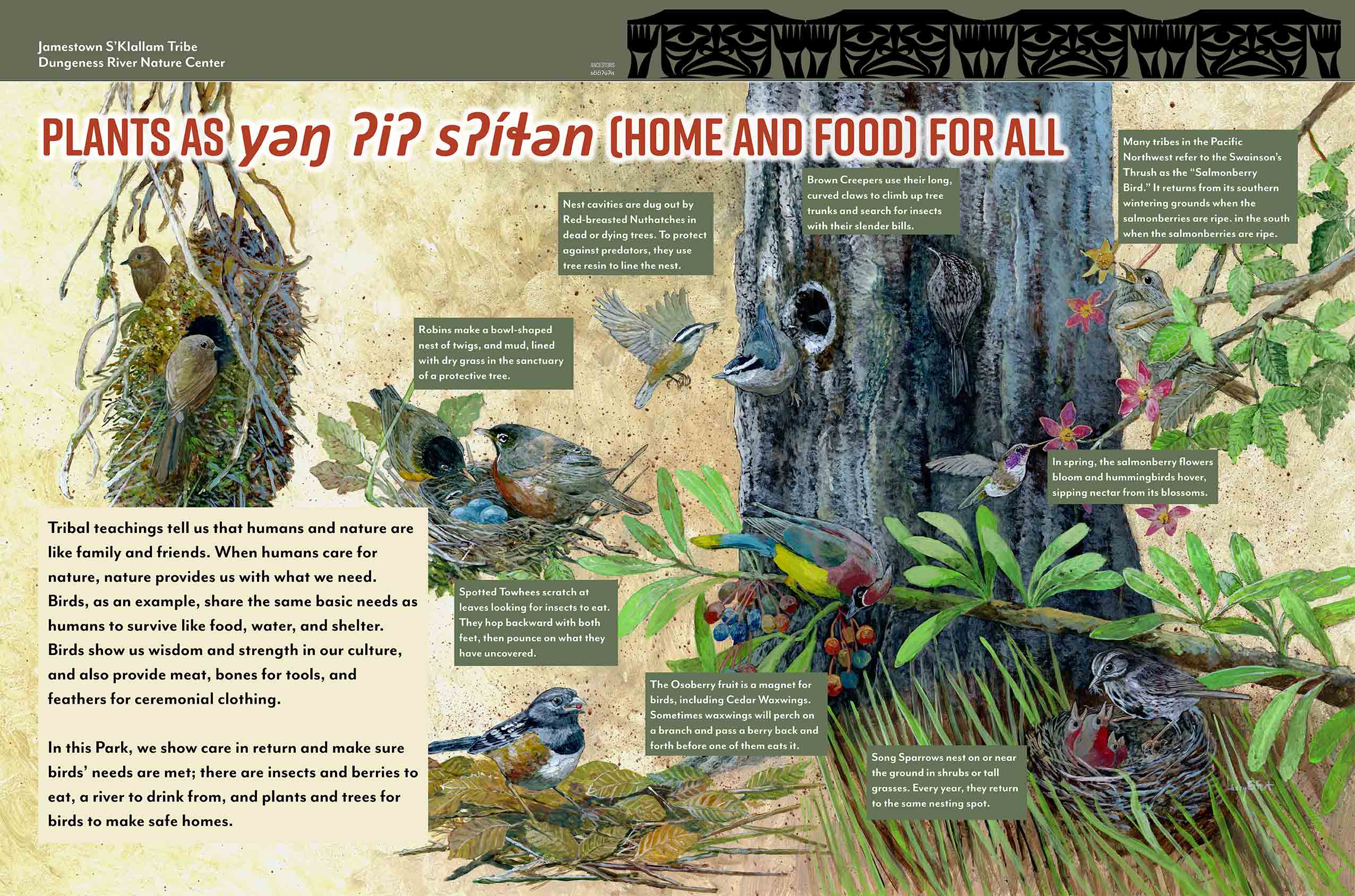
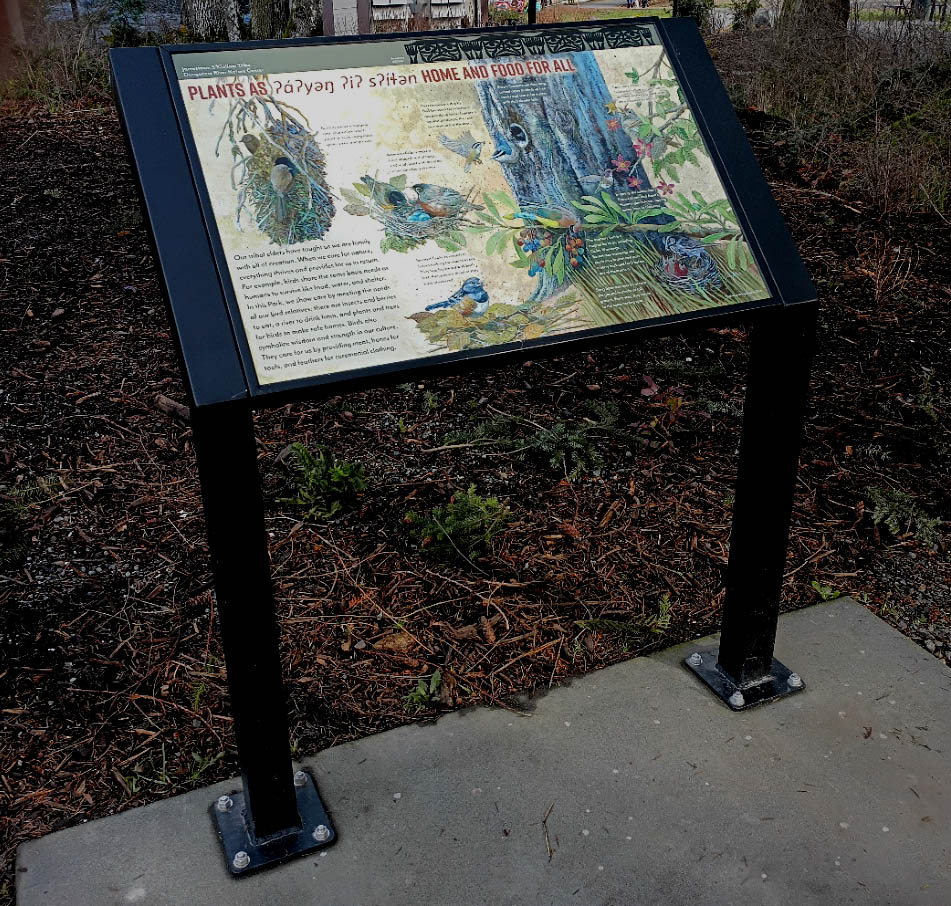
There’s a lot more than just painting that goes into this stuff. I don’t do it all, but from the ground up there’s the concrete pad, an ADA-approved installation of the legs and frame that will last 30 years, the aluminum panel the image is etched on is made only in South Dakota. The entire Adobe Suite of software (usually 4 programs that I use to design it) makes it print-ready. Then a committee has to approve what is written and painted so that it’s an accurate story. The art seems a secondary bit of this, but it takes the most time, and without good art, what is this but a book-on-a-stick!
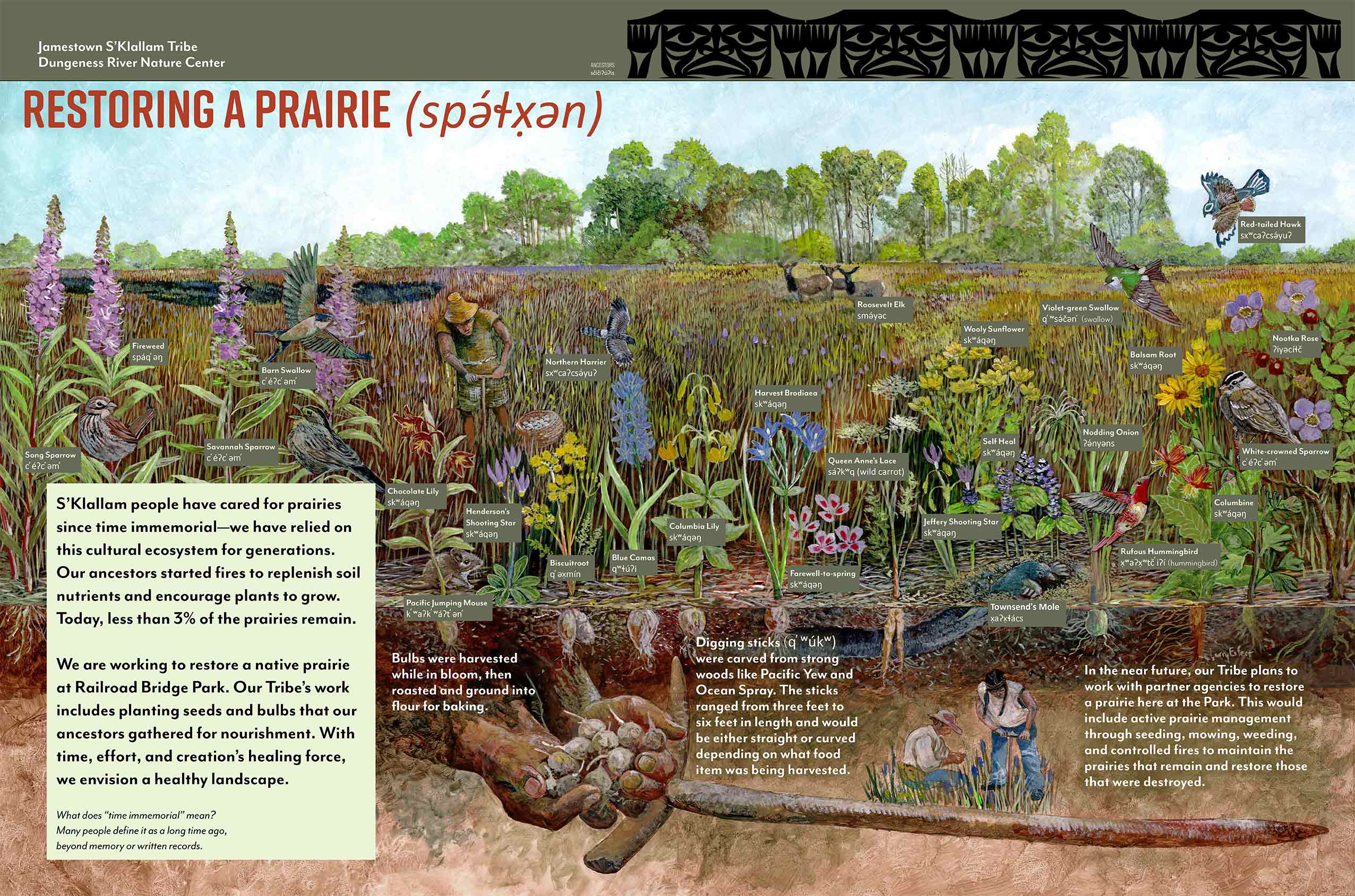
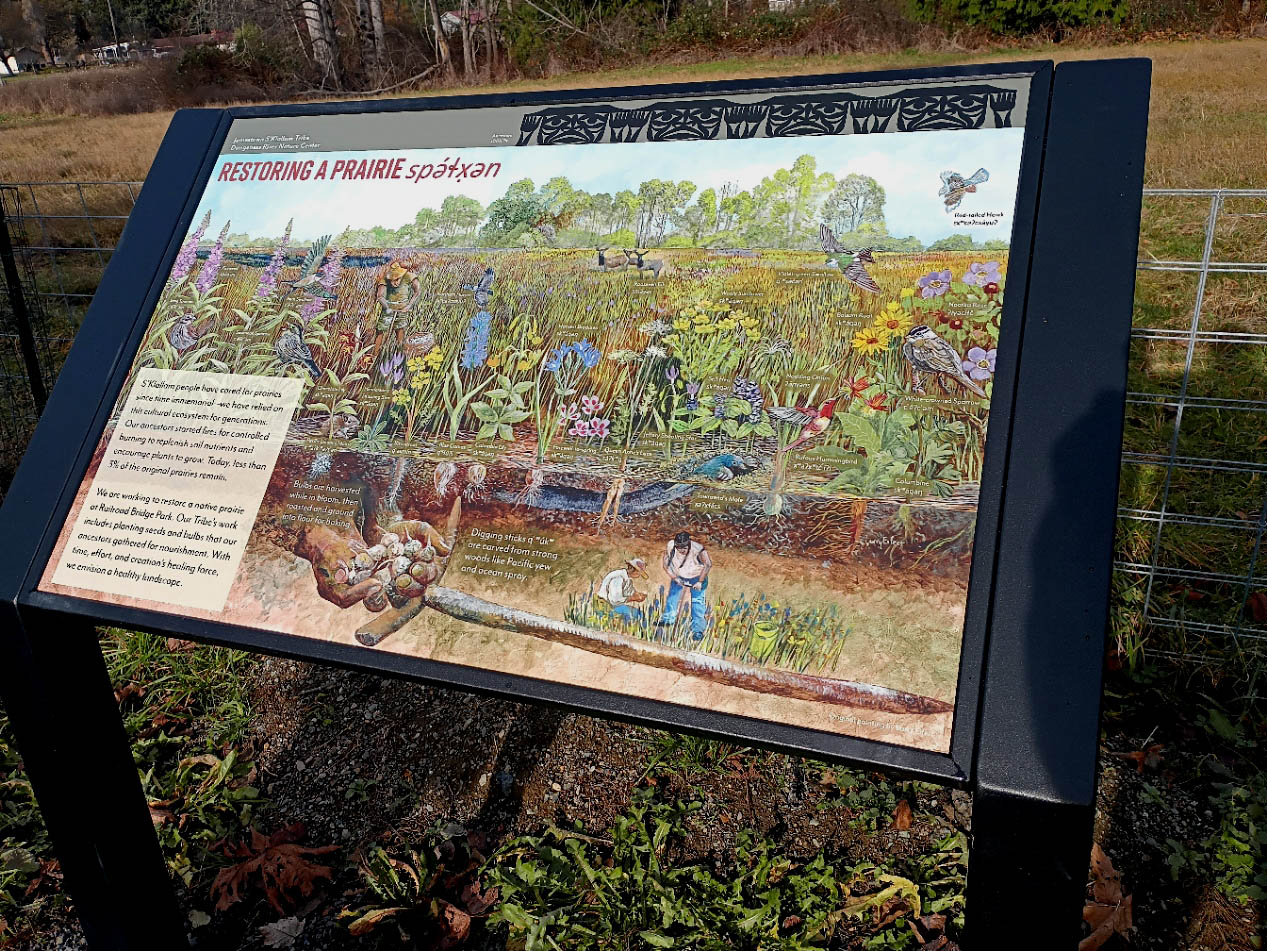
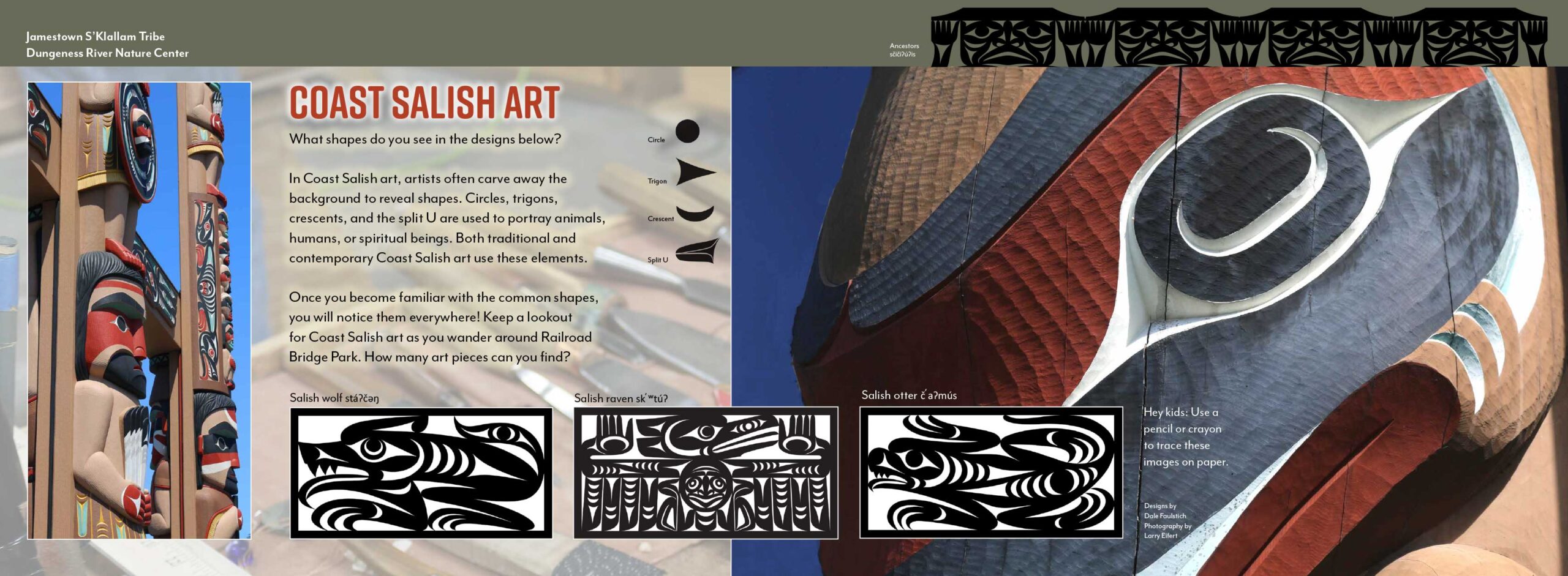
We tried something new on this panel (above), making the three insets from laser-cut plastic that can be traced with pencil or crayon. School groups can trace the image onto paper to take with them – sort of a hands-on approach to a visual object.
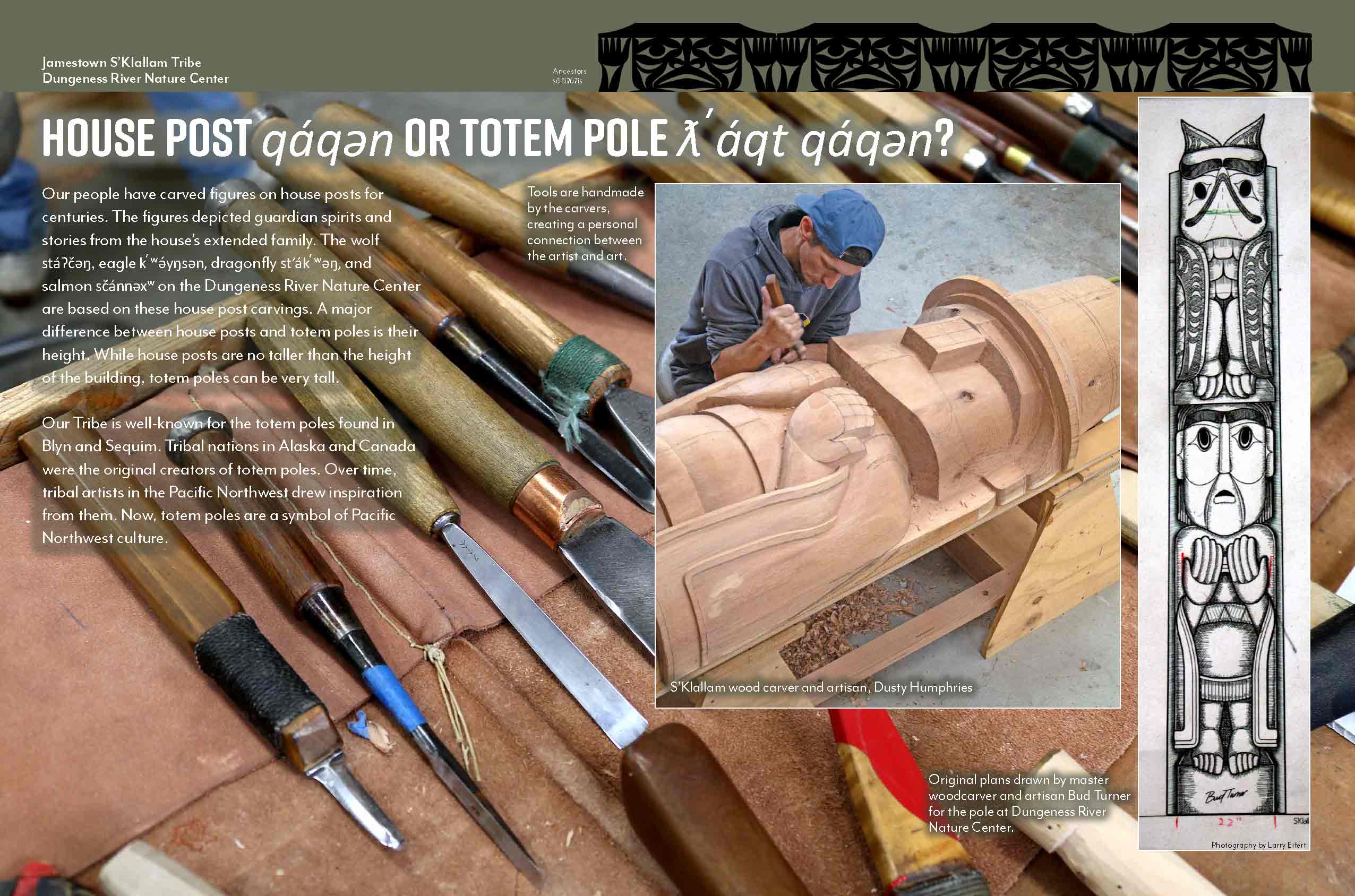
Dusty Humphries, an artisan at the Tribal carving shed (actually a huge new building, not a shed) allowed me in to photograph his work. A truely amazing place.
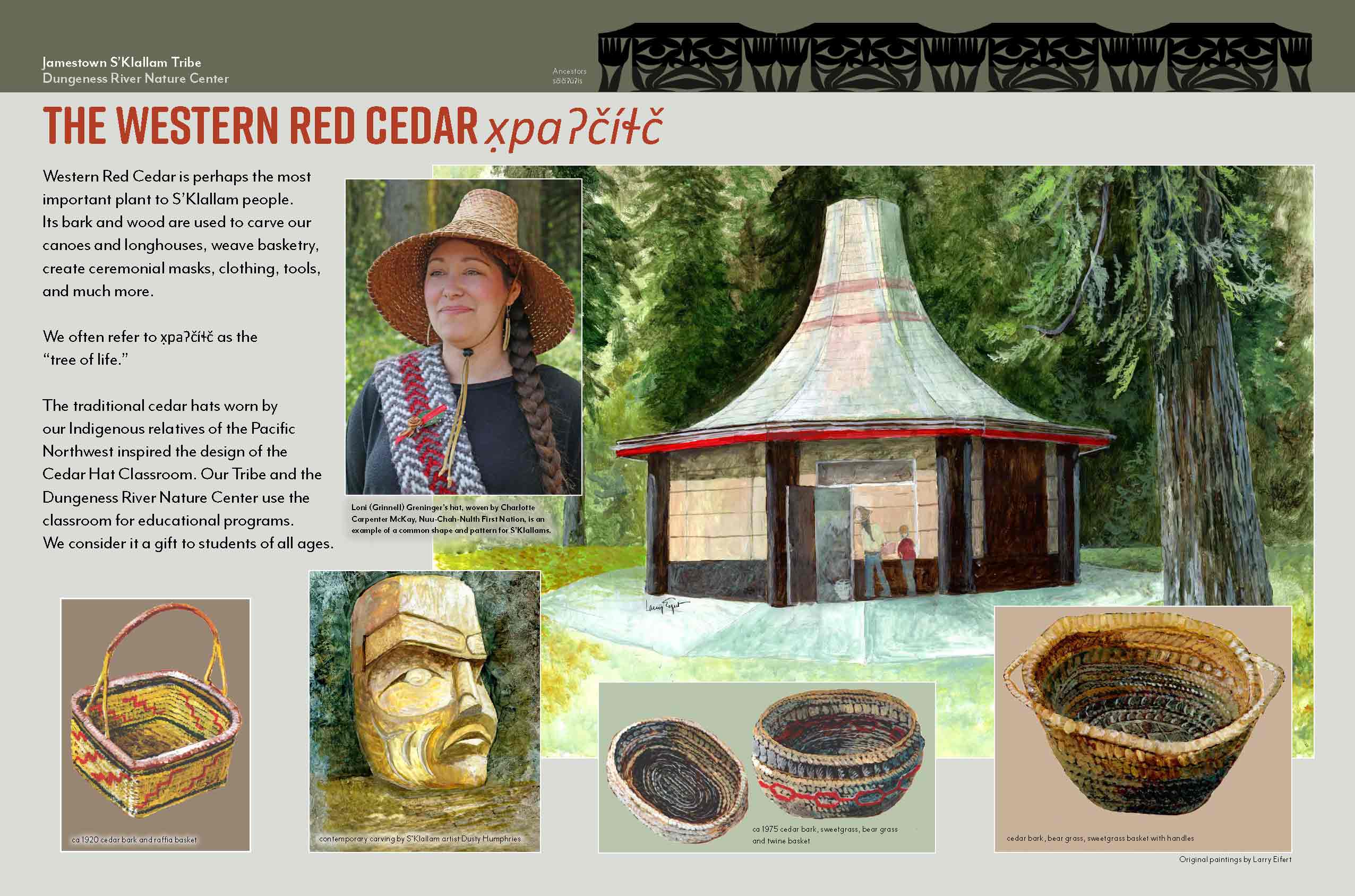
Lori Grinnell Greninger seemed to be all over this project, giving us help in many ways – and not just modeling her hat – which the building was modeled after.
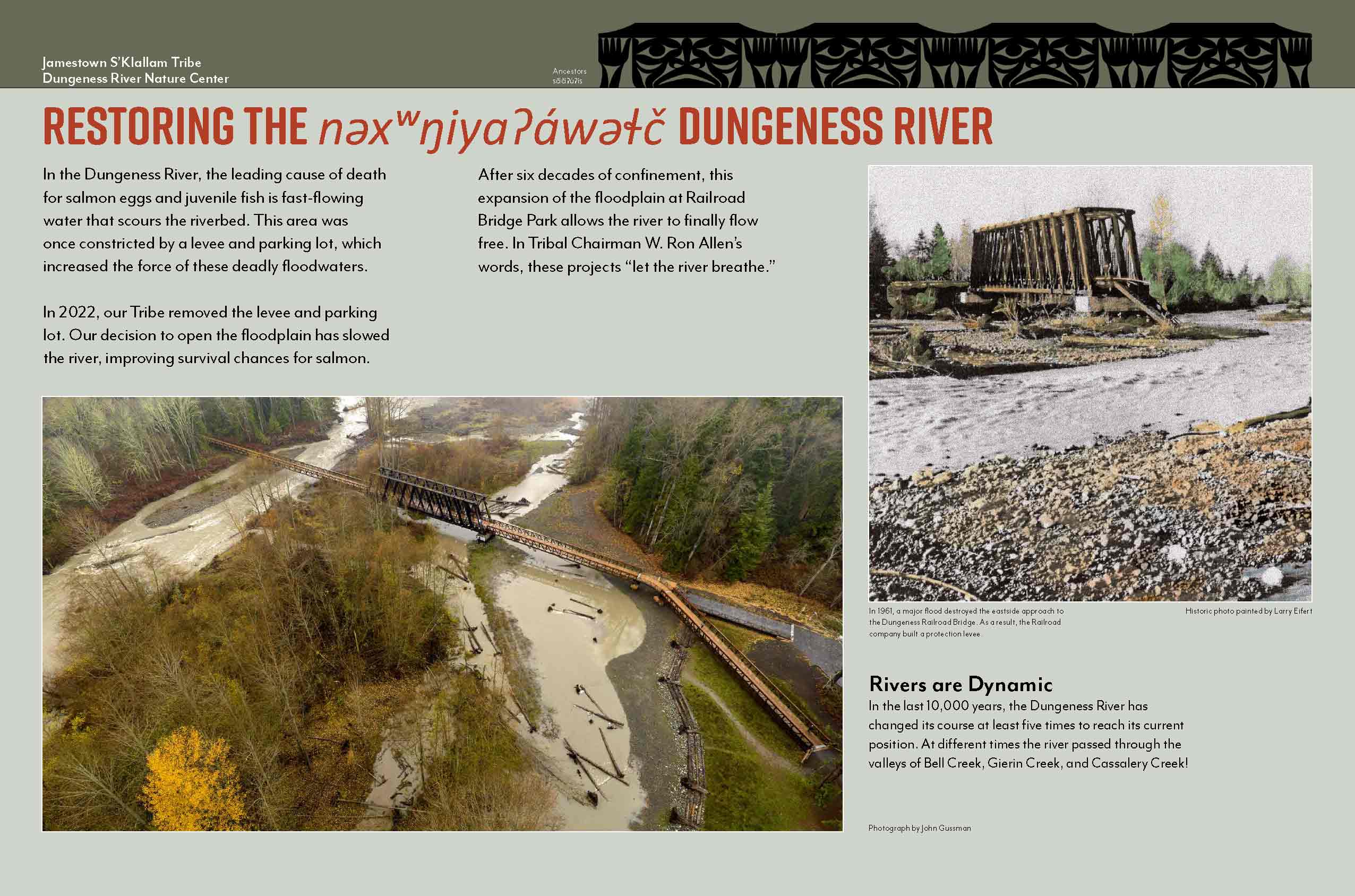
This last panel has the only image not of my own art or photography. Thanks to John Gussman for the drone image. Also a great thanks to Kathy Steichen for recommending me to the Tribe for this project in the first place. After a lifetime of painting, these new challenges keep me young, and I’ve worked with Kathy on many projects now.
Thanks for reading this week. You can sign up for emails for these posts on my website at larryeifert.com.
Larry Eifert
Here is my Etsy site with my currently available paintings for easy sale.
Here’s my Facebook fan page. I post lots of other stuff there.
Click here to go to our main website.
Nancy’s web portfolio of stunning photography and paintings.
And here to go to Virginia Eifert’s website.
Or Crater Lake Institute’s website which I also build – viewership of several million a month!